The Taking of Christ — History & Analysis
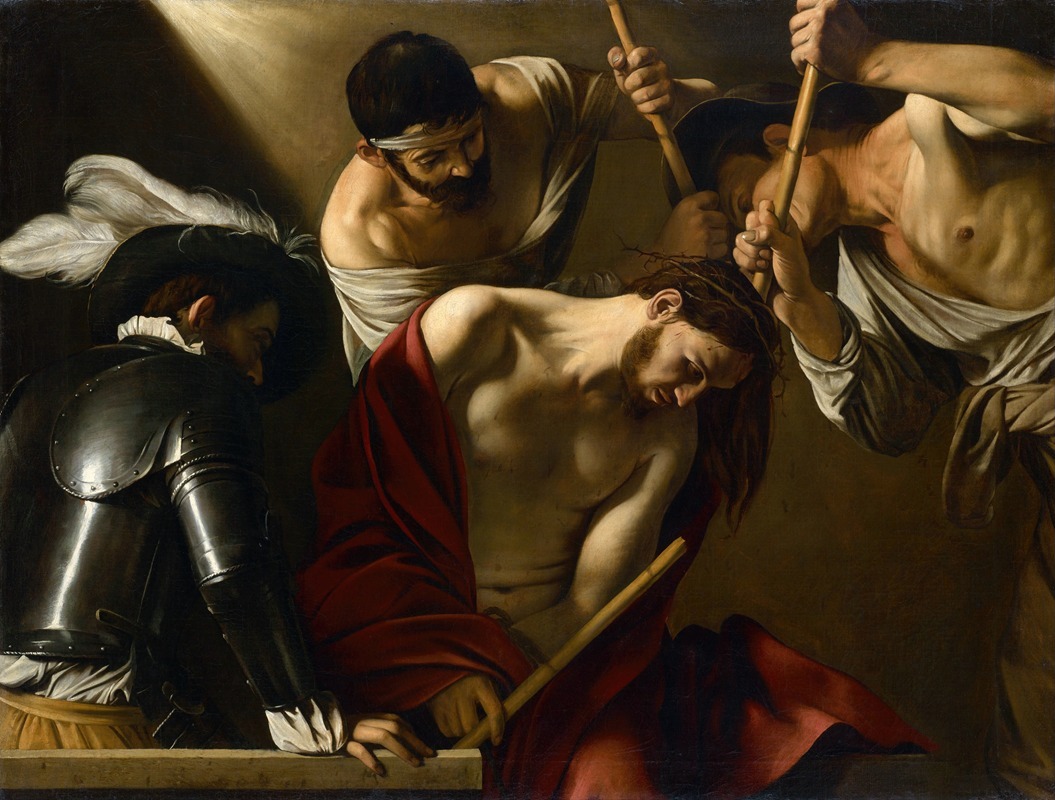
Is this a mirror — or a memory? In The Taking of Christ, a moment of betrayal unfolds, steeped in shadows and illuminated by the harsh light of truth, compelling the viewer to confront the weight of awakening. Focus on the central figure, Christ, whose expression captures both resignation and a glimmer of acceptance. Notice how the harsh light falls across his face, accentuating the tension in his serene demeanor juxtaposed against the violent chaos swirling around him. To the right, Judas embraces the darkness as he leans forward, his hand poised upon Christ's shoulder, sealing the act of betrayal.
The rich, deep colors and dramatic chiaroscuro envelop the scene, amplifying the emotional gravity that pervades the composition. In this turbulent tableau, the contrast between light and dark extends beyond physical realms; it reflects the internal conflict of each figure present. The surrounding soldiers, cloaked in ominous shadows, represent the encroaching forces of doubt and fear. Christ’s stillness in the face of imminent sacrifice suggests a profound awareness — an awakening to the fate that awaits him.
This duality of comprehension and betrayal invites viewers to contemplate their own moral dilemmas and the complexities of human connection. Painted in 1571, the artist was navigating a tumultuous period in his life, marked by personal strife and a burgeoning reputation. Working in Rome, Caravaggio was at the forefront of the Baroque movement, innovating with his realistic portrayal of subjects and his masterful play of light and shadow. This painting captures the fraught emotional landscape of both the artist and the world around him, encapsulating themes of faith and betrayal that continue to resonate today.