Bathers — History & Analysis
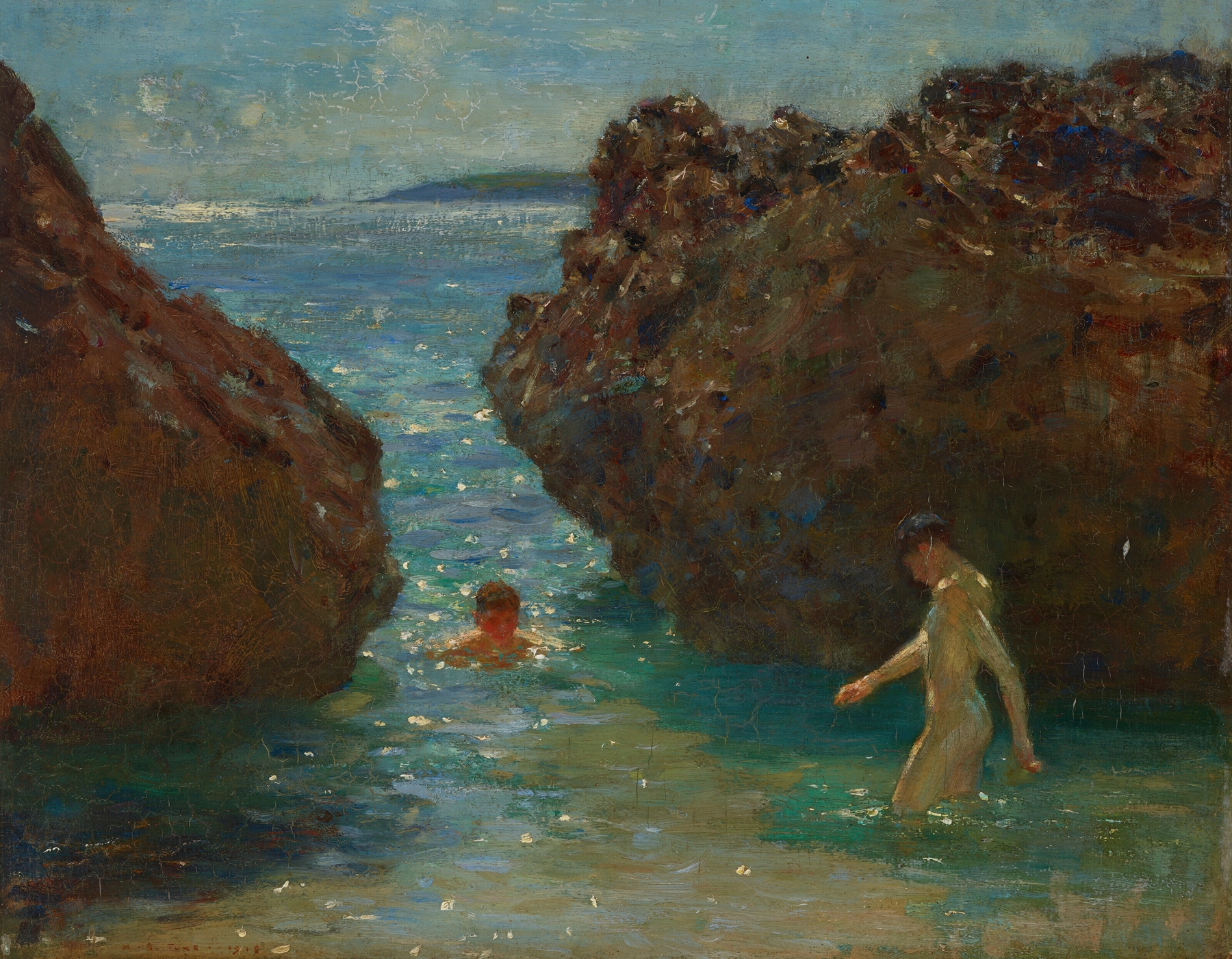
What secret hides in the quiet of the canvas? In Bathers, the stillness conveys an intimacy that invites viewers to linger in the calm moments, allowing whispers of emotion to surface. Look to the left at the young men, their bodies softly illuminated by the dappled sunlight filtering through the trees. The warm hues of gold and green create a serene atmosphere, while the shimmering water reflects their forms, drawing attention to the gentle curves and lines of their relaxed postures.
Notice how Tuke’s brushwork captures the play of light, intertwining flesh and water, emphasizing both the vitality of youth and the fleeting nature of this tranquil scene. Beneath the surface lies a contrast between exuberance and contemplation. The clear water symbolizes purity and freedom, while the figures, seemingly at ease, hint at deeper thoughts—perhaps of nostalgia or the passage of time. The absence of sound in the painting accentuates the stillness and invites reflection on shared moments of joy while hinting at underlying complexities of life beyond the frame.
Created in 1918, during a time when the world was grappling with the aftermath of war, Tuke’s work reflects a yearning for peace and a return to simpler pleasures. Working in Cornwall, he captured the essence of coastal life, subtly seeking solace and beauty amidst a backdrop of societal turmoil. This juxtaposition resonates throughout Bathers, making it a timeless exploration of human connection.