French Windjammer At Anchor Signed And Indistinctly — History & Analysis
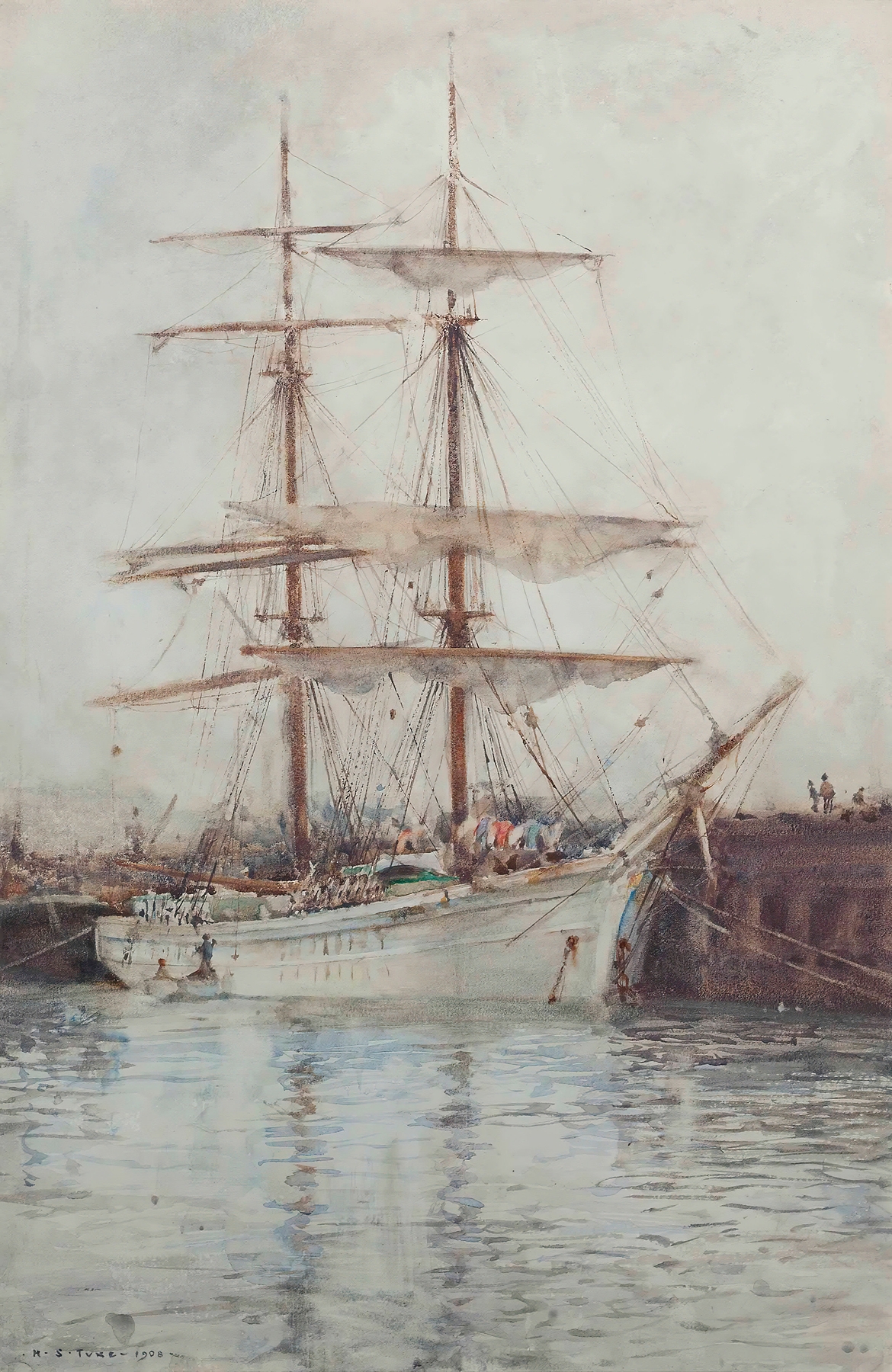
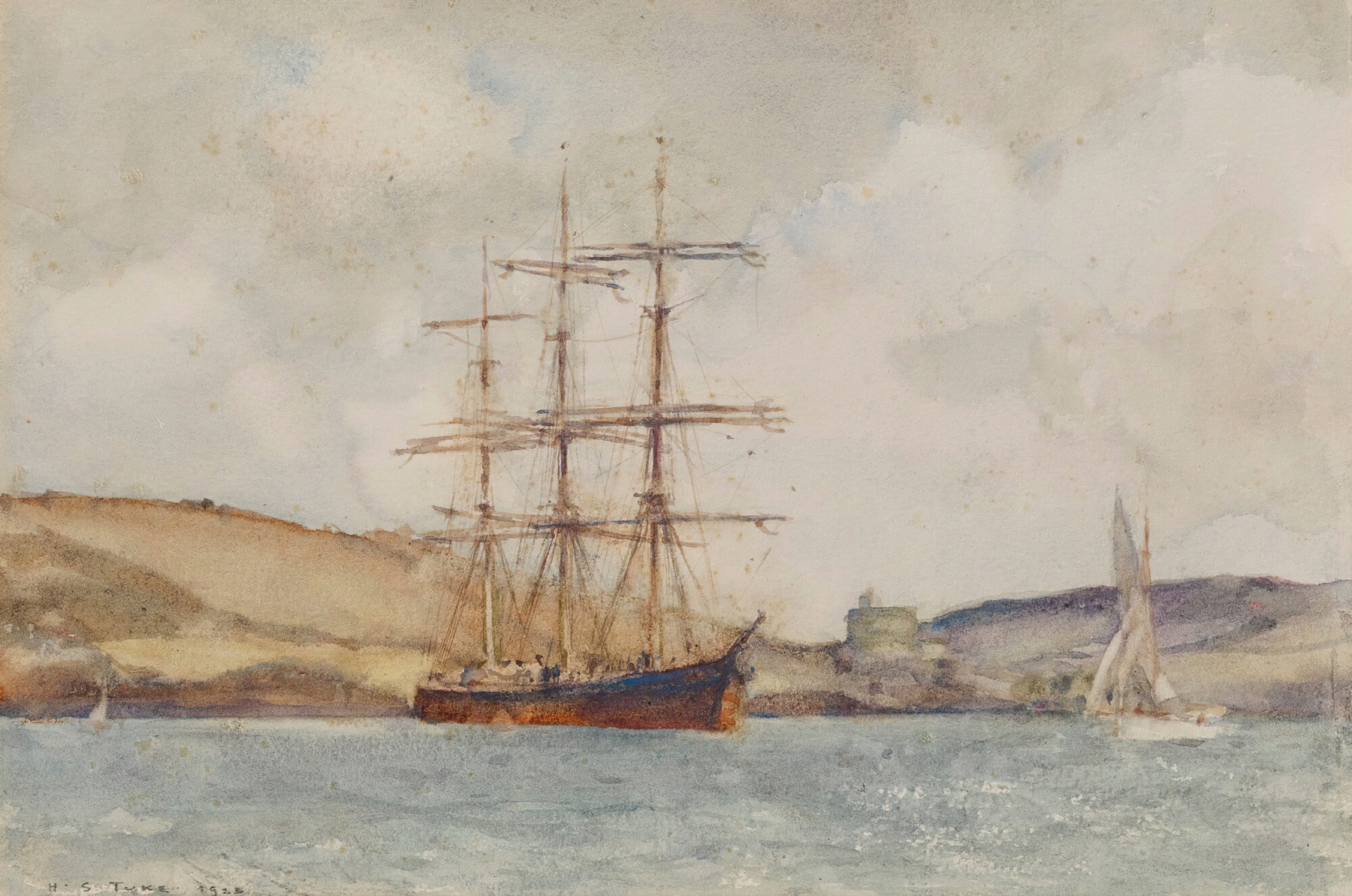
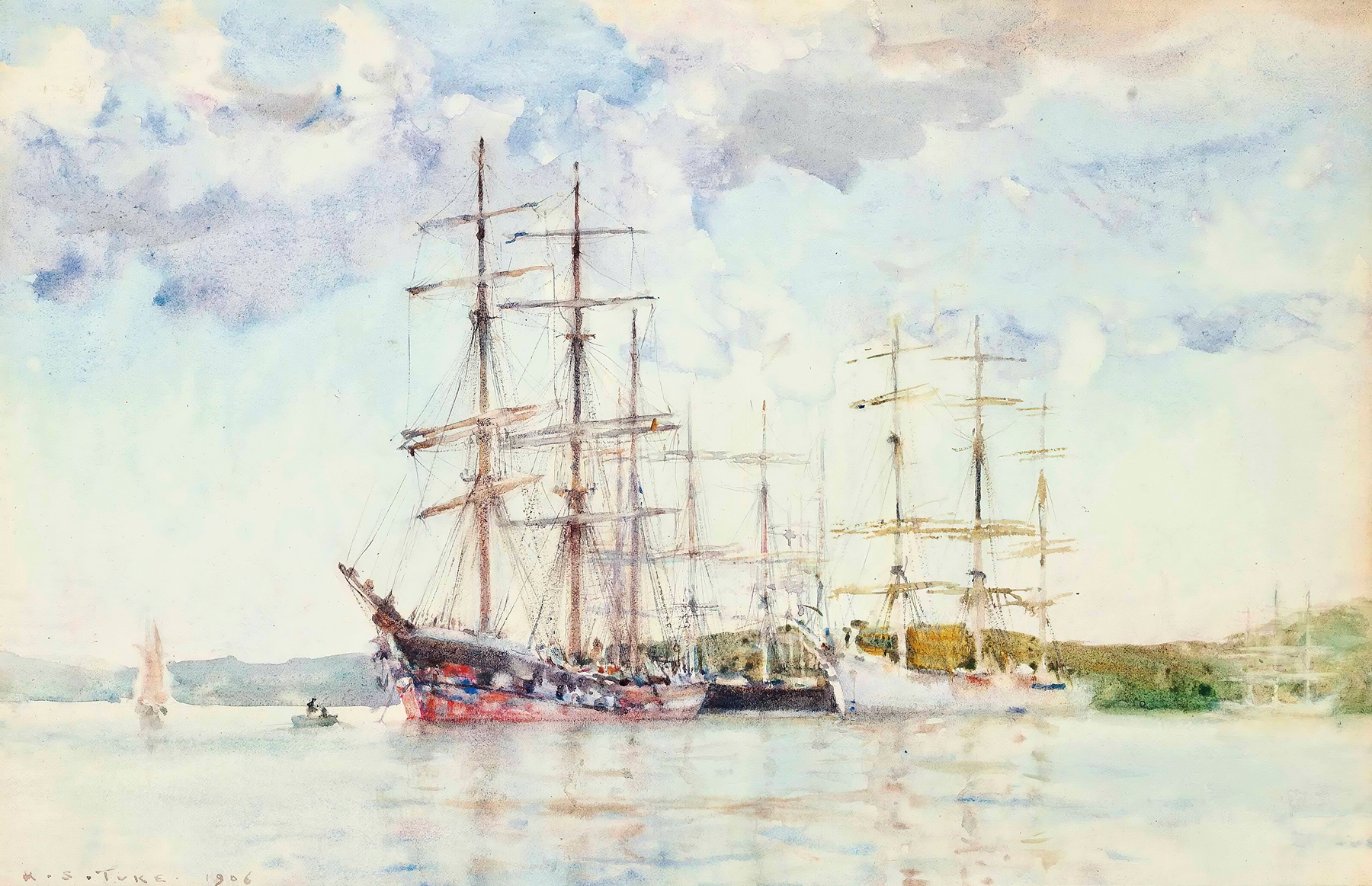
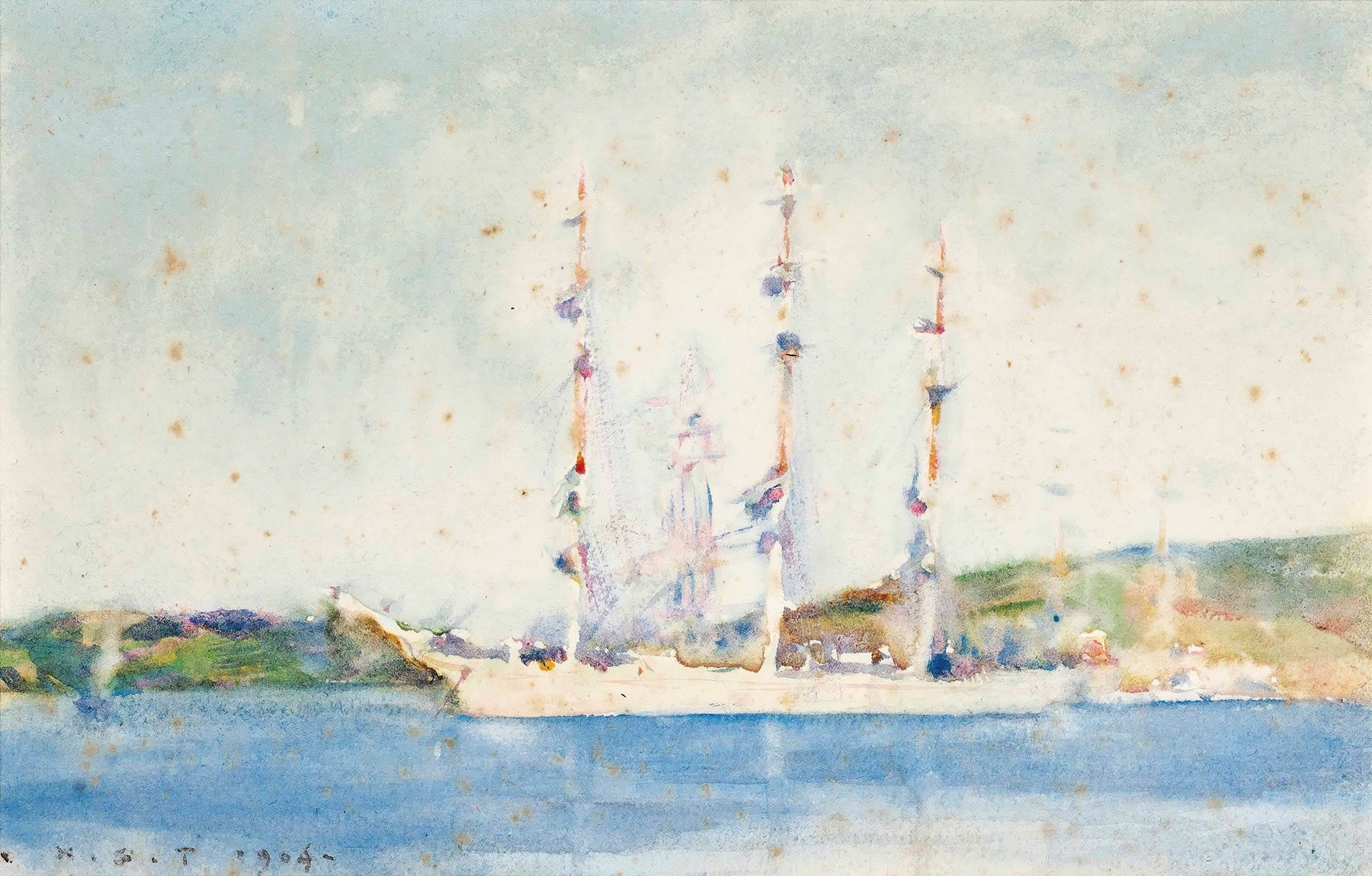
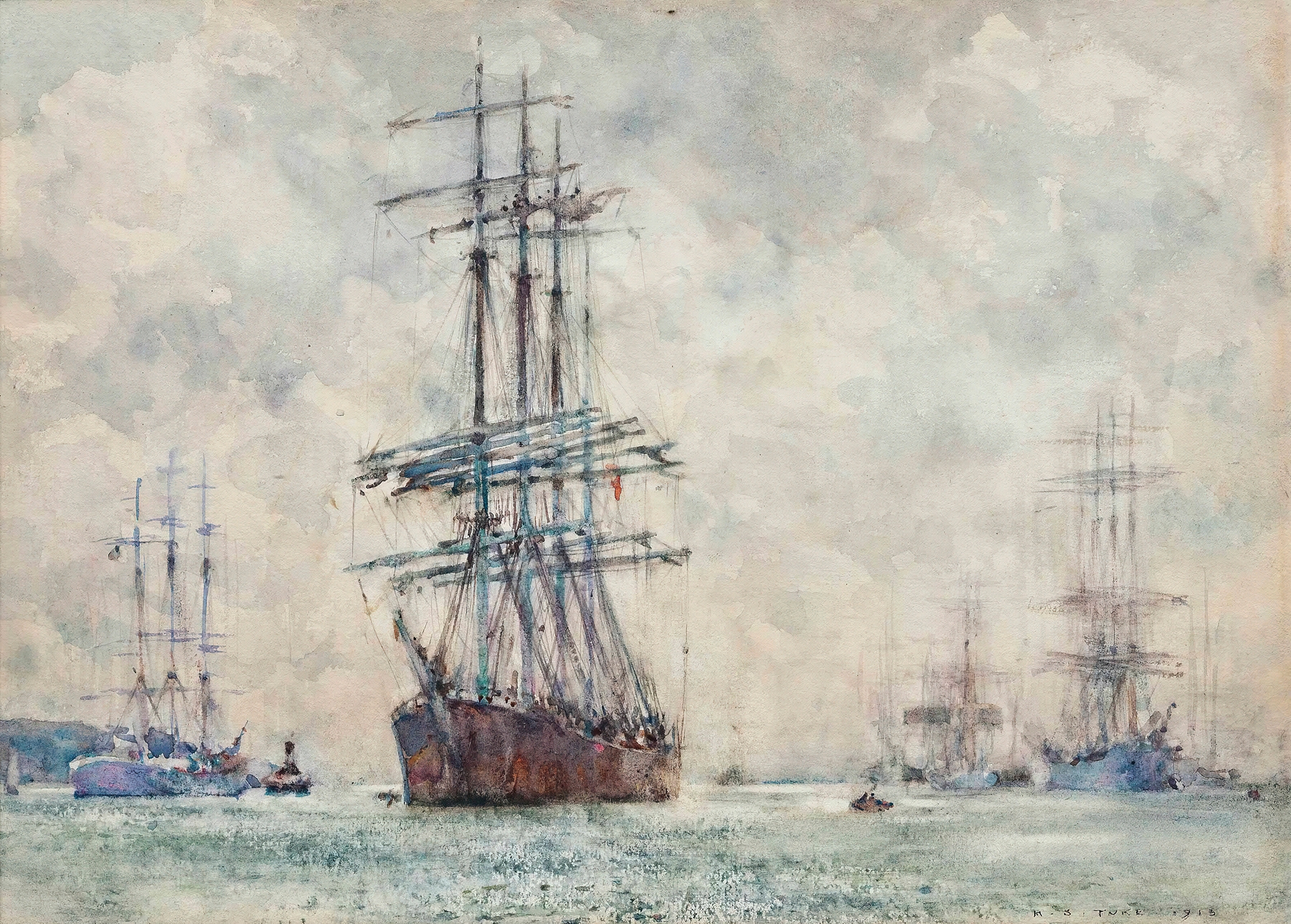
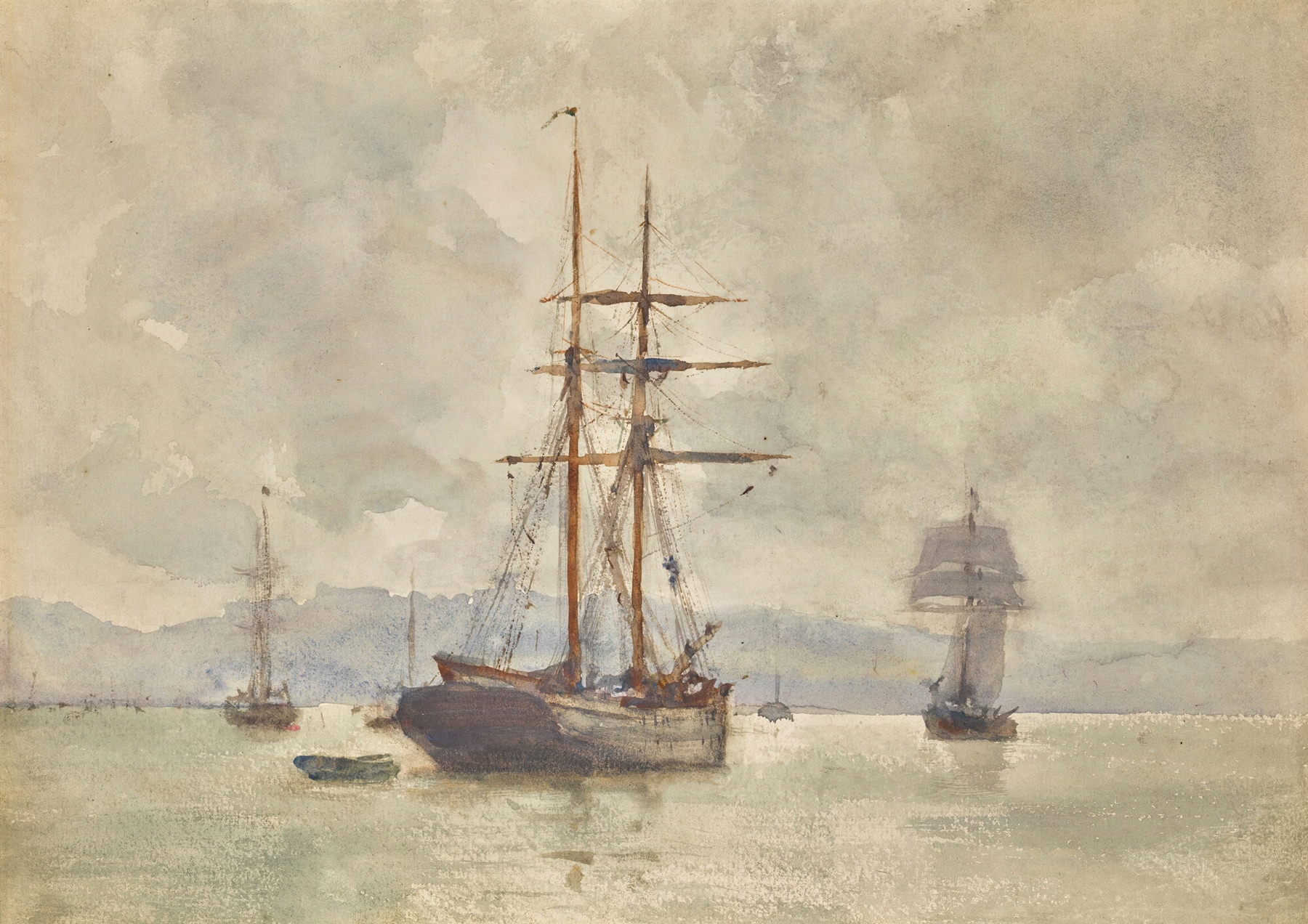
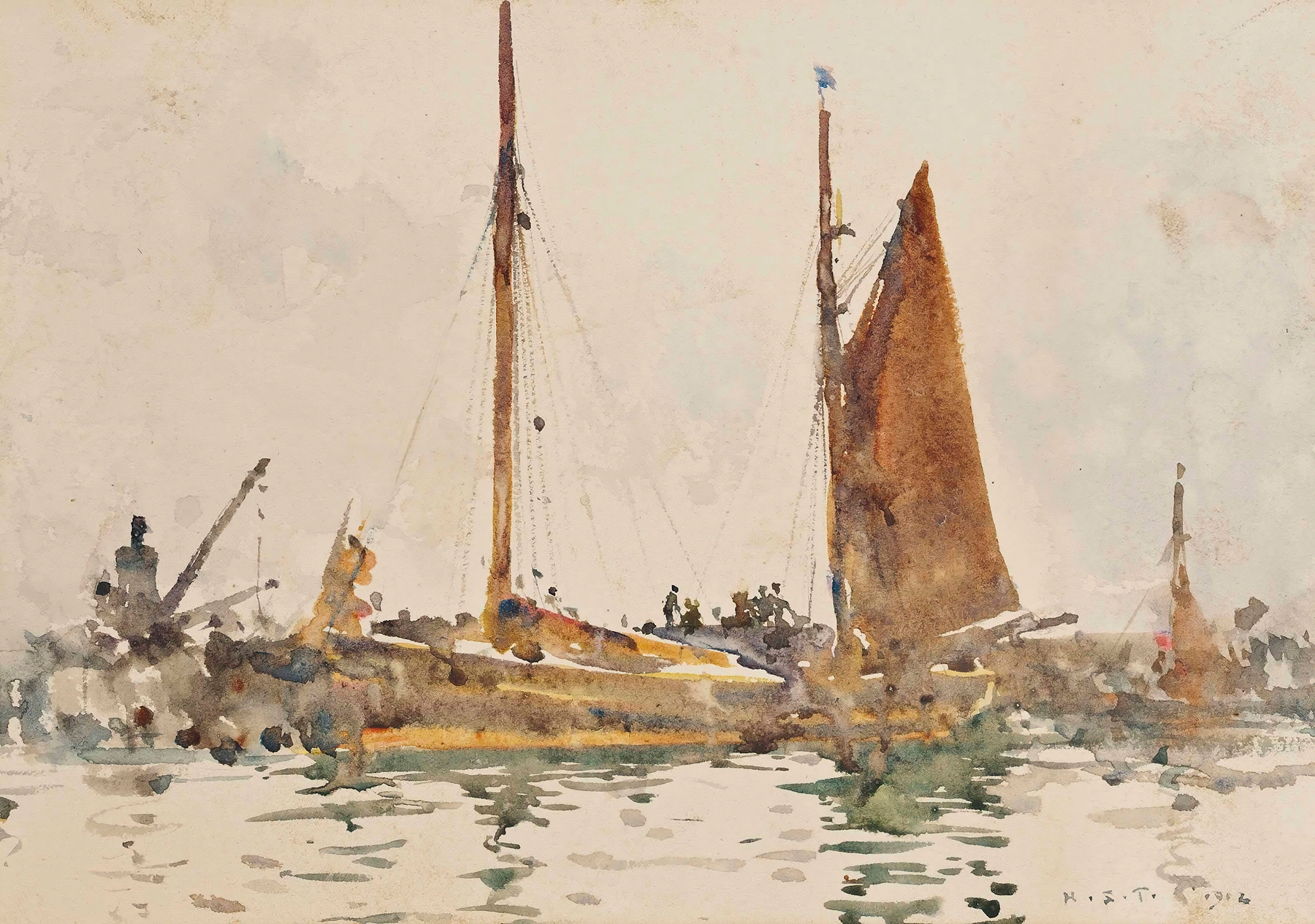
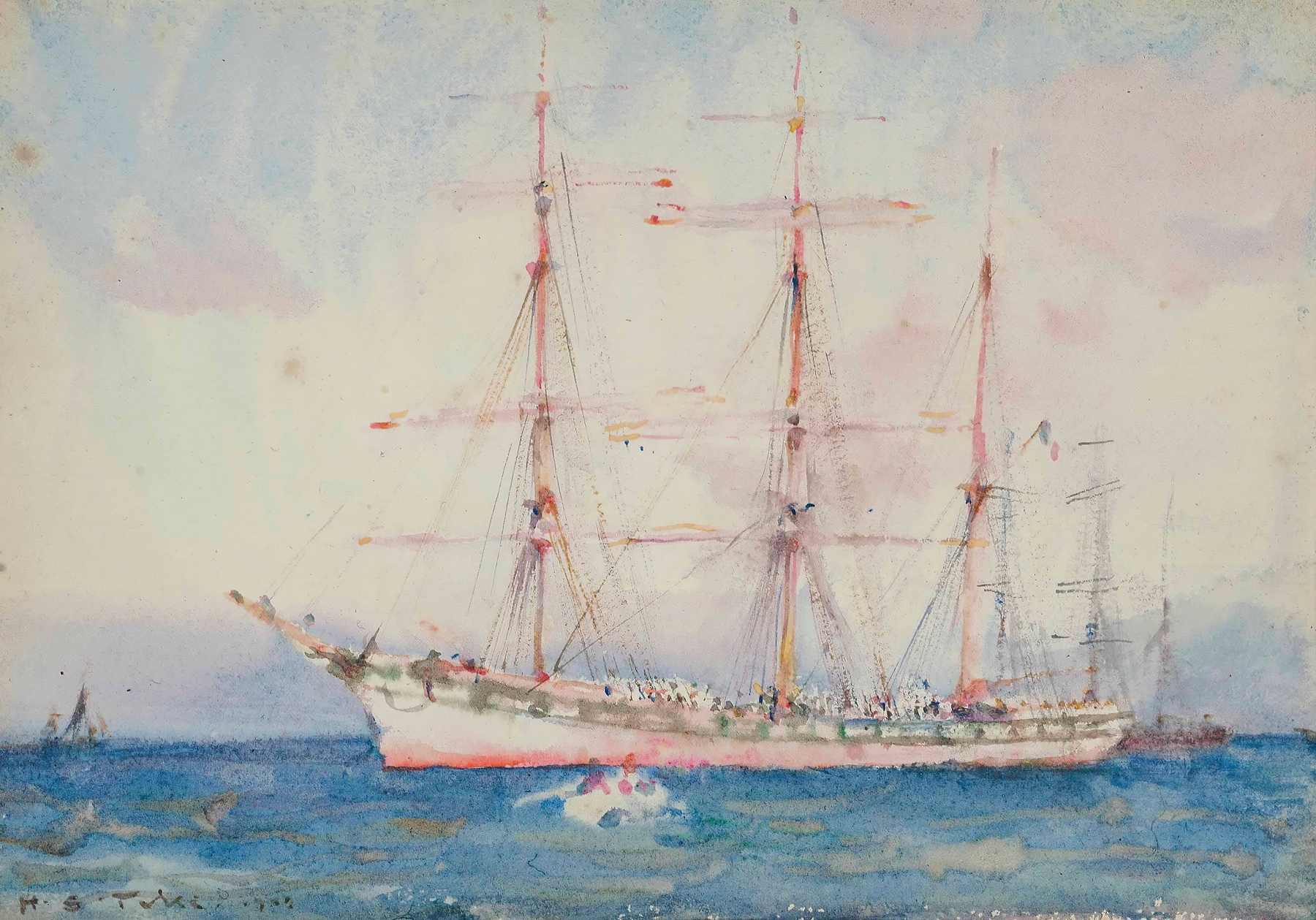
What secret hides in the quiet of the canvas? Under the gentle sway of the sea, a vessel waits, its fate intertwined with the whispers of the wind and water. Look to the left at the graceful lines of the windjammer, its sails furled yet poised, embodying both stillness and potential. The artist employs a soft palette, where cool blues and warm browns merge, creating an atmosphere that is serene, almost reverent.
The reflection of the ship upon the water, painted with delicate brushstrokes, draws the viewer’s eye and invites contemplation of the unity between man-made and natural beauty. Delve deeper into the interplay of light and shadow, where the sun casts a golden sheen across the surface, hinting at the promise of adventure just beyond the horizon. Notice how the quietude of the scene belies an undercurrent of anticipation; the vessel, though anchored, suggests an impending journey, a destiny yet to unfold. The horizon, vast and empty, speaks to the infinite possibilities that lie ahead, a metaphor for life’s own unpredictable tides.
Henry Scott Tuke created this piece in 1900 while residing in Cornwall, a region that inspired much of his work. The late 19th and early 20th centuries were marked by significant changes in maritime trade and technology, and Tuke's focus on seascapes reflects a growing fascination with the sea's beauty and mystery. This painting captures a moment of tranquility amid a transforming world, underlining the connection between nature and human aspiration.