Windjammers In The Carrick Roads — History & Analysis
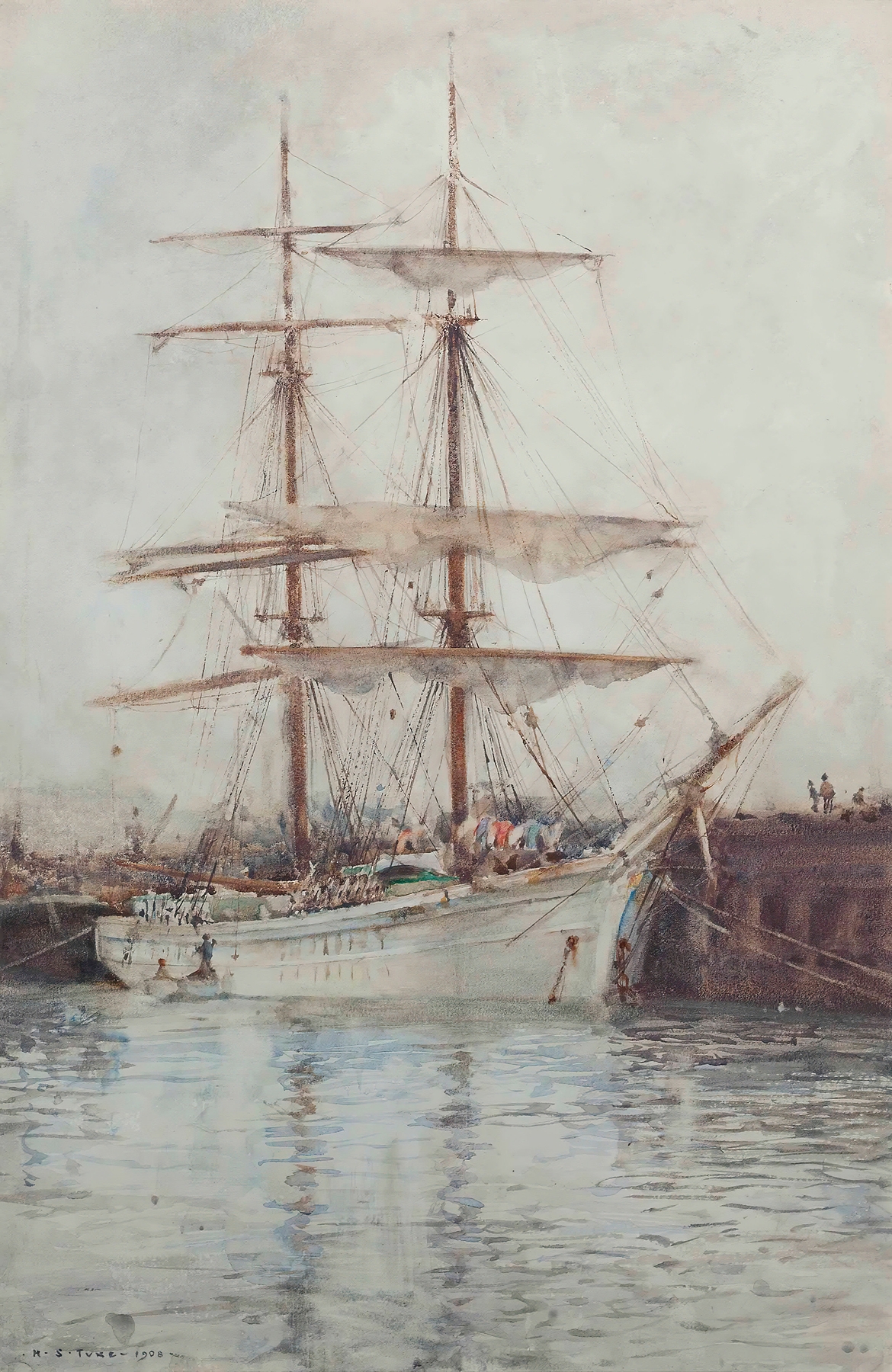
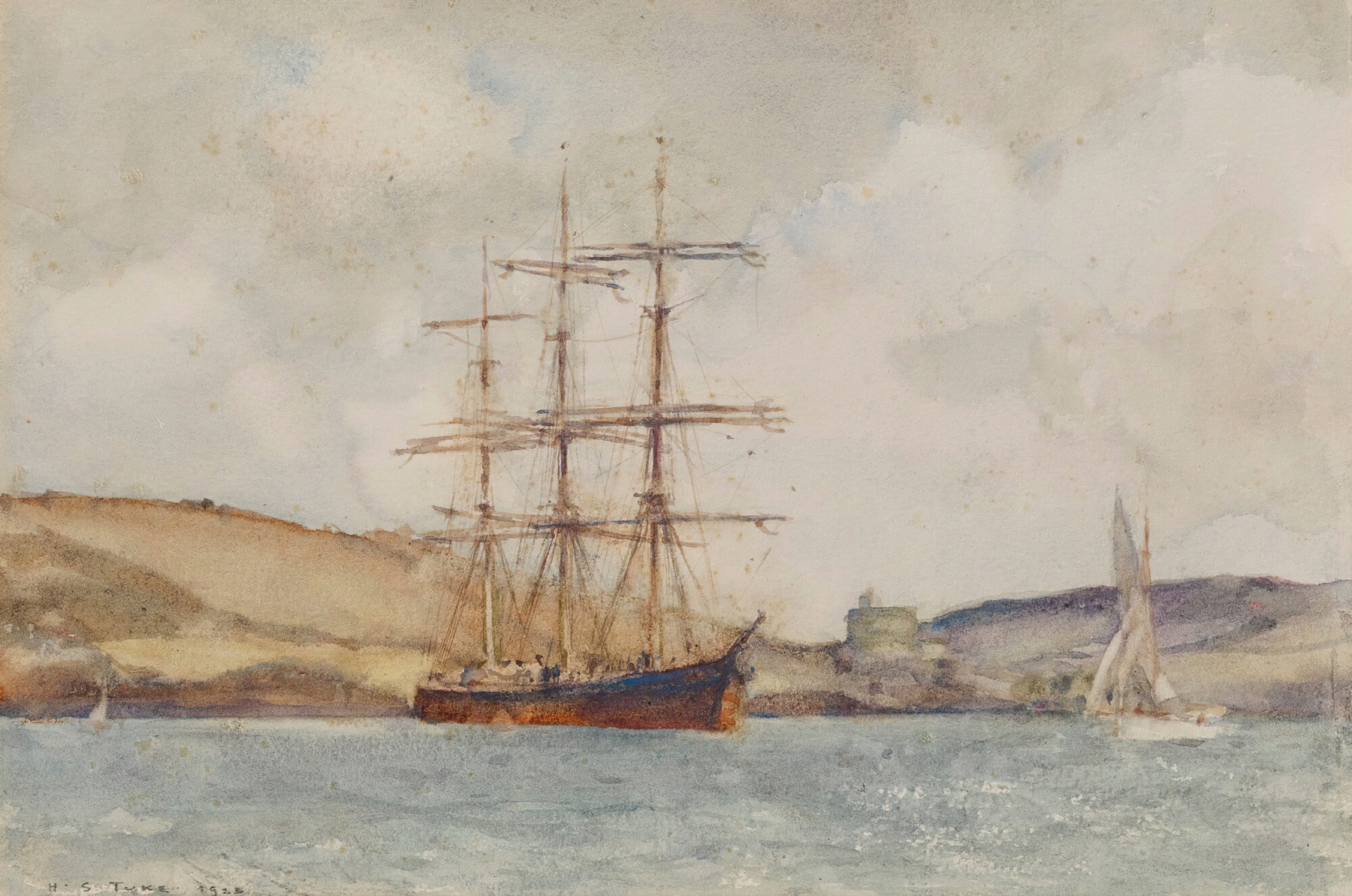
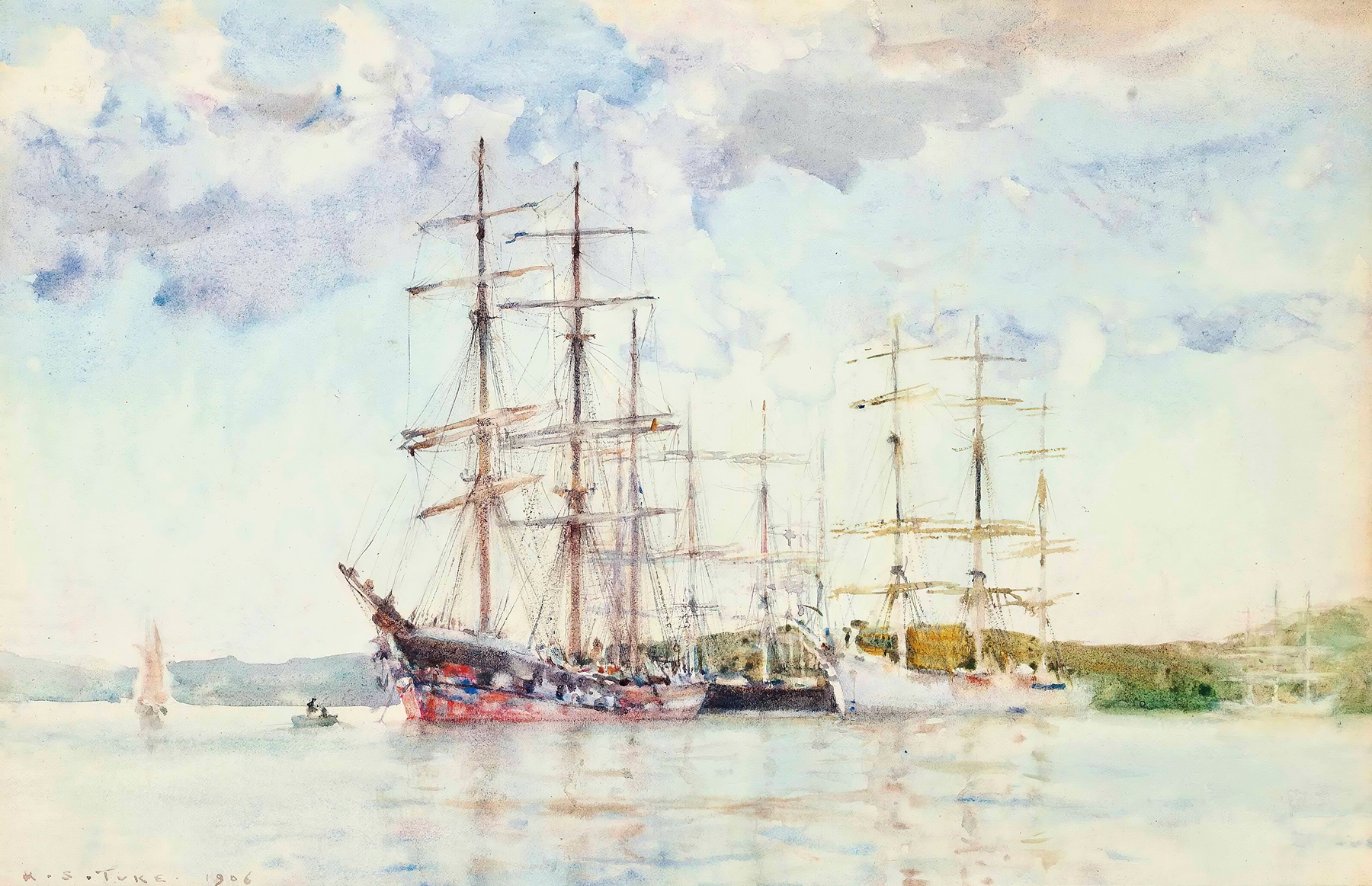
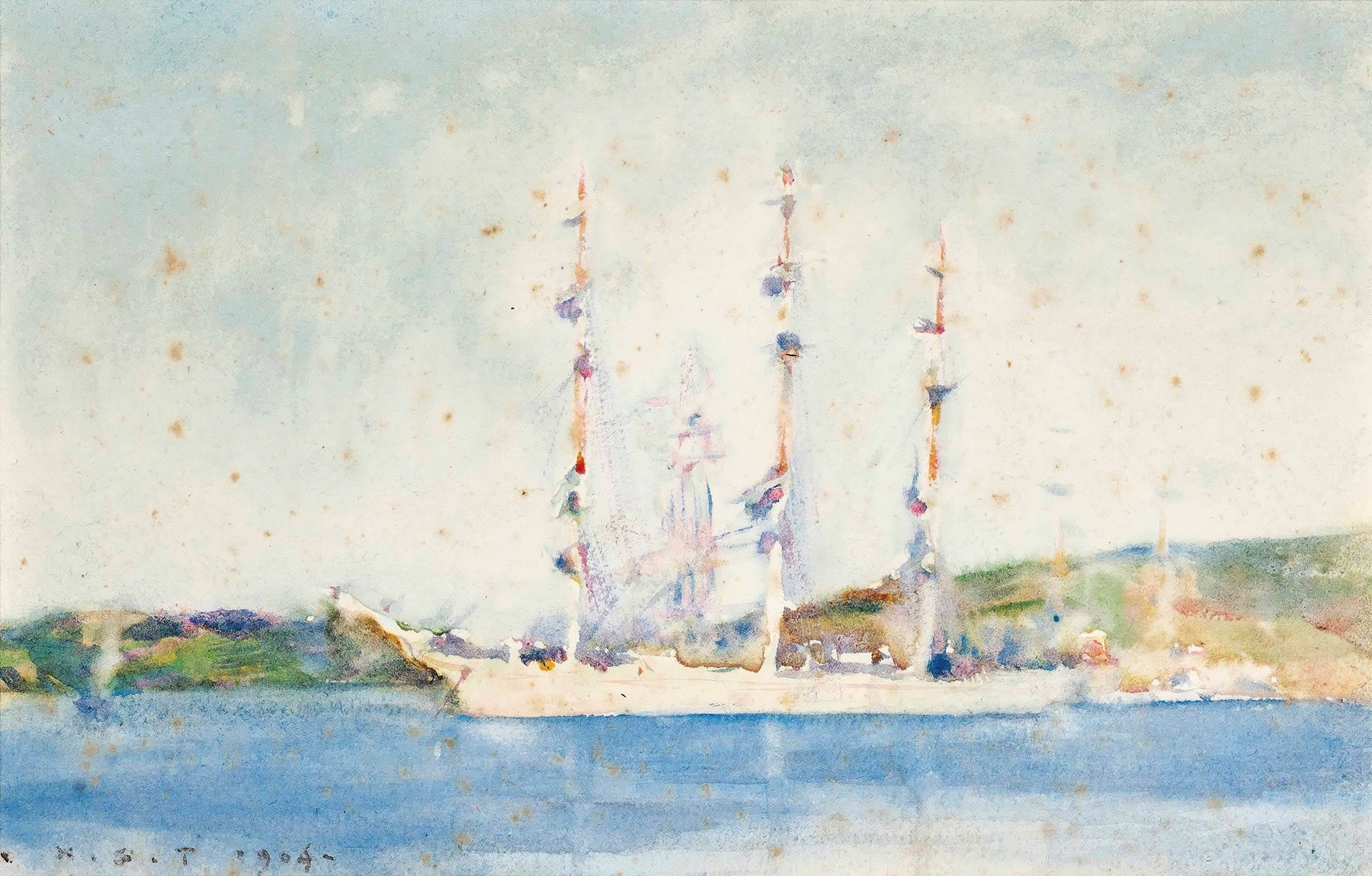
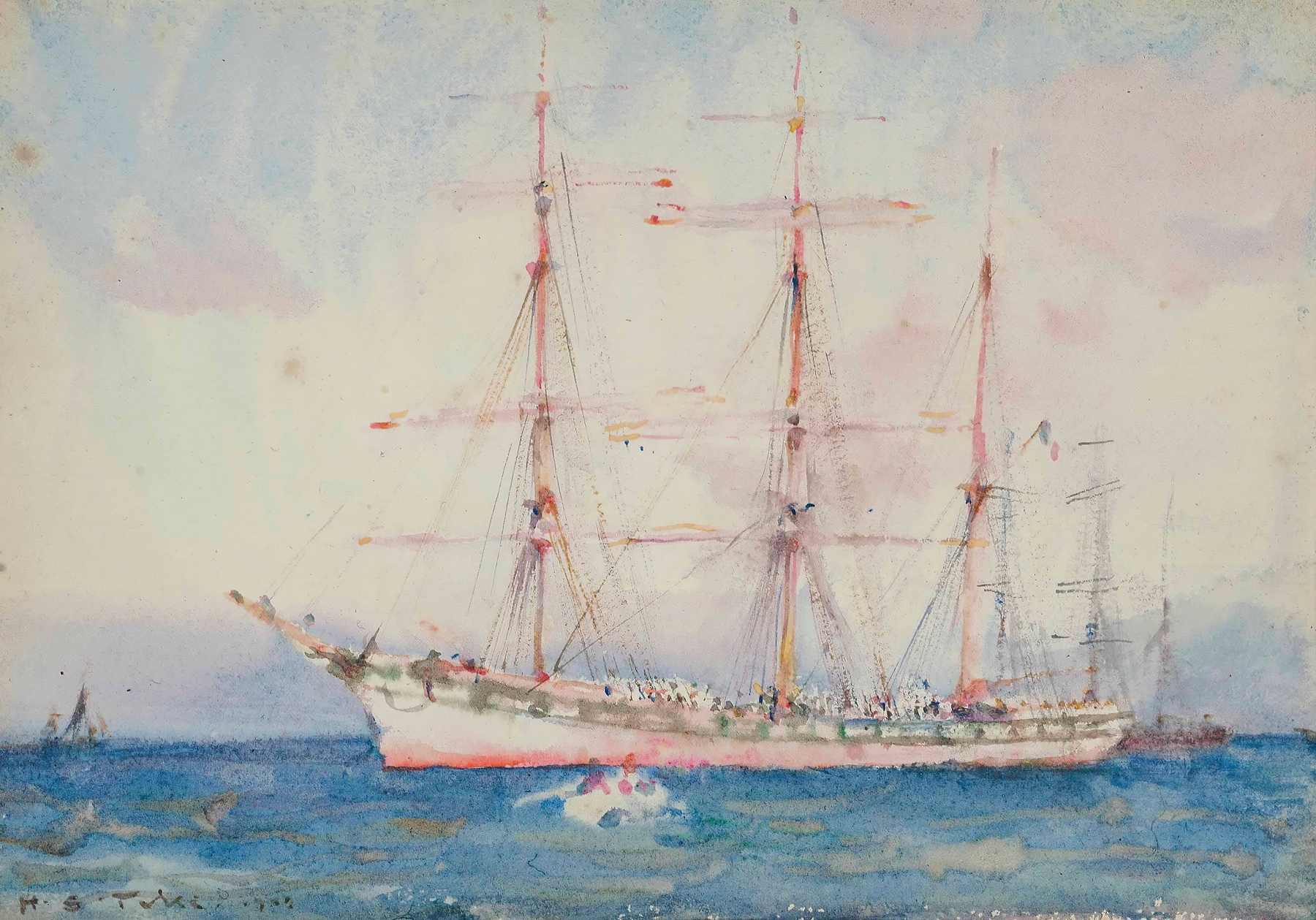
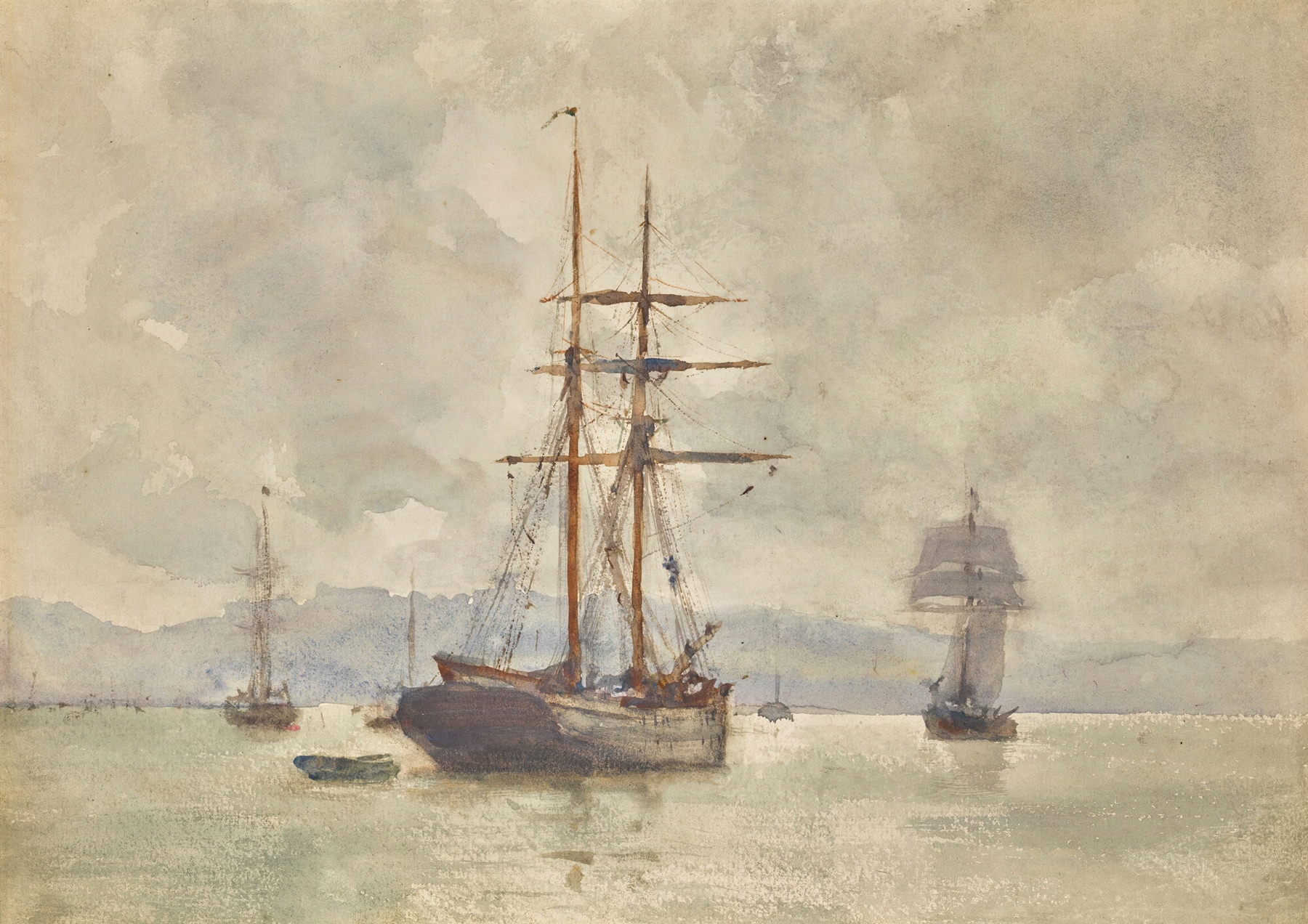
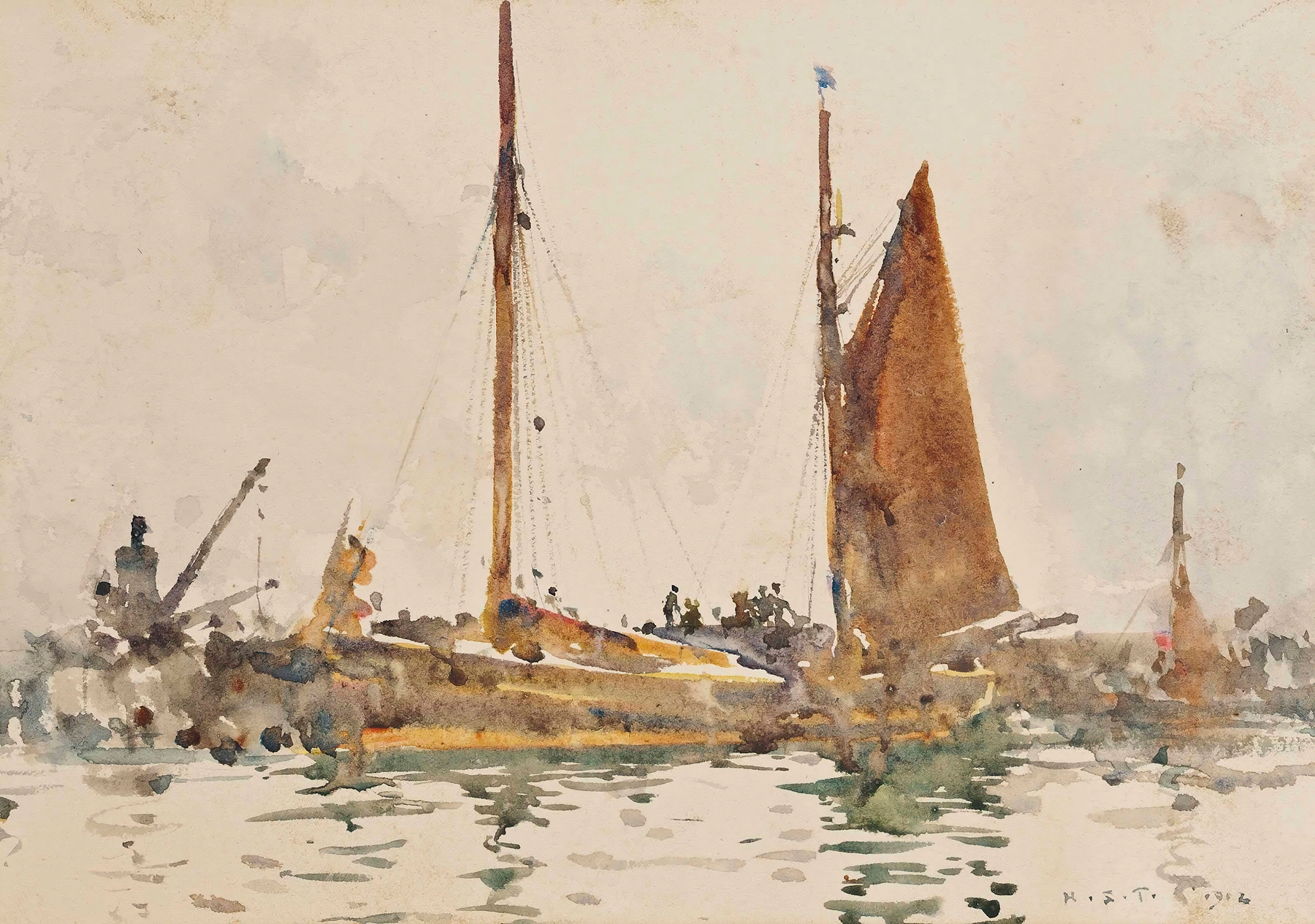
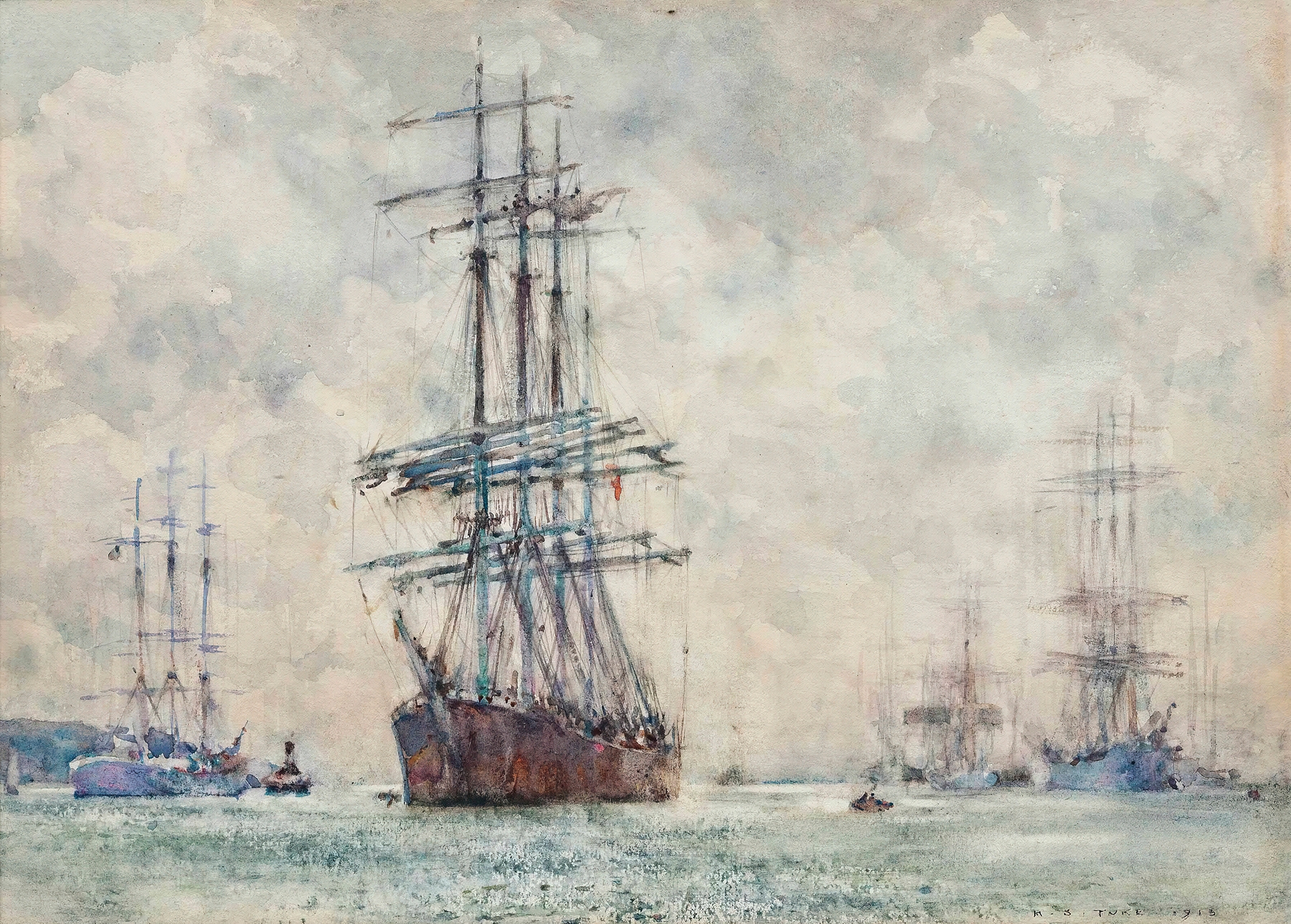
What if silence could speak through light? In Windjammers In The Carrick Roads, the interplay of sun and shadow whispers the fragility of life as it captures a fleeting moment on the water's edge. Look to the horizon, where the large sailing ships, the windjammers, stand proud against a backdrop of soft blues and whites. The rich, sunlit tones of the water reflect the sky’s vibrancy, creating a serene, almost hypnotic atmosphere.
Notice how the delicate brushstrokes lend movement to the sails, imbuing the scene with a sense of urgency that belies the calm. The sharp contrast between the vivid colors of the boats and the muted hues of the distant land emphasizes the isolation of this maritime world. Beneath the surface of this idyllic scene lies a poignant reflection on mortality. The elegantly positioned vessels symbolize both adventure and the passage of time, hinting at the transient nature of life itself.
The seemingly tranquil waters, imbued with a sense of foreboding, remind us of the inevitability of change, while the distant shores evoke longing — a contrast between the quest for freedom and the pull of home. Henry Scott Tuke painted this piece in 1913 during a period of personal reflection and artistic maturity. Working in Newlyn, Cornwall, Tuke found inspiration amidst the beauty of the coastal landscape, as he navigated through the evolving art world. At this time, the tension between tradition and modernity shaped his approach, as he sought to capture the essence of life at sea while grappling with the inevitable passage of time.