Ships Moored Near King Harry Ferry, On The River Fal — History & Analysis
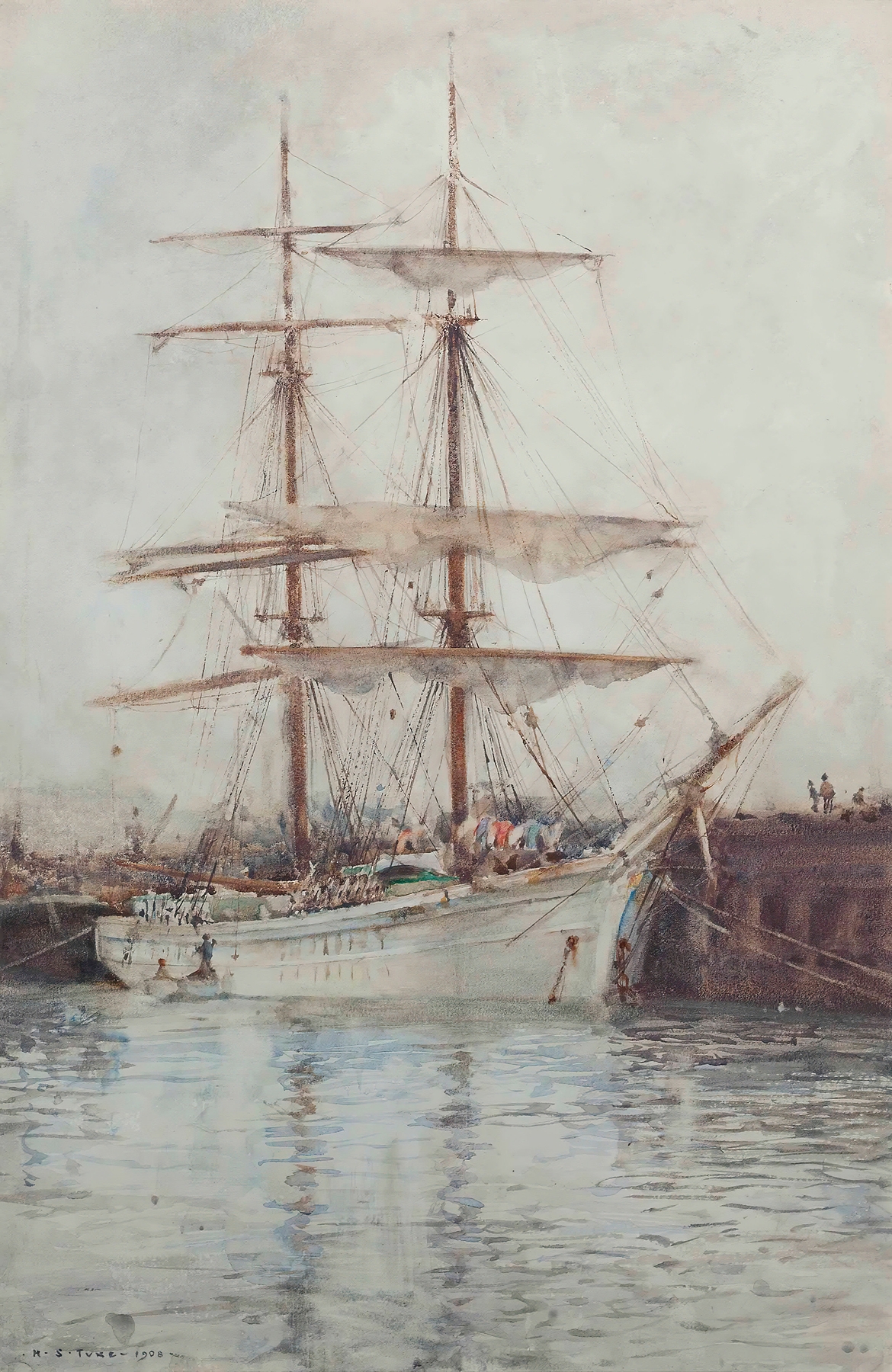
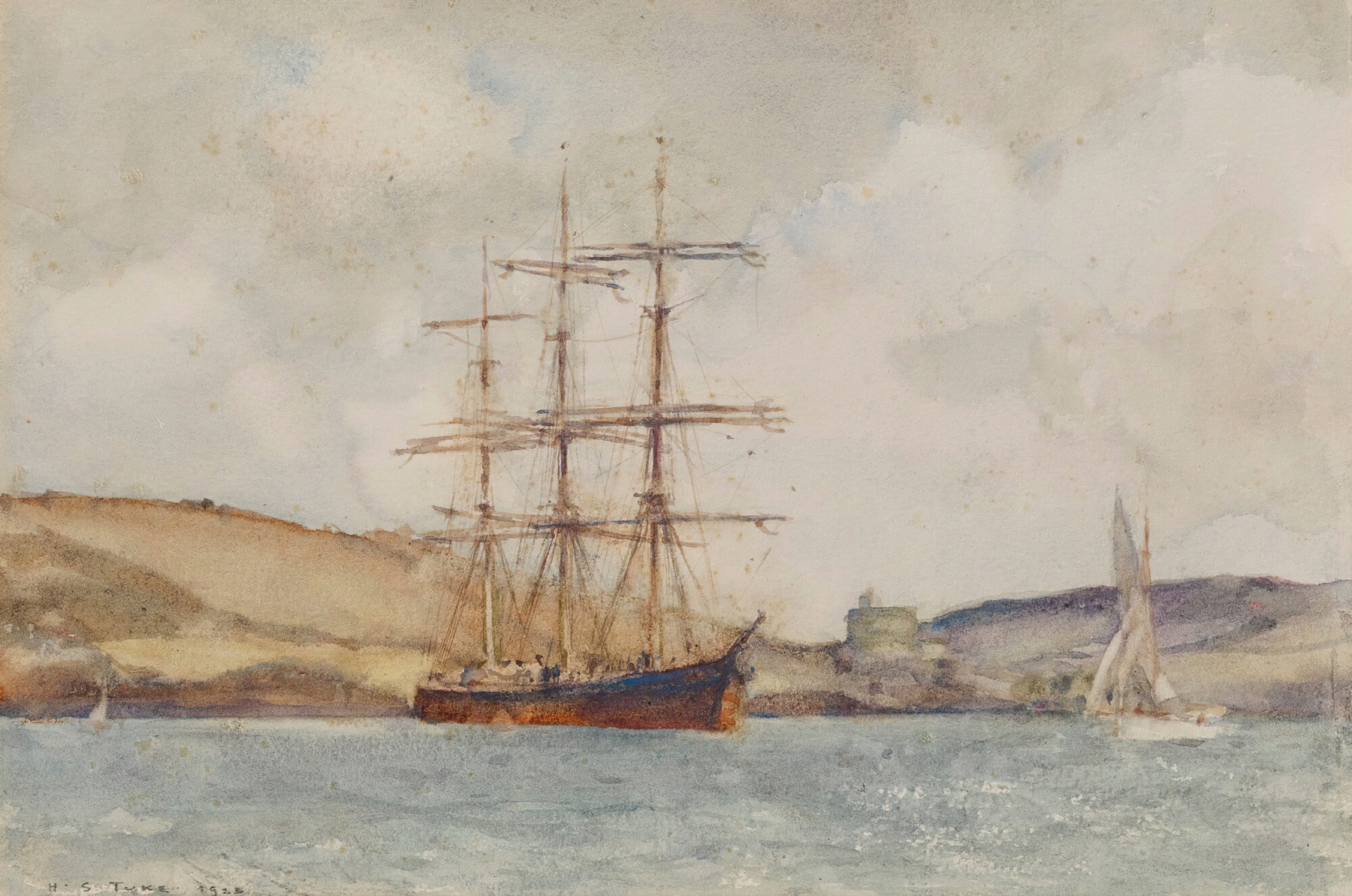
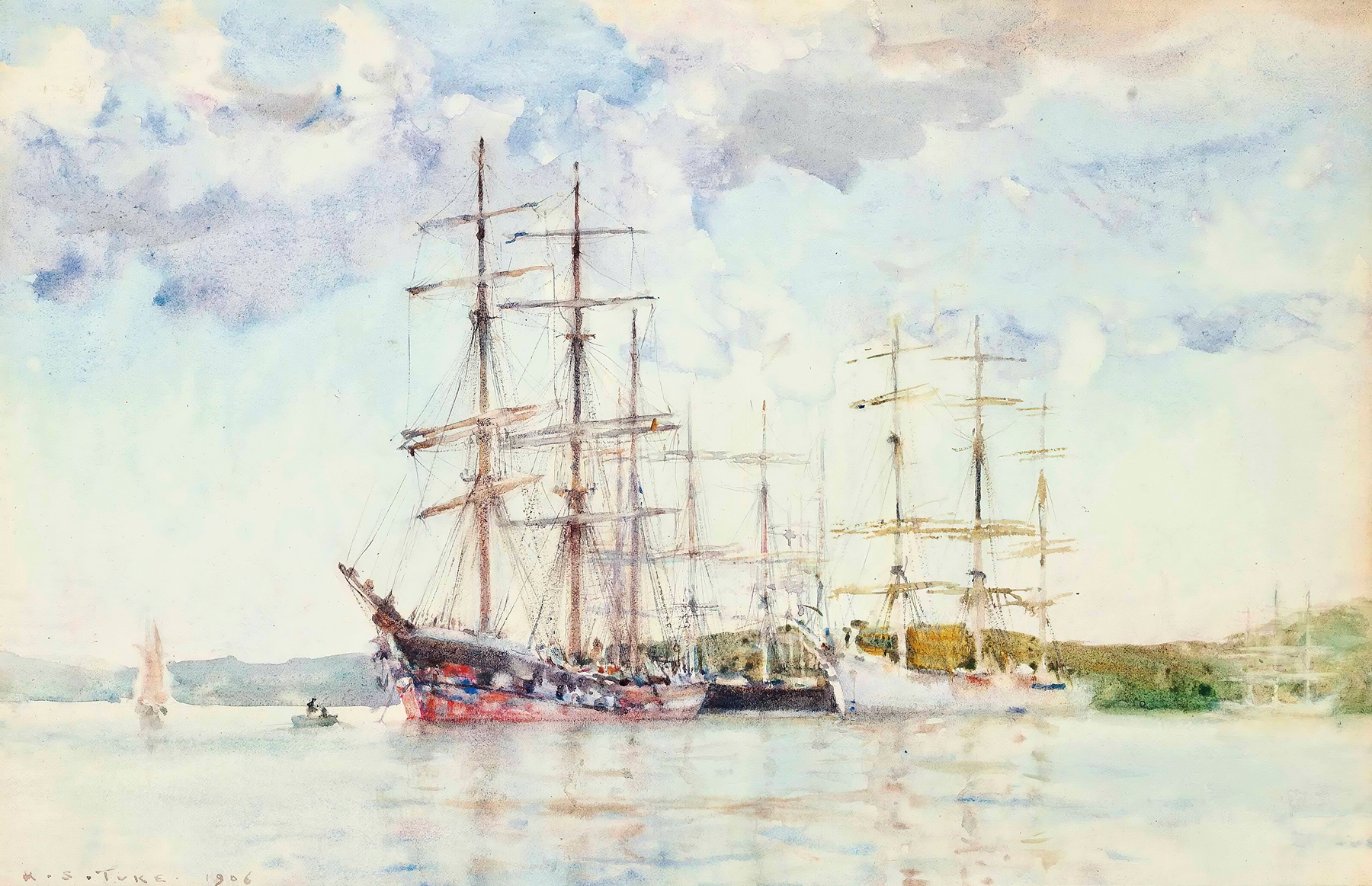
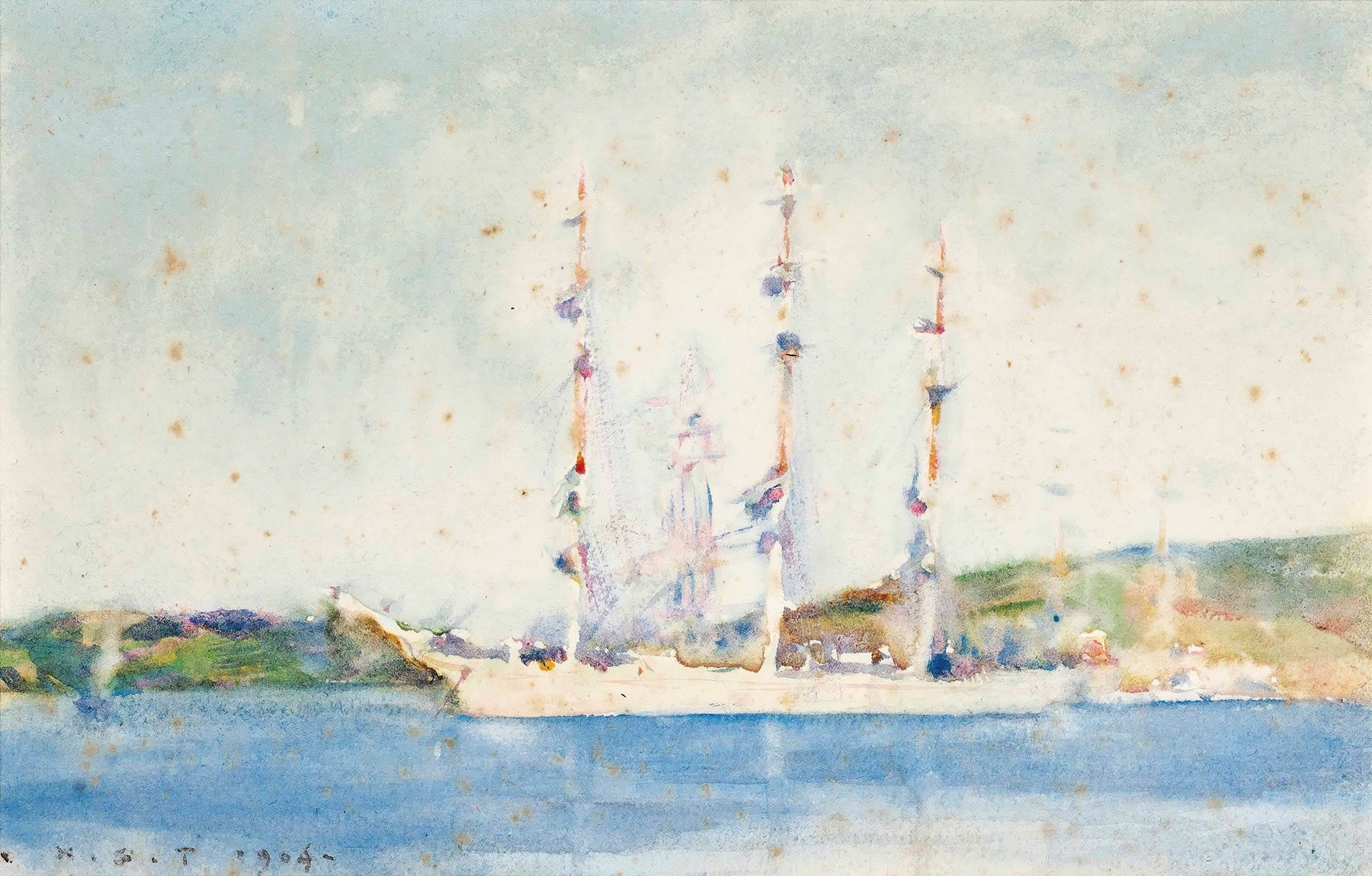
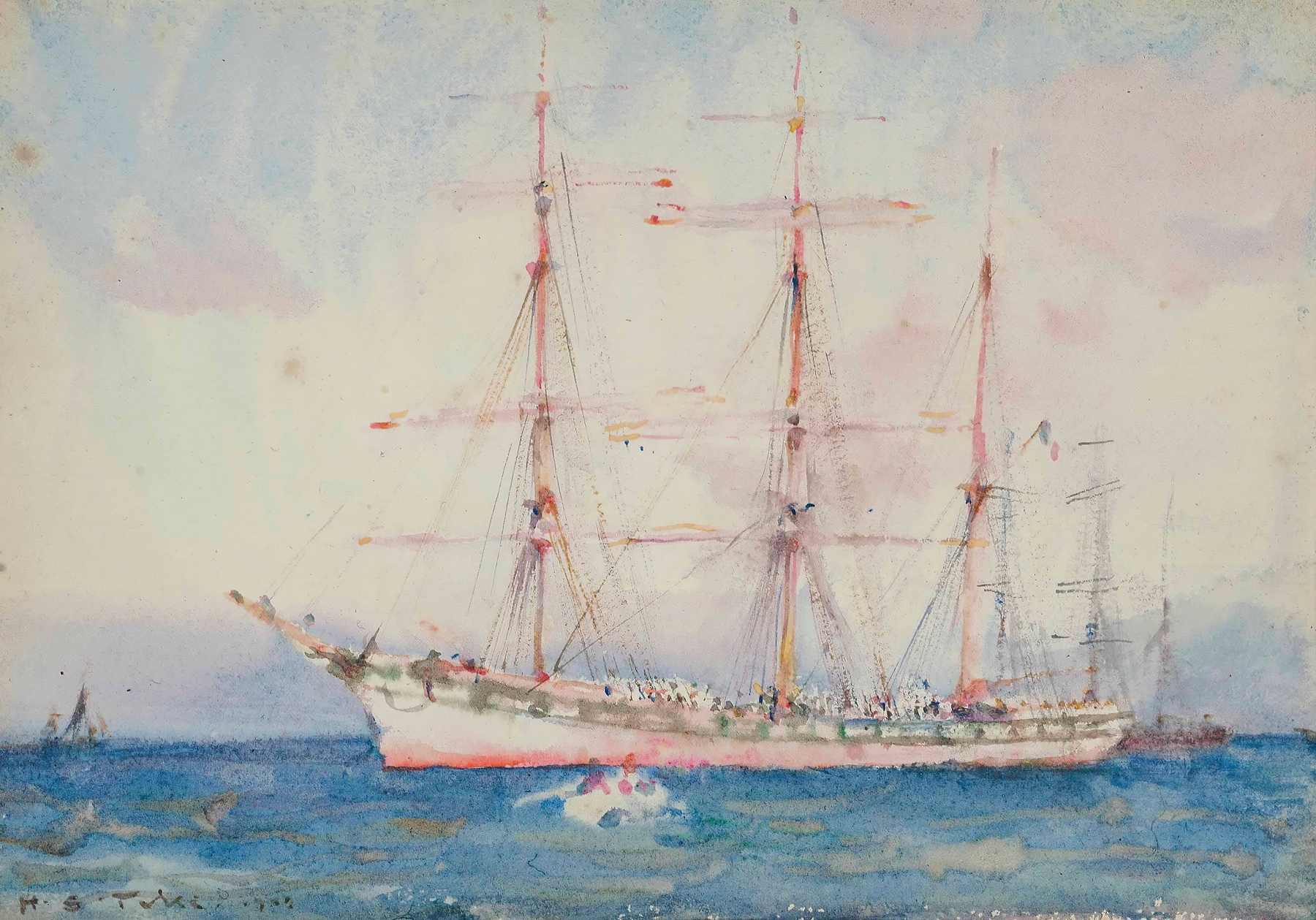
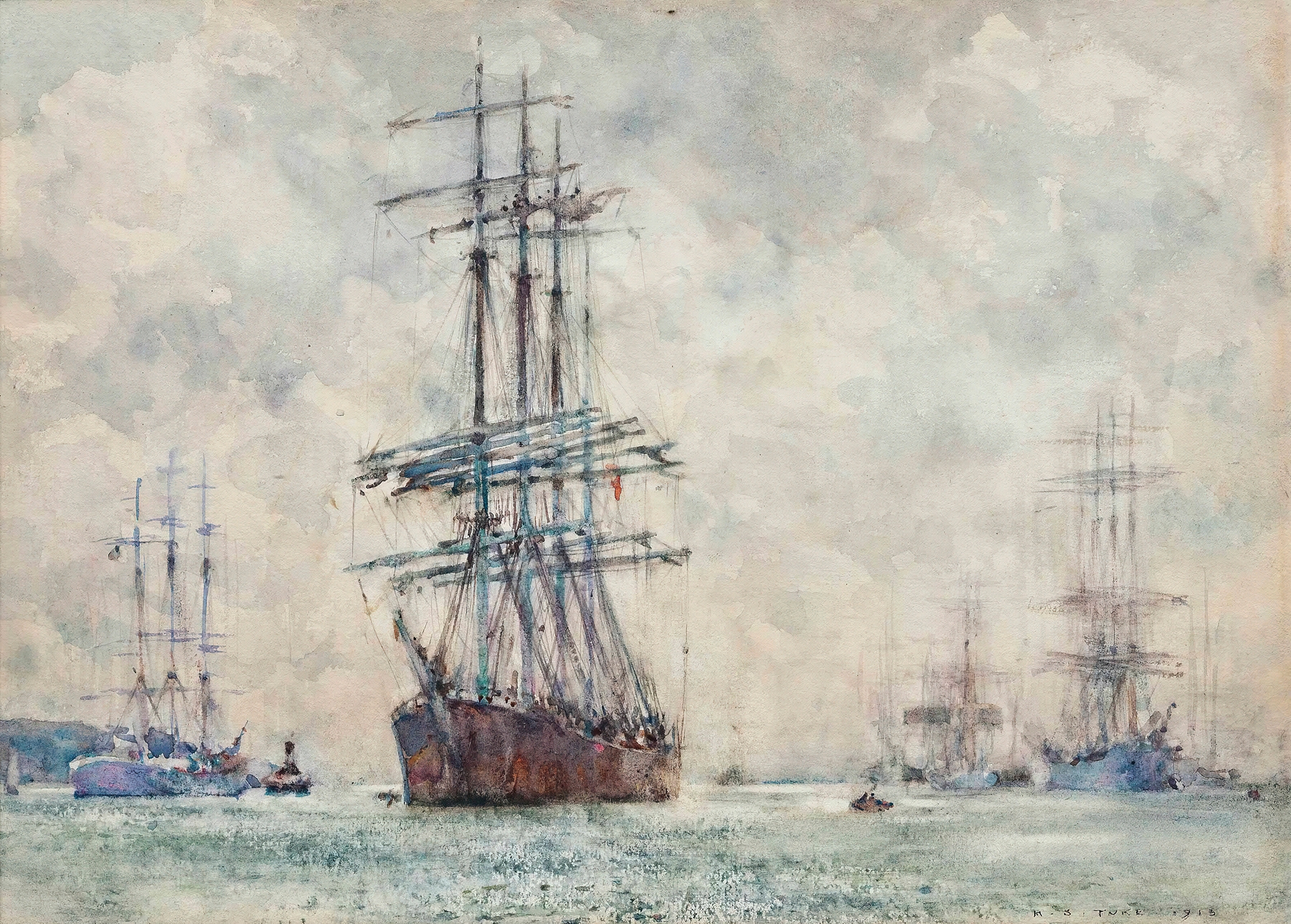
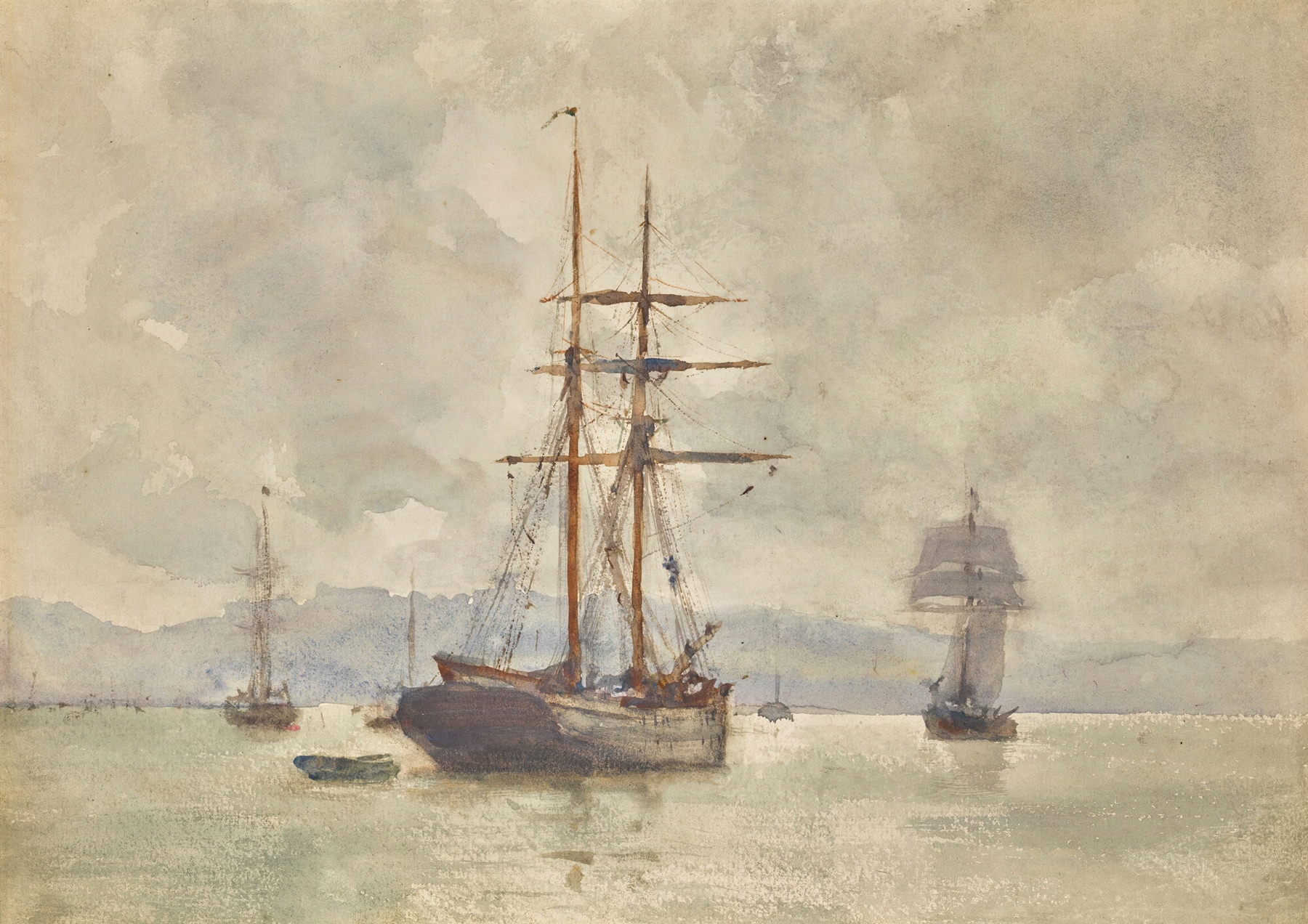
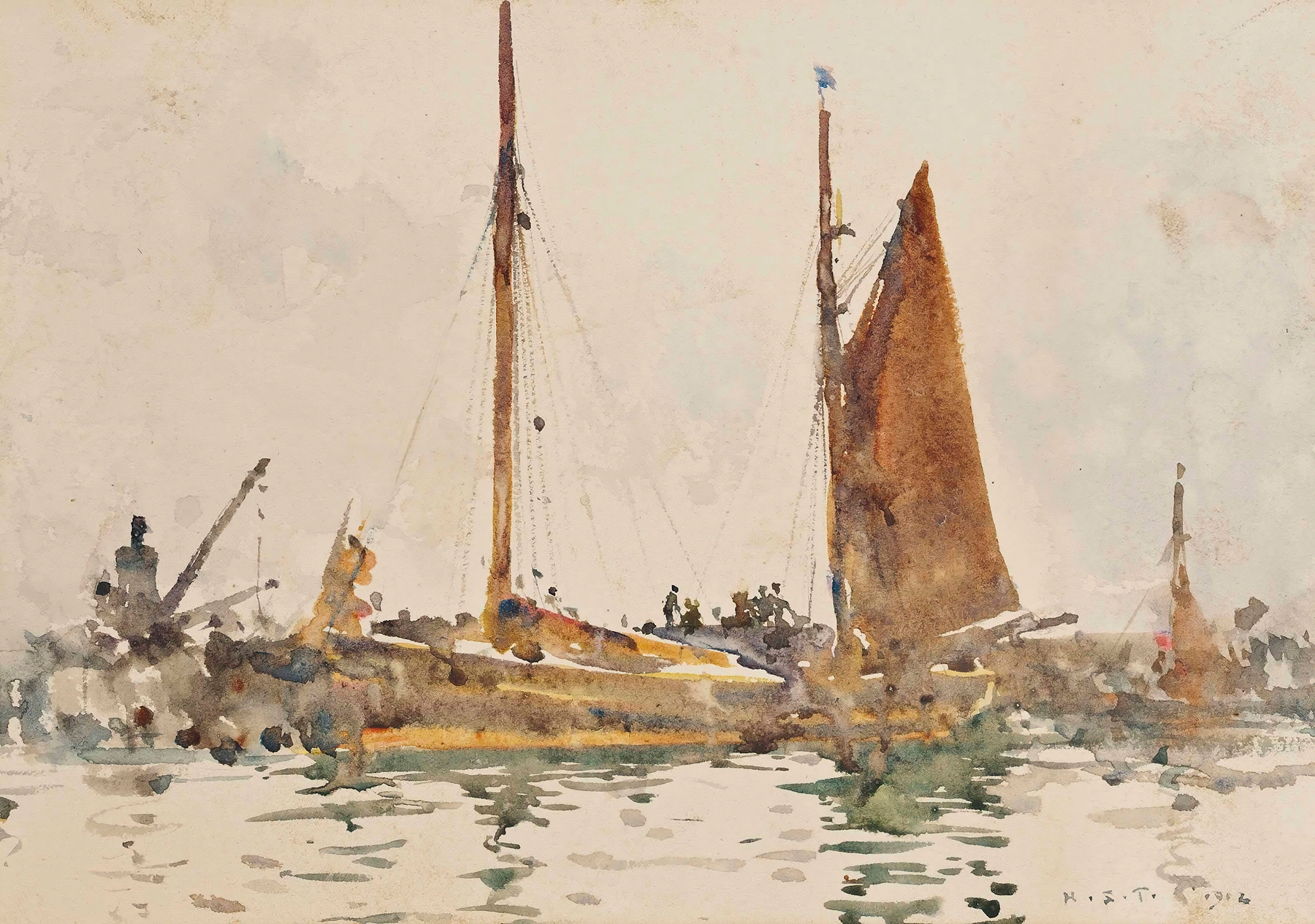
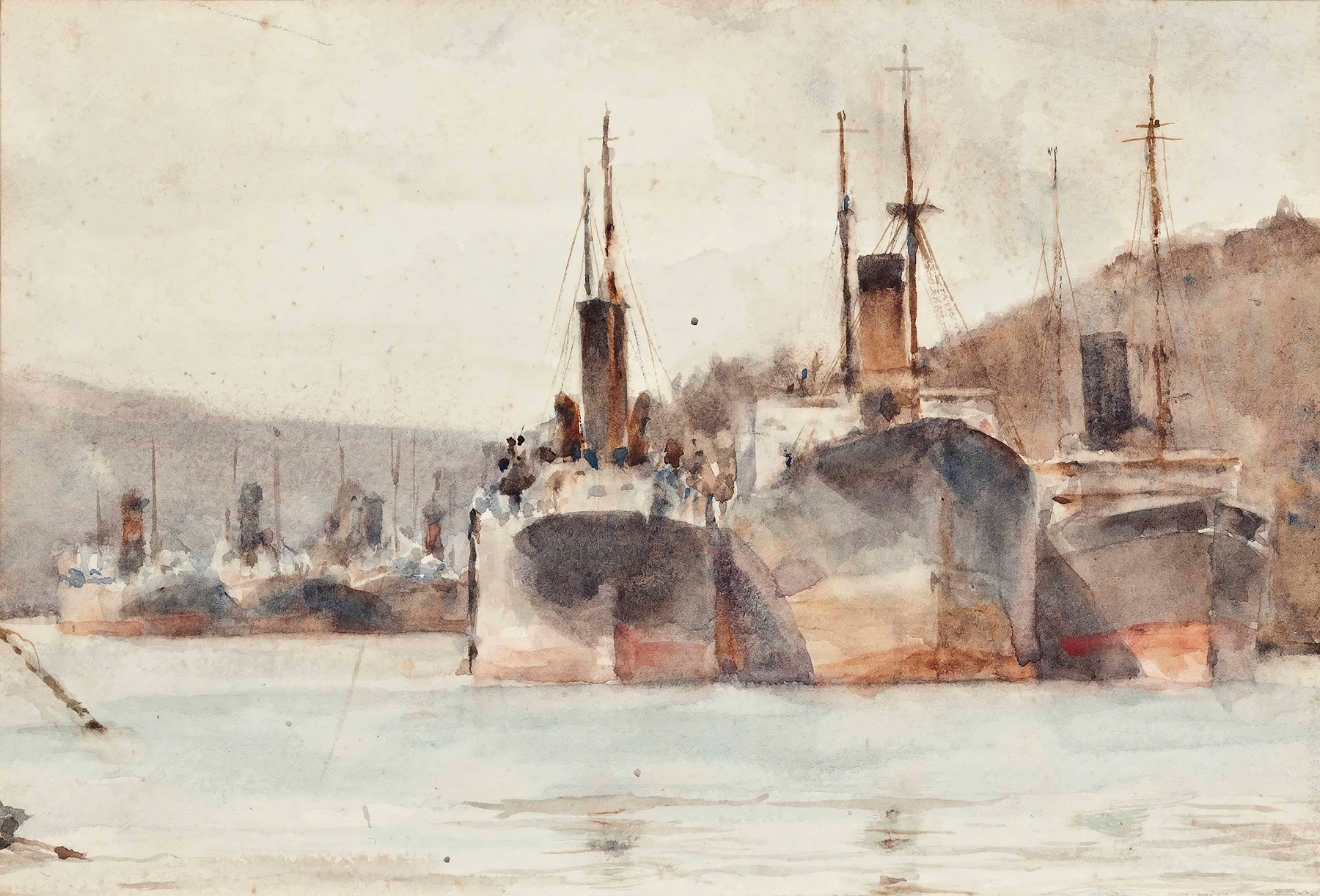
Who listens when art speaks of silence? In Ships Moored Near King Harry Ferry, On The River Fal, tranquil waters embrace a world unburdened by sound, inviting reflection and contemplation. The composition offers a momentary pause, a serene invitation to immerse oneself in the stillness of nature's embrace. Look closely at the left side of the canvas, where the gentle curves of the shoreline cradle the moored ships. Notice how the sunlight dances on the water's surface, creating a shimmering path that draws your gaze across the scene.
Soft, muted colors wash over the boats and land, lending an ethereal quality to the landscape; the artist’s delicate brushstrokes masterfully capture the fluidity of water and sky. The harmonious balance between the vessels and their surroundings creates a sense of unity, one that emphasizes the beauty of stillness. Within this serene tableau lies a deeper commentary on the relationship between humanity and nature. The ships, tethered yet free, symbolize both the journey of life and the moments of stillness that define it. The subtle interplay between light and shadow evokes a sense of anticipation—what stories lie within these dormant vessels?
This artwork posits that silence, too, speaks volumes; it carries the weight of memories and dreams untold, bridging the gap between the seen and the unseen. Henry Scott Tuke painted this work during a time of profound change in the art world, primarily working in the early 20th century along the scenic coast of Cornwall. His focus on light, color, and the interplay of nature marked a significant departure from the academic styles of his predecessors. As he explored the themes of leisure and the beauty of the coastal landscape, Tuke's art captured not only the essence of his surroundings but also the silent echoes of those who inhabited them.