Bathers, Annisquam — History & Analysis
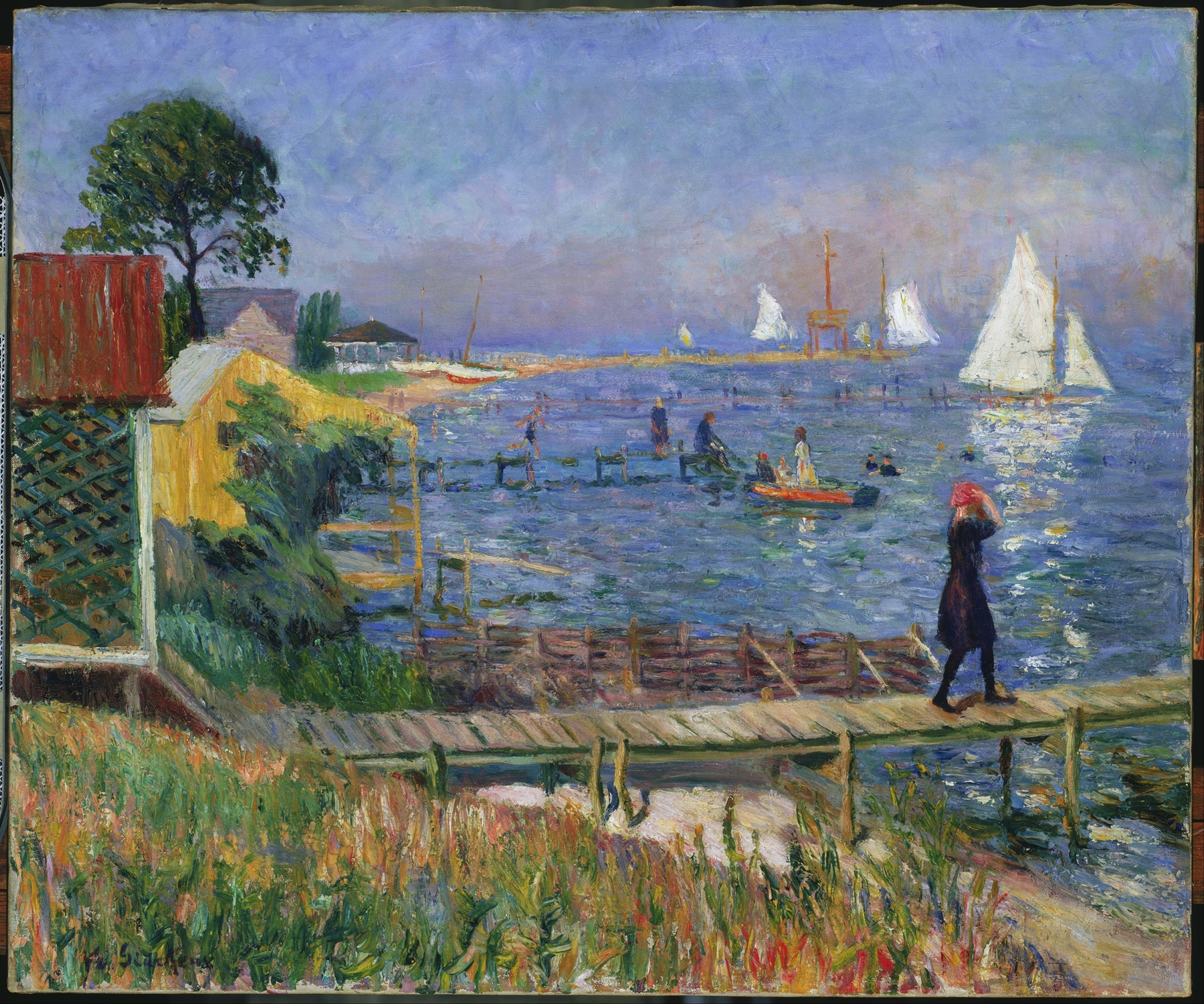
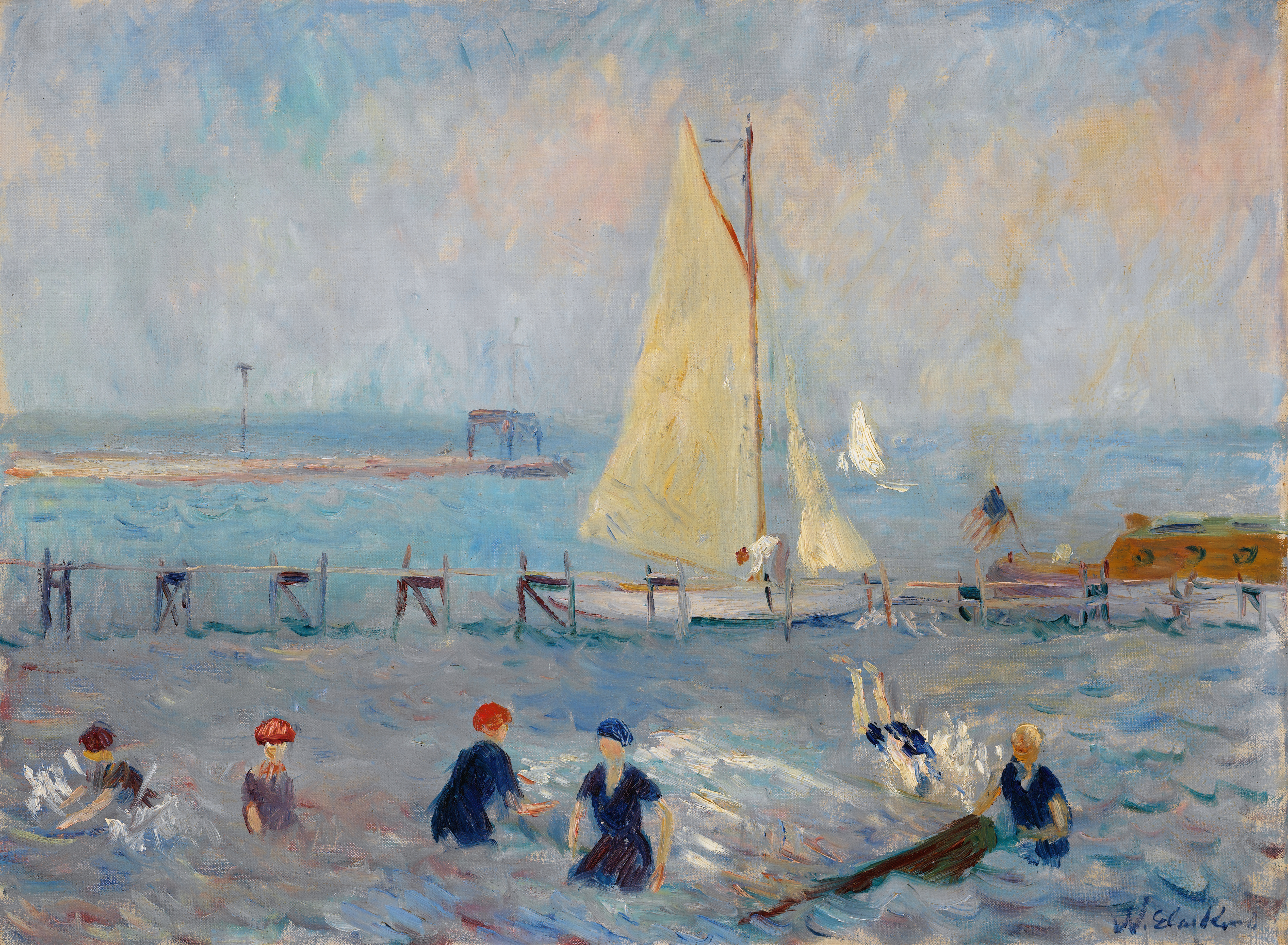
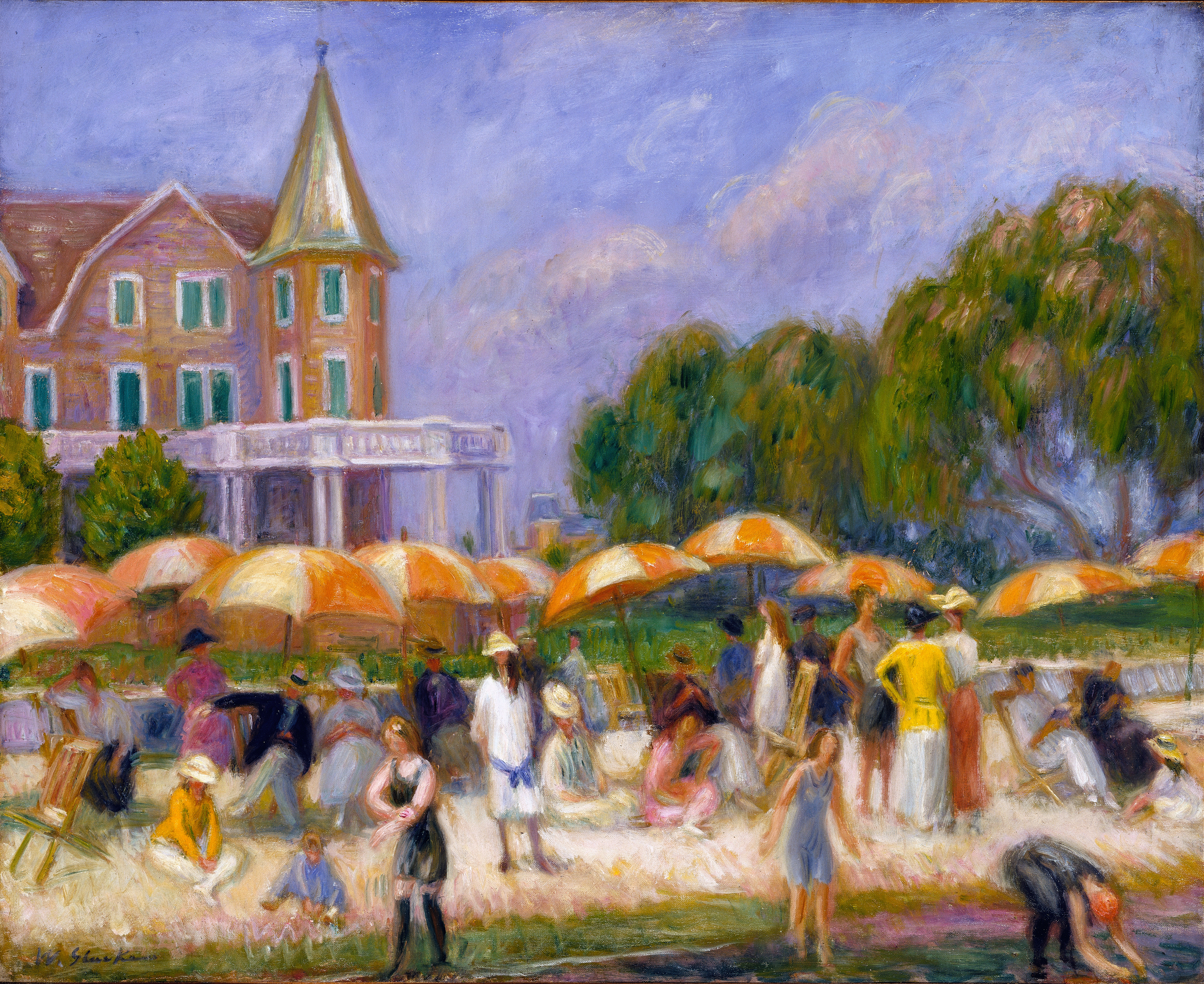
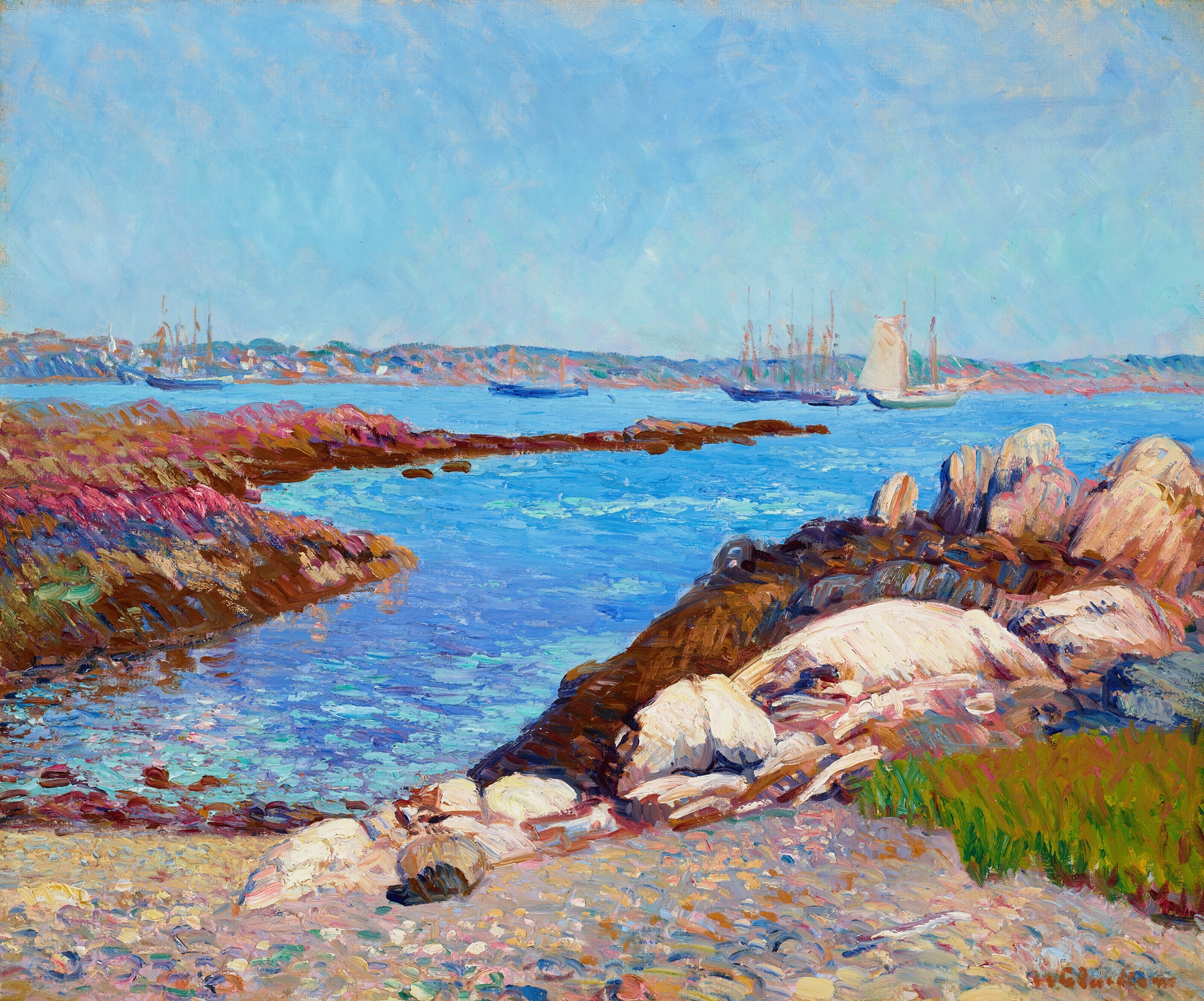
“Under the brush, chaos becomes grace.” The act of creation transforms the mundane into something transcendent, capturing fleeting moments in time and nature. Look to the center of the canvas where figures blend seamlessly into a sun-drenched landscape, their forms undulating like waves on the water's surface. The warm palette of yellows and soft greens invites the viewer to bask in the serene atmosphere, while dappled sunlight flickers across the scene. Notice how the artist’s loose brushwork evokes movement and joy, as the bathers’ bodies intertwine with the environment, suggesting an intimate connection between humanity and nature.
Hidden within the exuberance of this work are subtler emotional currents. The figures, both individual and collective, express a moment of liberation, celebrating the simple pleasure of shared experiences by the water’s edge. Contrast emerges in the juxtaposition of the vibrancy of life against the stillness of the surrounding landscape, highlighting the tension between chaos and calm. Here, the bathers become symbols of freedom, yet they remain bound to their serene environment, illustrating the delicate balance of nature and society.
In 1919, Glackens painted this piece during a period of artistic transformation, having already established his reputation within the Ashcan School. After World War I, when many artists sought to redefine their identities and explore new subjects, he shifted his focus toward more vibrant, plein air studies that captured the essence of leisure and community life. This work stands as a testament to both his evolution and the art world’s embrace of a more impressionistic approach.