Bathing Place (Badeanstalt) — History & Analysis
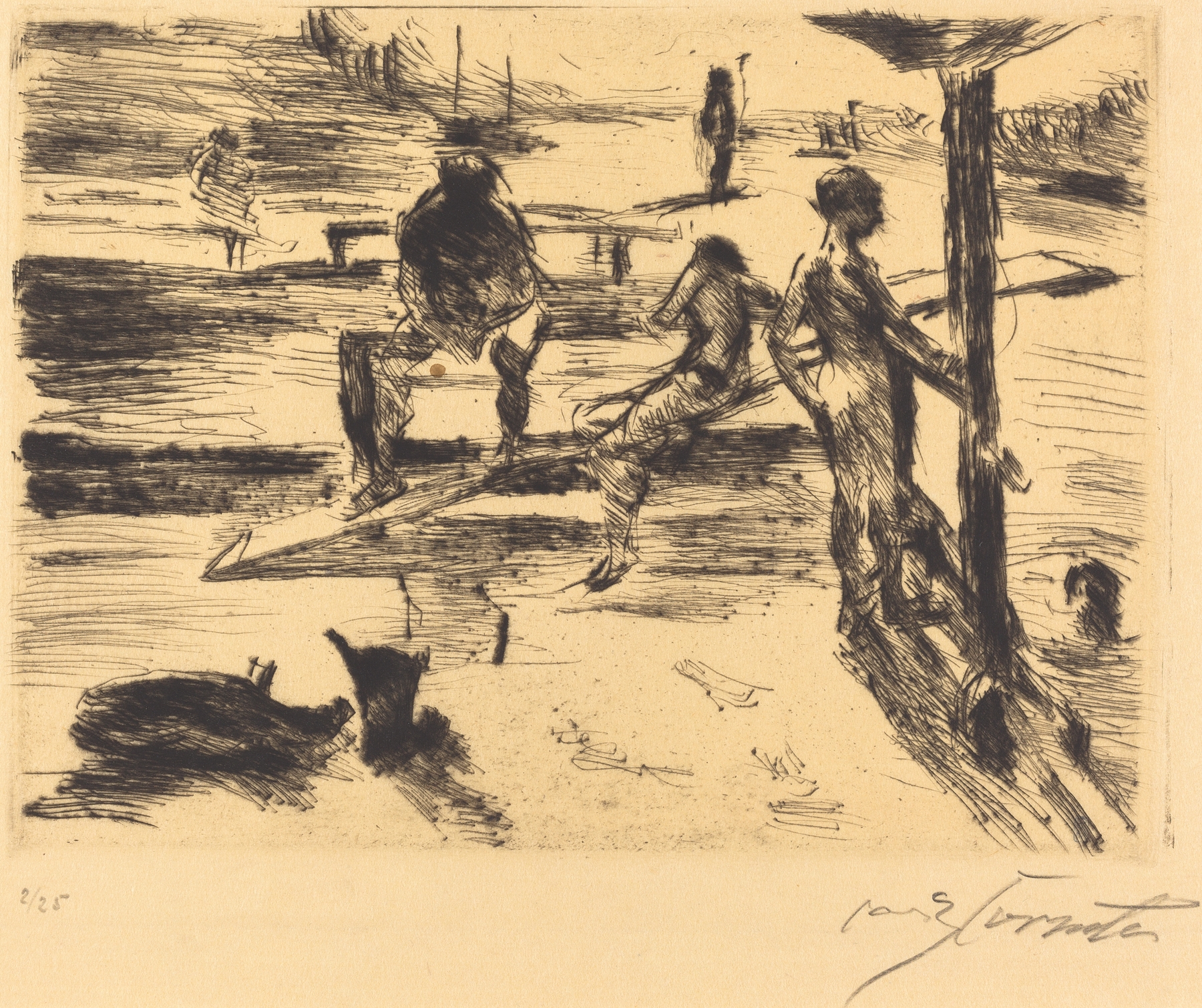
Did the painter know this moment would outlive them? In the midst of a tumultuous post-war era, Bathing Place captures the delicate awakening of human intimacy and connection in an uncertain world. Look to the left at the figures emerging from the water, their forms softened by rippling reflections. Notice how Corinth masterfully employs a palette of gentle blues and warm skin tones, creating a harmonious balance between the coolness of the water and the warmth of sunlit flesh. The brushwork is vigorous yet tender, suggesting movement and vitality, as if the figures are not merely resting but embracing life itself.
The light filters through the foliage above, casting dappled patterns that seem to dance across the scene, inviting the viewer to step into this serene moment. Beneath the surface, there lies a profound contrast between the tranquility of the bathing place and the chaotic backdrop of early 20th-century Europe. Each figure represents a reclaiming of innocence and joy, signaling resilience in the face of societal upheaval. The juxtaposition of nudity against the natural environment evokes vulnerability while simultaneously celebrating liberation and acceptance.
The composition invites contemplation about the interplay of humanity and nature, igniting a sense of awakening that transcends mere existence. In 1919, Lovis Corinth painted Bathing Place during a time of personal and artistic renewal after surviving a stroke that left him partially paralyzed. Residing in Germany, he was witnessing a period of profound change both politically and culturally, as art movements began to shift dramatically in response to the recent war. This work stands as a testament to both his resilience and the evolving human experience of beauty amidst chaos.