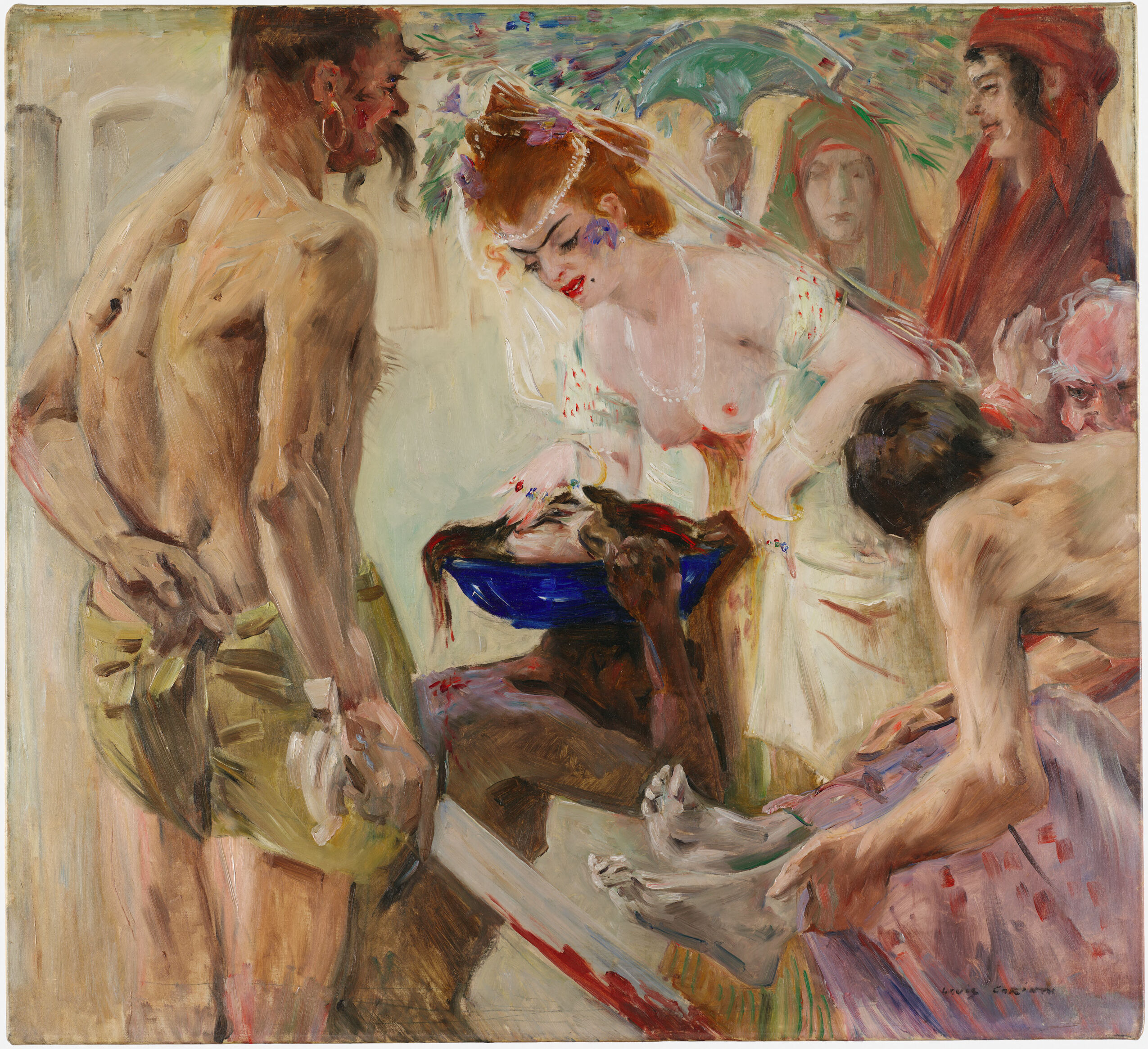
Where does light end, and longing begin? This question resonates in the depths of *Salomé*, capturing an essence of serene yet profound yearning. Look to the left, where the delicate play of light bathes Salomé’s pale skin, highlighting her ethereal beauty. The warm tones of the background contrast sharply with her cool coloring, creating a sense of detachment. Notice how the soft brushstrokes evoke a sense of movement, merging her figure seamlessly with the flowing drapery that envelops her. Each fold and cascade seems to whisper secrets, drawing the viewer into a tender yet unsettling intimacy with her presence. Beneath the surface, a narrative unfolds; the serene expression on Salomé's face belies the tumultuous emotions just out of sight. The tension between her calm demeanor and the vivid hues surrounding her creates an atmosphere thick with anticipation. This duality not only reflects her complexities but also invites contemplation about the themes of desire and consequence that lie within the biblical tale she embodies. In 1899, Lovis Corinth painted this poignant work while based in Berlin, an era marked by his exploration of expressionism. He was grappling with his own artistic identity, influenced by the shifting tides of modern art. The interplay of light and shadow in *Salomé* reflects not only his technical prowess but also a deep philosophical inquiry into feminine power and vulnerability during a time of social change in Europe.