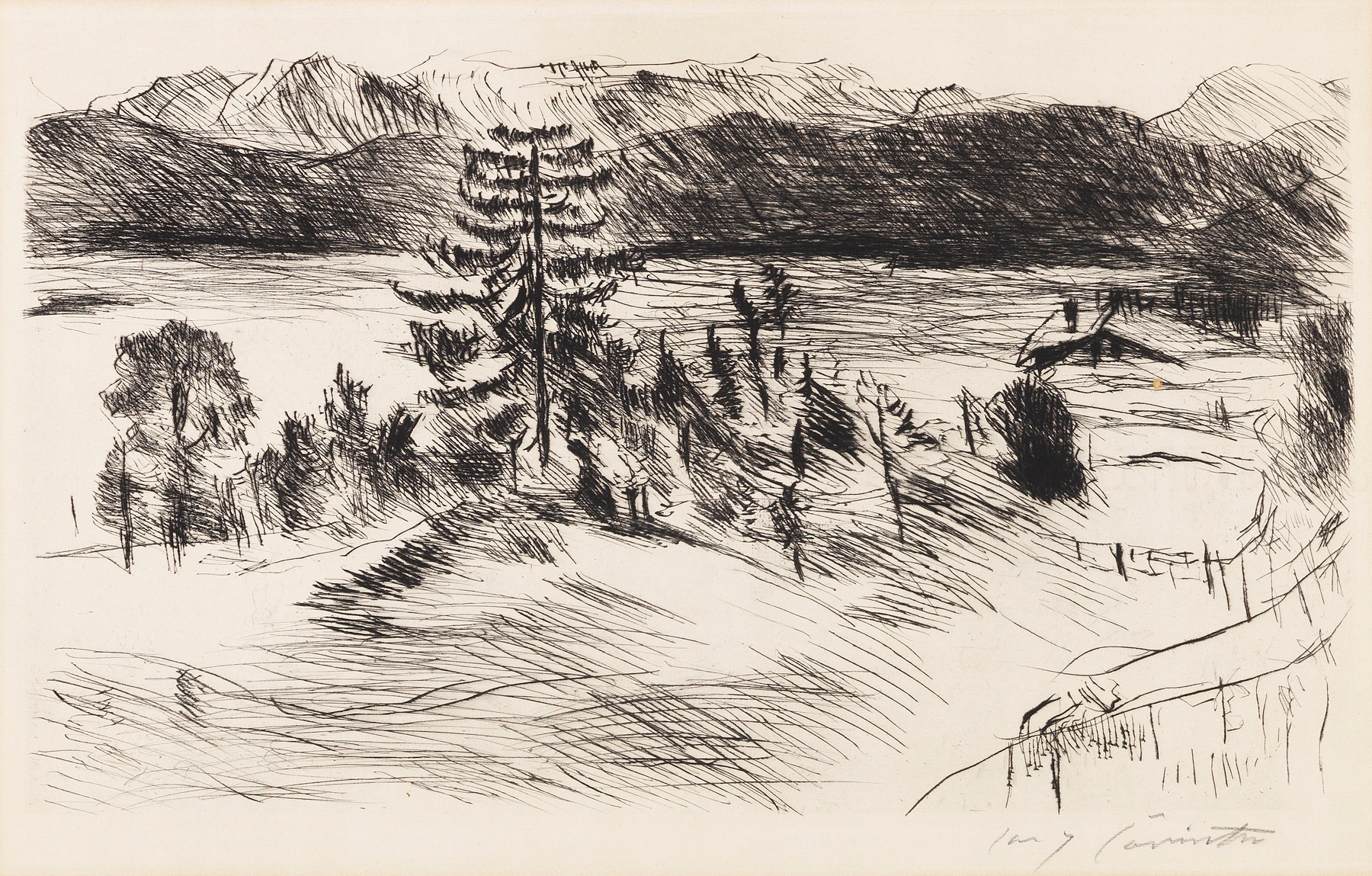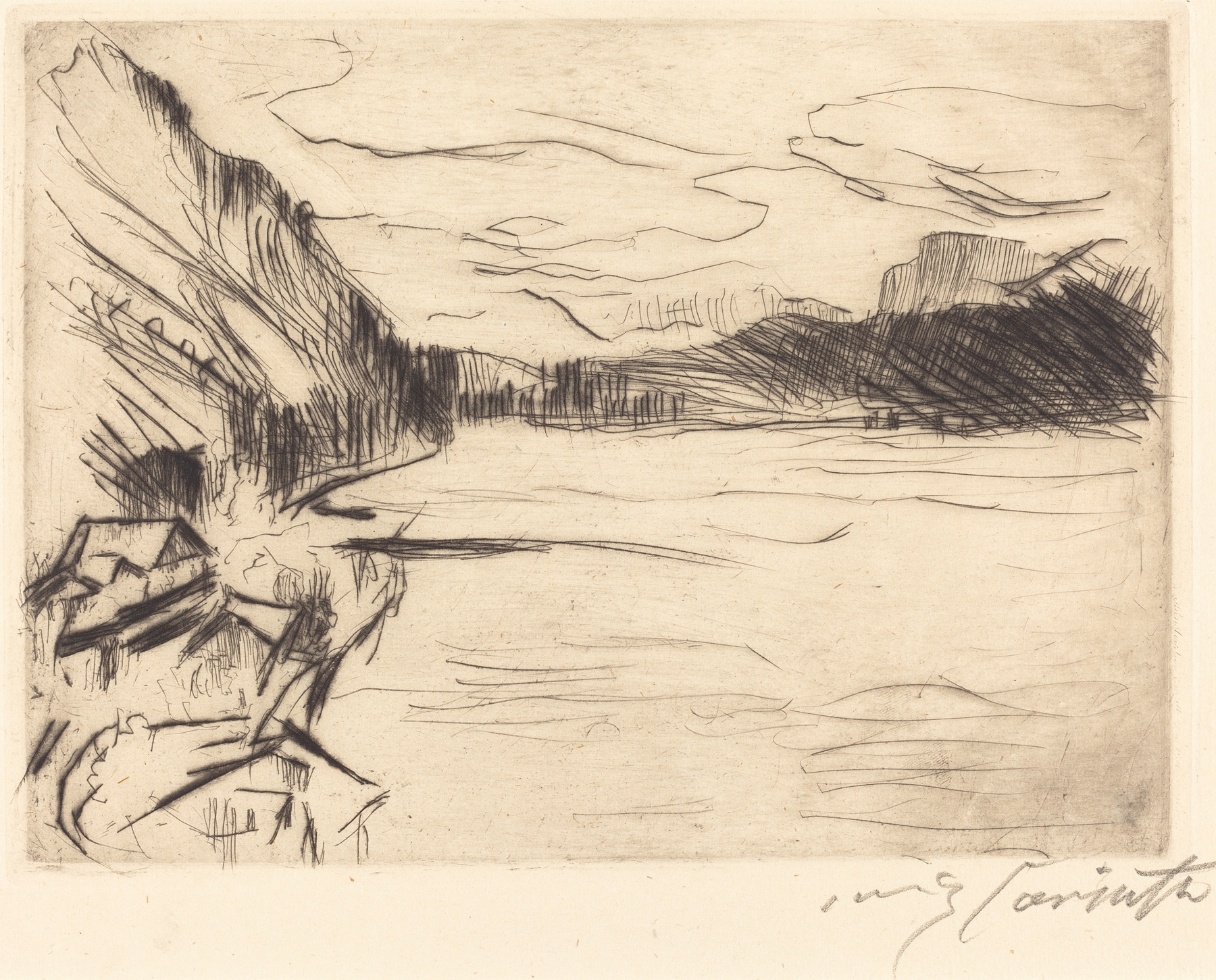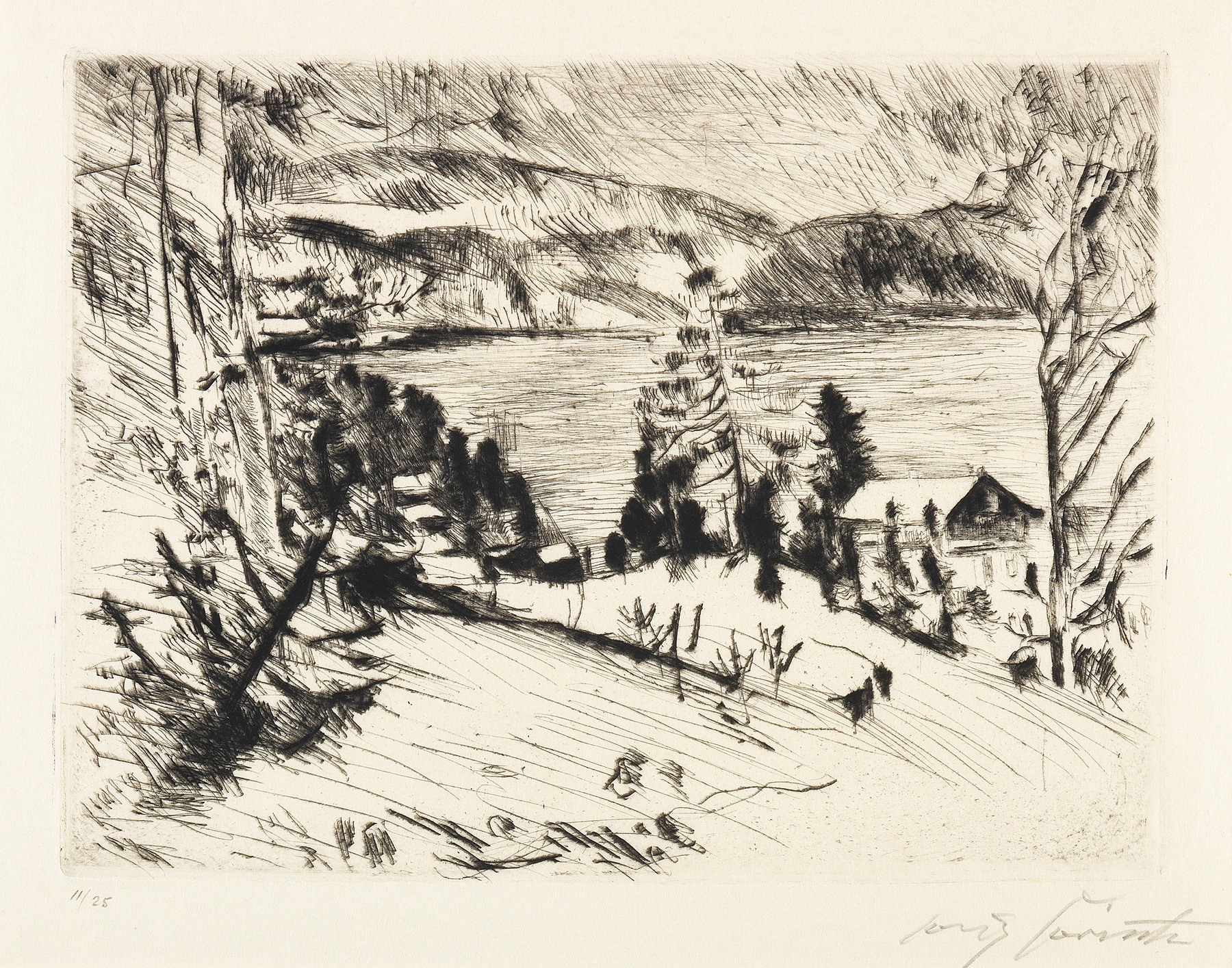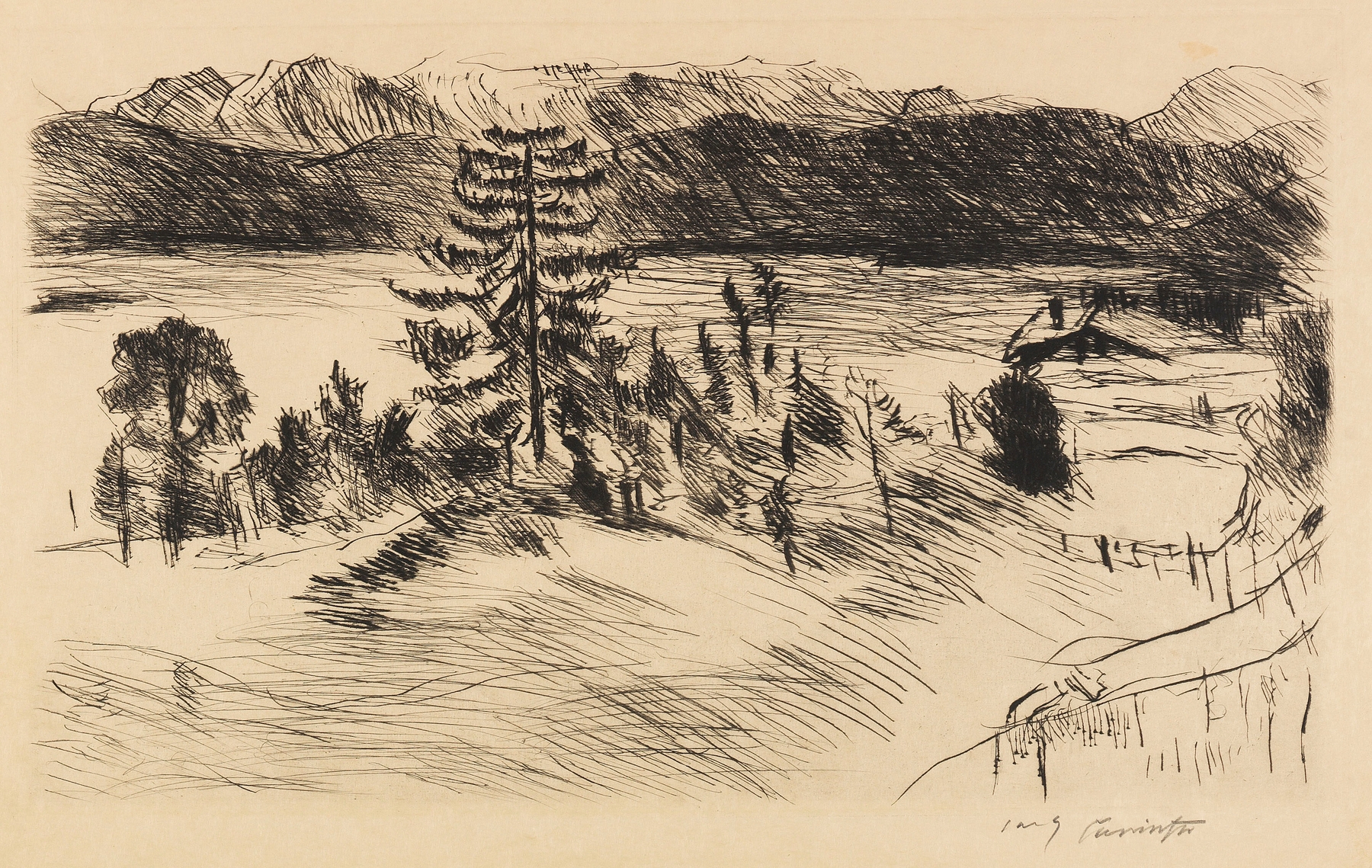
Große Walchenseelandschaft. — History & Analysis
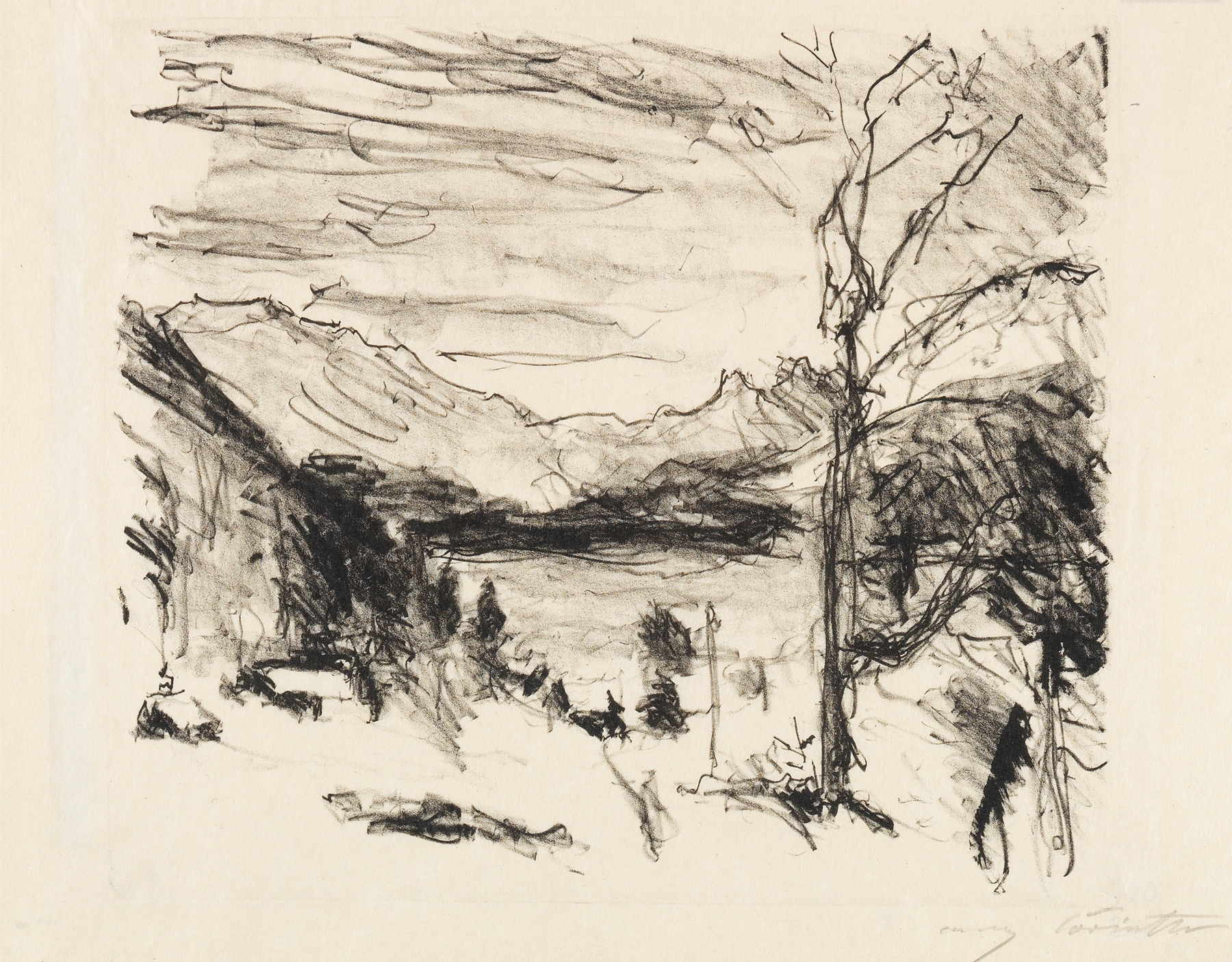
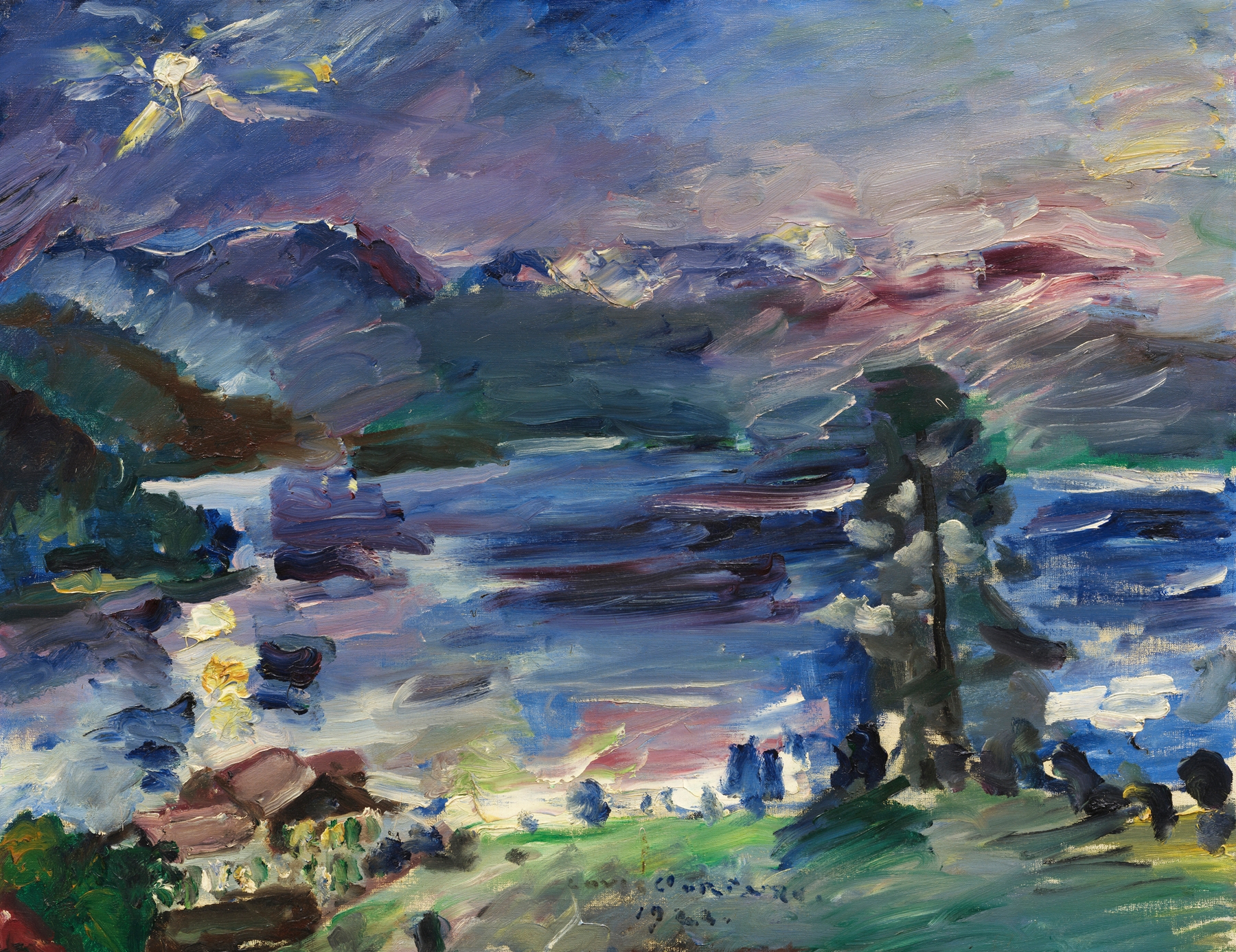
When did color learn to lie? In the hands of a master, it becomes a vessel of memory, whispering truths that evade the eye. Focus on the rich, swirling blues and greens that dominate the canvas, inviting you to lose yourself in the landscape. Notice how the trees, painted with a vigorous impasto, seem to sway gently, their forms bending towards the shimmering lake below.
The light dances across the water’s surface, rendering a vivid contrast between the tranquil depths and the chaotic brilliance of the sky, creating an almost dreamlike atmosphere. Delve deeper into the interplay between the light and shadow, where hints of orange and purple emerge, evoking a sense of nostalgia that transcends mere representation. The balance between the serene lake and the tumultuous sky reflects an emotional tension, perhaps a longing for moments gone by. Each brushstroke conveys an essence of fleeting beauty, prompting us to ponder the nature of memory itself—how it is shaped and reshaped over time.
In 1923, Lovis Corinth painted this landscape during a period of artistic maturity, grappling with the legacy of expressionism and impressionism that influenced him. He had moved from Berlin to the countryside, where he found solace amid the natural beauty of Bavaria. This work embodies not just his technical prowess but also a deeper introspection, capturing a moment in time that resonates with the turbulence of the era while remaining timeless in its evocative power.