On Walchen Lake (Am Walchensee) — History & Analysis
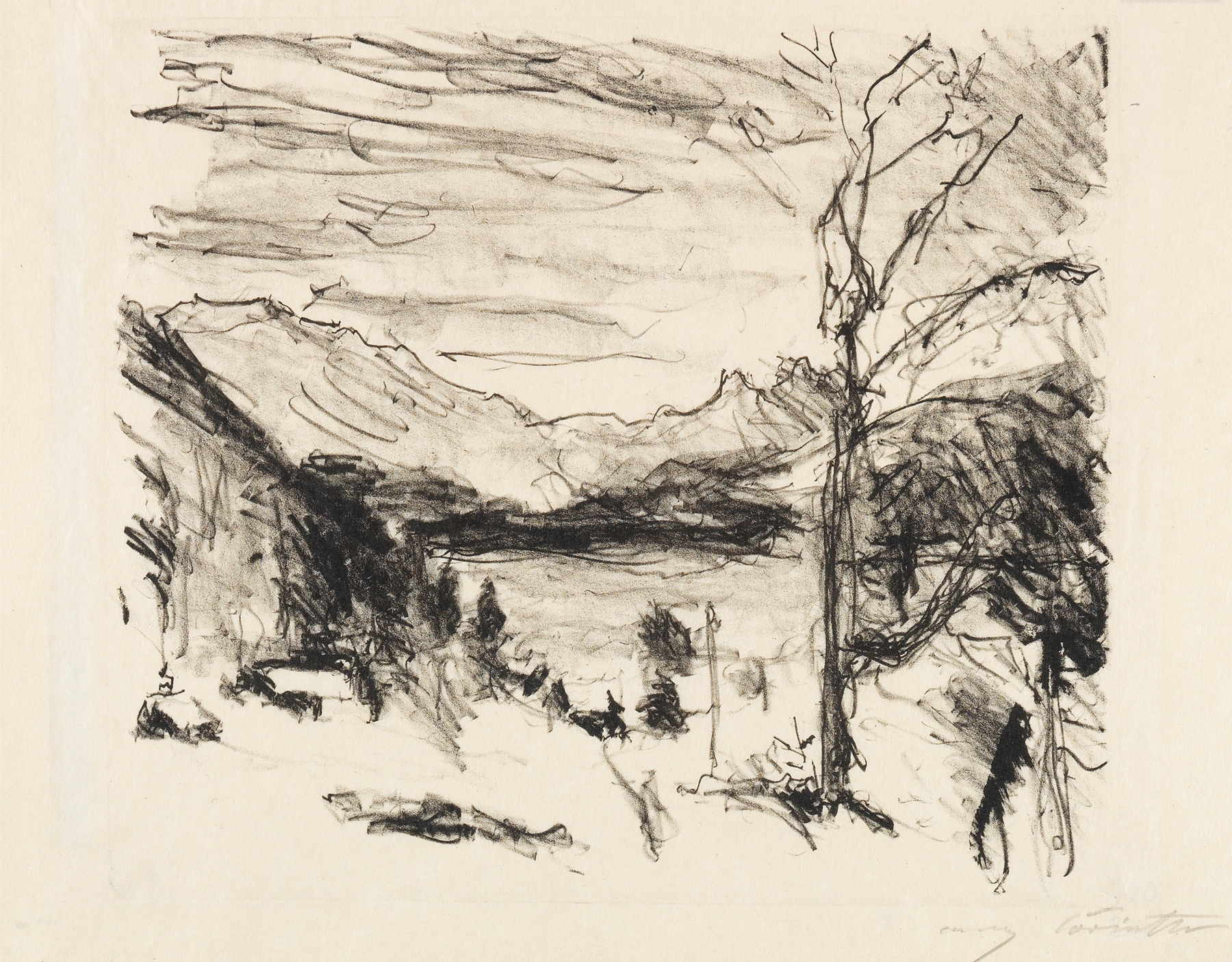
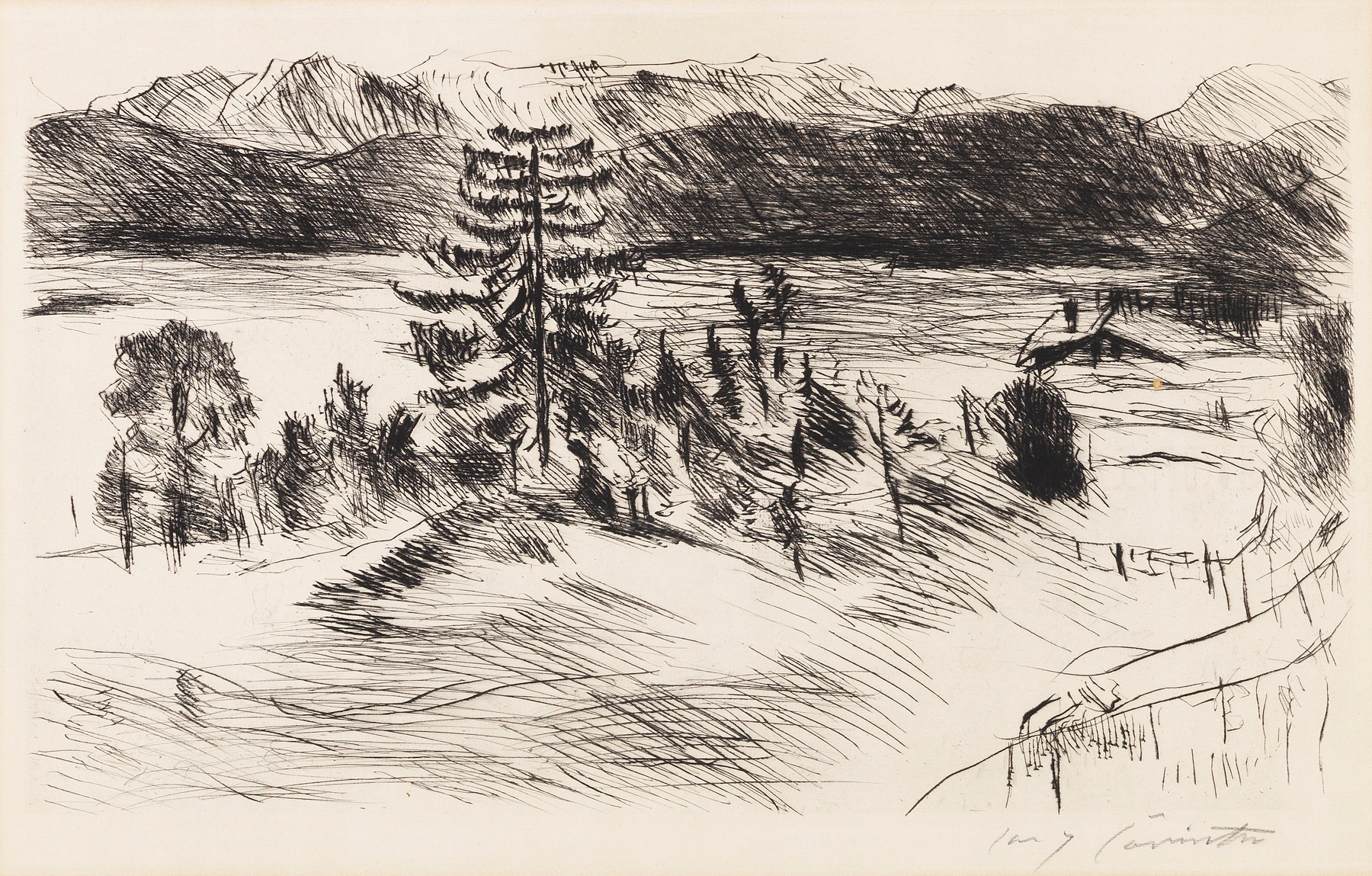
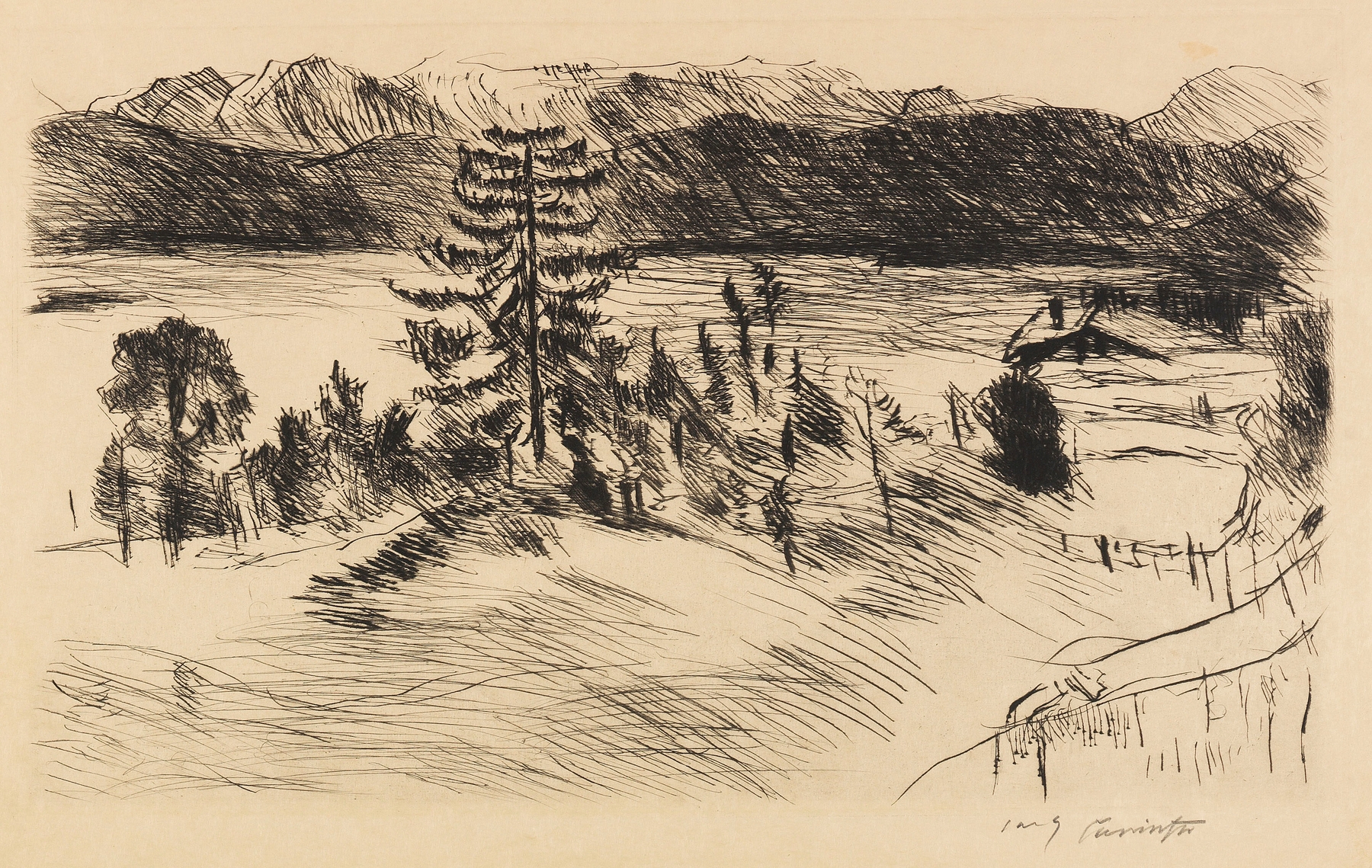
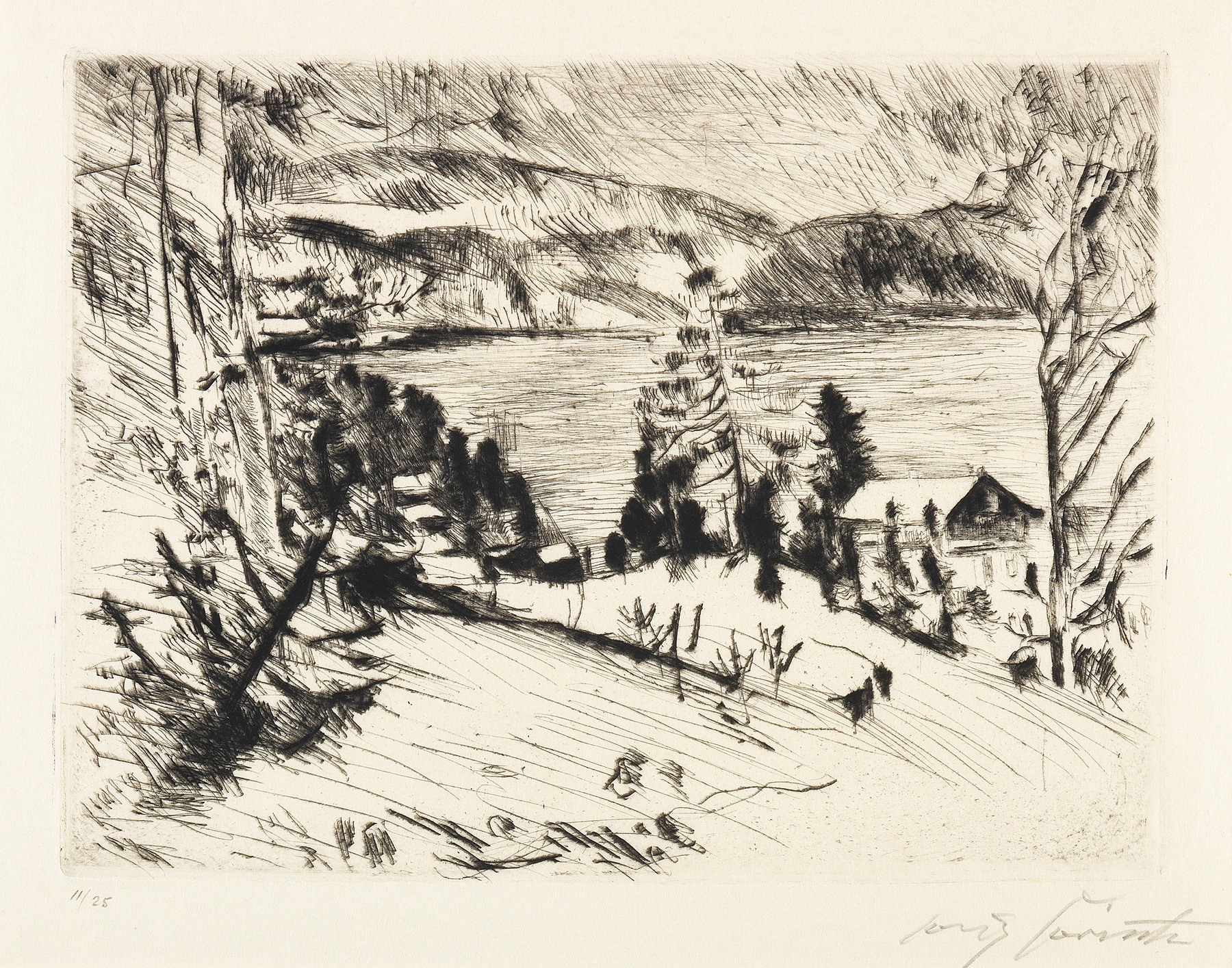
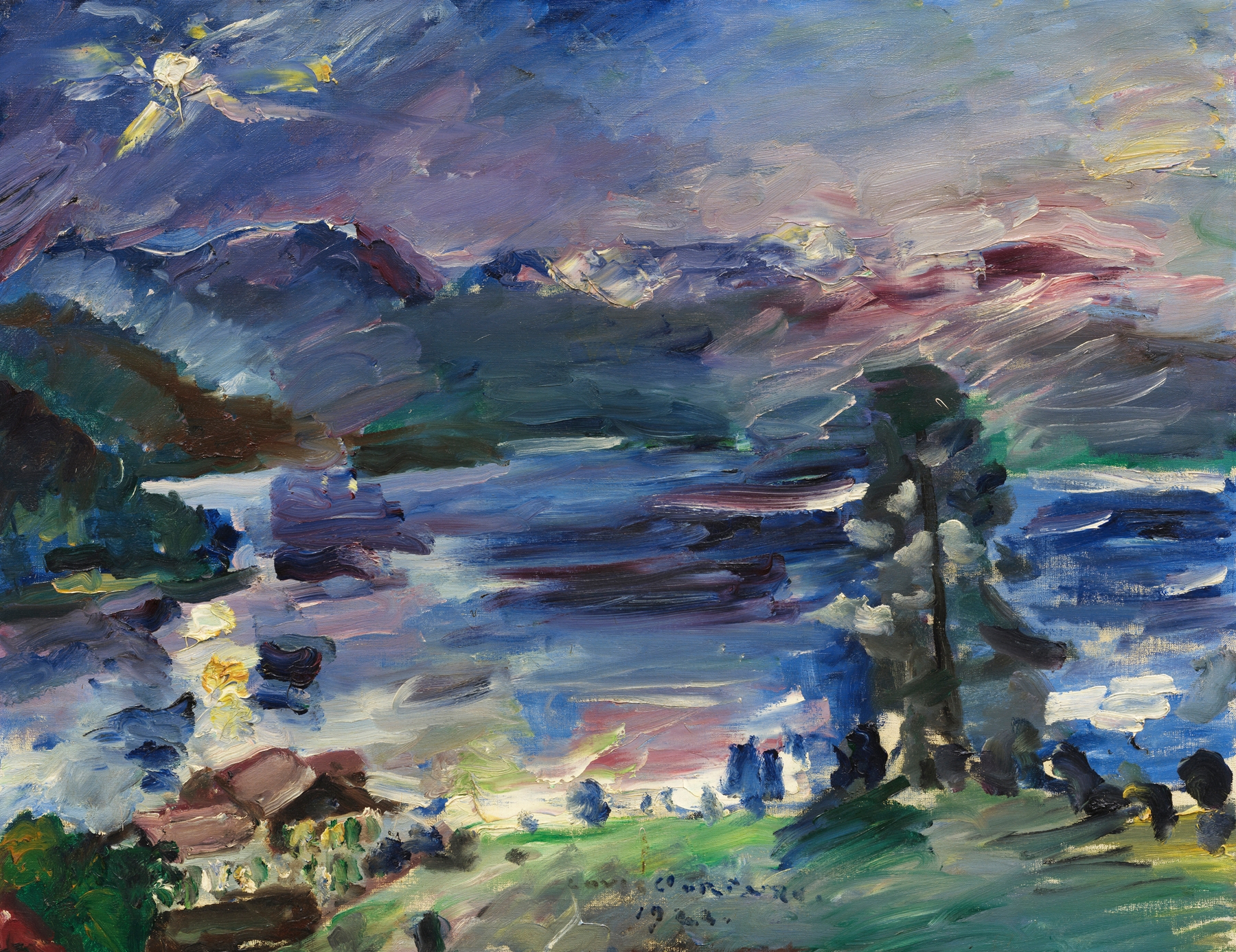
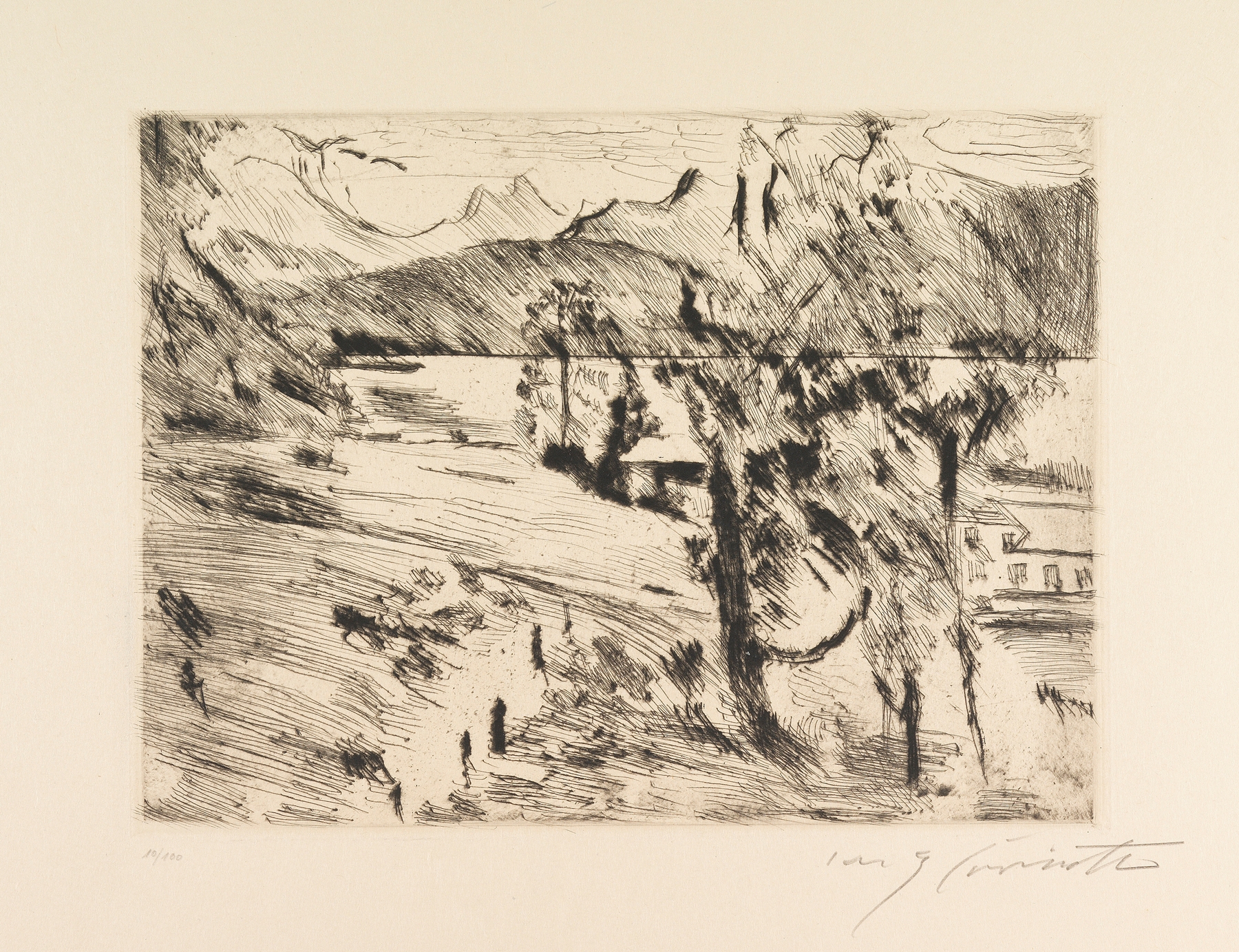
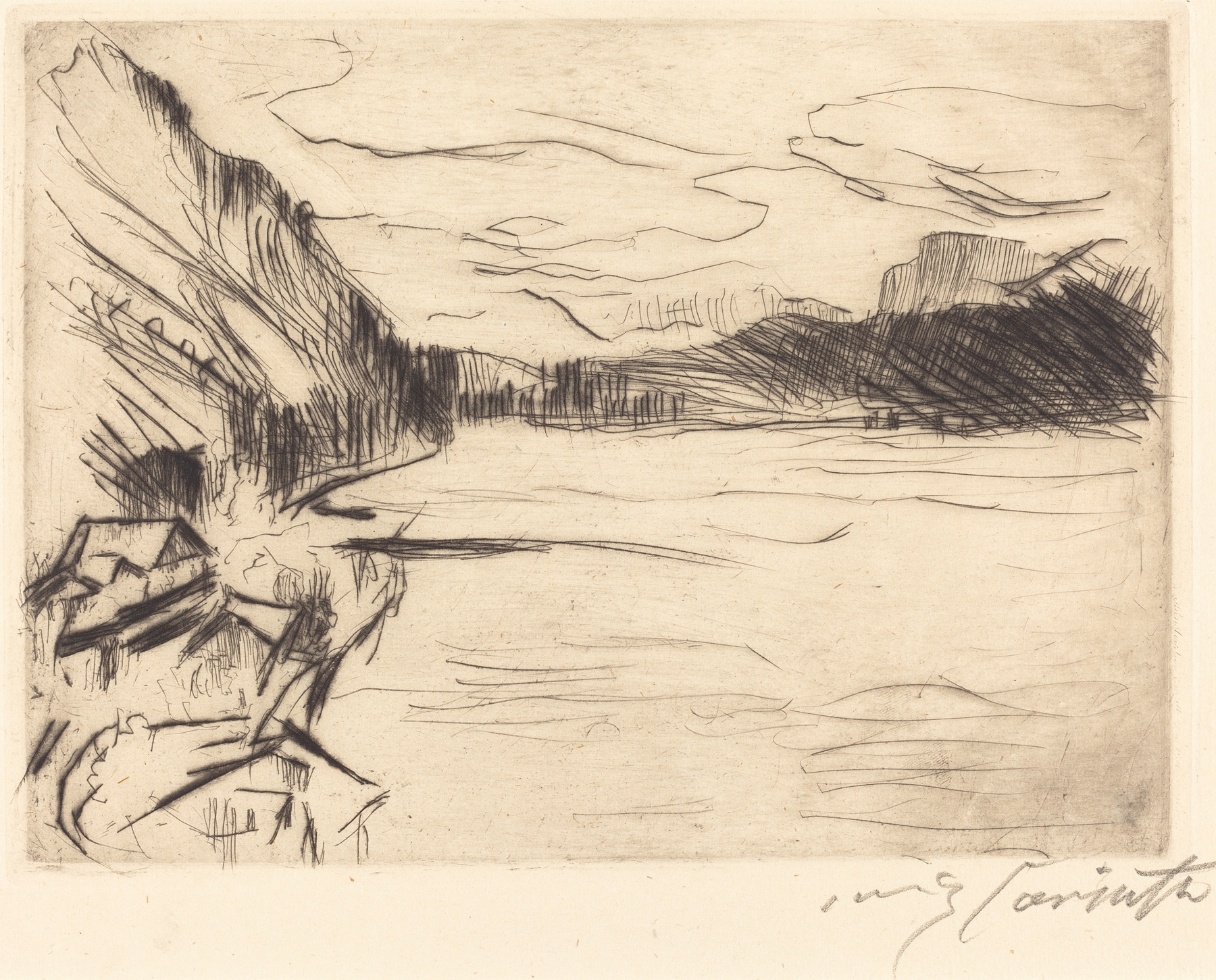
What if silence could speak through light? In On Walchen Lake, a tranquil scene belies an undercurrent of violence, hinting at the turmoil beneath its serene surface. Focus on the central expanse of water, shimmering in soft hues of blue and green. Notice how the gentle brushstrokes create a sense of movement, the waves lapping quietly against the shore. Look to the left where the trees frame the composition, their dark, jagged silhouettes contrasting sharply with the peaceful water.
The light filtering through the branches casts dappled reflections that dance across the lake, suggesting a fleeting moment frozen in time, capturing both beauty and hidden peril. This delicate interplay between serenity and unease is further emphasized in the contrasting colors. The warm, golden sunlight hints at life and joy, yet the cool shadows lurking beneath the trees evoke a sense of foreboding. The juxtaposition of light and dark here speaks to the duality of existence — calmness that can quickly shatter, revealing the violent truths that dwell just out of sight.
Each stroke carries a weight, whispering of turbulent emotions and memories that shape the landscape. In 1923, On Walchen Lake was painted during a pivotal time in Lovis Corinth's life. Residing in a Europe grappling with the aftermath of World War I, his work reflected both personal struggles and broader societal changes. As he explored themes of nature, light, and shadow, Corinth sought to convey not only the physical beauty of his surroundings but the psychological complexities of his time, revealing an artist deeply engaged with the world around him.