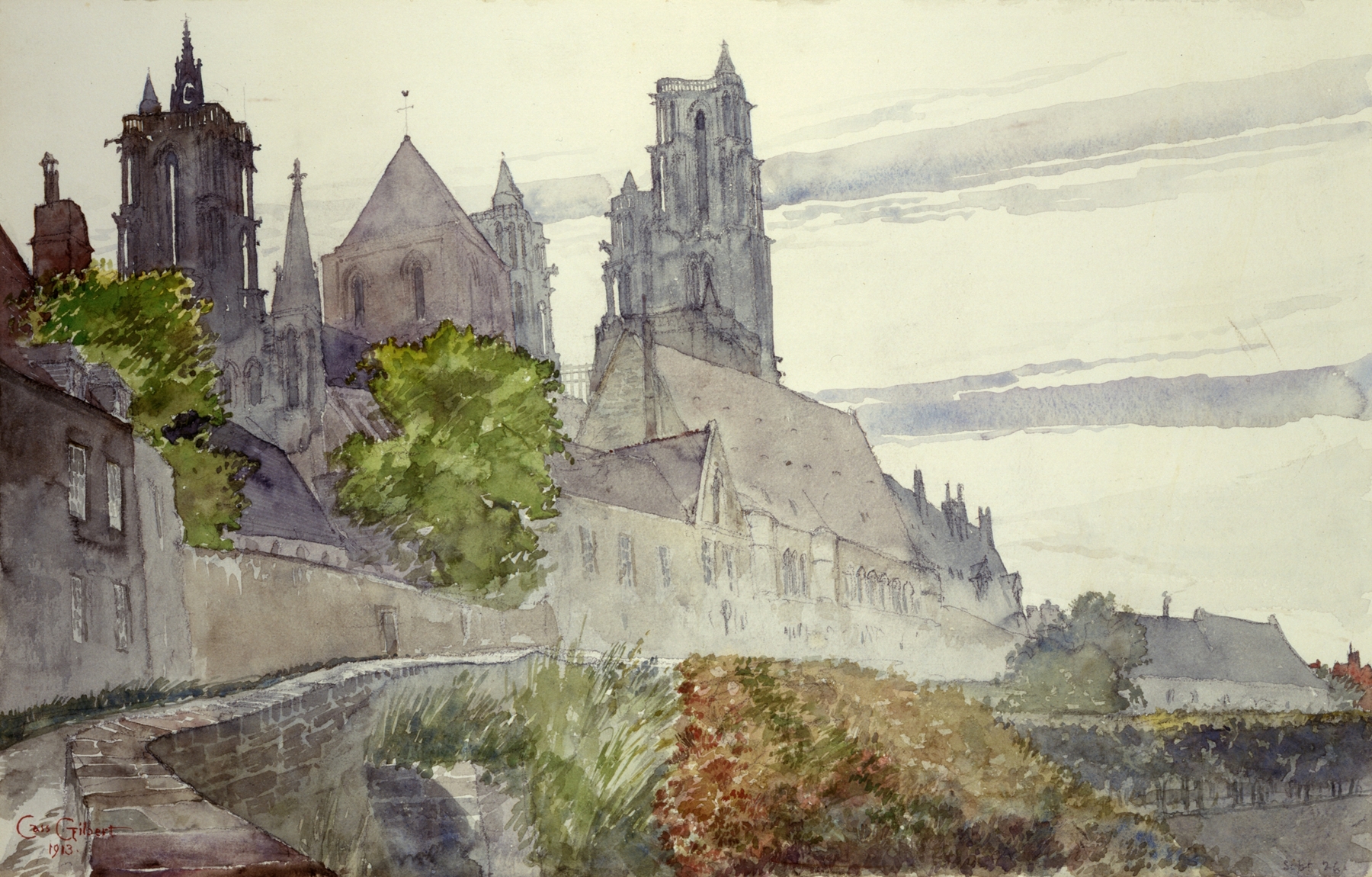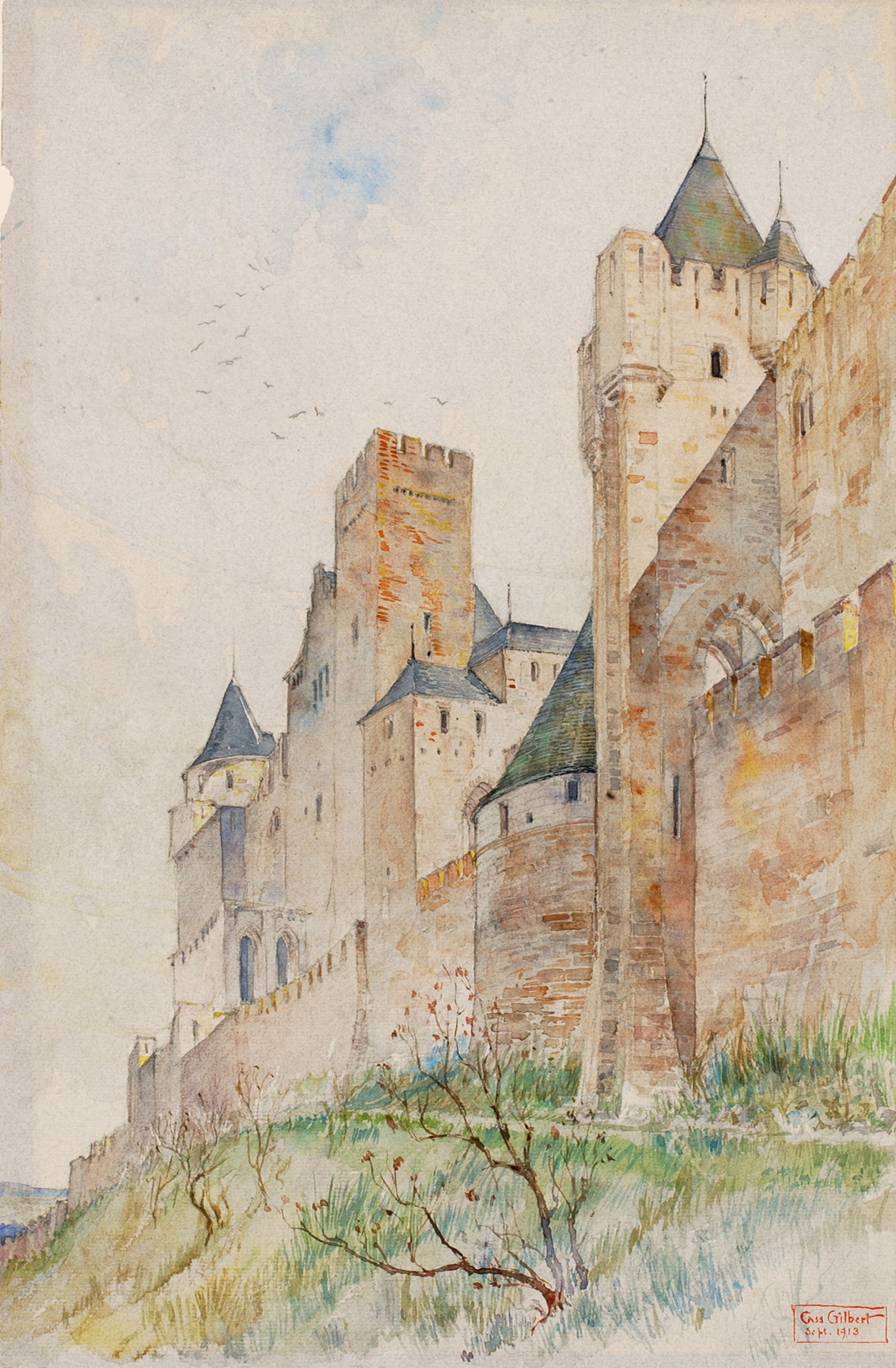
The sun dips low over the medieval citadel of Carcassonne, casting elongated shadows on the weathered stones of its battlements. A lone figure stands at the edge, gazing into the distance, contemplating the weight of history etched within the fortress walls. The air is thick with anticipation, as if the very stones hold their breath, awaiting the next chapter in their storied past. Look to the left at the imposing towers, their stony textures rendered with meticulous detail that invites touch. Notice how the warm hues of ochre and burnt sienna blend seamlessly into the cool, shadowy blues of the encroaching evening sky. The contrasting colors highlight the fortress’s grandeur while accentuating the isolation of the figure, lost in reverie against the backdrop of an ancient world. Every stroke captures not just the architecture, but the emotional resonance of a place steeped in transformation. The image speaks of duality; the strength of the battlements juxtaposed with the vulnerability of the solitary figure. This tension invites the viewer to ponder their own place within history and the passage of time. The fading light symbolizes both an ending and a beginning, echoing themes of transformation and the inevitable march of progress that looms over even the sturdiest of fortifications. In 1913, Cass Gilbert was deeply engaged in bridging the worlds of architecture and fine art. Working in the United States while simultaneously being influenced by European traditions, he sought to capture both the physical and emotional landscapes of history. This period was marked by a burgeoning interest in integrating art into civic spaces, as society grappled with its past while looking forward to the future.