Berliner Straßenszene im Herbst (Hotel Adlon, Berlin) — History & Analysis
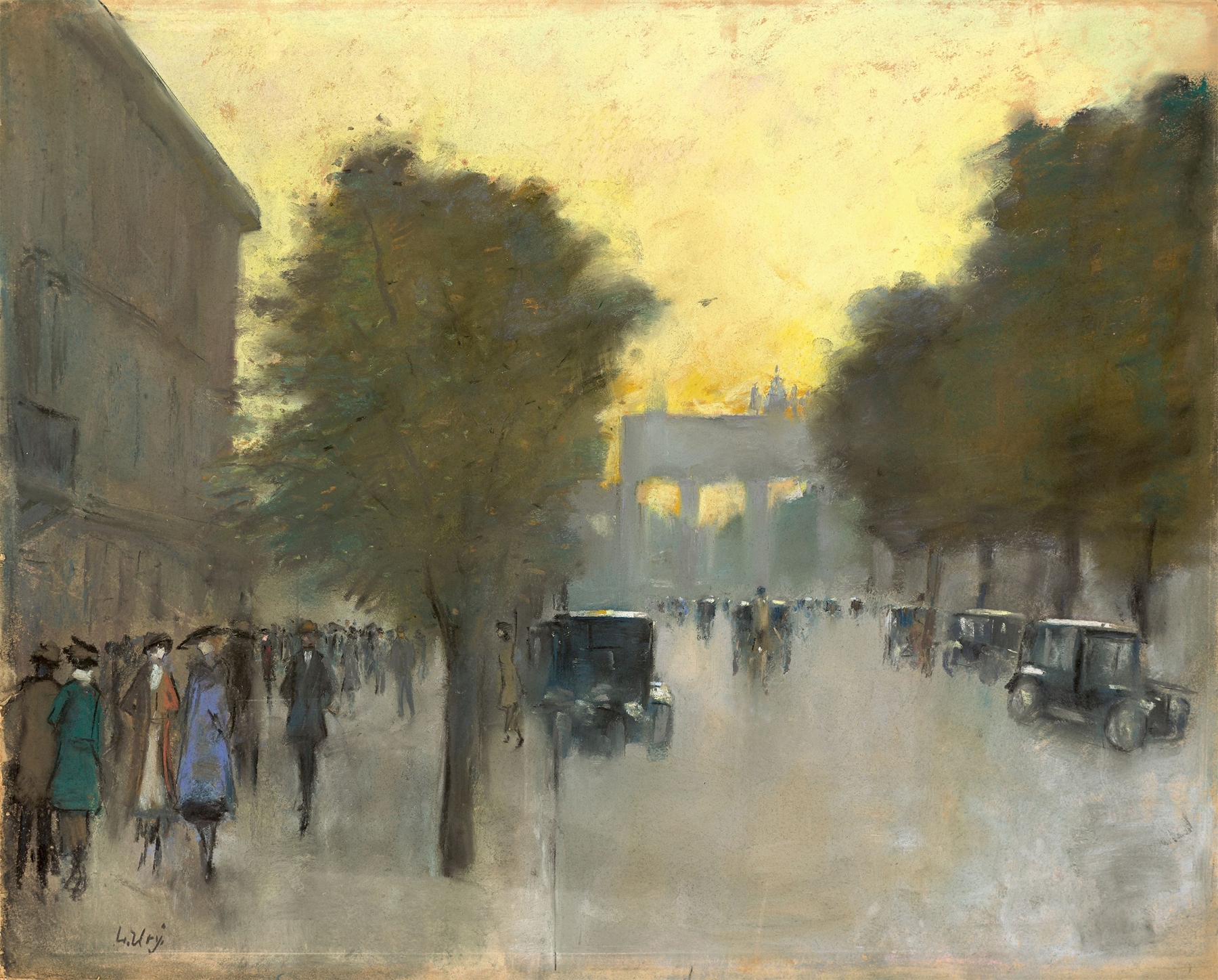
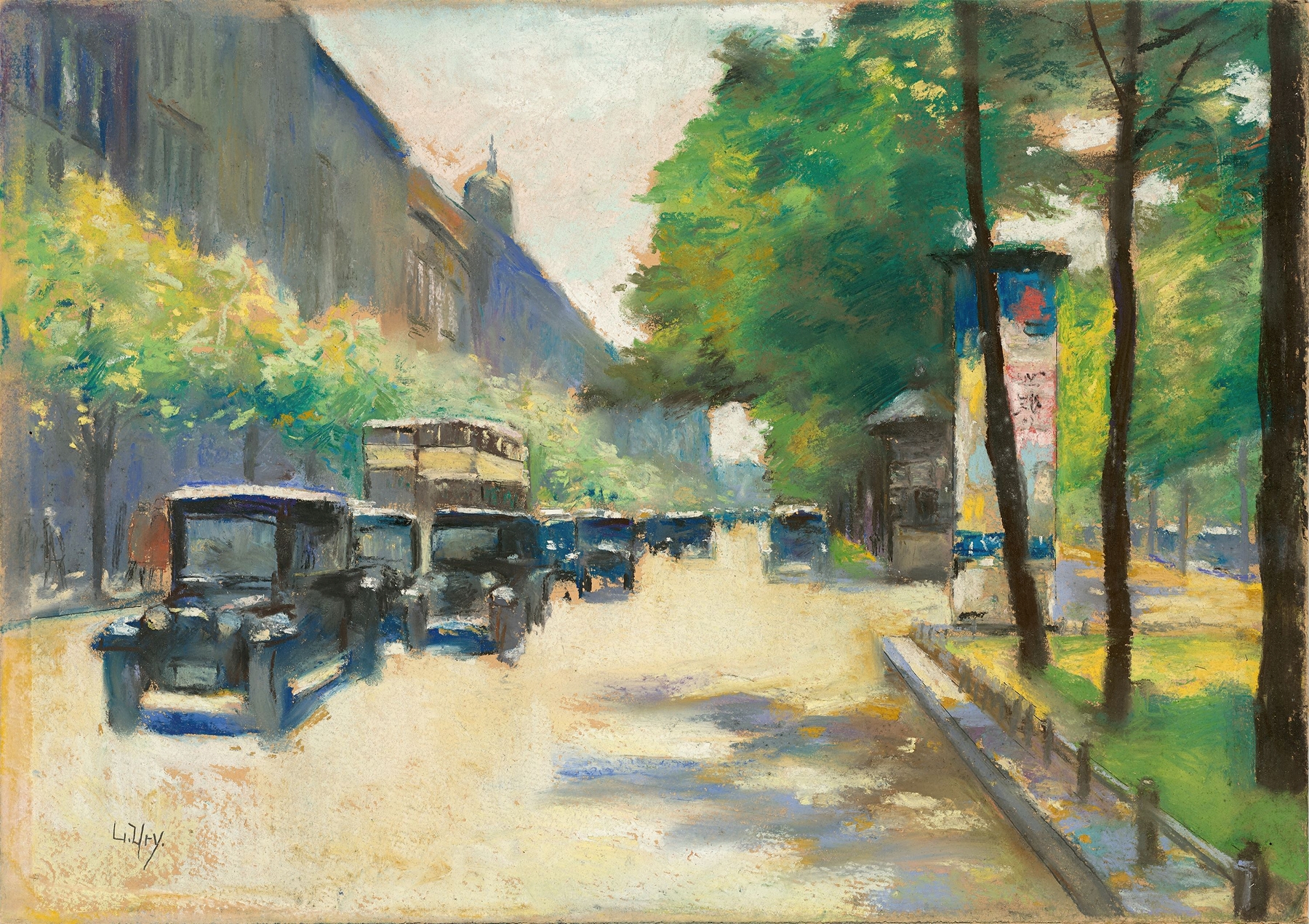
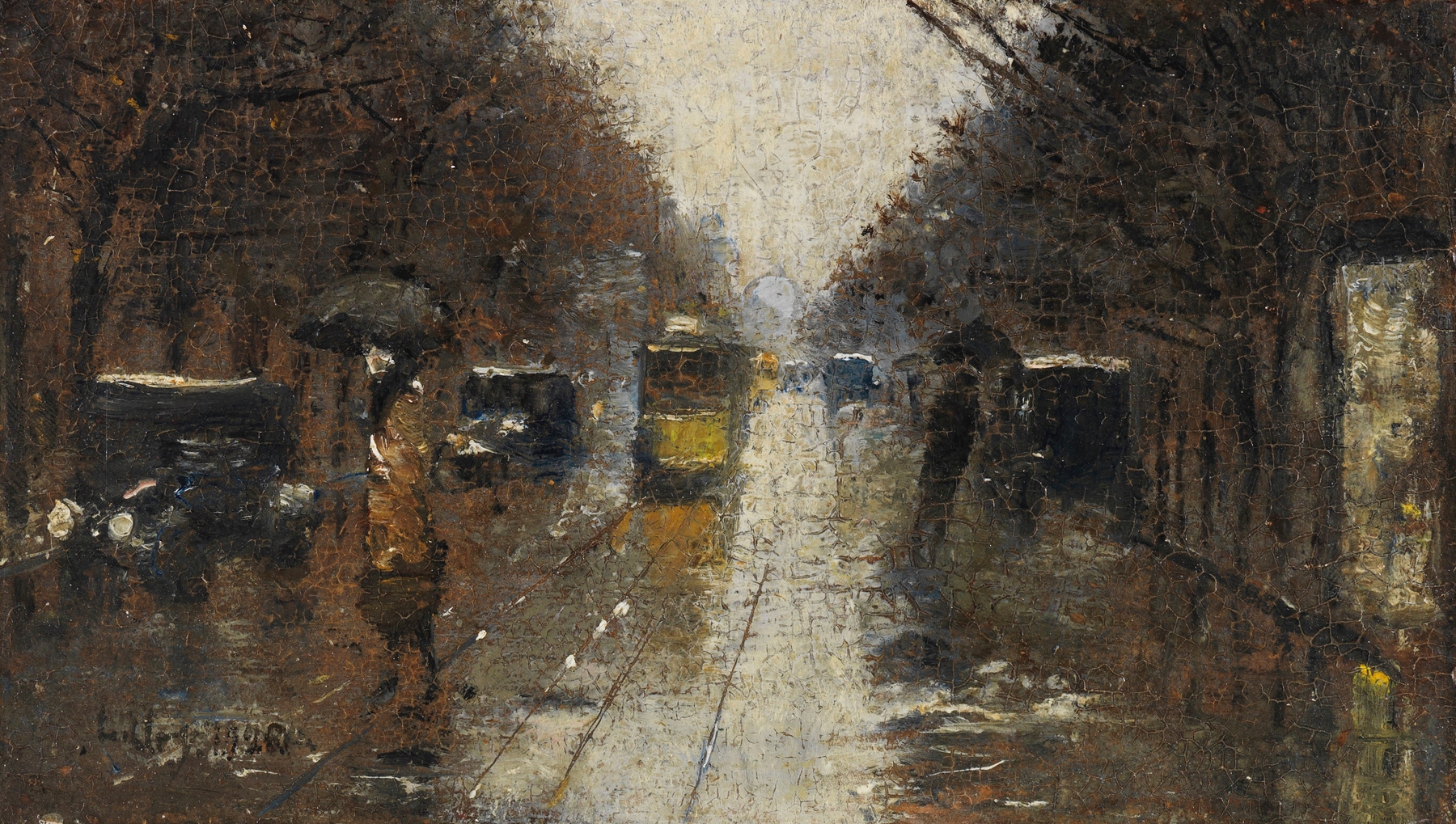
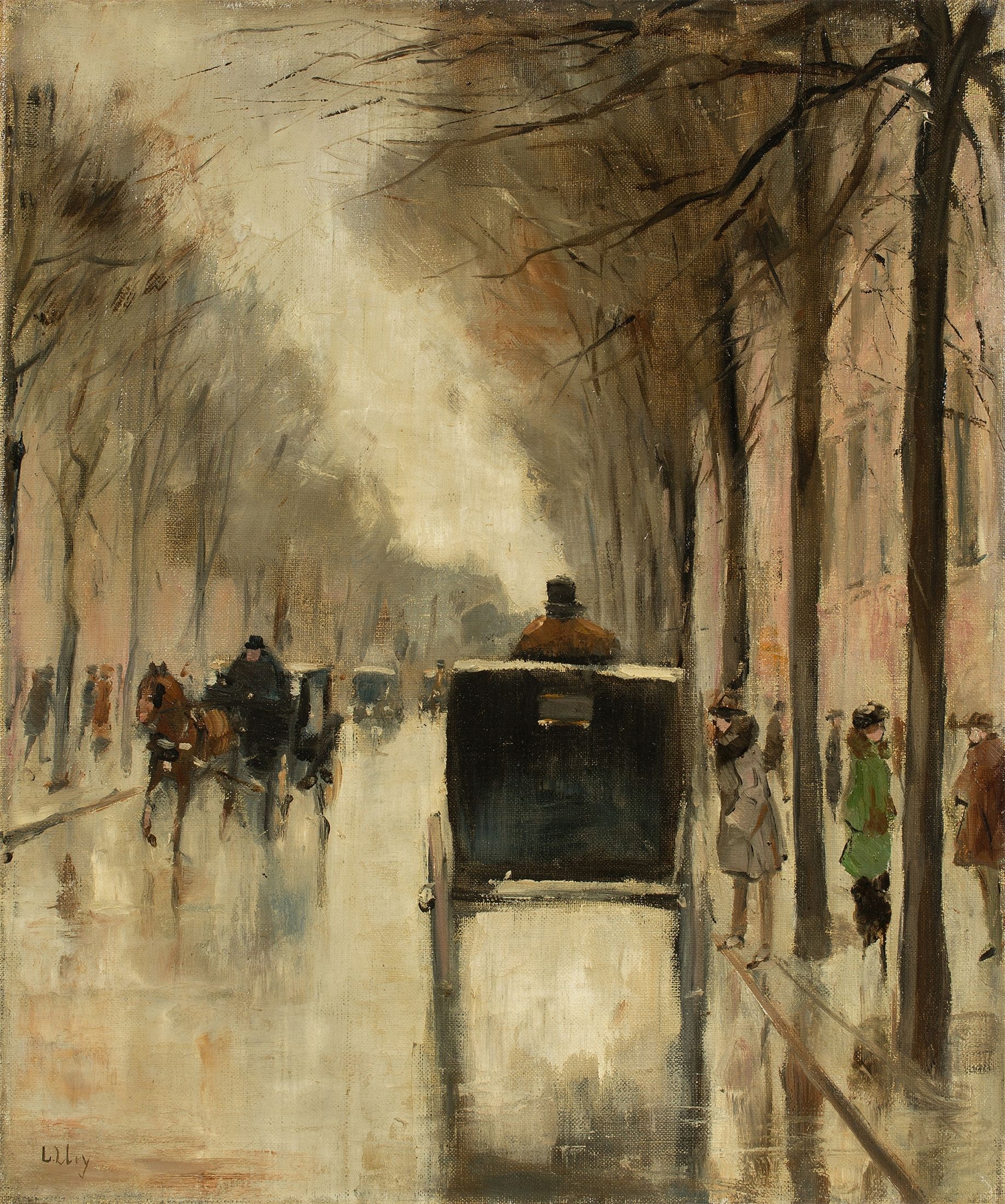
“Every silence here is a confession.” In the stillness of autumn, the cityscape unfolds like a whispered secret, revealing the void beneath the bustling surface of life. Look to the left where vibrant splashes of amber and gold foliage dance along the pavement, a stark contrast to the melancholy grays of the buildings. The artist employs bold strokes and a moody palette, guiding your eyes through the interplay of light and shadow that envelops the scene. The figures, rendered in soft focus as they traverse the street, seem almost ephemeral, vanishing into the cool air, suggesting an infinite cycle of existence that both captivates and haunts.
Amidst the lively autumn hues, an undercurrent of loneliness permeates the composition. The distant figures embody a collective solitude, each engrossed in their own narrative, yet united by the shared space of the city. The looming Hotel Adlon serves as a silent witness, a monument to both grandeur and isolation, evoking a sense of nostalgia for the vibrant life that once thrived within its walls. The autumn leaves, swirling to the ground, remind us of fleeting moments, capturing the essence of transience in a transient city.
In 1920, Lesser Ury painted this work amid the turbulence of post-World War I Berlin, a city struggling to find its identity. It was a time of profound change, as the remnants of the past collided with the aspirations of a modern era. Ury, deeply influenced by expressionism, sought to convey the emotional landscape of an urban environment, using color and form to articulate the complexities of human experience in a society that felt both alive and achingly void.