Straße bei Nacht im Regen (Berlin) — History & Analysis
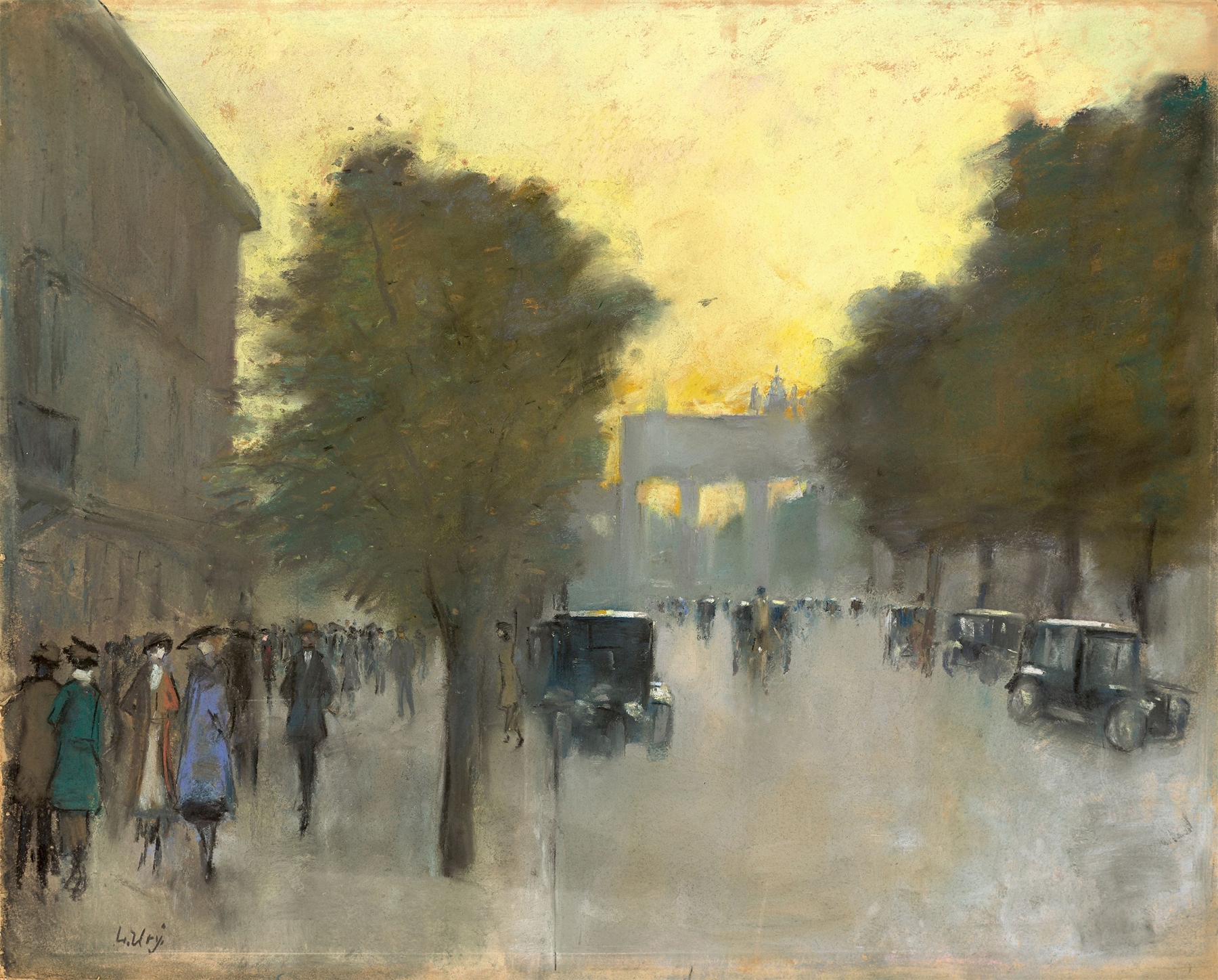
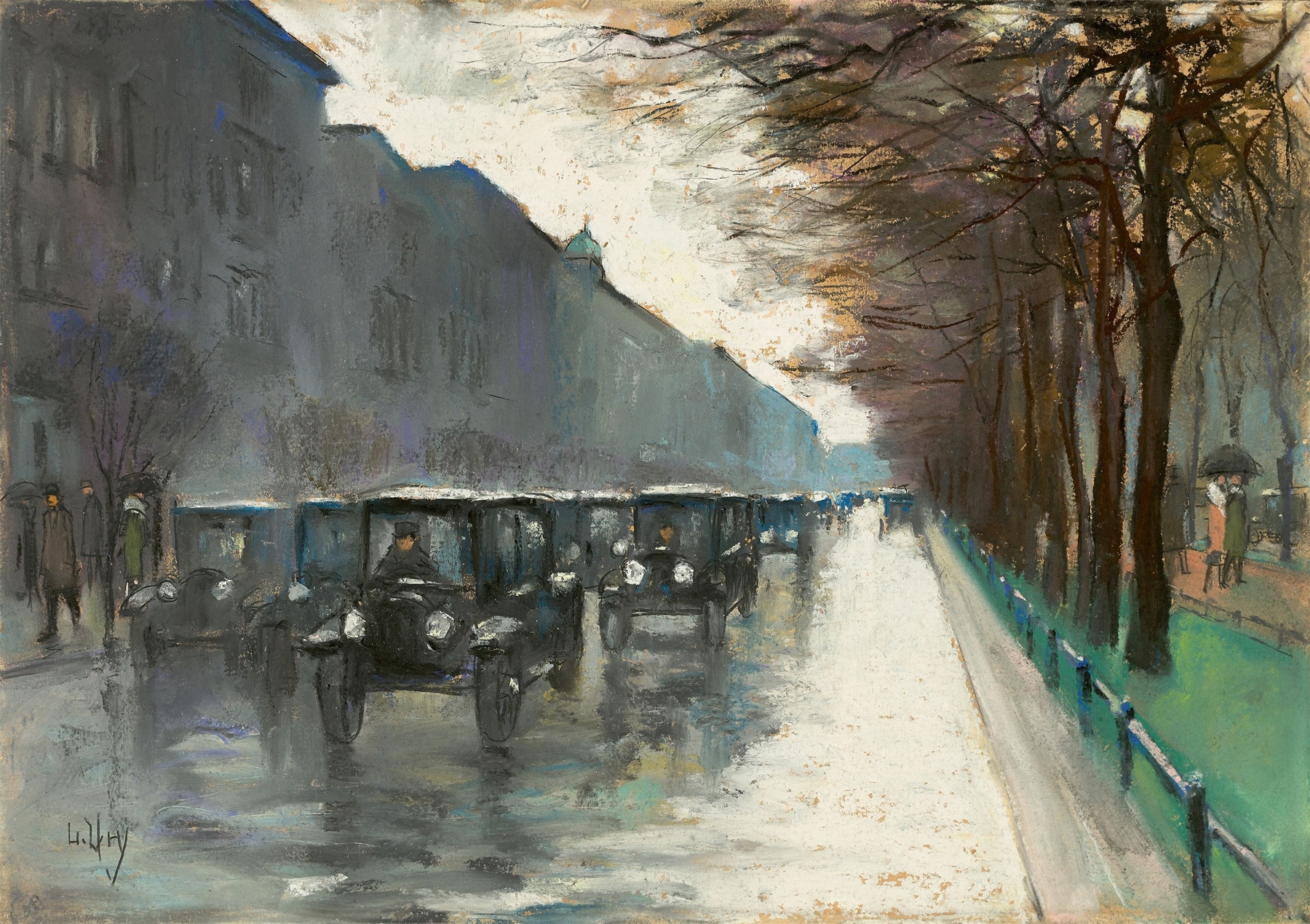
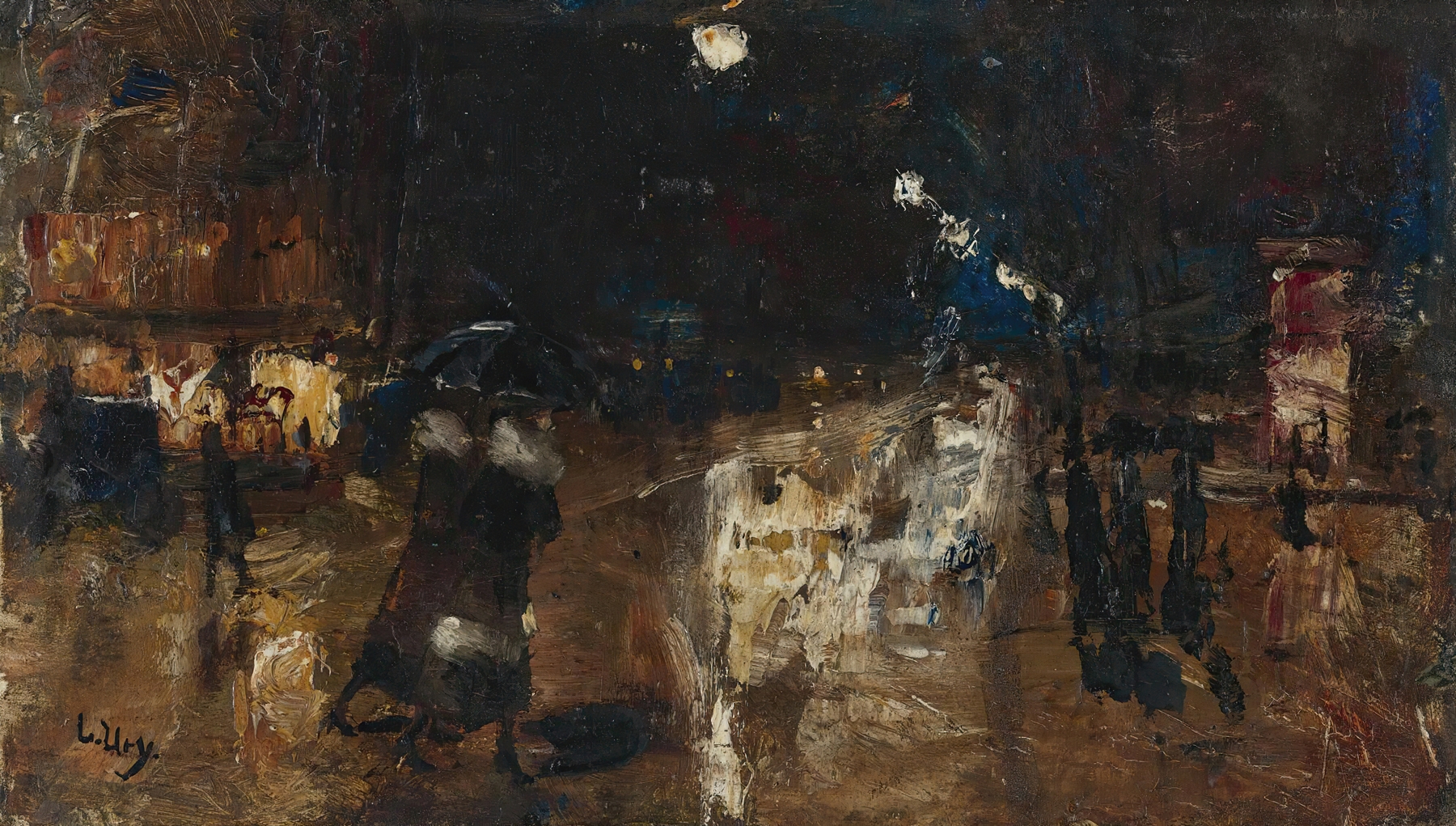
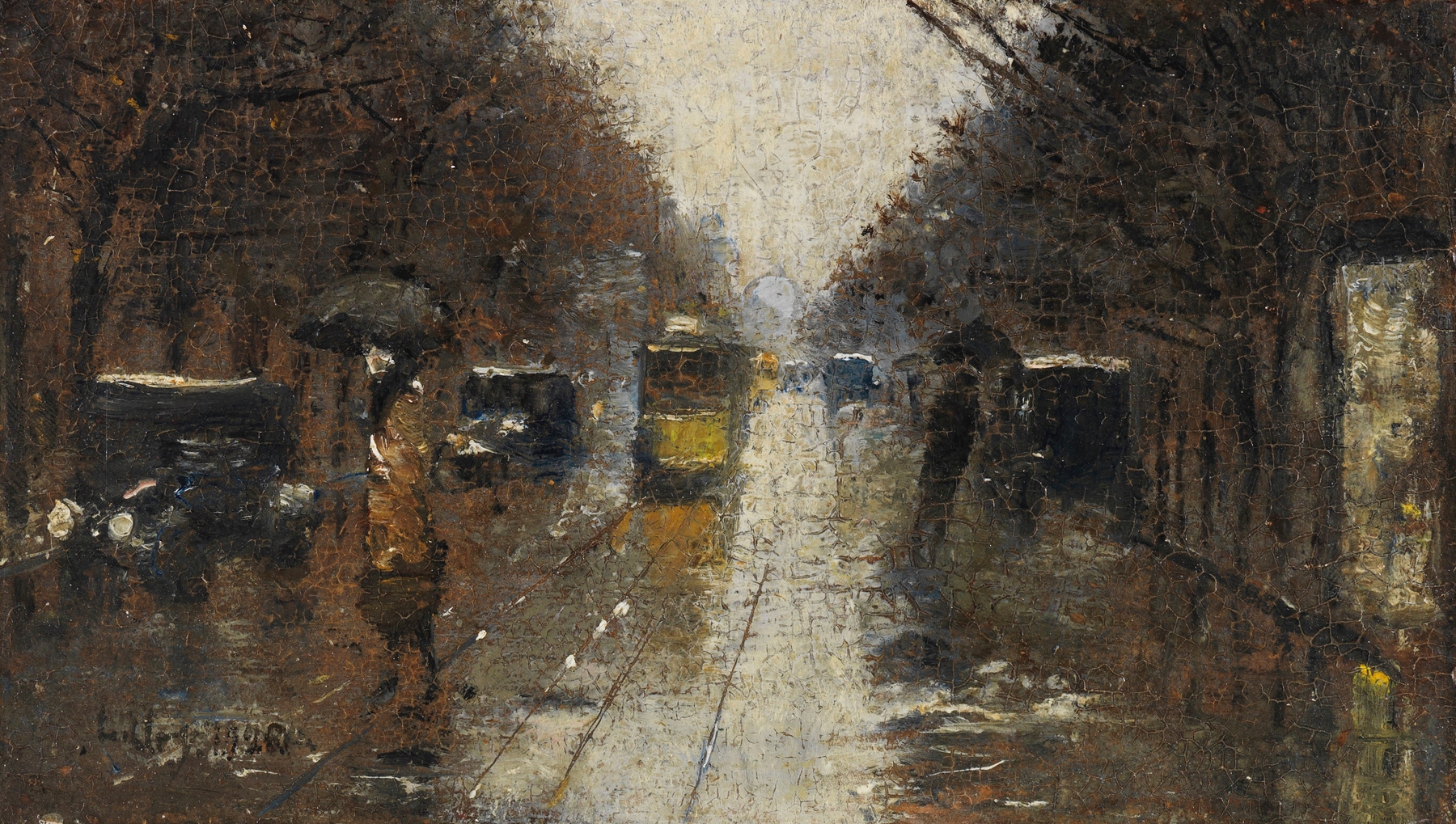
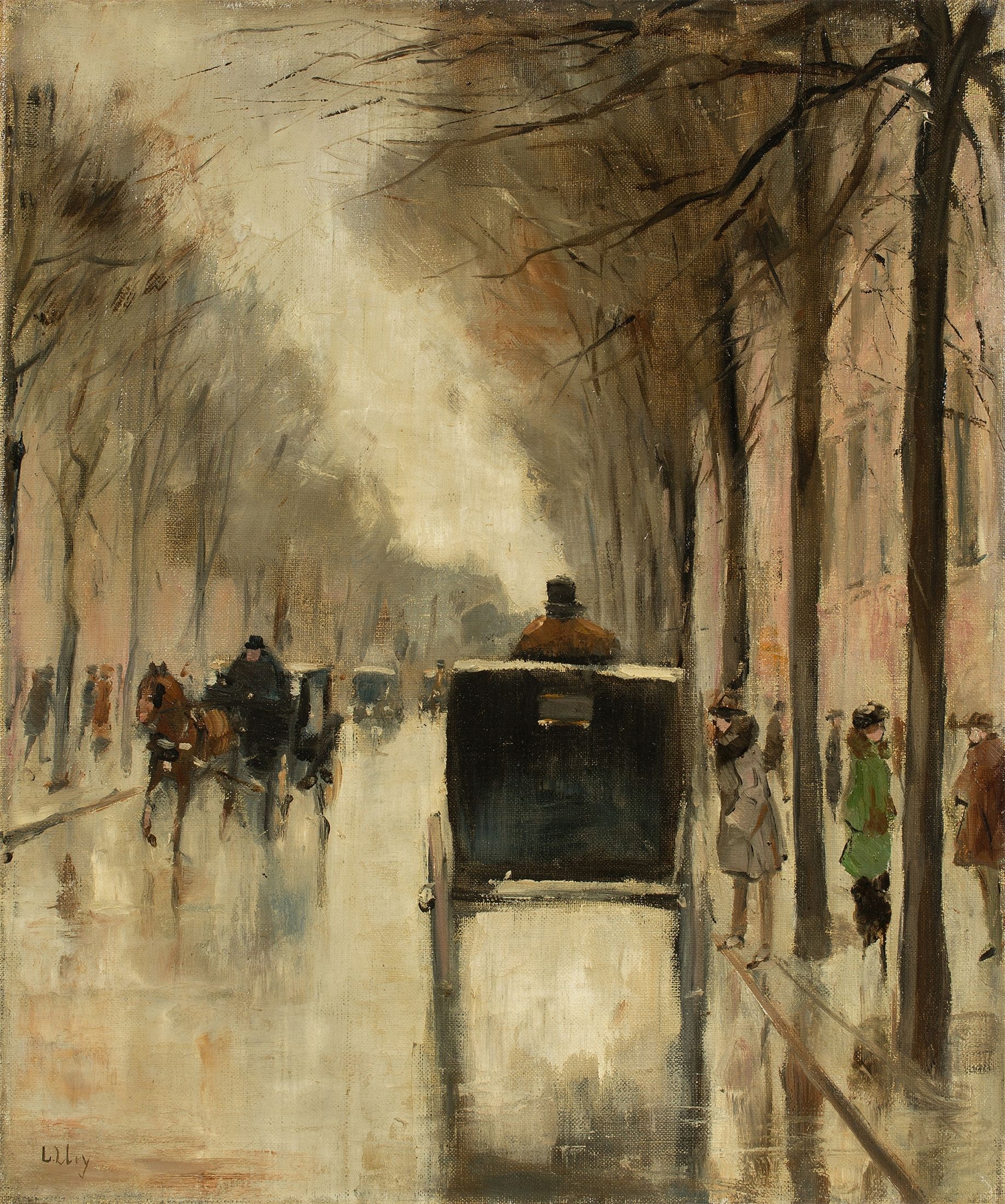
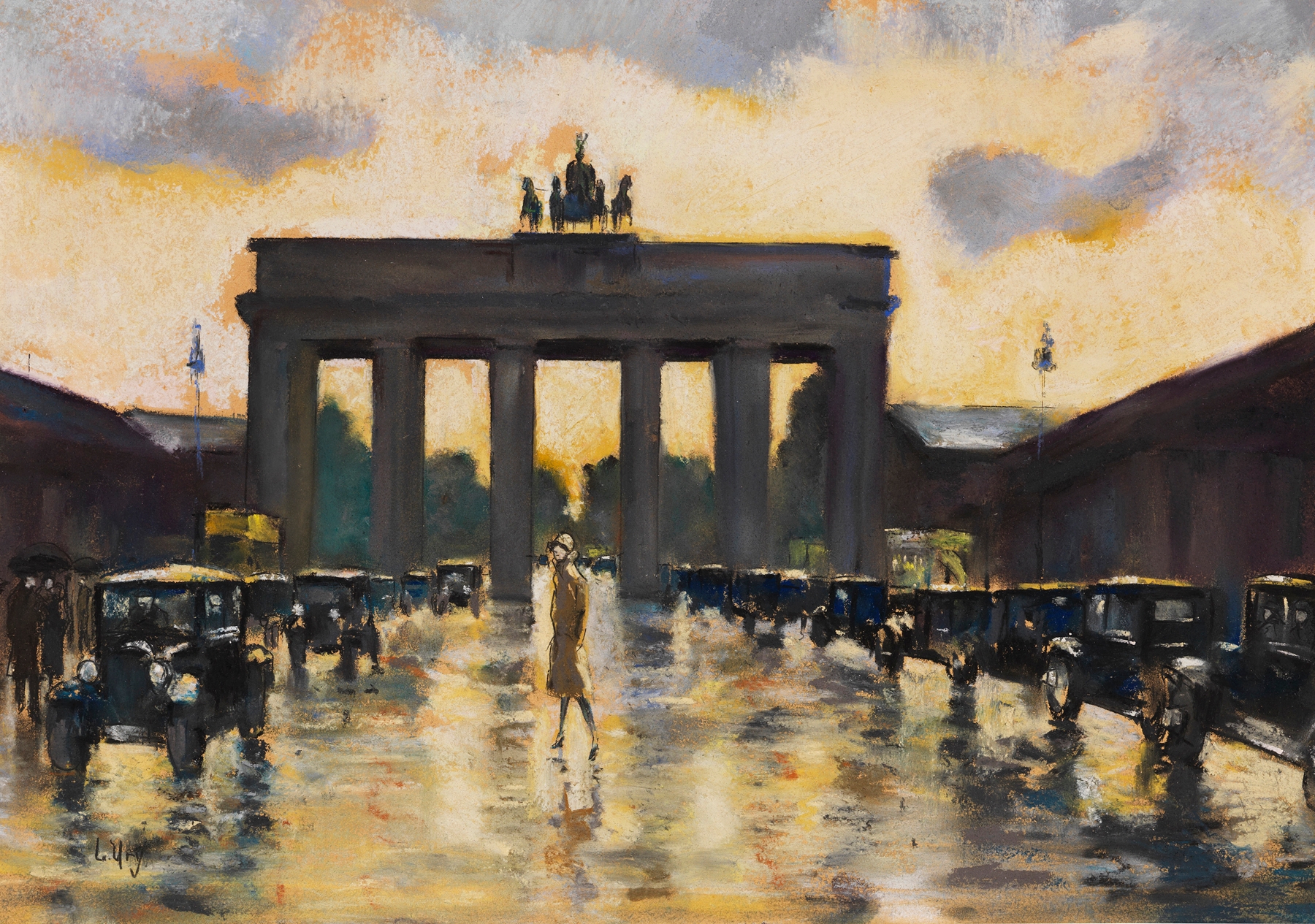
What if silence could speak through light? In Straße bei Nacht im Regen (Berlin), the art of stillness becomes an obsession, capturing a haunting moment of urban solitude. Focus on the shimmering reflections in the rain-slicked street, where warm light spills from unseen windows, creating a contrast against the cool, shadowy outlines of buildings. Look closely at the figures that traverse the canvas; their hurried movements and bent postures evoke a sense of urgency and detachment, rendered in softer, muted tones.
The artist's deft use of brushwork enhances the feeling of movement, while the rich interplay of light and shadow suggests a world that pulsates quietly beneath the surface. Beneath the surface, the painting explores themes of isolation and connection within the urban landscape. The rain serves as a metaphor for both cleansing and emotional weight, blurring the lines between the solitude of the individual and the chaos of city life. Each element, from the glistening cobblestones to the ethereal glow of ambient light, invites viewers to reflect on their own place amid the thrumming heart of the metropolis.
Created between 1898 and 1900, this work emerged during a time when Lesser Ury was establishing himself in Berlin's vibrant art scene. The city was undergoing rapid change, reflecting the tensions of modernity while grappling with the remnants of the past. Ury's exploration of light and atmosphere marked him as a pioneer of urban impressionism, as he set out to capture not just the physical reality of the city, but also its emotional landscape.