Berliner Straßenszene im Spätherbst — History & Analysis
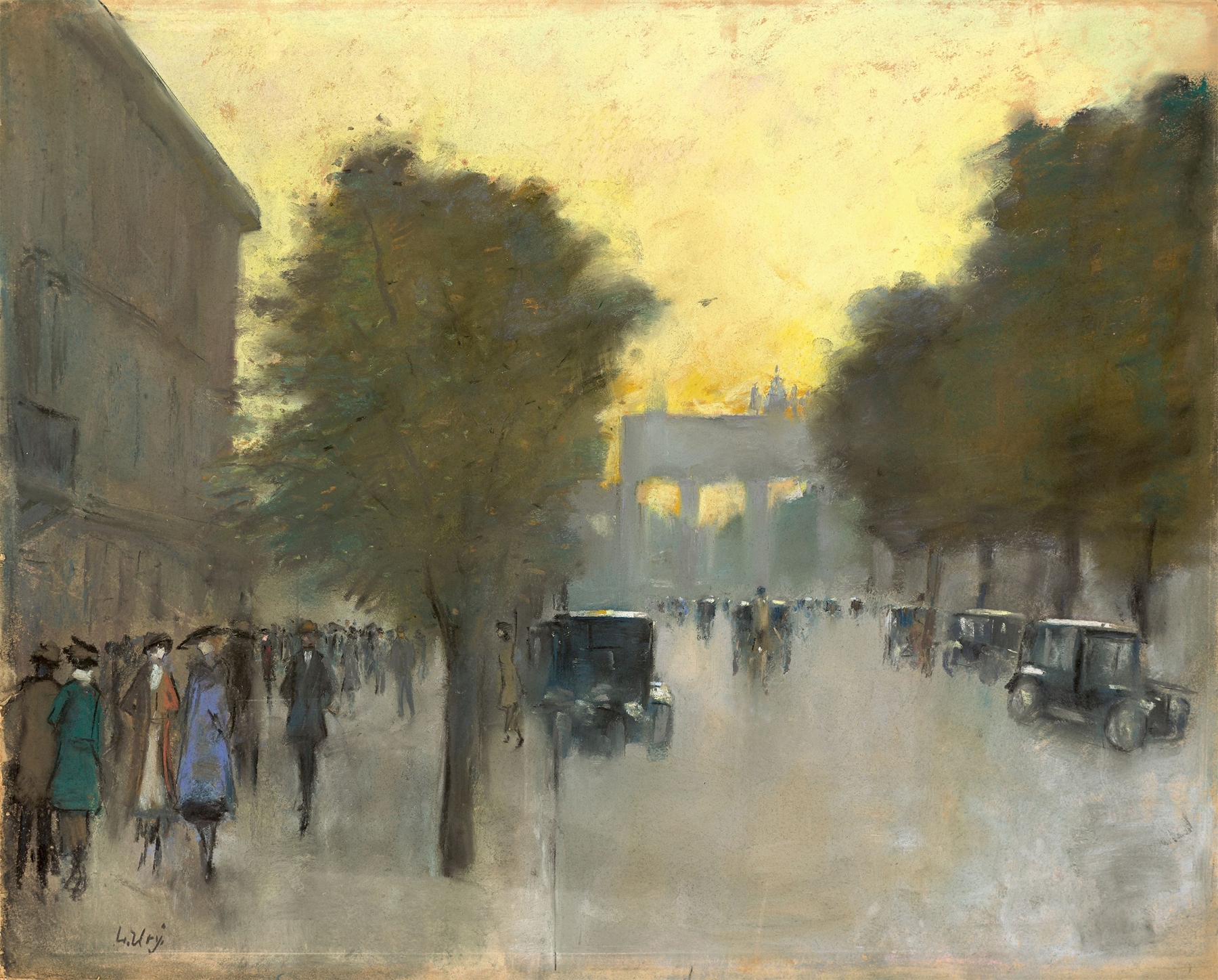
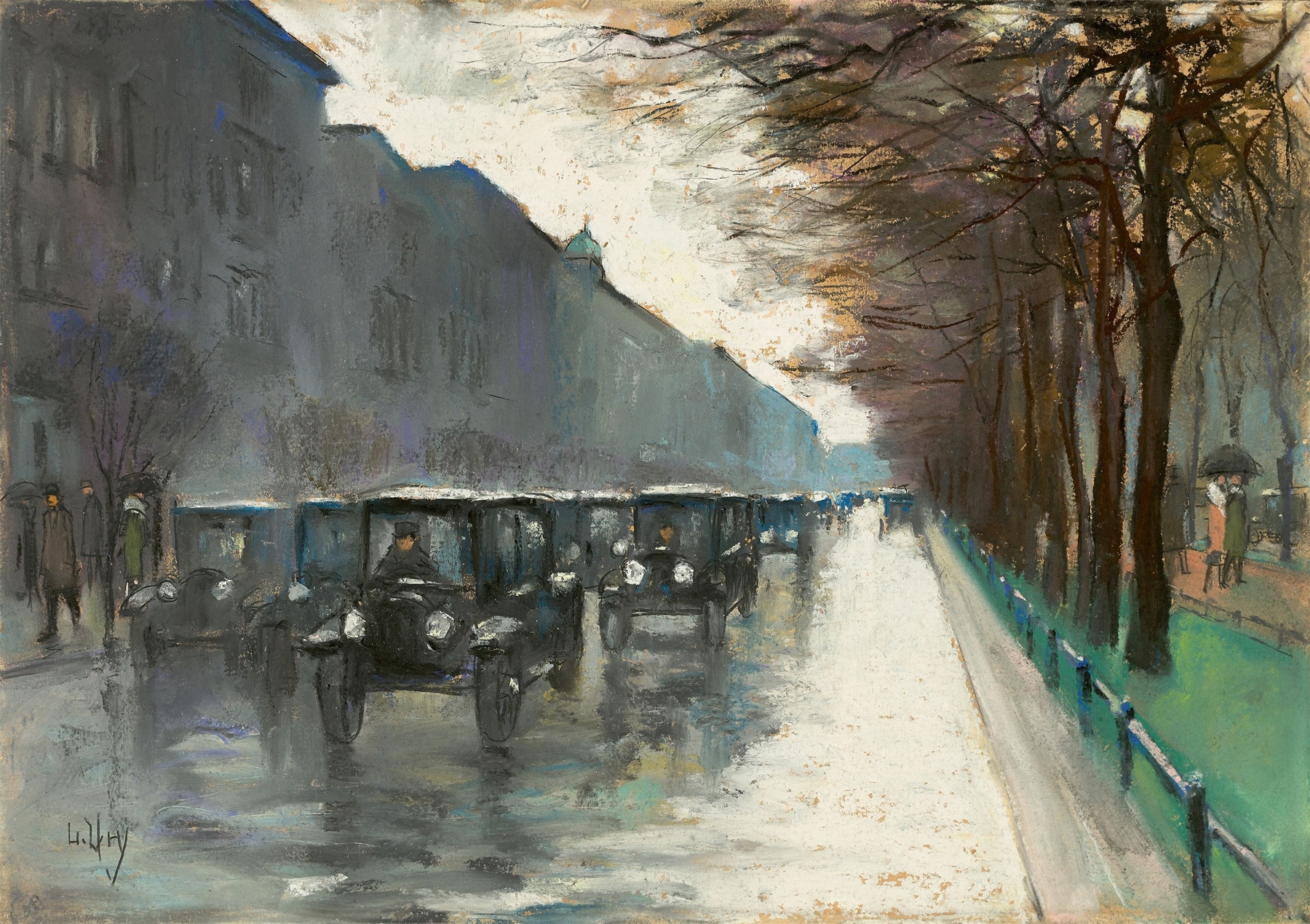
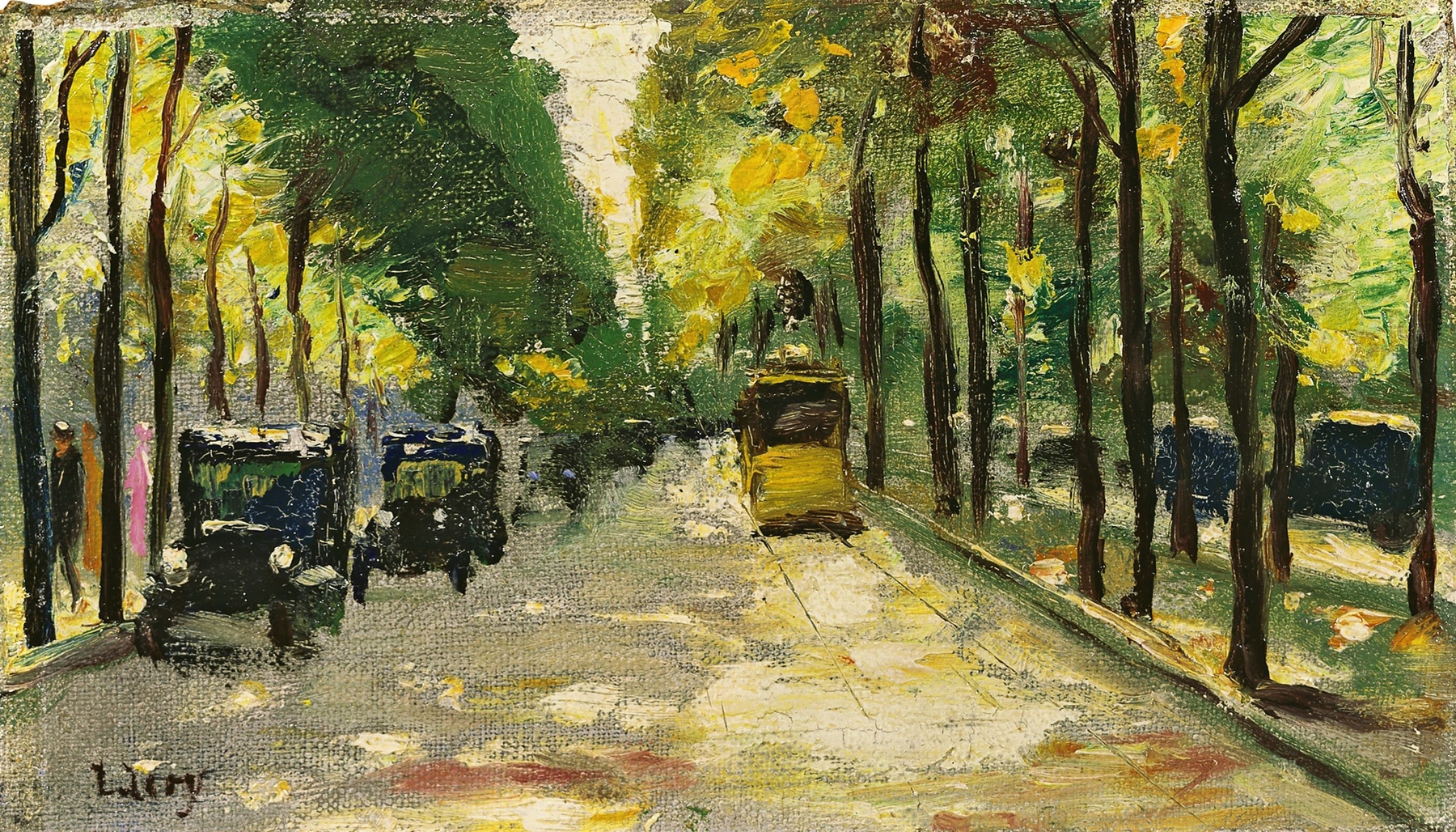
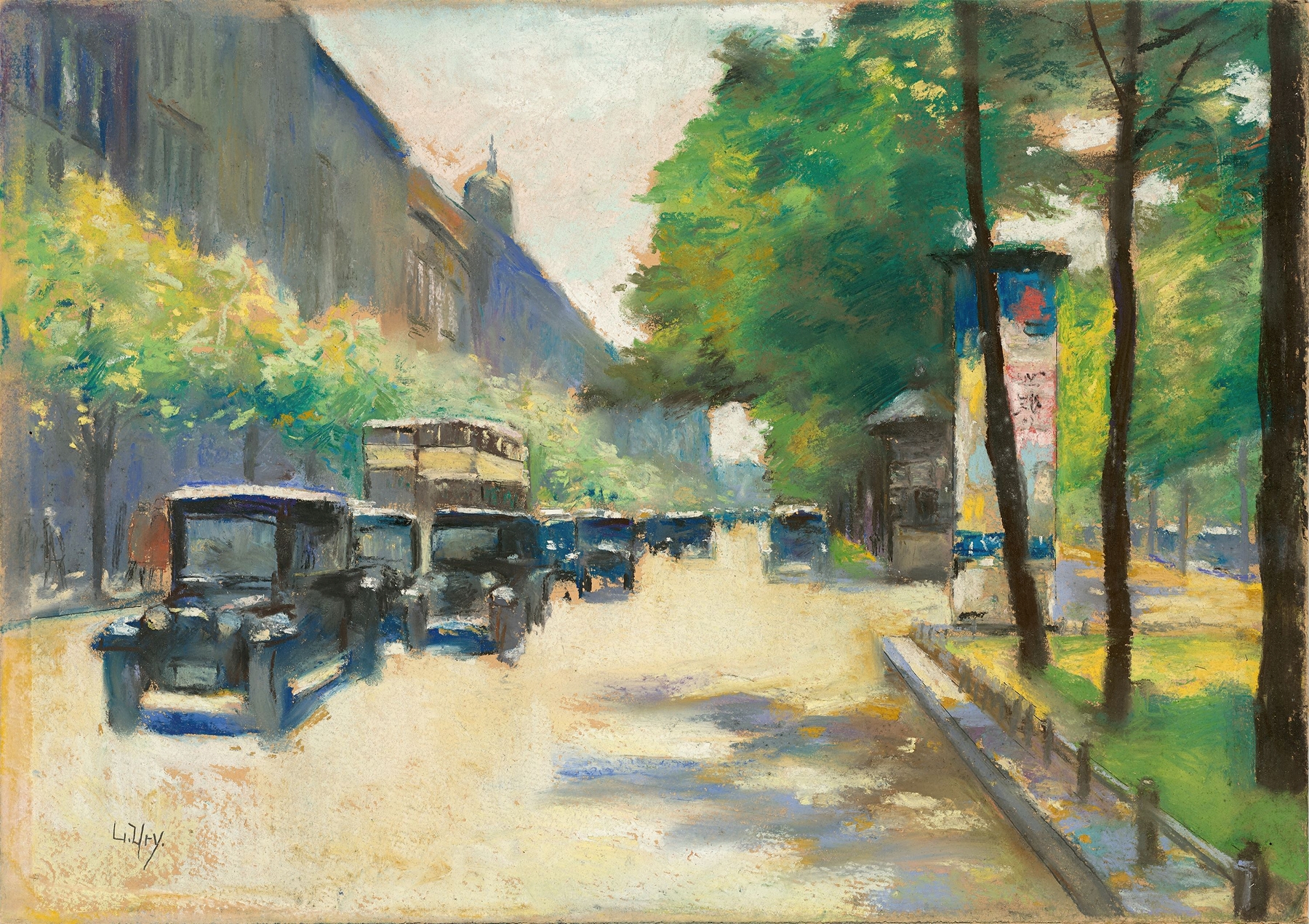
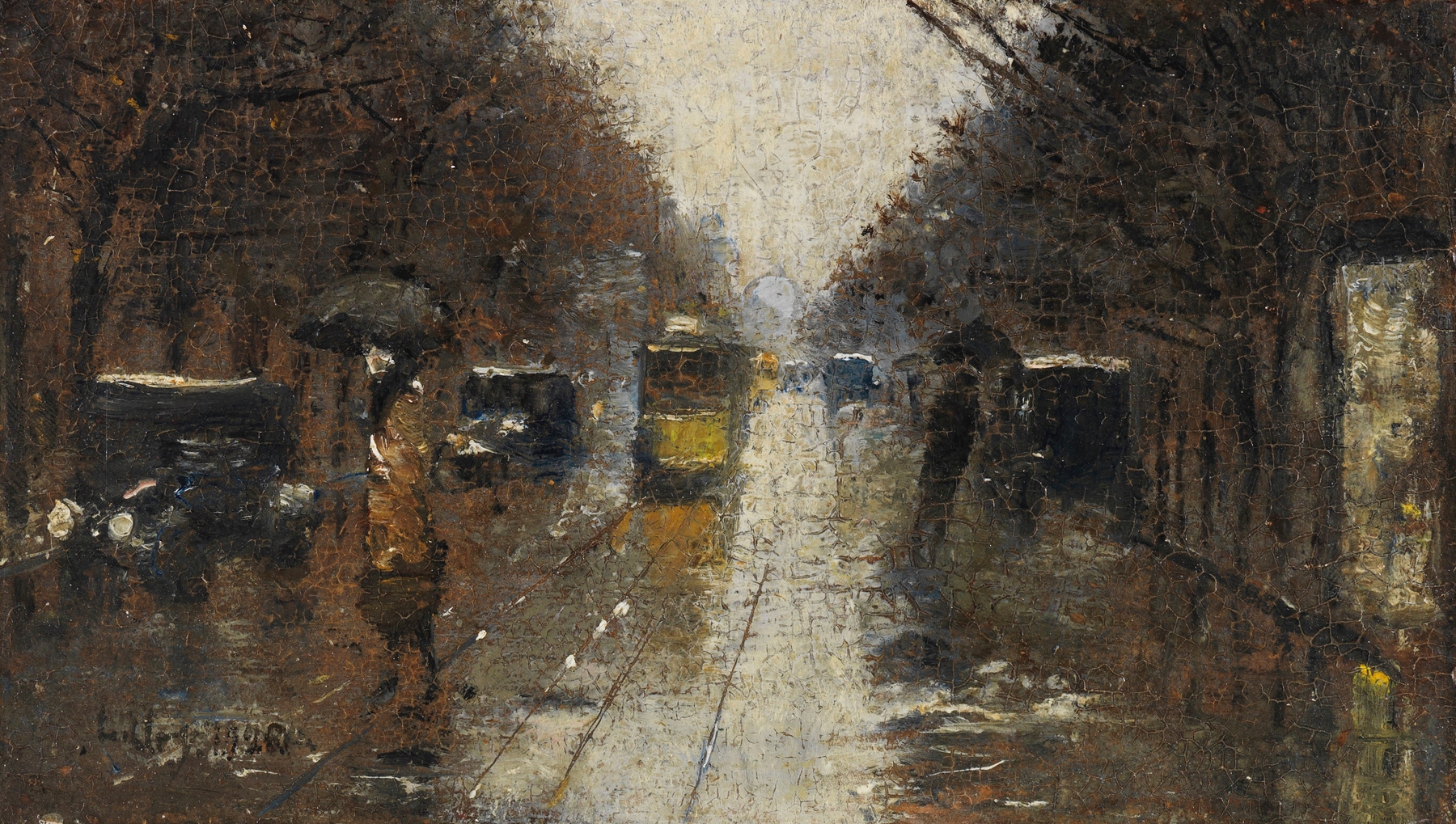
What if beauty was never meant to be finished? In Berliner Straßenszene im Spätherbst, the transient moments of life unfold like whispers carried by the autumn wind, beckoning viewers to contemplate the fleeting nature of existence. Look to the left at the delicate brushstrokes that capture the falling leaves, their warm ochres contrasting with the cooler grays of the cobblestone streets. Notice how the pedestrians, cloaked in a subtle blur, seem to merge with the surrounding scenery, their movements almost ghostly as they navigate the city's pulse.
The soft light filters through the trees, casting dappled shadows that dance across the pavement, inviting the eye to trace the paths of those who pass by. Beneath this serene composition lies a deeper tension between permanence and impermanence. The figures, though blurred and indistinct, embody the hurried lives of urban dwellers, each lost in their own world yet collectively part of a greater narrative. The interplay of warmth and coolness in the color palette evokes a sense of nostalgia, reminding us that beauty often resides in the ephemeral moments we cannot hold onto.
The illusion of movement suggests the flow of time, urging us to consider what remains when the hustle fades into memory. In the years between 1920 and 1925, Lesser Ury found himself immersed in a Berlin that oscillated between the vibrancy of post-war culture and the encroaching shadows of political unrest. This period saw him experimenting with light and atmosphere, infusing his scenes with a dreamlike quality that resonated with the unease of the times. Ury, drawing from his experiences, sought to capture not just the city but the emotional landscape of its inhabitants, making this artwork a poignant reflection of an era teetering on the edge of change.