Blick auf den Vesuv — History & Analysis
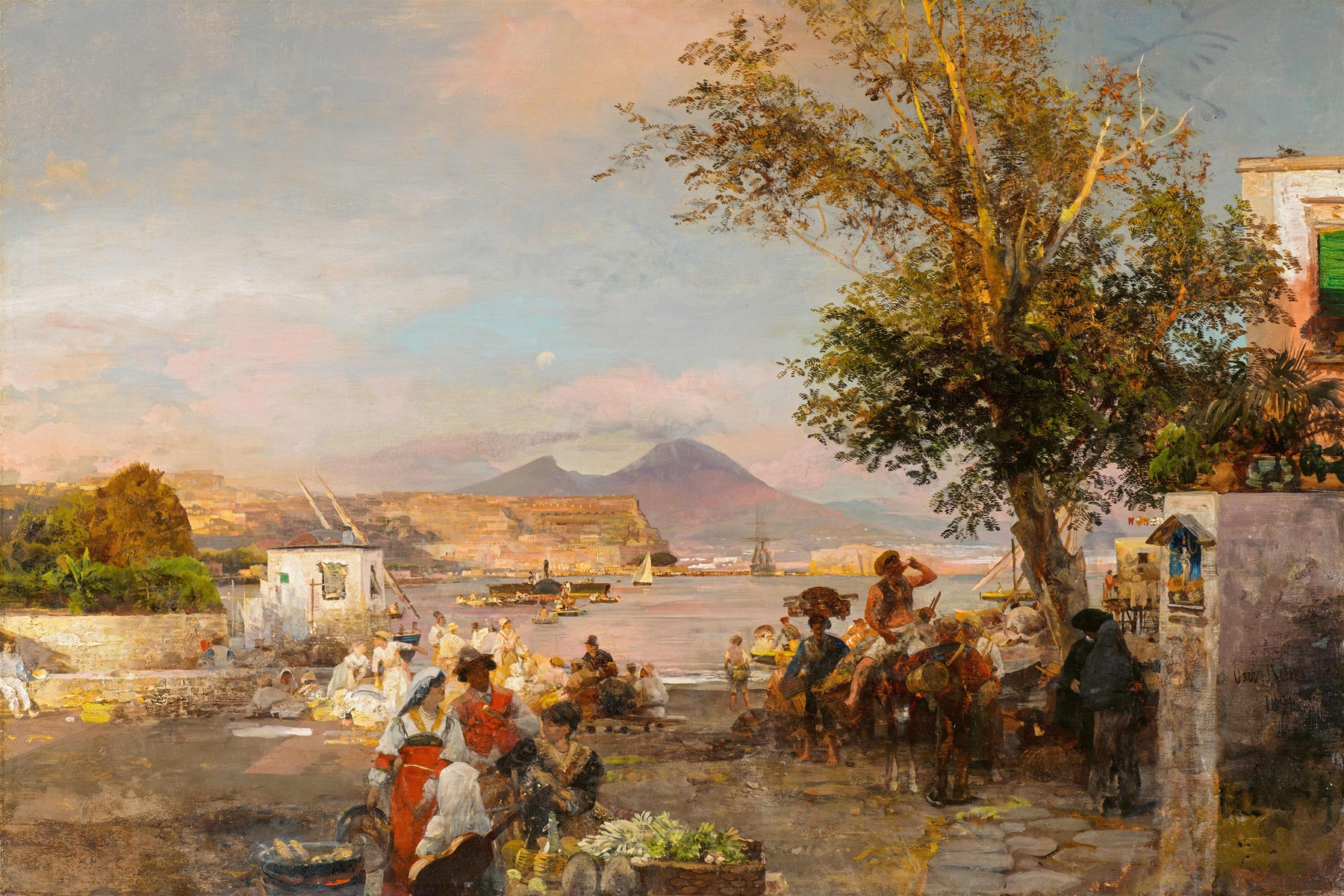
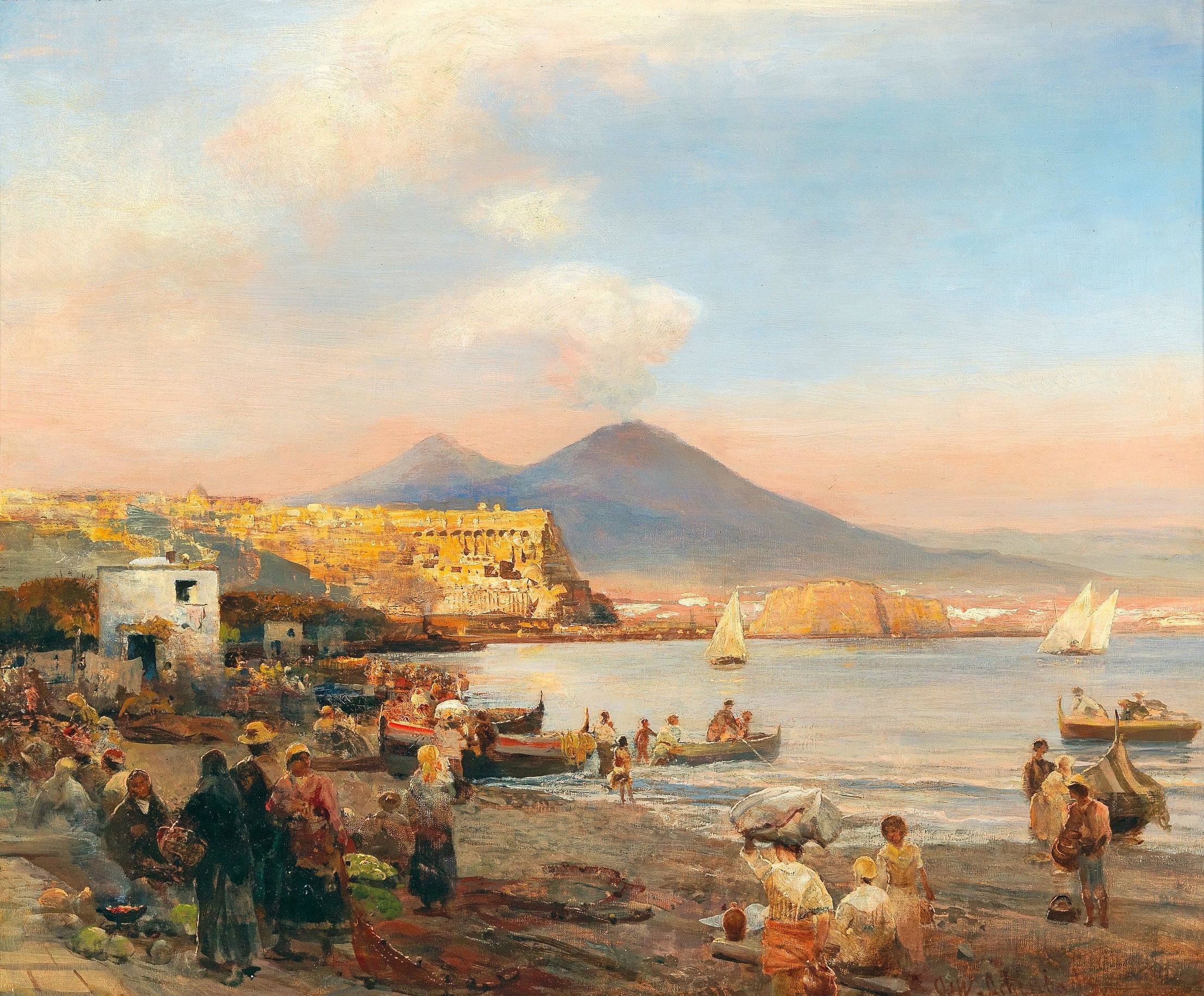
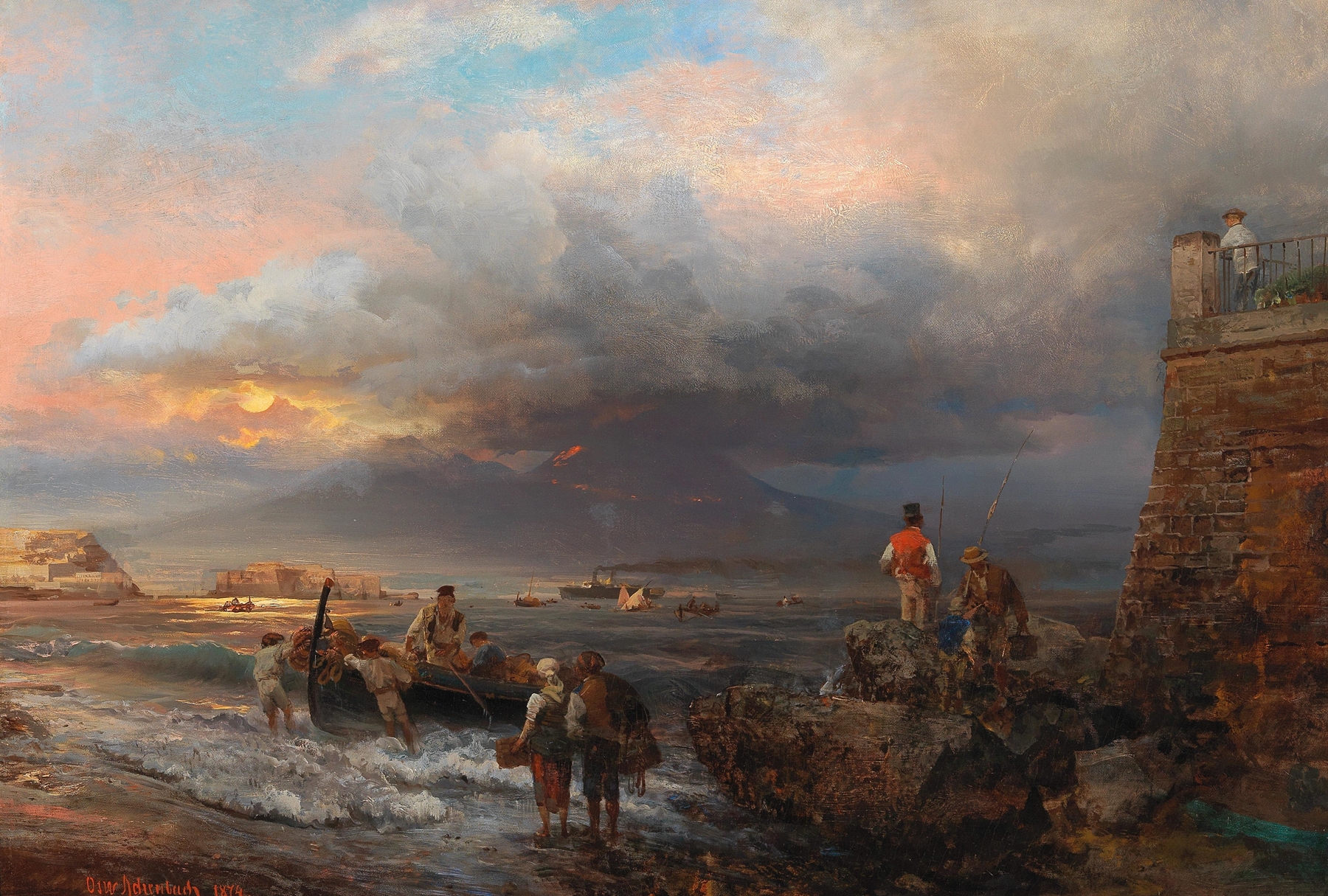
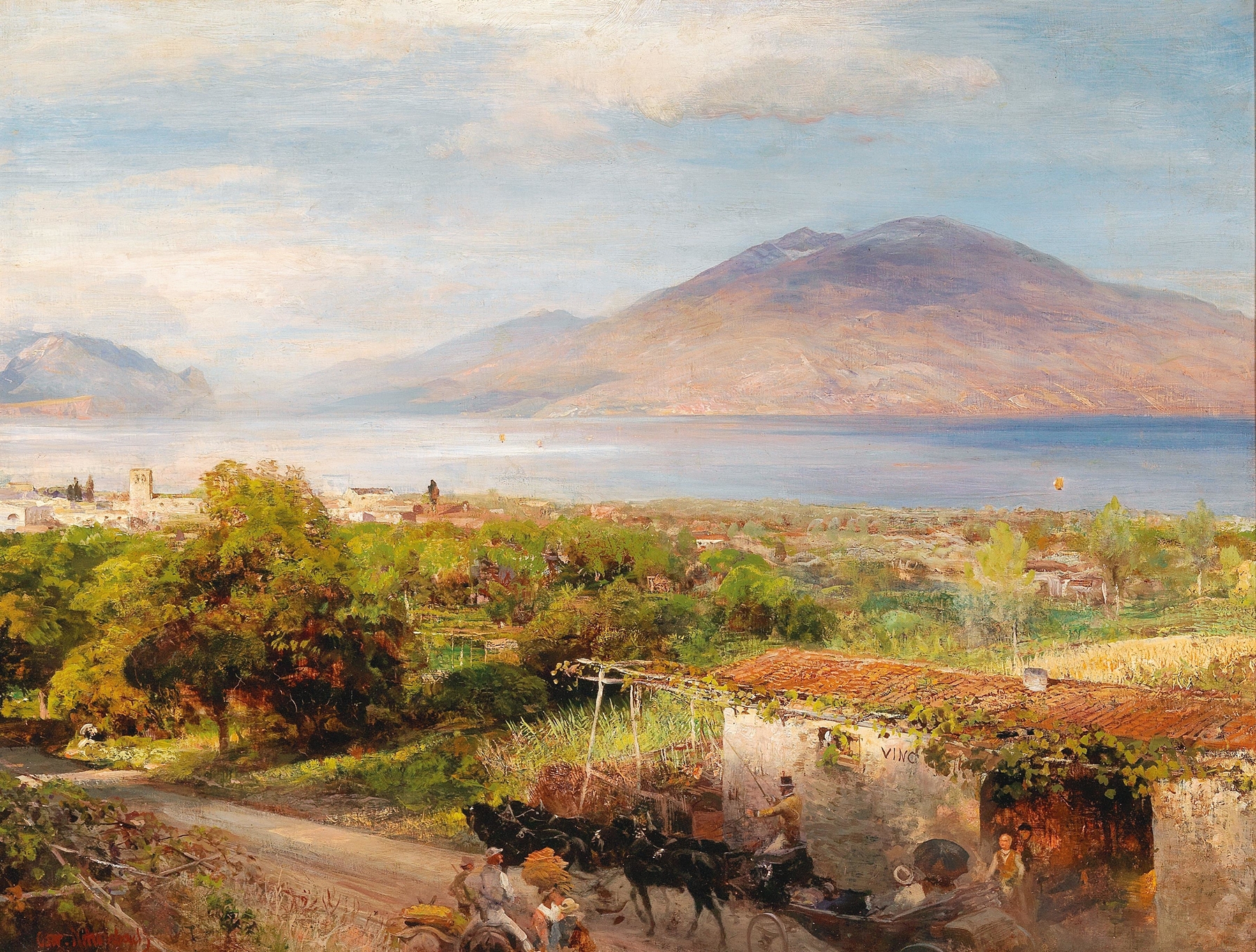
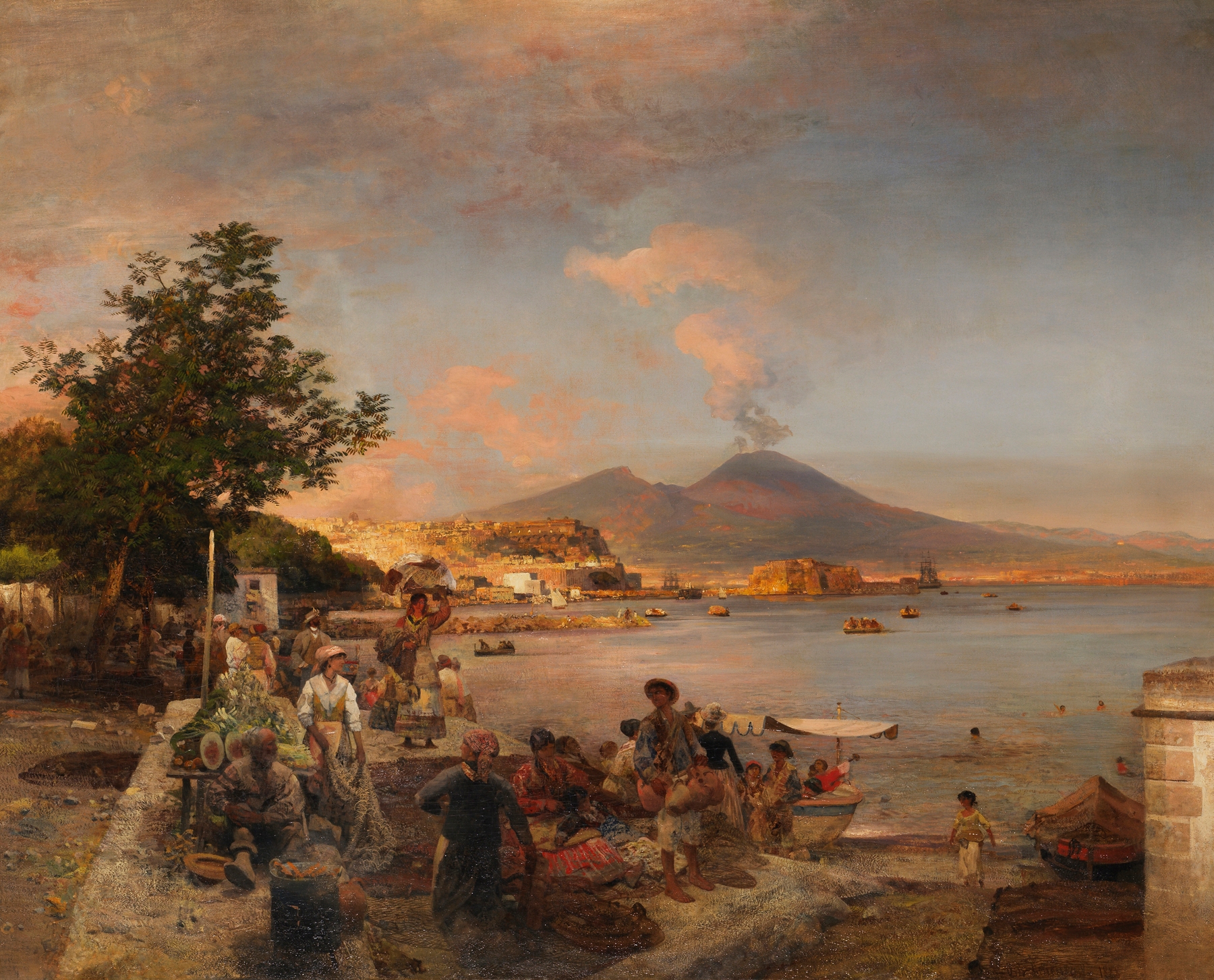
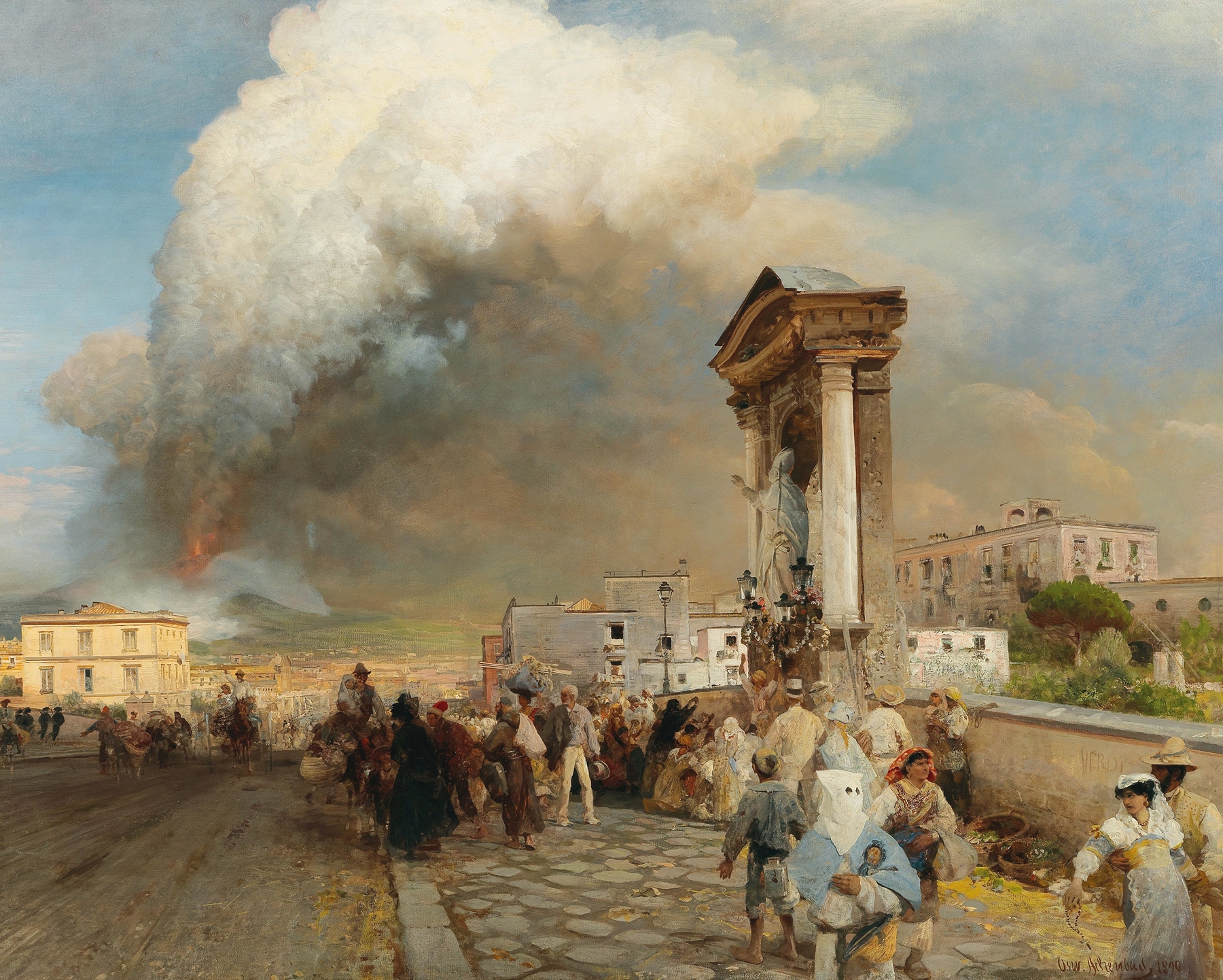
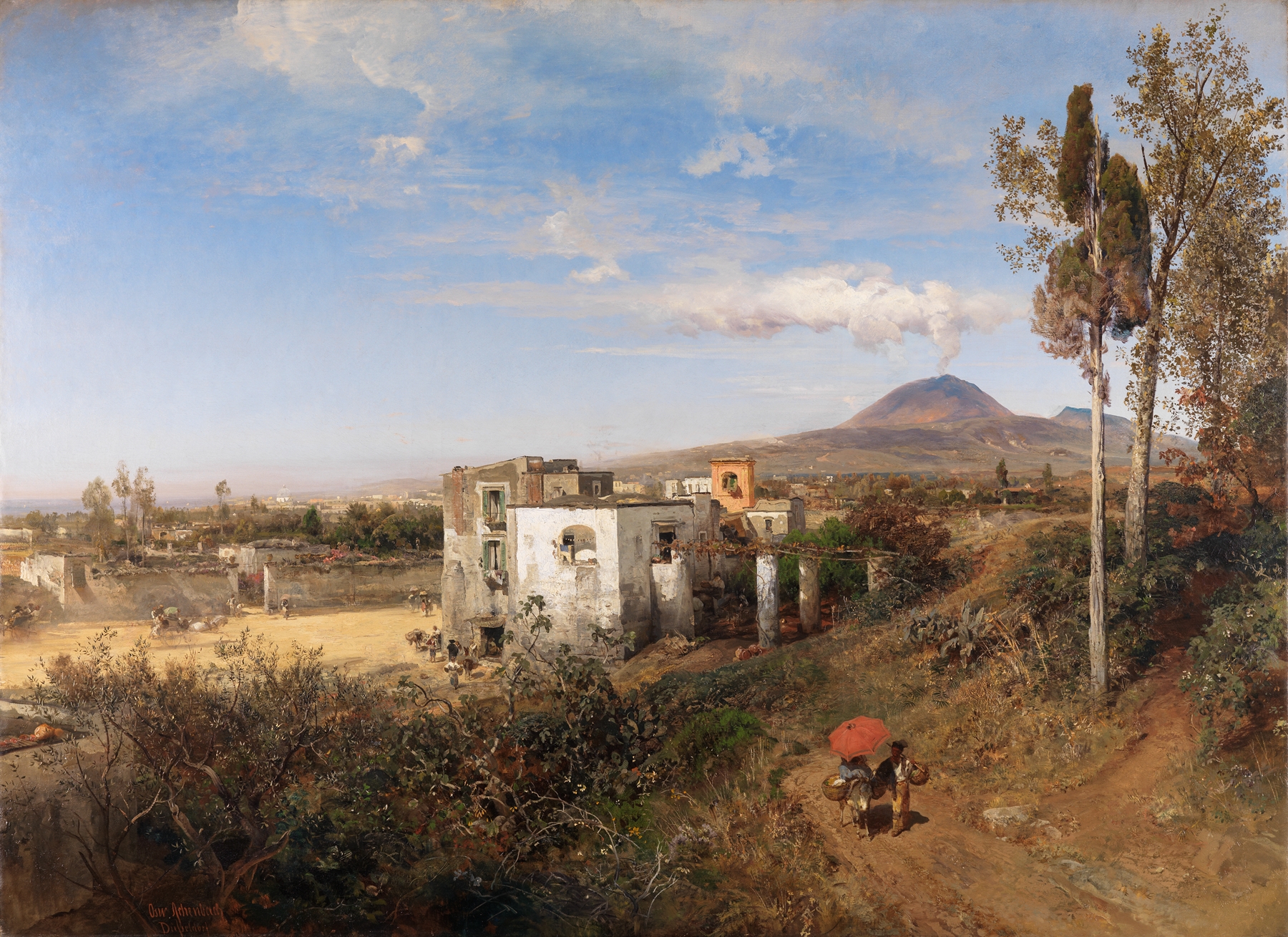
Is this a mirror — or a memory? The interplay of light and shadow invites contemplation, drawing us into a moment where nature reveals its serene yet powerful essence. Look to the horizon, where the sun’s golden rays illuminate the majestic silhouette of Vesuvius. The volcano rises dramatically against a canvas of soft blues and whites, its slopes bathed in an ethereal glow.
Notice how the gentle waves of the Bay of Naples catch the light, creating a shimmering pathway that leads our eyes toward the mountain's peak, establishing a profound contrast between tranquility and latent power. Beneath the surface of this idyllic scene lies an undercurrent of tension. The placid waters mirror the sky’s serenity, yet the presence of Vesuvius serves as a reminder of nature's unpredictable temperament. The subtle variations in color — from warm golds to cool blues — evoke a sense of nostalgia, suggesting the relationship between beauty and danger, calmness and chaos.
These elements intertwine, creating a metaphor for the duality of existence itself. Oswald Achenbach painted this evocative landscape in 1884 while residing in Düsseldorf, a time when Romanticism was giving way to a burgeoning realism in art. The tranquil depiction of Vesuvius reflects his fascination with the Italian landscape, a subject he returned to frequently. During this period, Achenbach’s work was gaining recognition for its ability to marry meticulous detail with emotive landscapes, securing his place within the pantheon of 19th-century landscape painters.