Blick auf Rom von der Villa Medici — History & Analysis
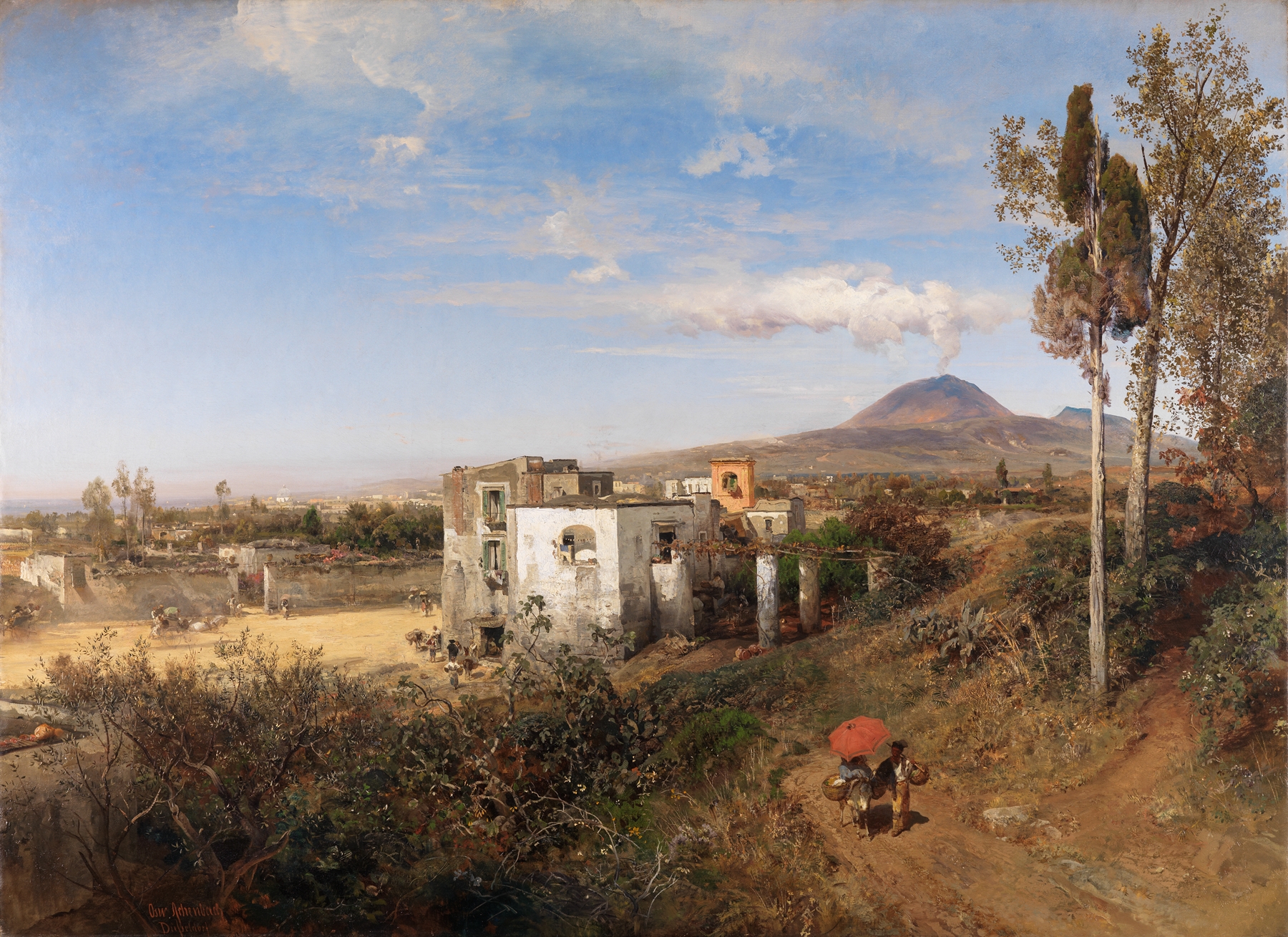
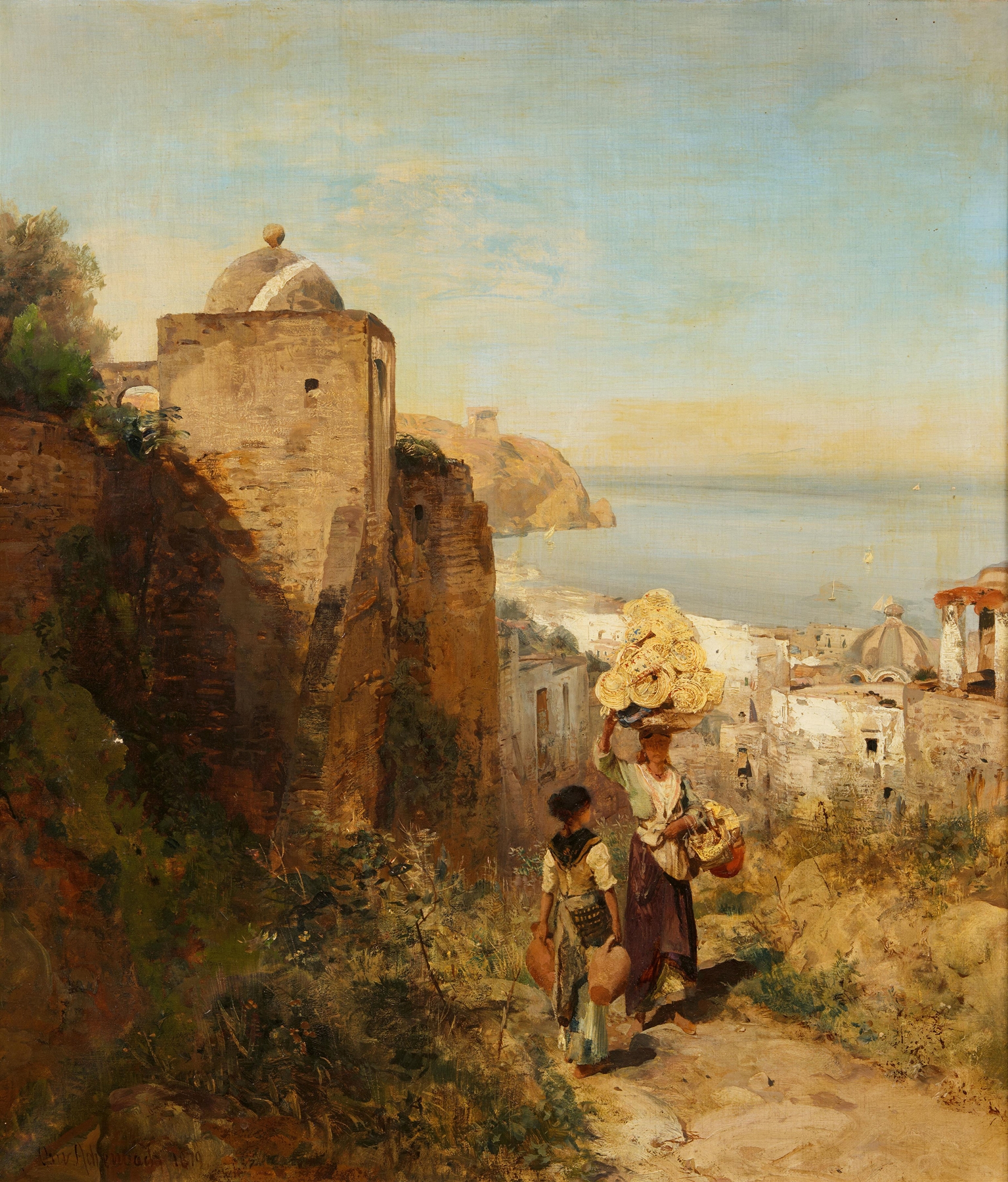
Who listens when art speaks of silence? In the stillness of Blick auf Rom von der Villa Medici, Oswald Achenbach captures a moment heavy with unspoken grief, where the beauty of the landscape intertwines with a lingering sense of loss. Look to the left, where the gentle contours of the hills cradle the city below. Achenbach’s brushwork is meticulous, each stroke echoing the myriad shades of green and gold that blanket the terrain. Focus on the interplay of light and shadow; the golden rays seep delicately through the clouds, illuminating the ancient structures of Rome while casting a soft glow on the surrounding landscape.
The artist expertly balances the vividness of the foreground with the muted tones of the distant horizon, inviting the viewer to traverse the layers of depth in this serene panorama. Yet, within this idyllic scene lies a profound tension. The lush foliage and sun-drenched city evoke a haunting stillness that speaks of what once was, contrasting the vibrancy of life with the inevitability of time’s passage. Consider the juxtaposition of the vibrant colors against the pale, distant sky—an embodiment of hope subsumed by sorrow.
Each detail whispers stories of memories held dear, suggesting that the beauty of life is often shadowed by the echoes of absence. In 1893, Achenbach found inspiration in the tranquility of the Villa Medici, situated on the Pincian Hill overlooking Rome. This period marked a pivotal moment in his career, as he was grappling with the transition between Romanticism and Impressionism. The art world was evolving, yet Achenbach remained steadfast in his pursuit of capturing the emotional essence of a place, reflecting both the idyllic charm of the countryside and the weight of nostalgia intertwined with his own experiences of loss.