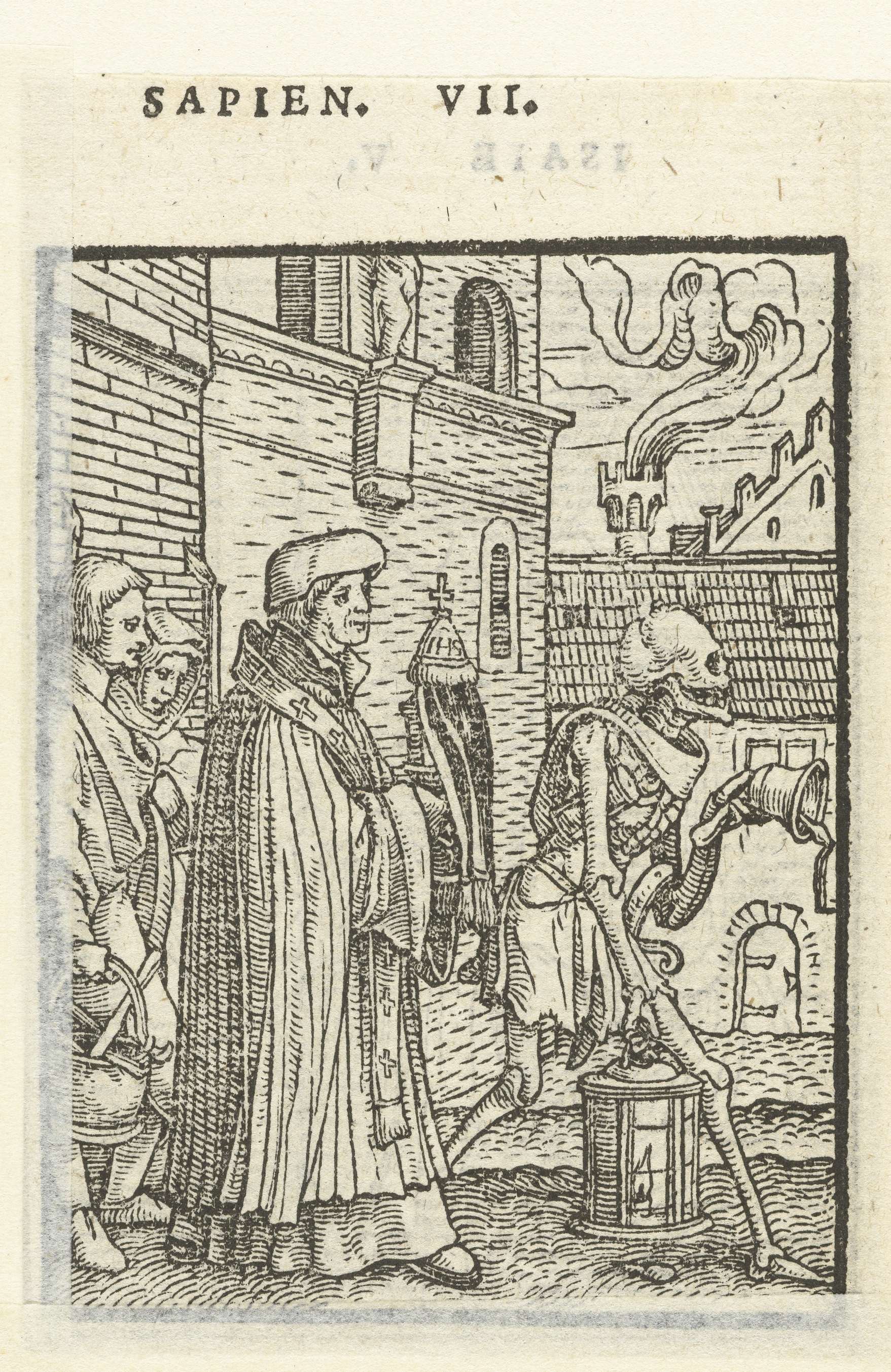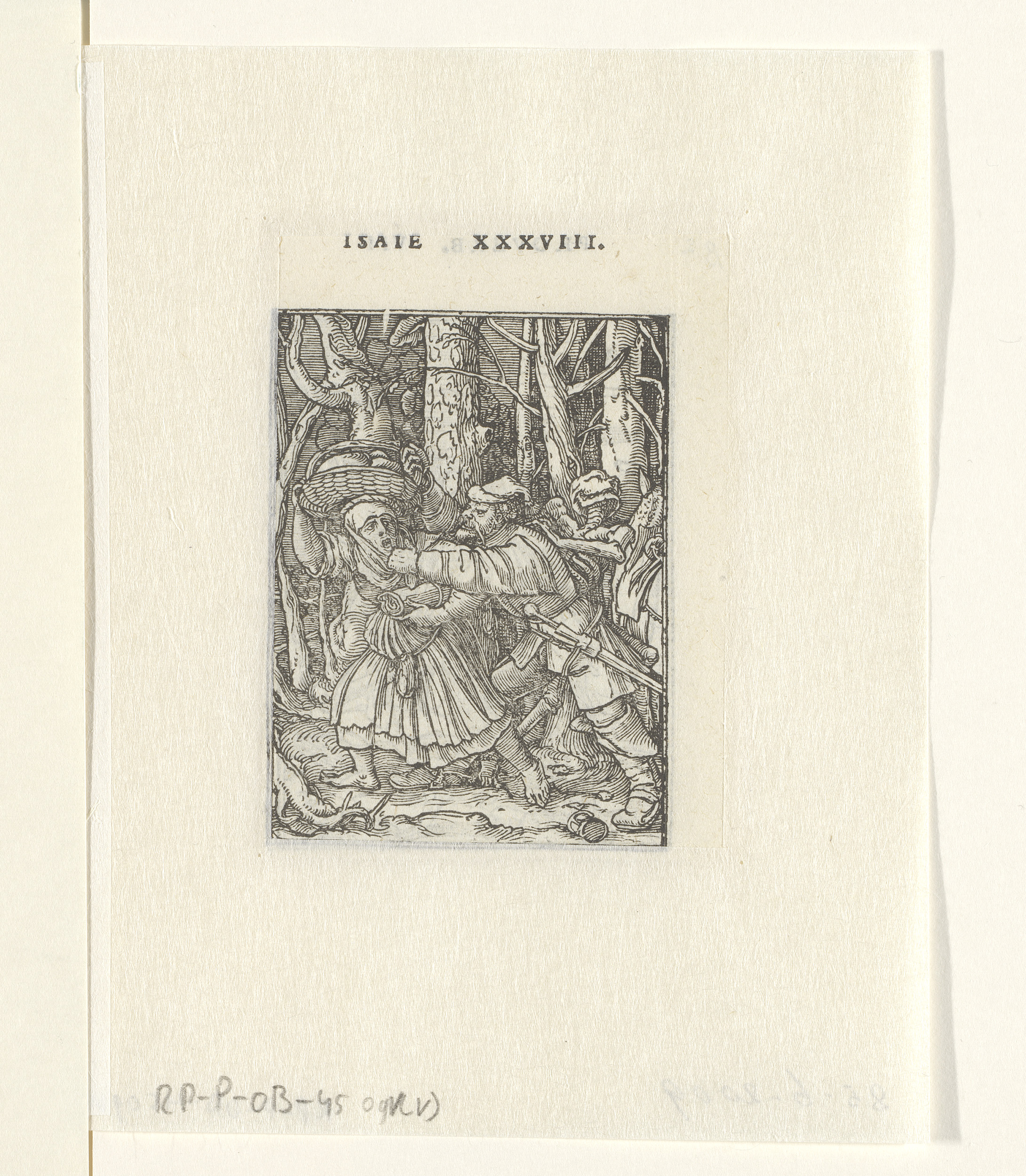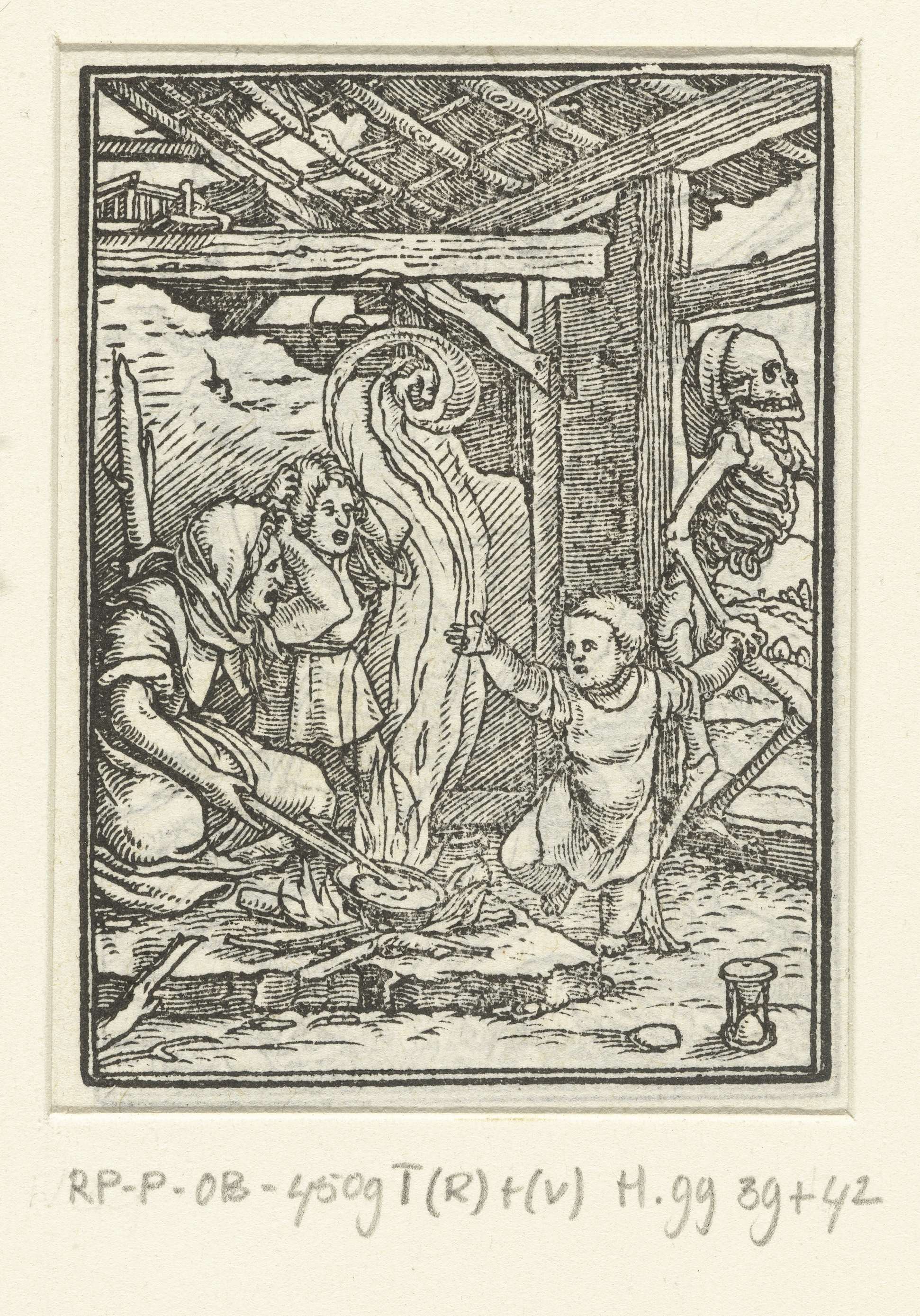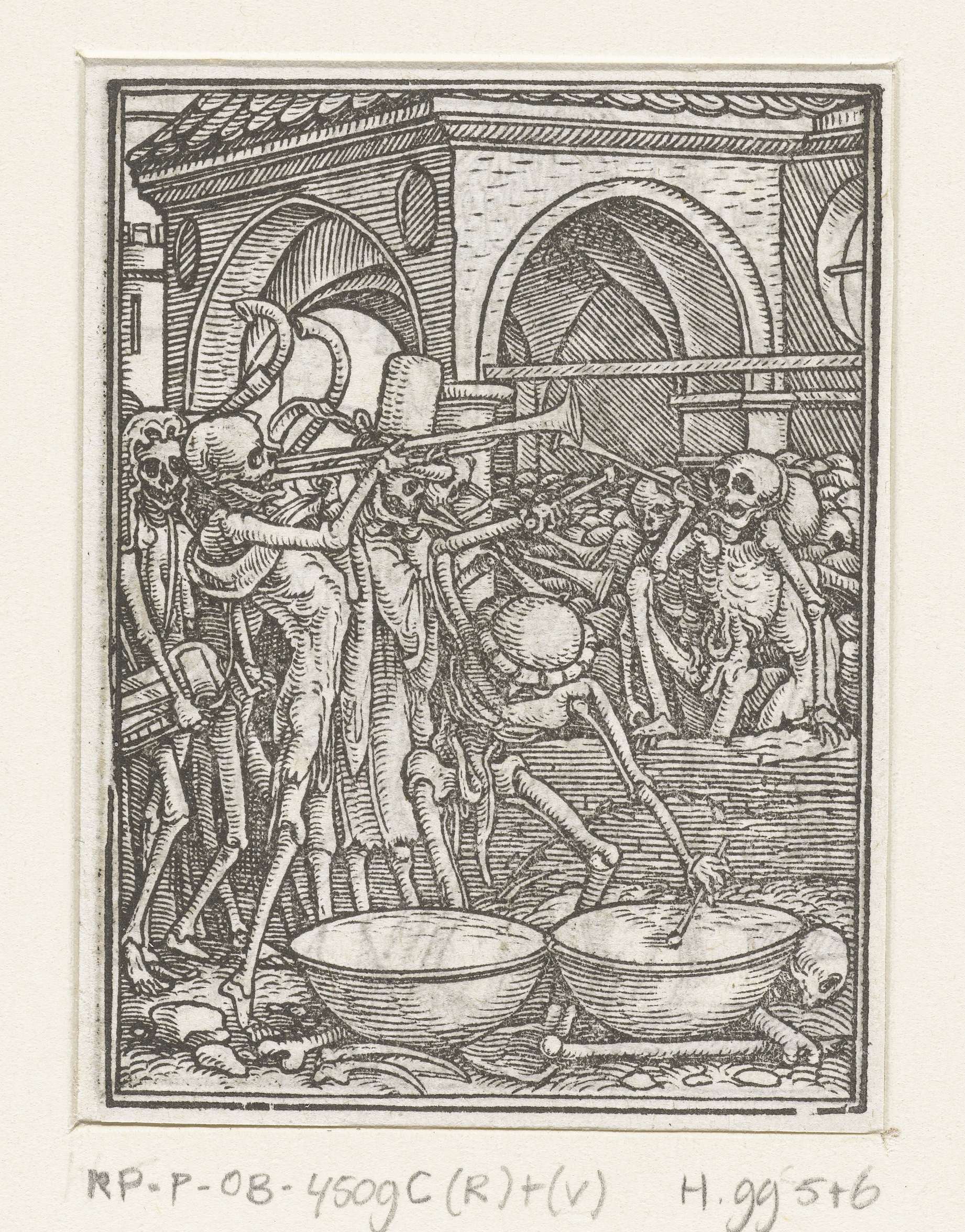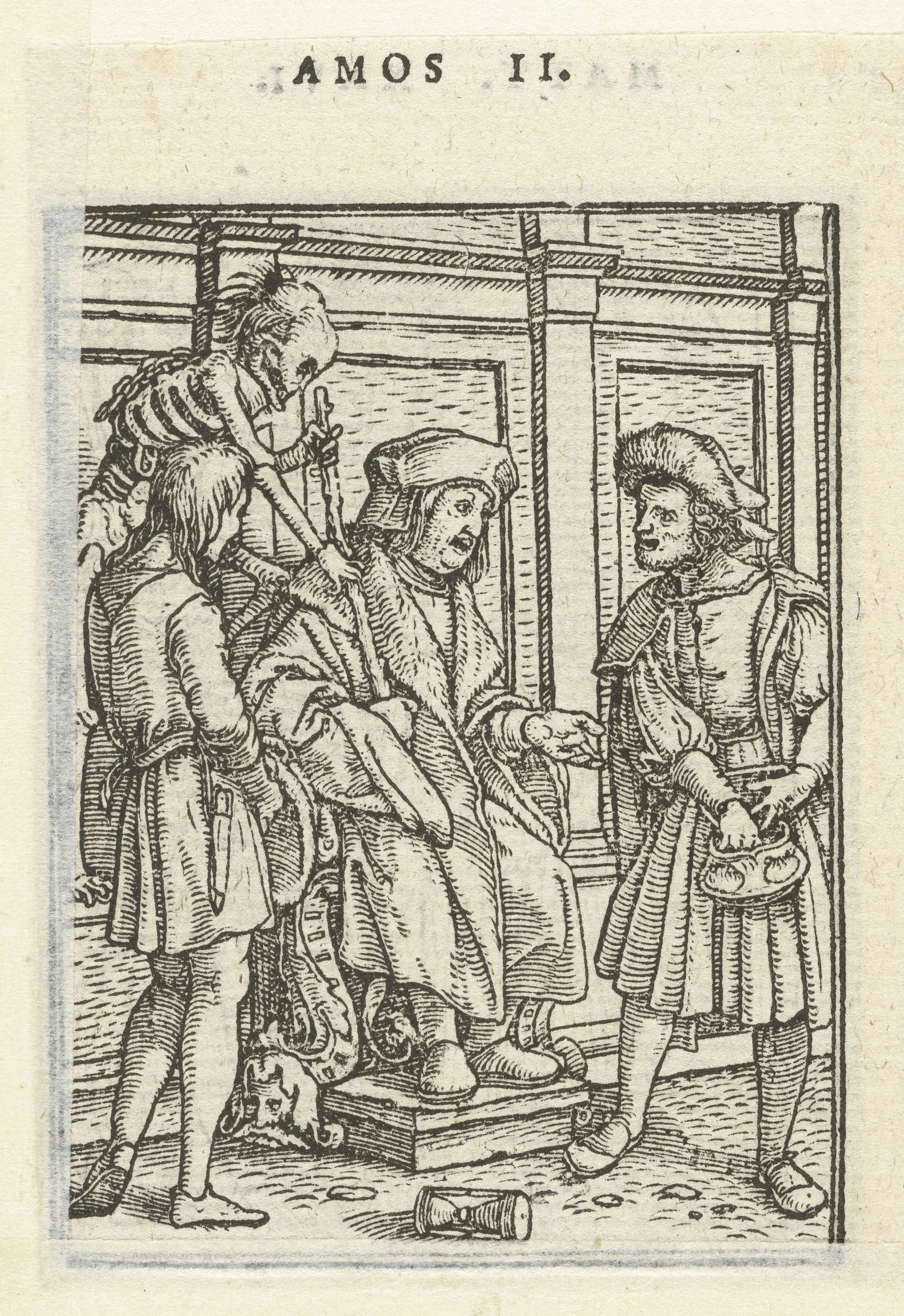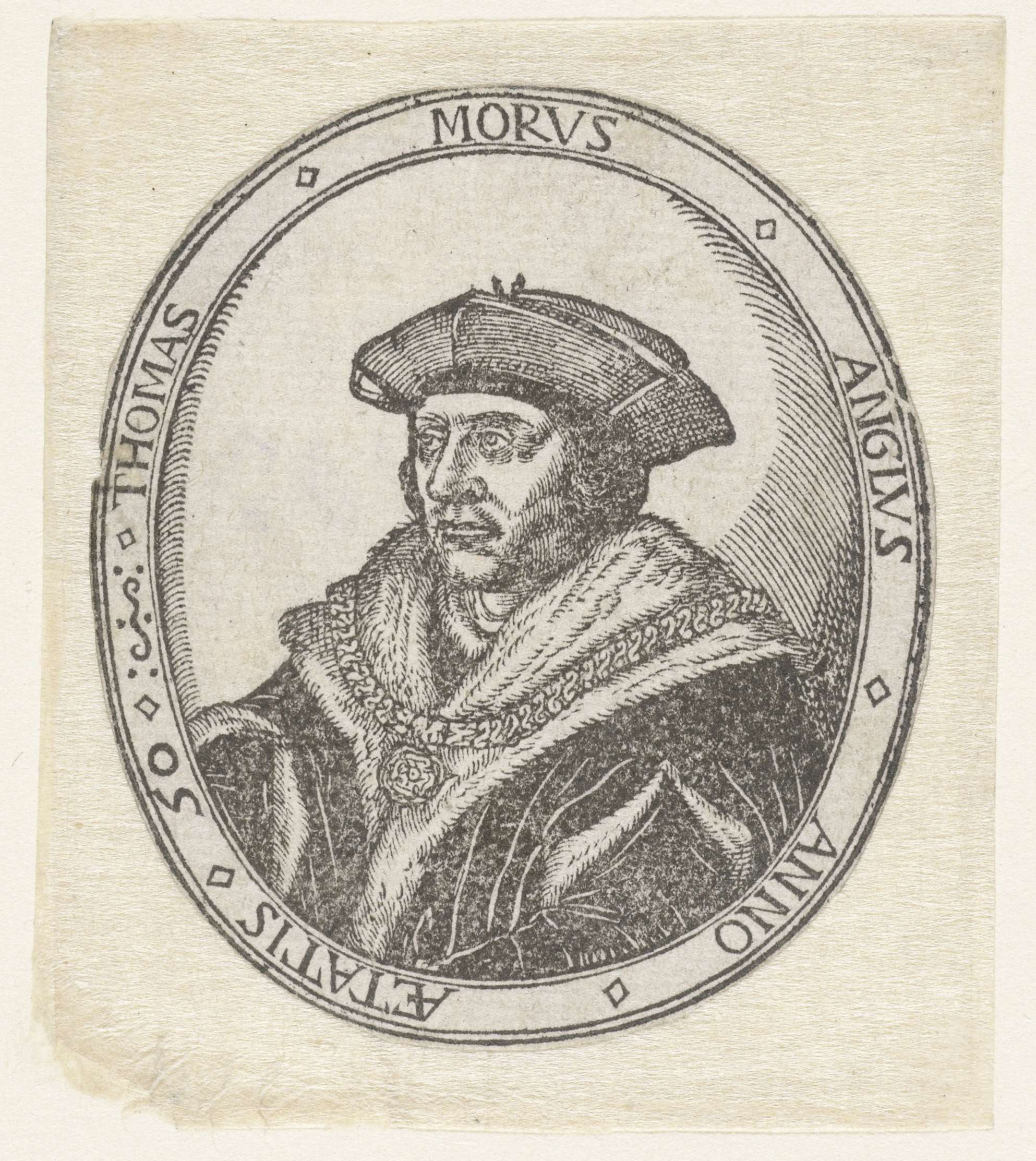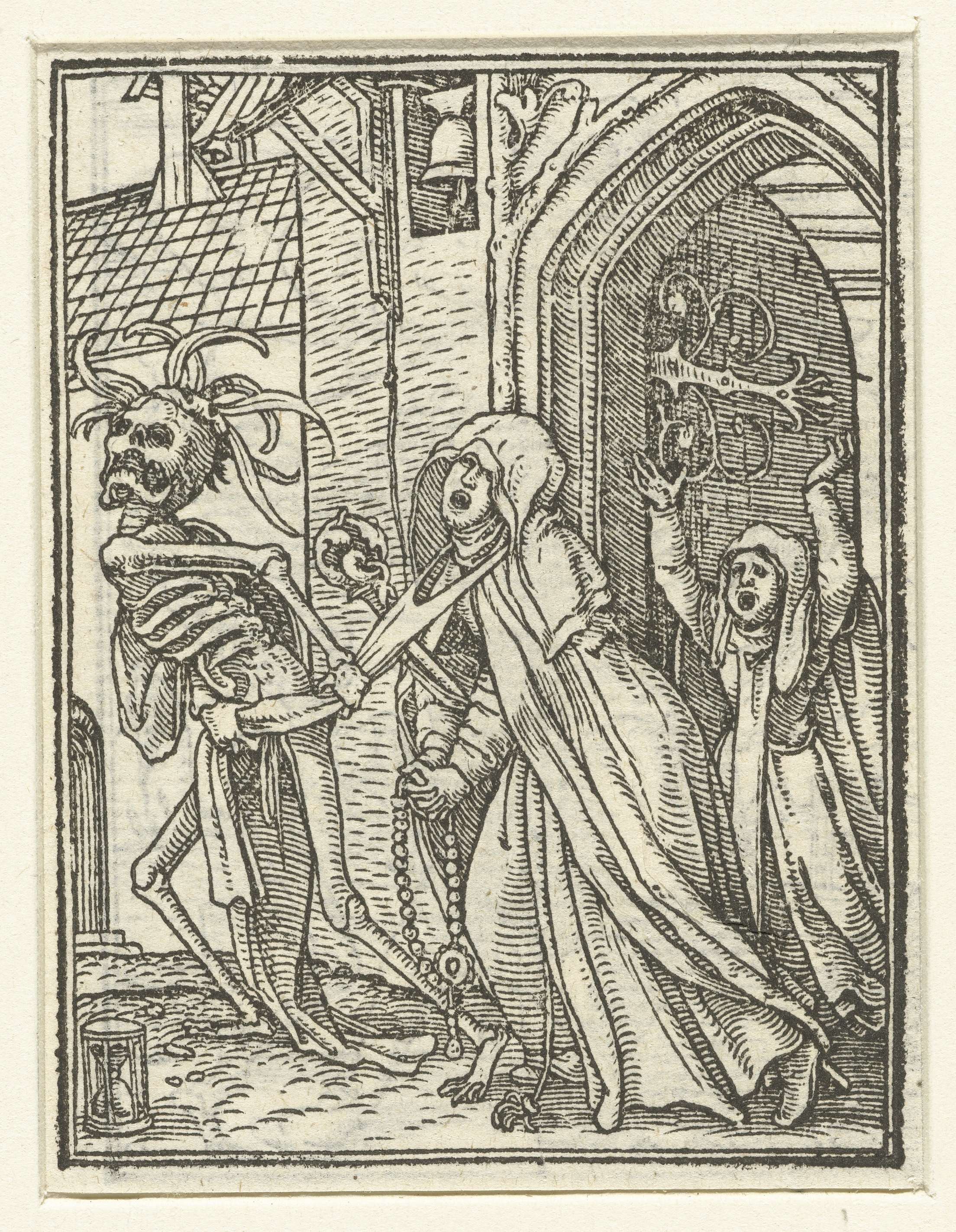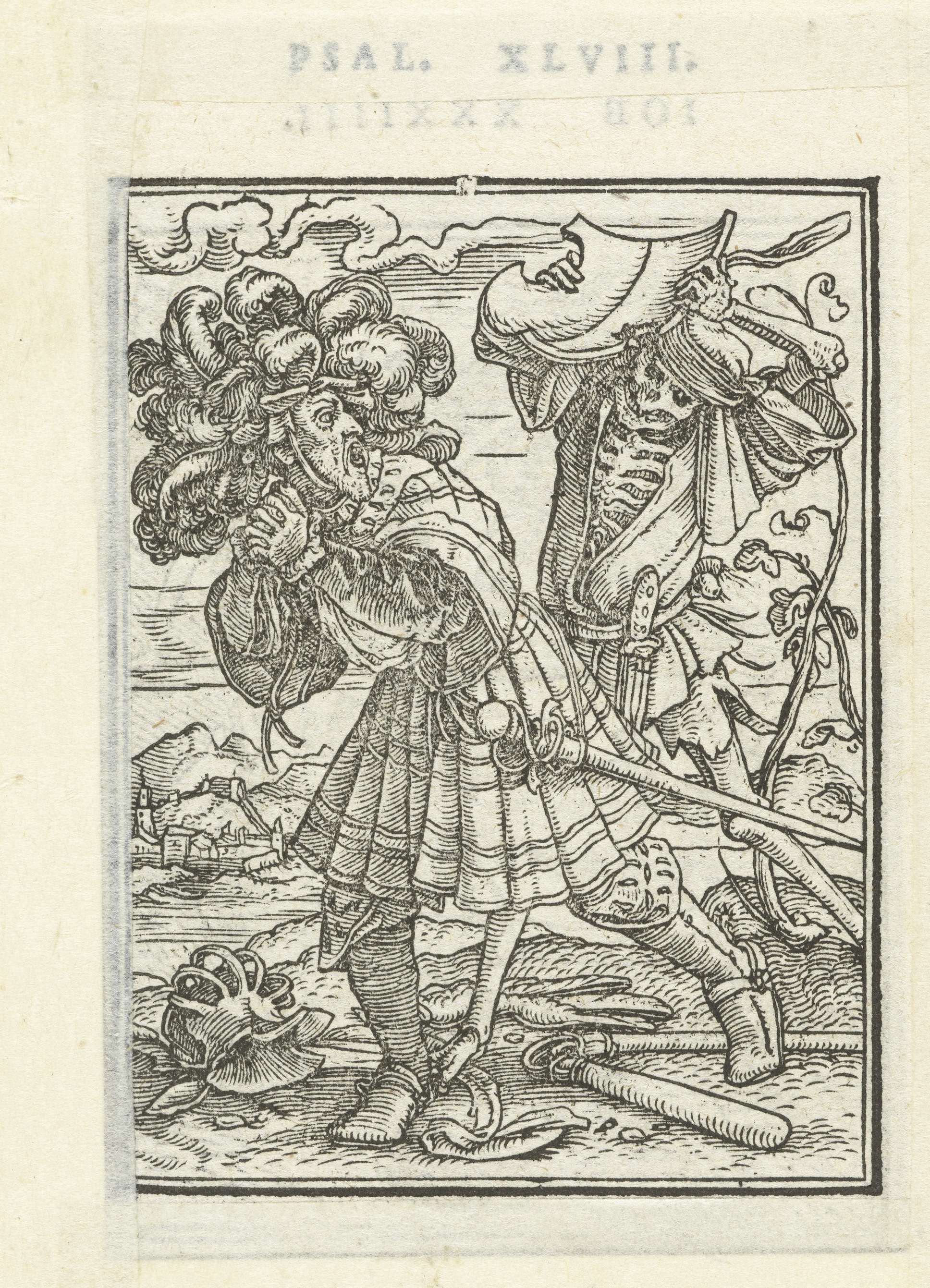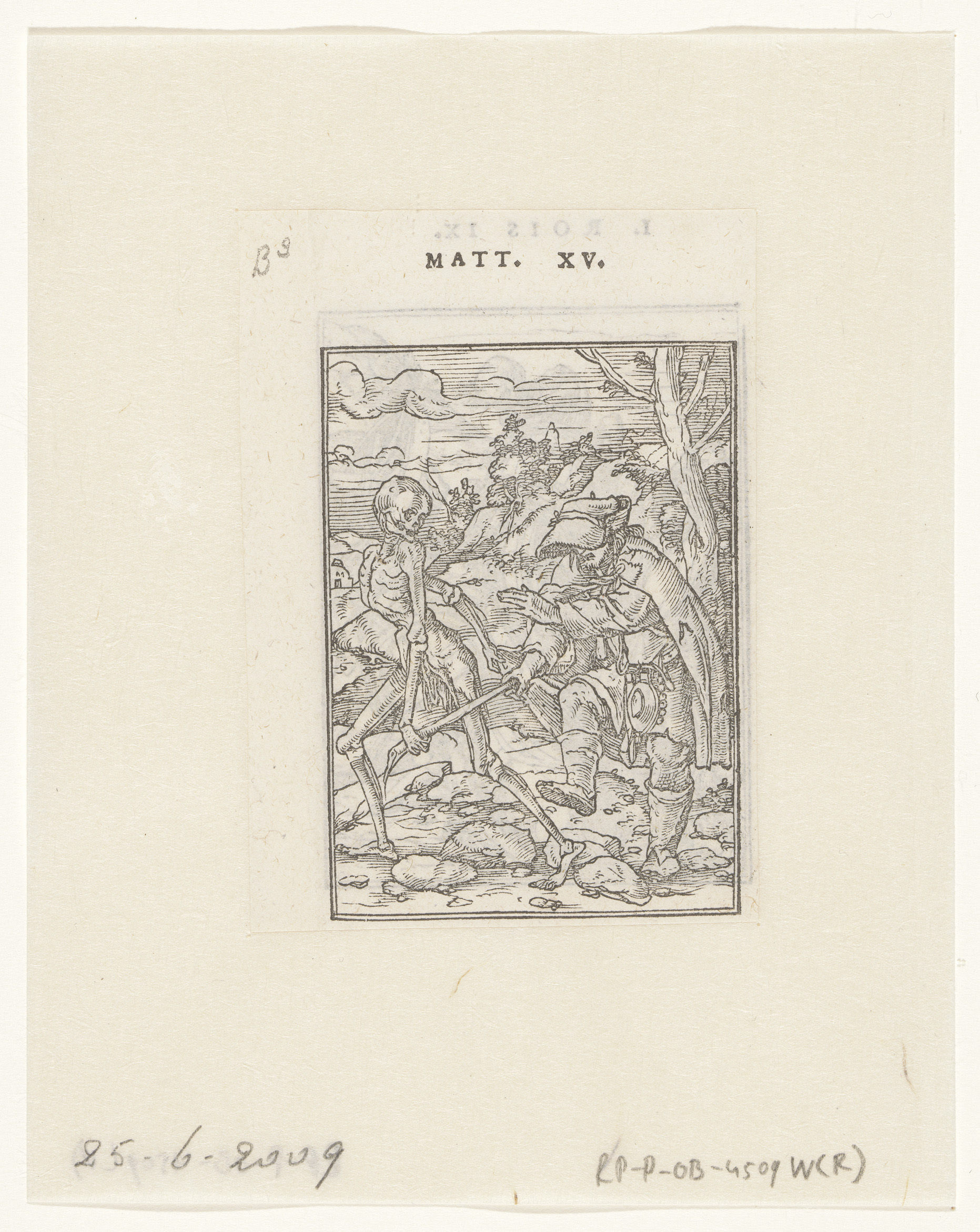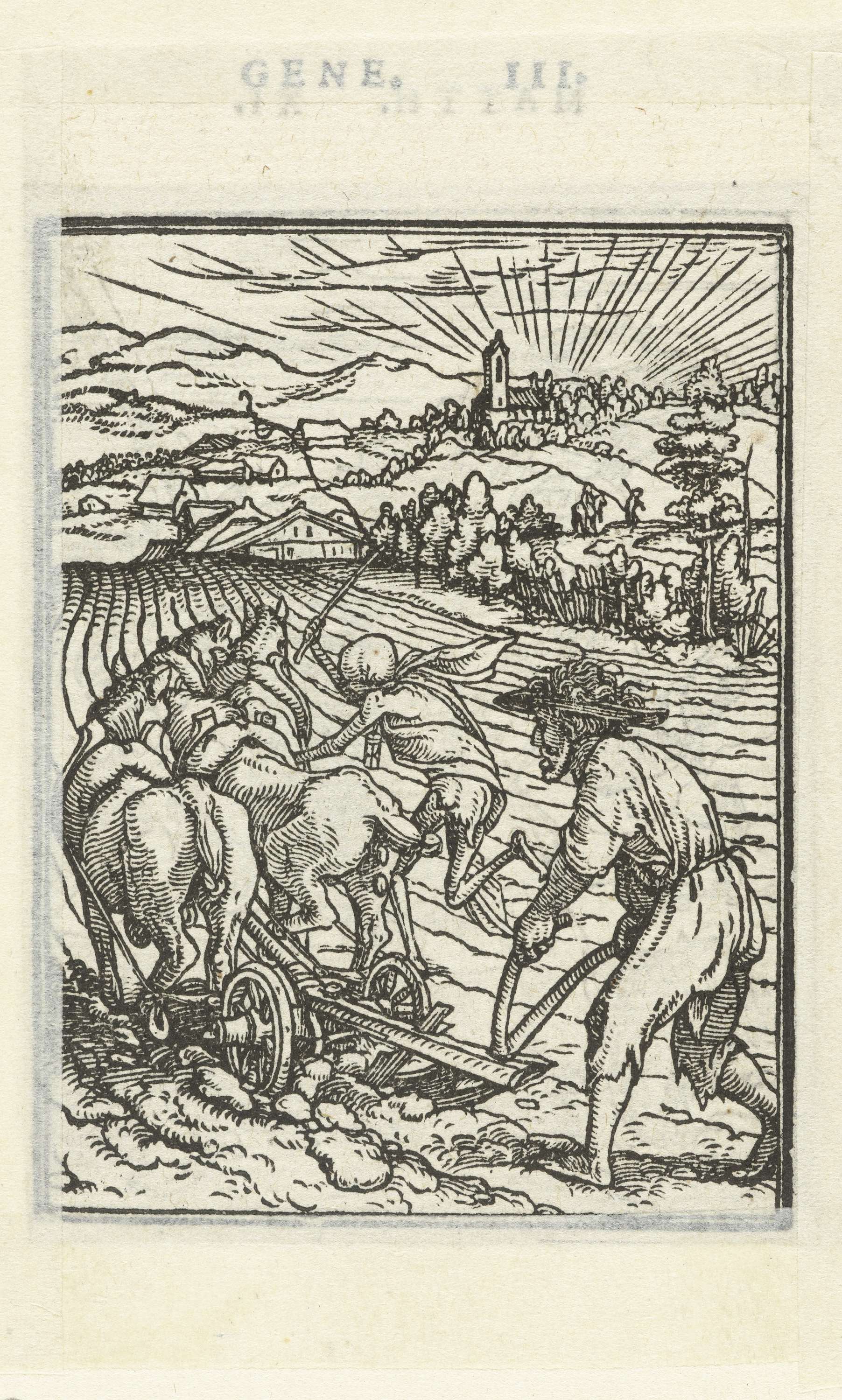
Could beauty survive in a century of chaos? The haunting stillness of *Boer en de Dood* speaks to the fragile intersection of life and mortality, a moment suspended in the tension between faith and despair. Look to the left at the farmer's weary face, etched with lines that tell stories of toil and resilience. Notice the contrast between the vibrant greens of the landscape and the dark, ominous figure of Death, looming but not yet encroaching. The composition balances life and death through meticulous detail: the farmer’s weathered hands gripping his tools speak of labor, while the skeletal form beside him reminds us of the inescapable end. Holbein’s use of muted earth tones heightens this tension, drawing us into a world that feels both beautifully alive and eerily transient. Hidden meanings pulse beneath the surface; the farmer's steadfast posture suggests a defiance against his fate, yet his gaze betrays an awareness of the inevitable. The juxtaposition of life’s vigor against Death’s chilling presence highlights the emotional tug-of-war between hope and resignation. In this moment, Holbein captures a universal truth—faith in the face of mortality—evoking both fear and a stirring resolve to embrace life. In 1538, Hans Holbein II painted this work during a period marked by religious strife and political upheaval in Europe. Settled in England, he was deeply influenced by the Reformation, which altered the landscape of faith and art. This context informed his exploration of mortality and existence, as he sought to depict not just the visible world but the profound questions that linger beneath its surface, making *Boer en de Dood* a poignant reflection on life’s fleeting nature.