Graaf en de Dood — History & Analysis
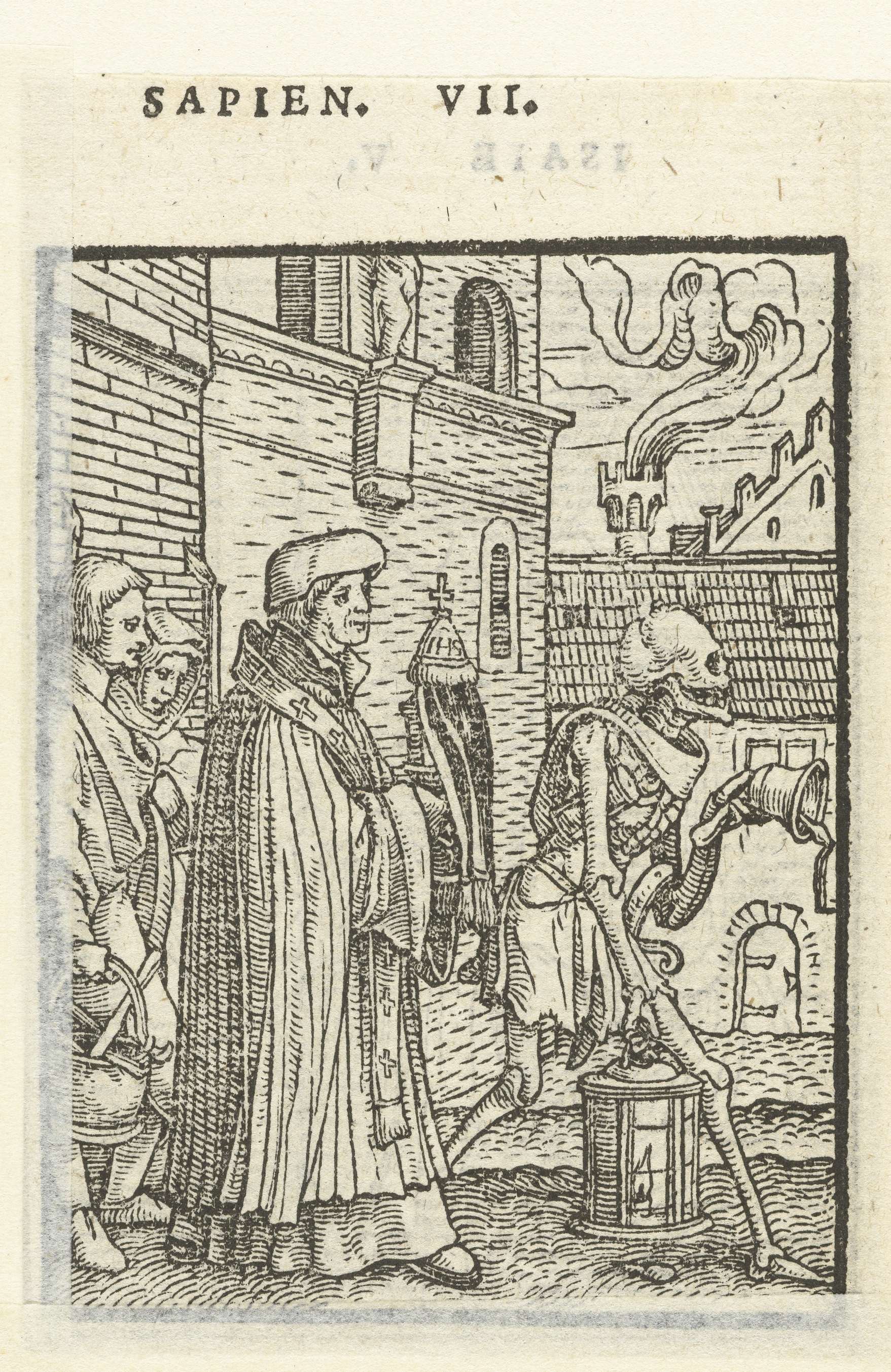
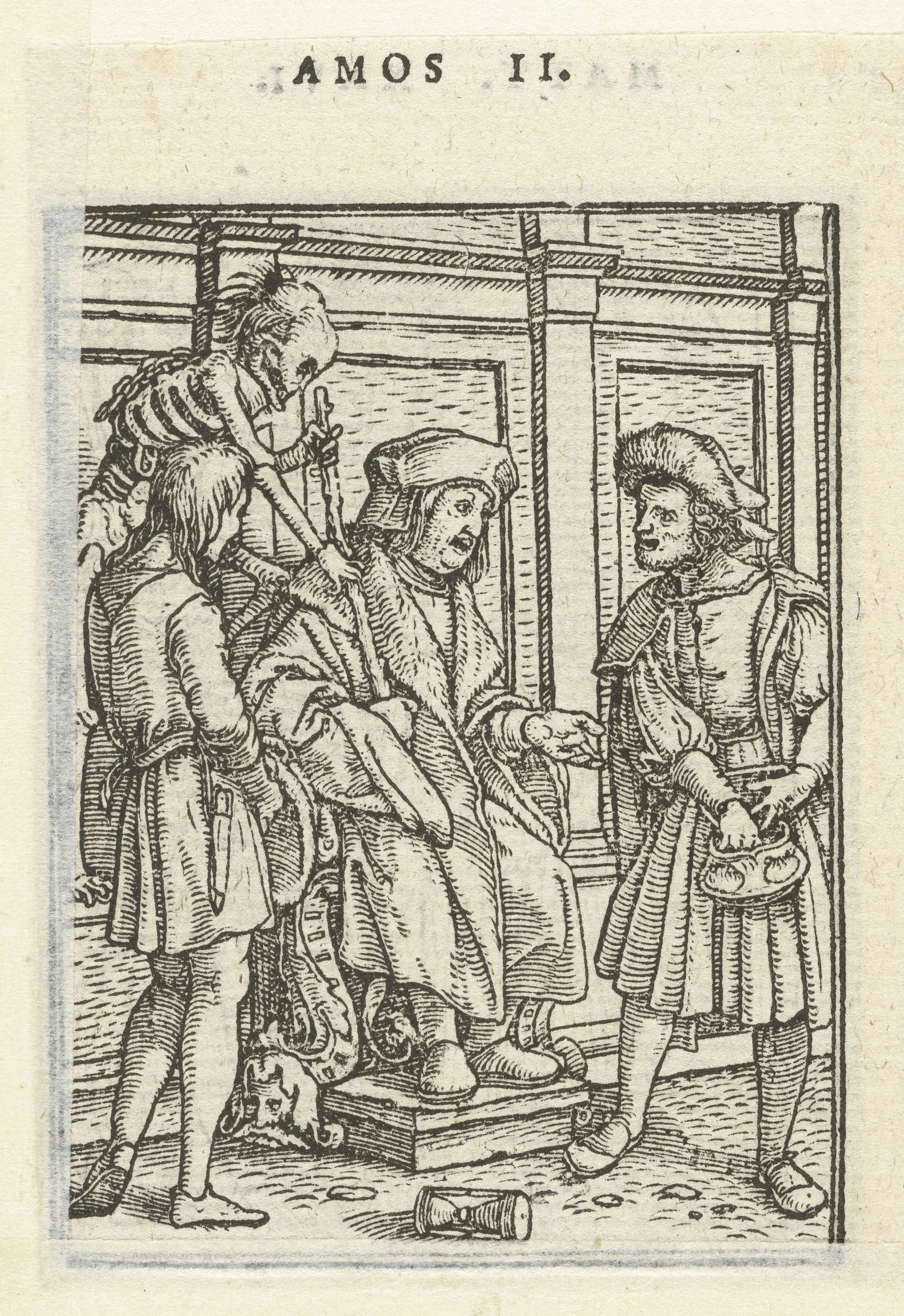
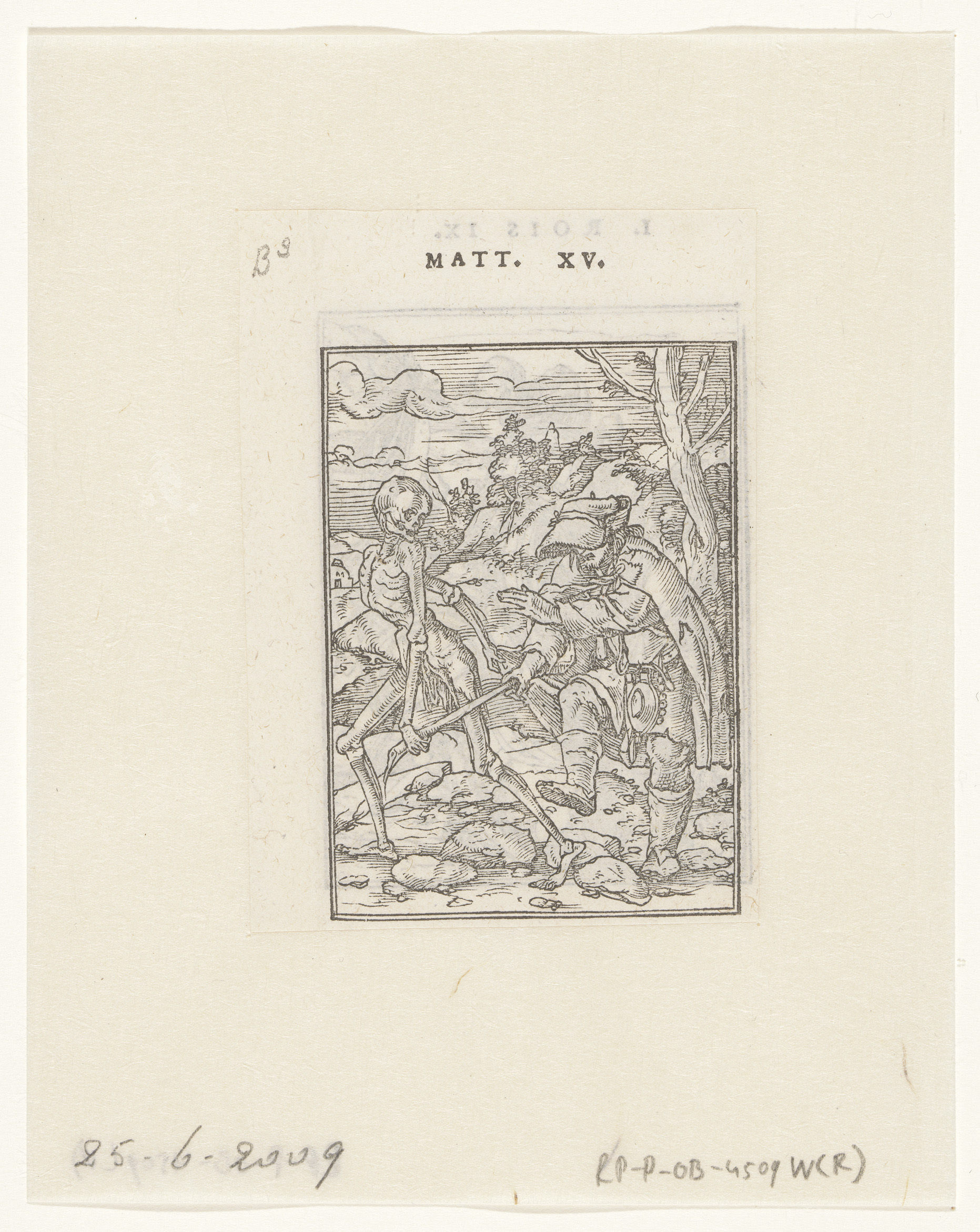
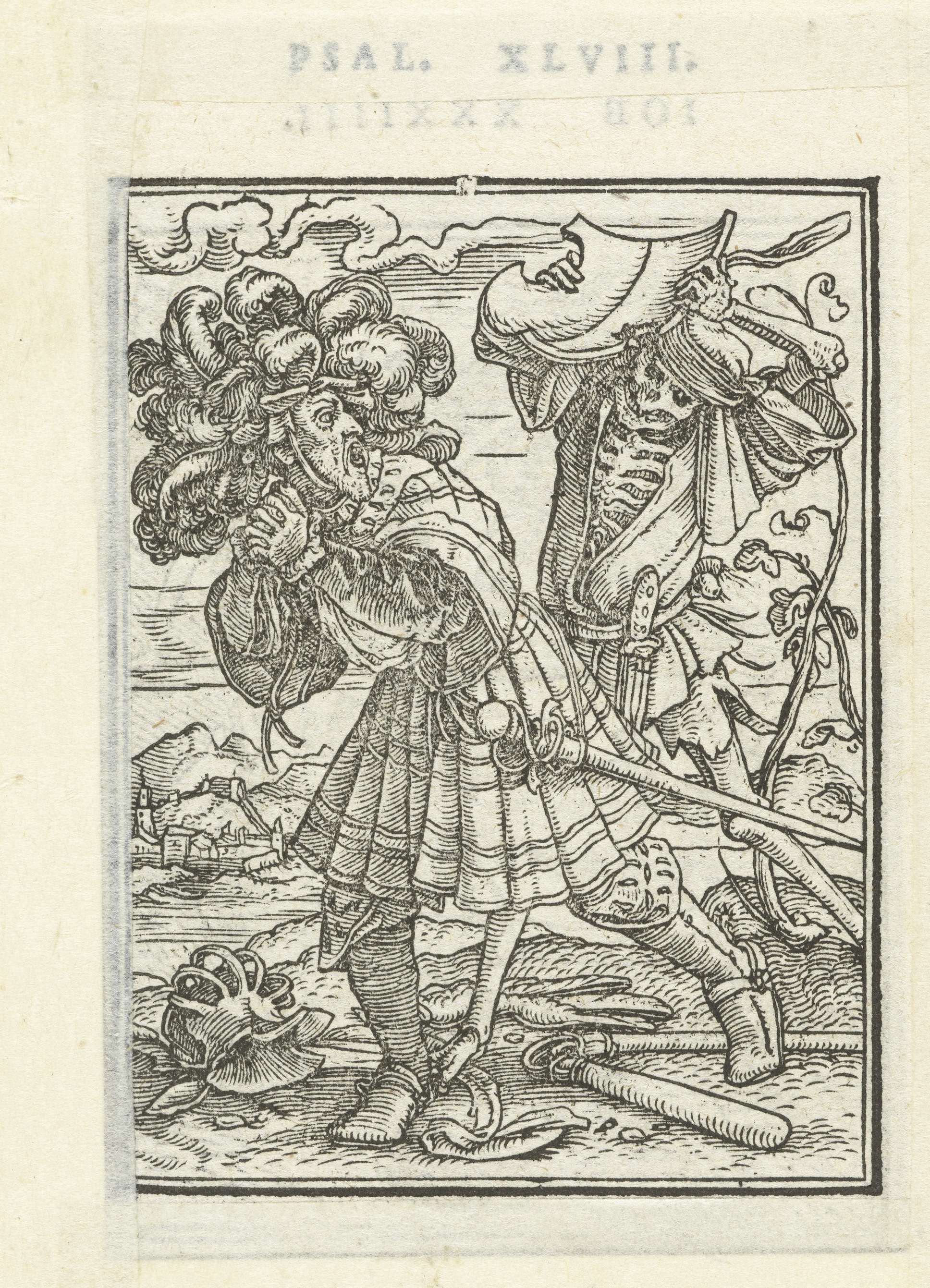
“Every silence here is a confession.” In a moment suspended between stark reality and the unfathomable void, the viewer is confronted with the haunting nature of mortality and the profound awakening it brings. Look to the center of the composition where the figure of Death, clad in a tattered cloak, looms over the nobleman, whose gaze reflects a mixture of dread and acceptance. The deep, shadowy tones create a chilling atmosphere, contrasting sharply with the vibrant colors of the nobleman’s attire. Notice how the delicate brushwork of the fabric captures light, emphasizing both the opulence of life and the inevitability of decay.
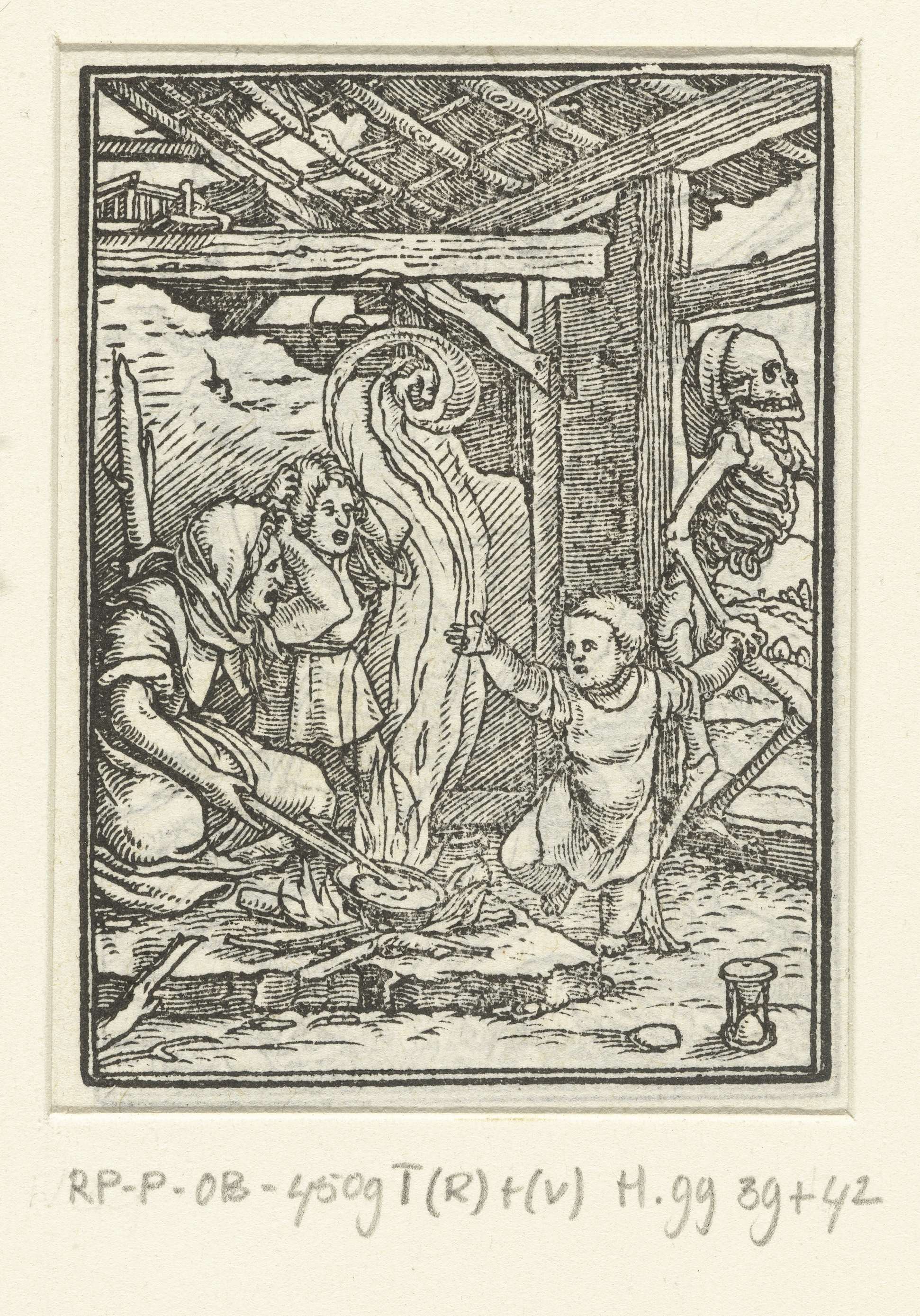
Yet, it is in the subtle details that the emotional tension unfolds. The nobleman’s posture suggests an awareness of his own fragility, while the skeletal hand of Death points ominously, evoking a sense of urgency. Holbein cleverly employs symbols, such as the hourglass and the open book, to signify the passage of time and the weight of knowledge, urging the viewer to reflect on their own life's fleeting nature.
Created in 1538, this work emerged during a period of profound social and religious upheaval in Europe. Holbein, already a renowned portraitist in England, painted Graaf en de Dood against the backdrop of the Reformation, a time when mortality was a pressing concern woven deeply into the cultural consciousness. This piece not only represented individual existential dread but also mirrored the collective fears of a society grappling with change and the harsh realities of life and death.