Kind en de Dood — History & Analysis
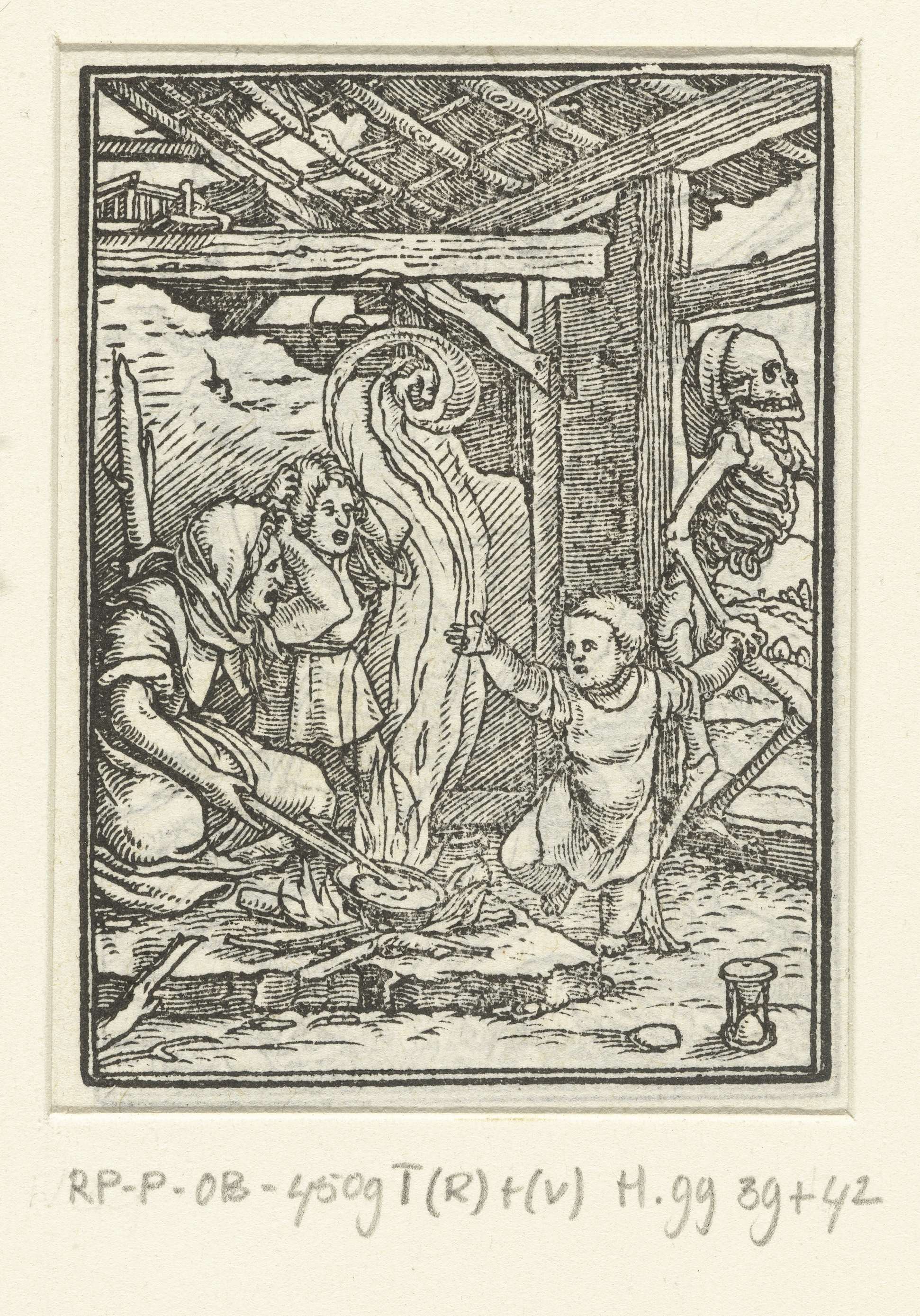
Did the painter know this moment would outlive them? The quiet encounter between a child and the skeletal figure of Death evokes a poignant reflection on the fleeting nature of life and the inevitability of mortality. Look to the center of the canvas, where the child’s innocent gaze meets the formidable visage of Death’s skull. The masterful use of chiaroscuro enhances the illusory depth, casting a soft light on the youthful face while shrouding the skeletal form in shadow.
Notice how the muted earth tones imbue the piece with a somber yet intimate atmosphere, grounding the viewer in the raw tension between life and death that permeates the scene. In this haunting tableau, the juxtaposition of innocence and finality resonates deeply. The child's playful posture contrasts starkly with the menacing presence of Death, embodying an emotional tension that invites contemplation. The subtle details—the child's clasped hands, the faint smile juxtaposed against the skull—speak to the universal experience of grappling with mortality, a theme that transcends time itself and compels each viewer to confront their own existence.
Holbein created this thought-provoking work in 1538 during a period marked by the Renaissance's deep engagement with themes of mortality and humanism. Living in Basel, he was influenced by the burgeoning interest in the human condition, reflected in both art and literature. As a prominent figure in Northern Renaissance art, Holbein’s exploration of life’s transience in Kind en de Dood resonates with the cultural anxieties of his time, encapsulating the delicate balance between the joy of life and the certainty of death.