Bords de la Mer, Palavas — History & Analysis
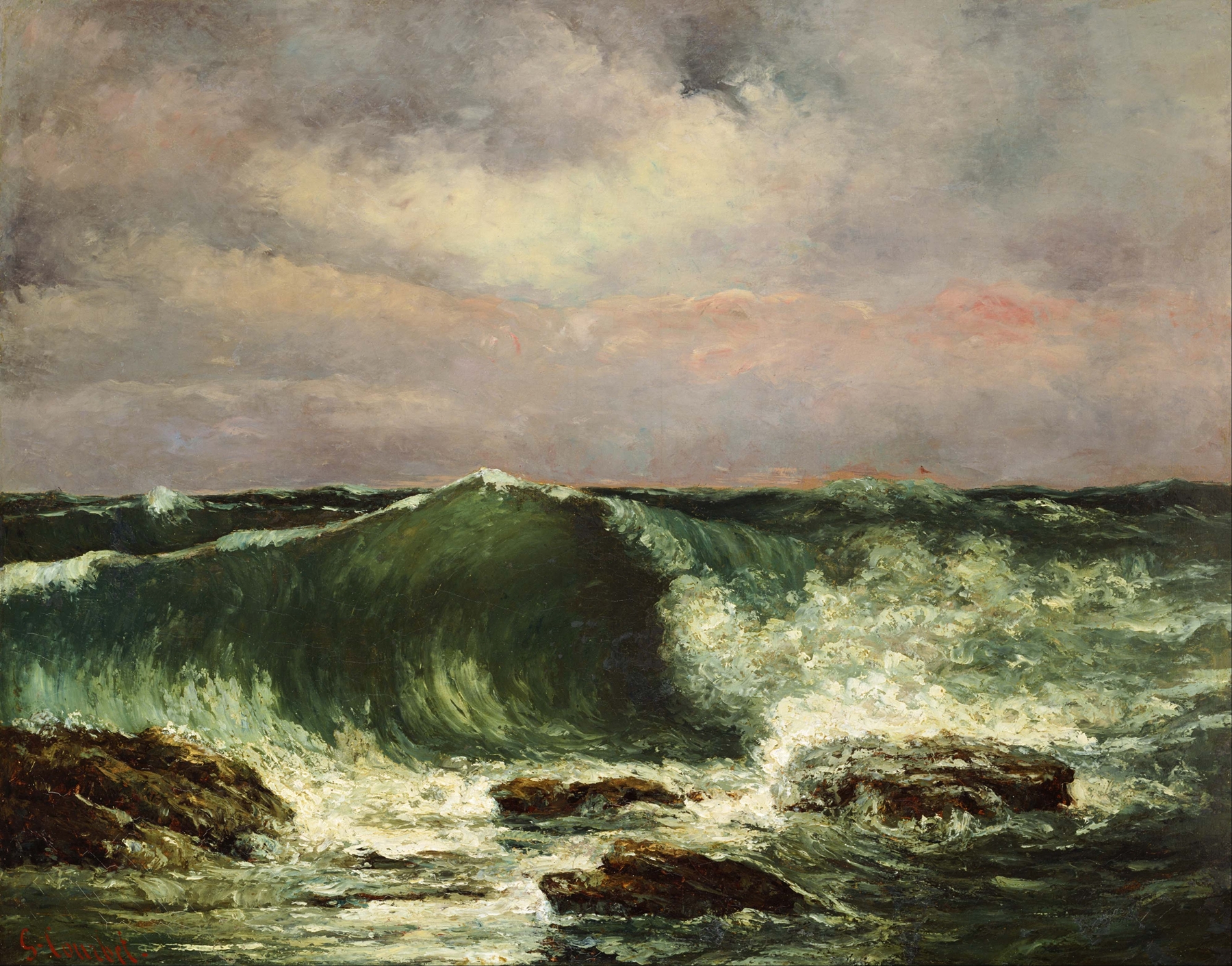
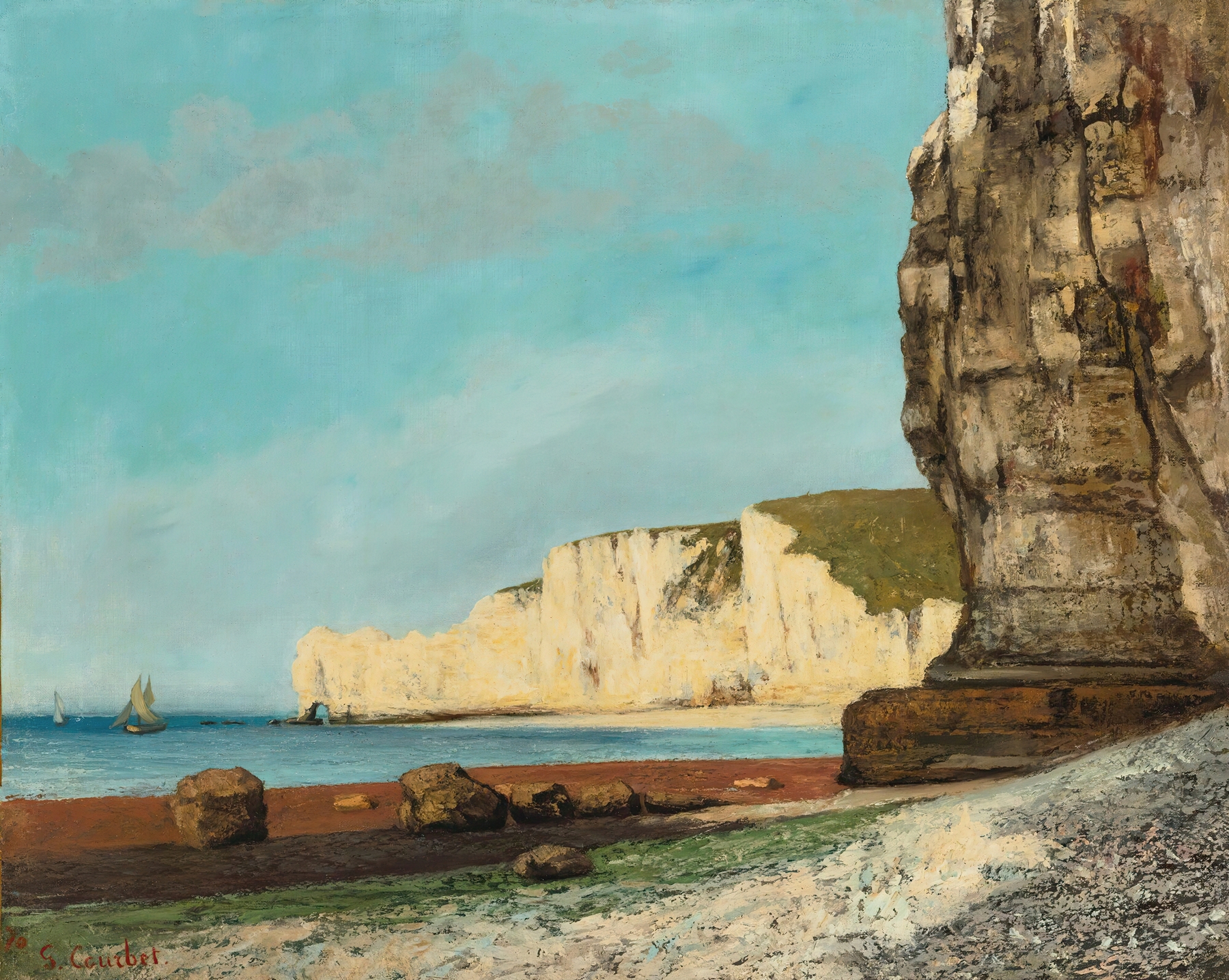
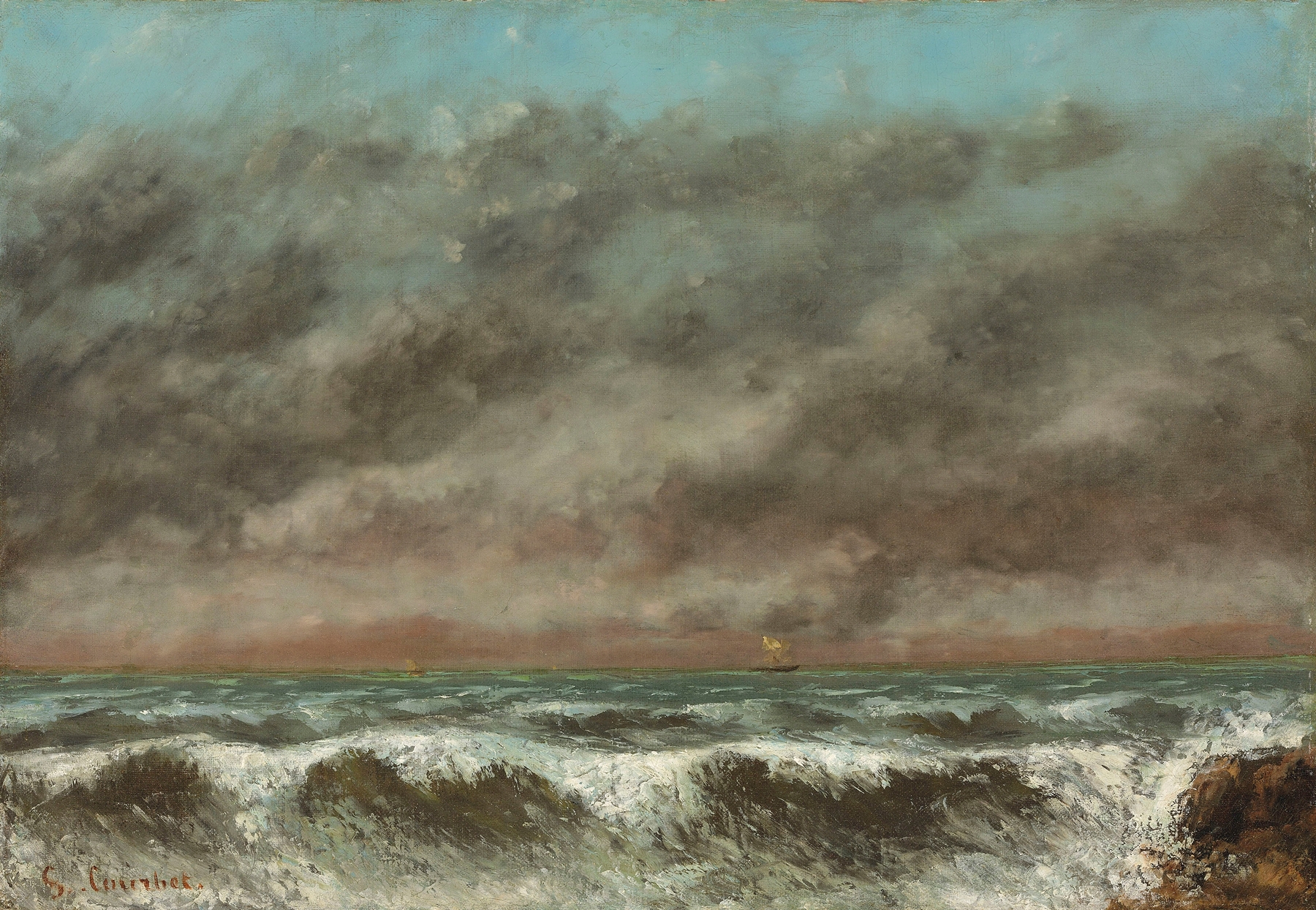
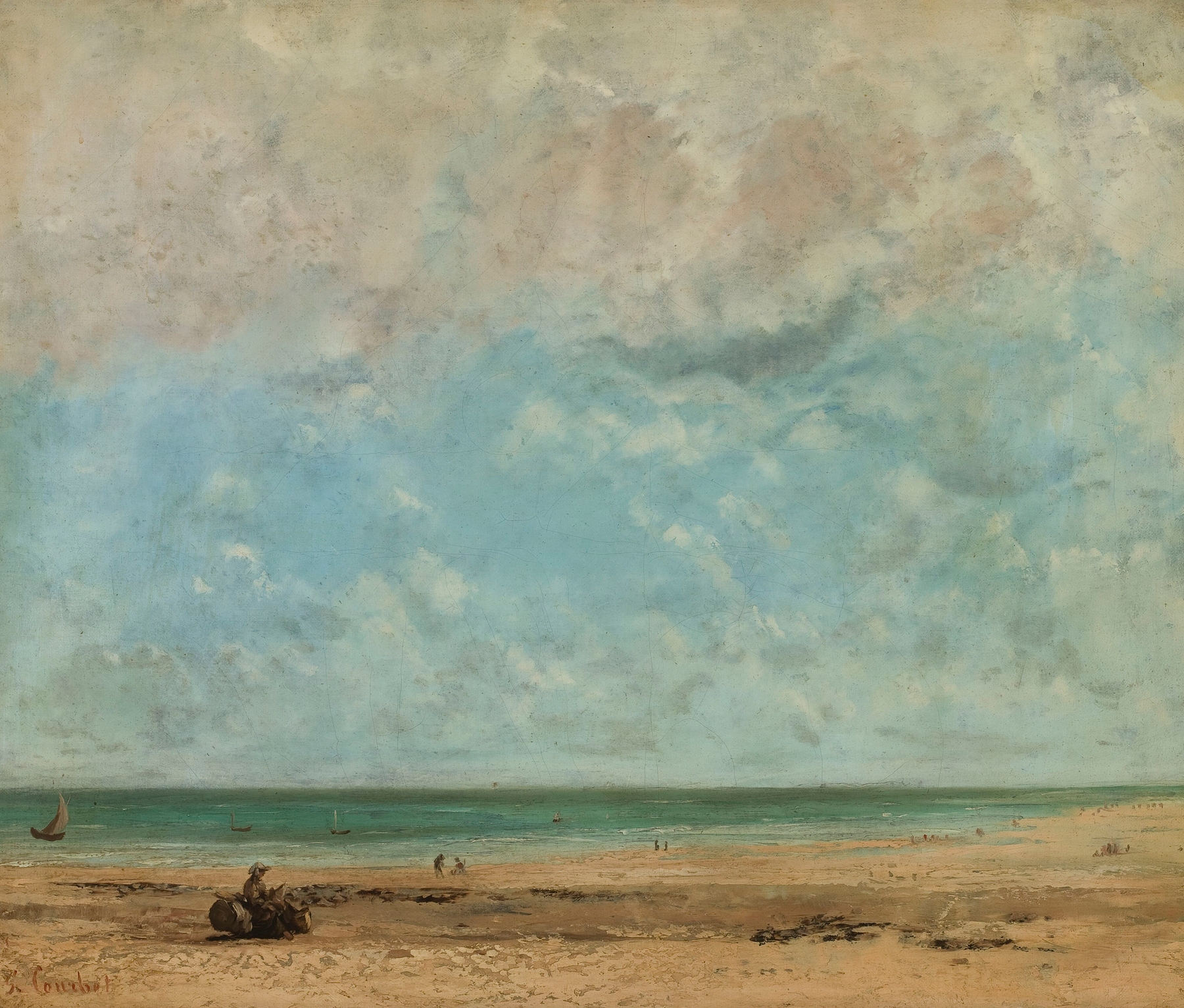
Is this a mirror — or a memory? In Bords de la Mer, Palavas, a tranquil yet enigmatic shoreline beckons reflection, inviting the viewer to ponder their own experiences against the backdrop of nature’s beauty. Look to the left at the gentle curve of the coastline, where the soft waves kiss the sands, blurring the lines between sea and shore. Notice how the artist employs a palette of muted blues and greens, contrasting with the warm ochres of the beach, creating harmony and tension simultaneously.
The brushwork reflects Courbet’s commitment to realism, capturing the essence of a moment rather than an idealized landscape, drawing the eye toward the interplay of light on water, where shimmering ripples dance with the evening sun. Delve deeper into the composition, where the solitary figure, half-hidden, seems to embody both isolation and contemplation. This figure stands at the edge, embodying the paradox of connection and separation from nature. The clouds loom overhead, hinting at the transient nature of existence.
Here, we find the delicate balance between serenity and turmoil, a reminder that nature reflects not only what we see, but also what we feel within. Courbet painted this work during a pivotal moment in his career, likely in the late 1860s, while deeply immersed in the naturalistic movement. At this time, he wrestled with the conventions of academic art, seeking to forge a path that embraced the raw beauty of the world around him. As he captured these shores, the artist was also navigating his own tumultuous relationship with society, art, and the essence of truth itself, laying bare a vision that still resonates today.