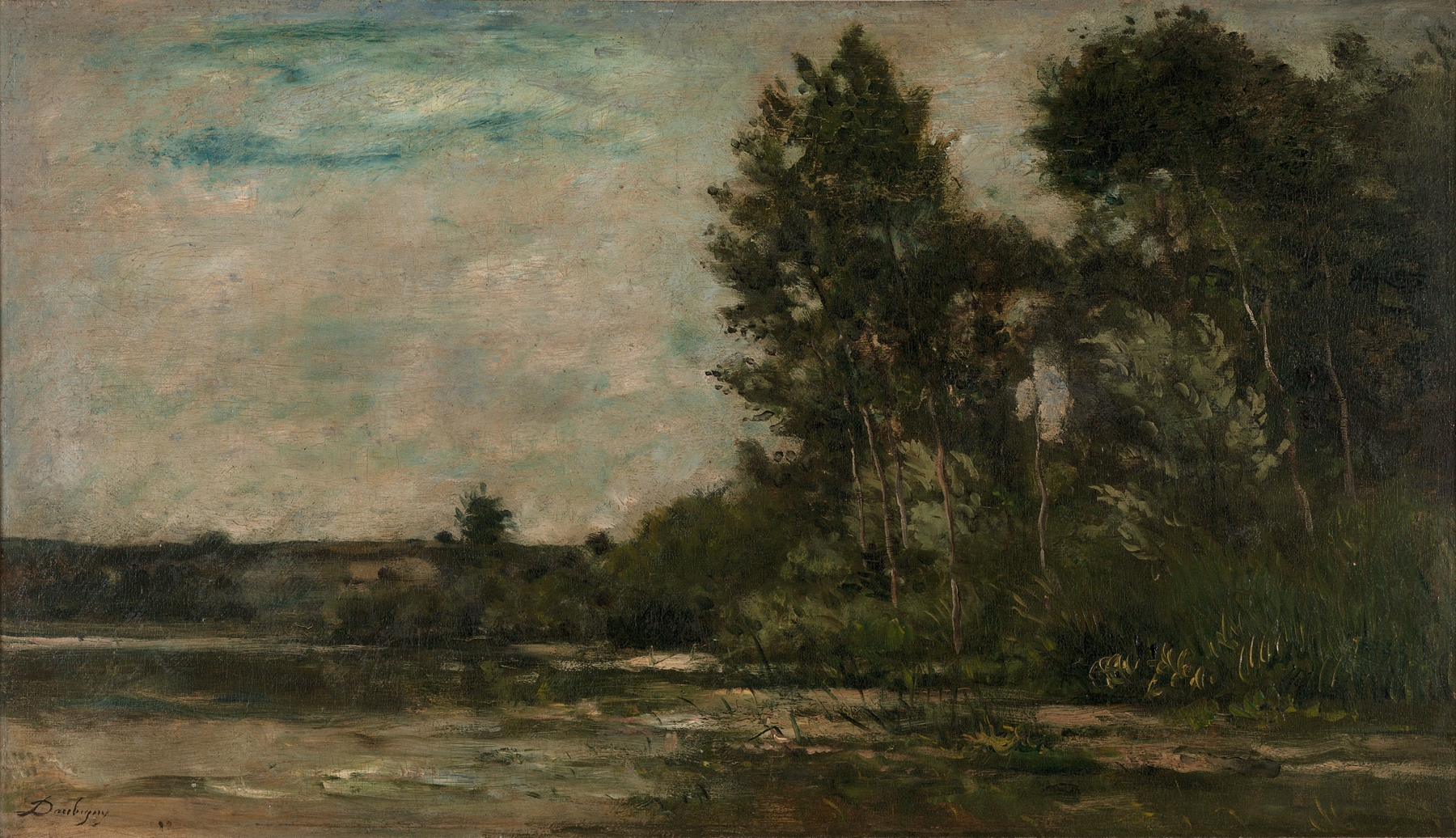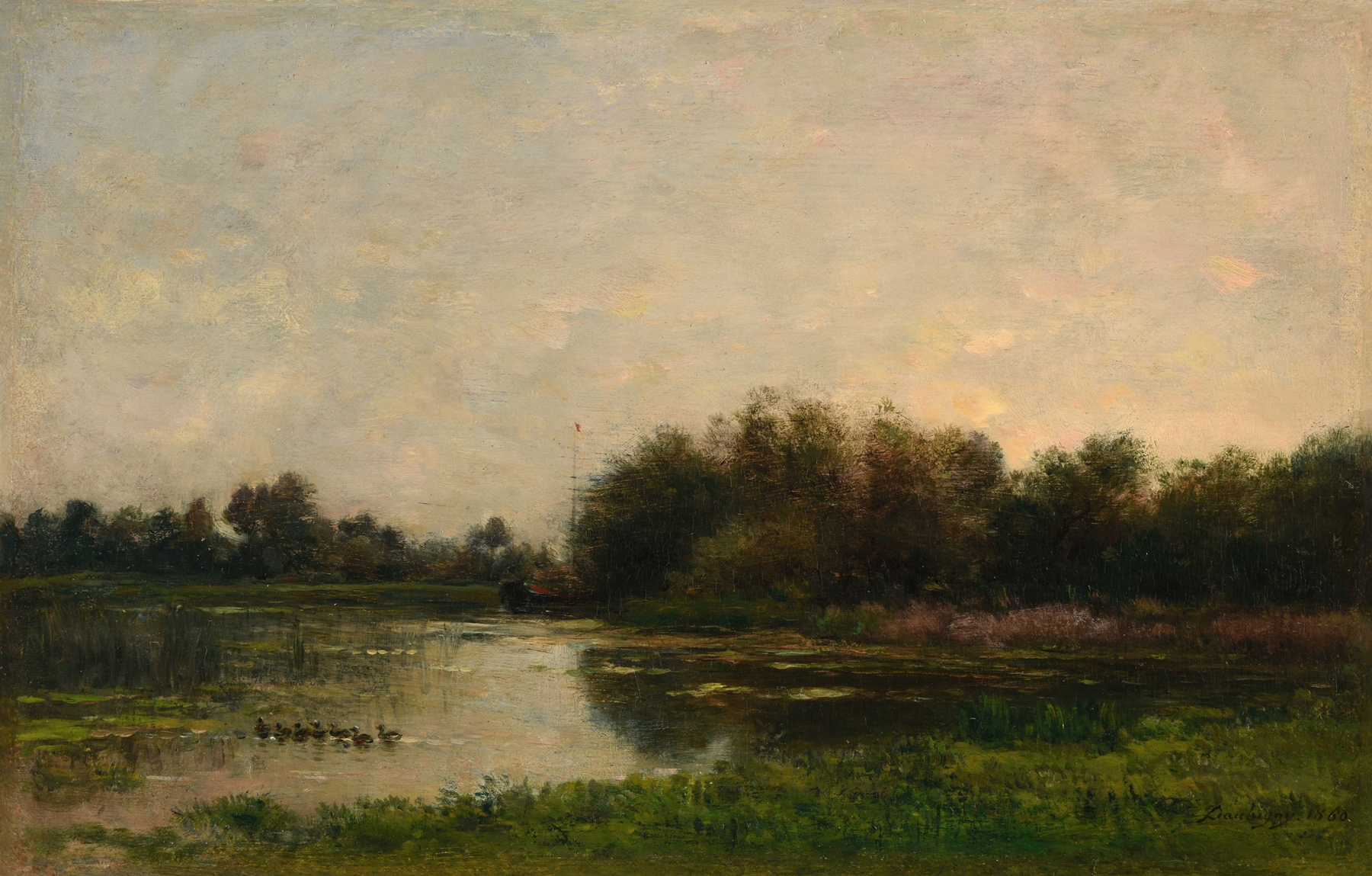
Bords de l’Oise — History & Analysis
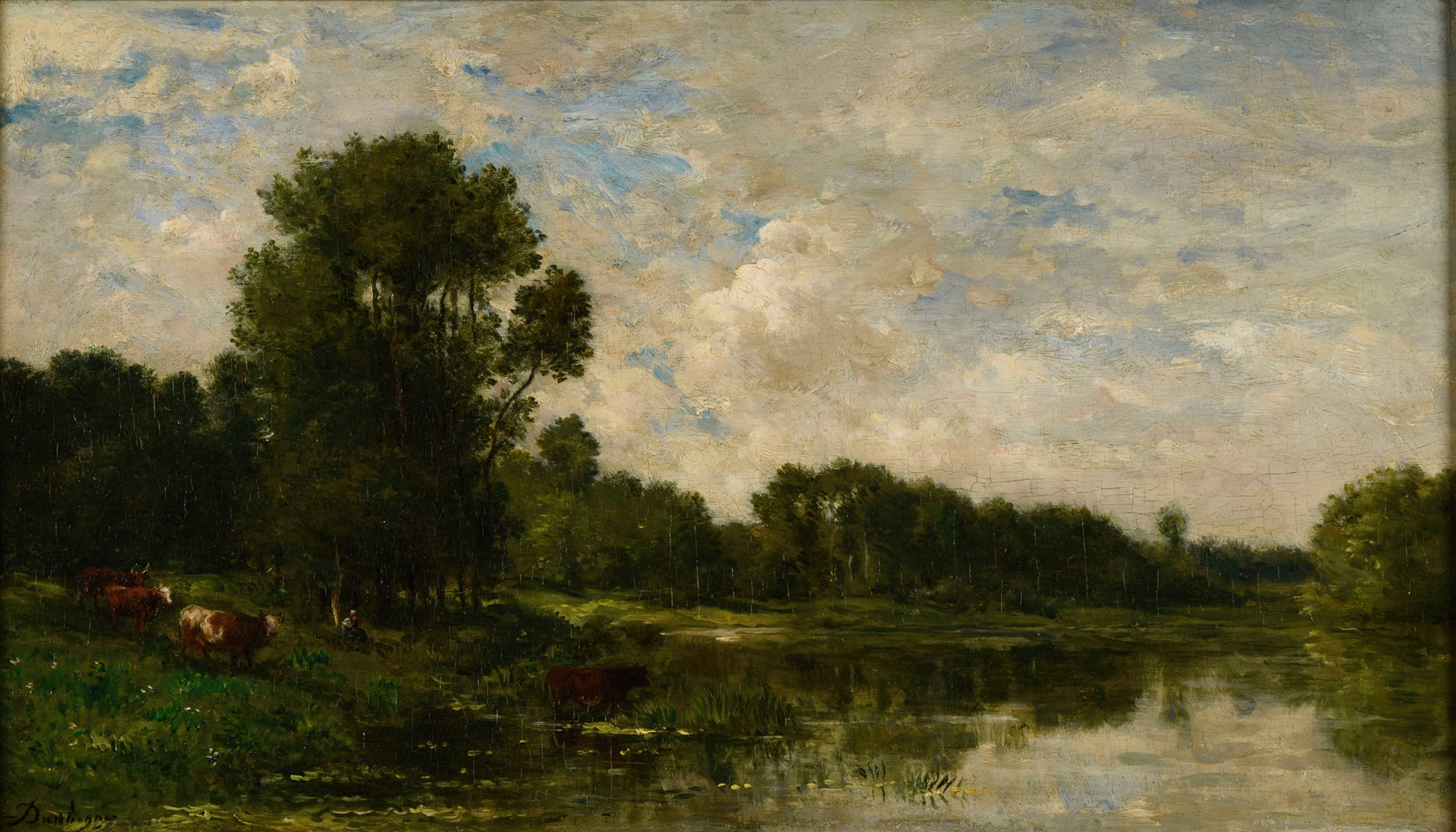
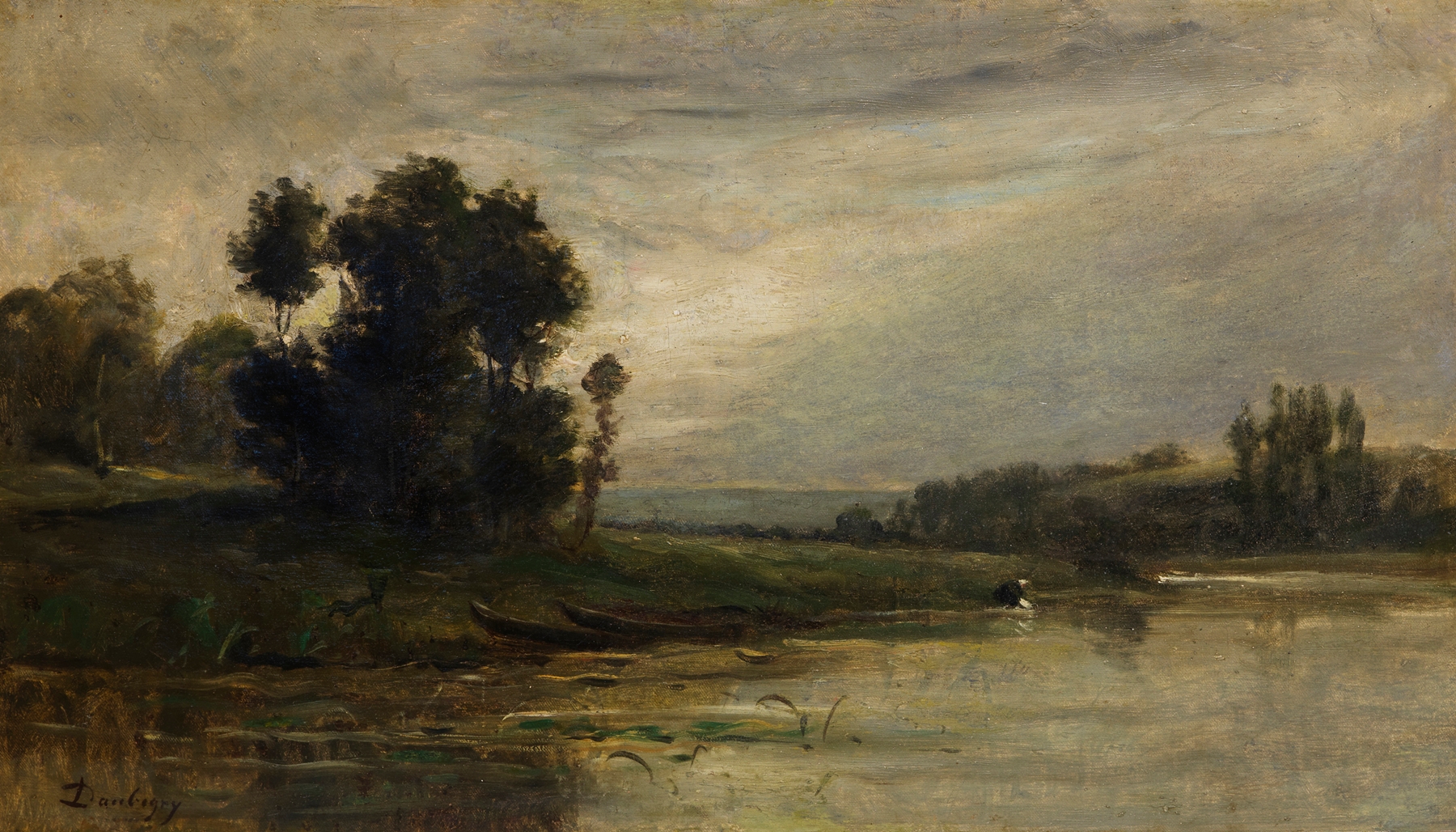
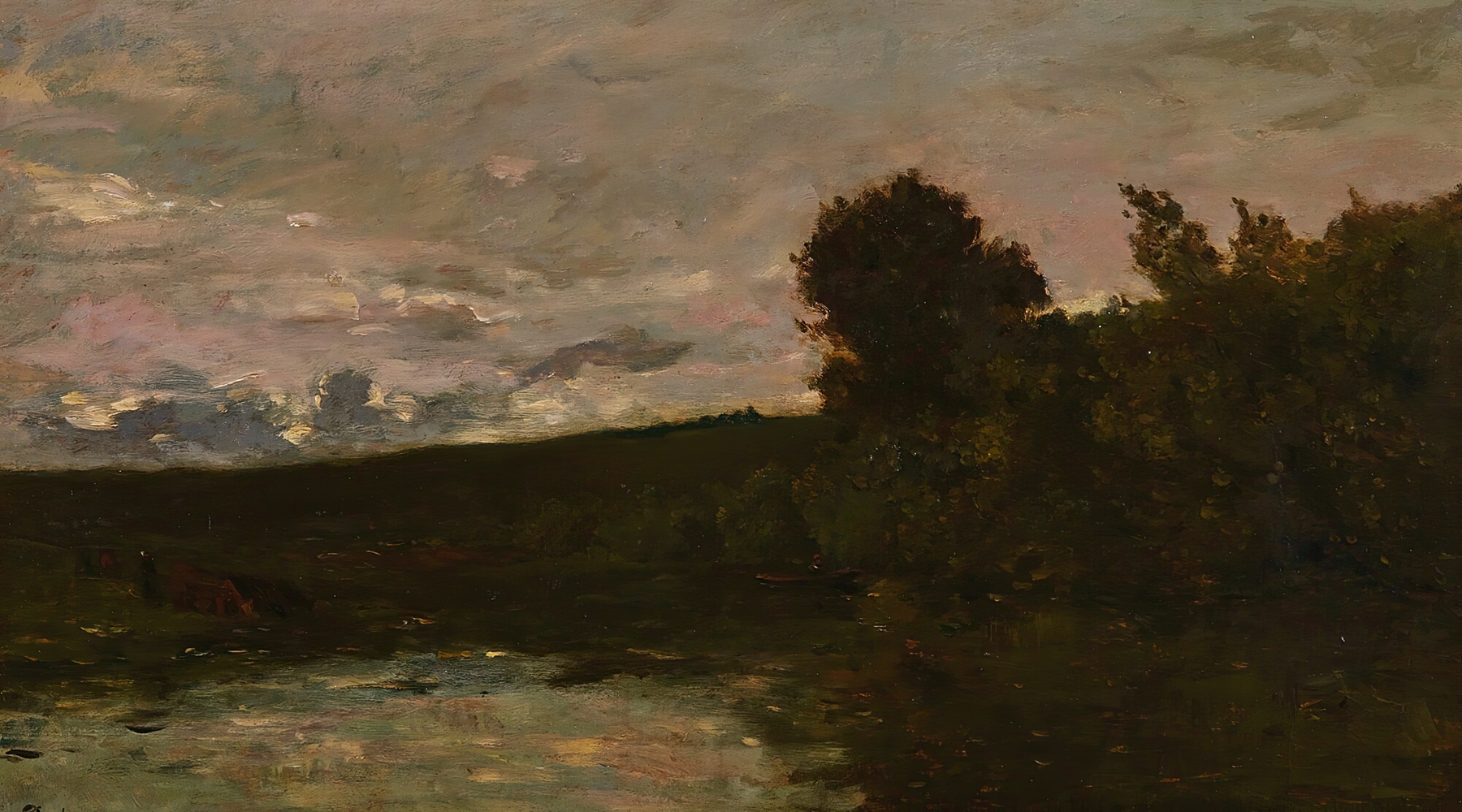
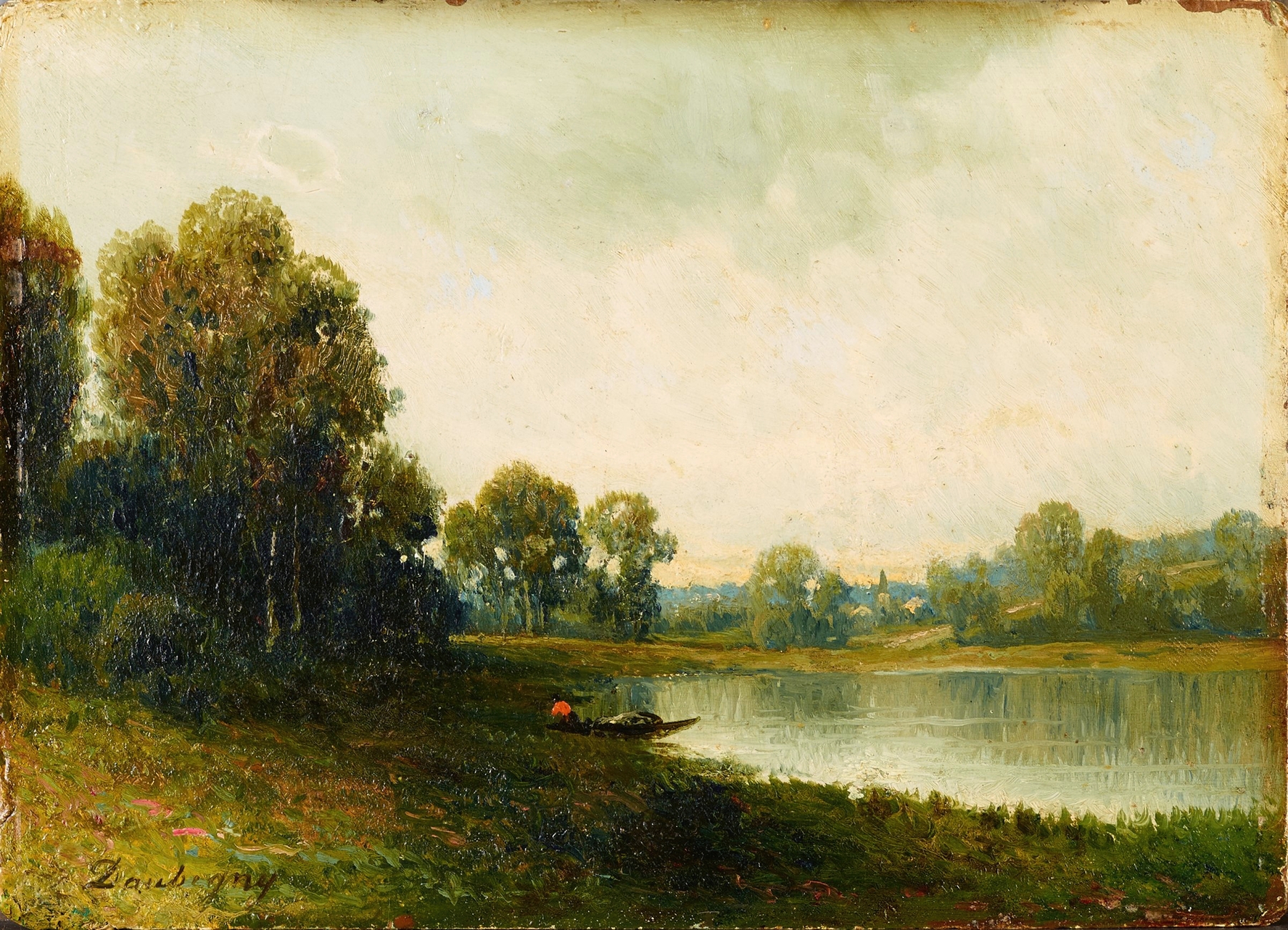
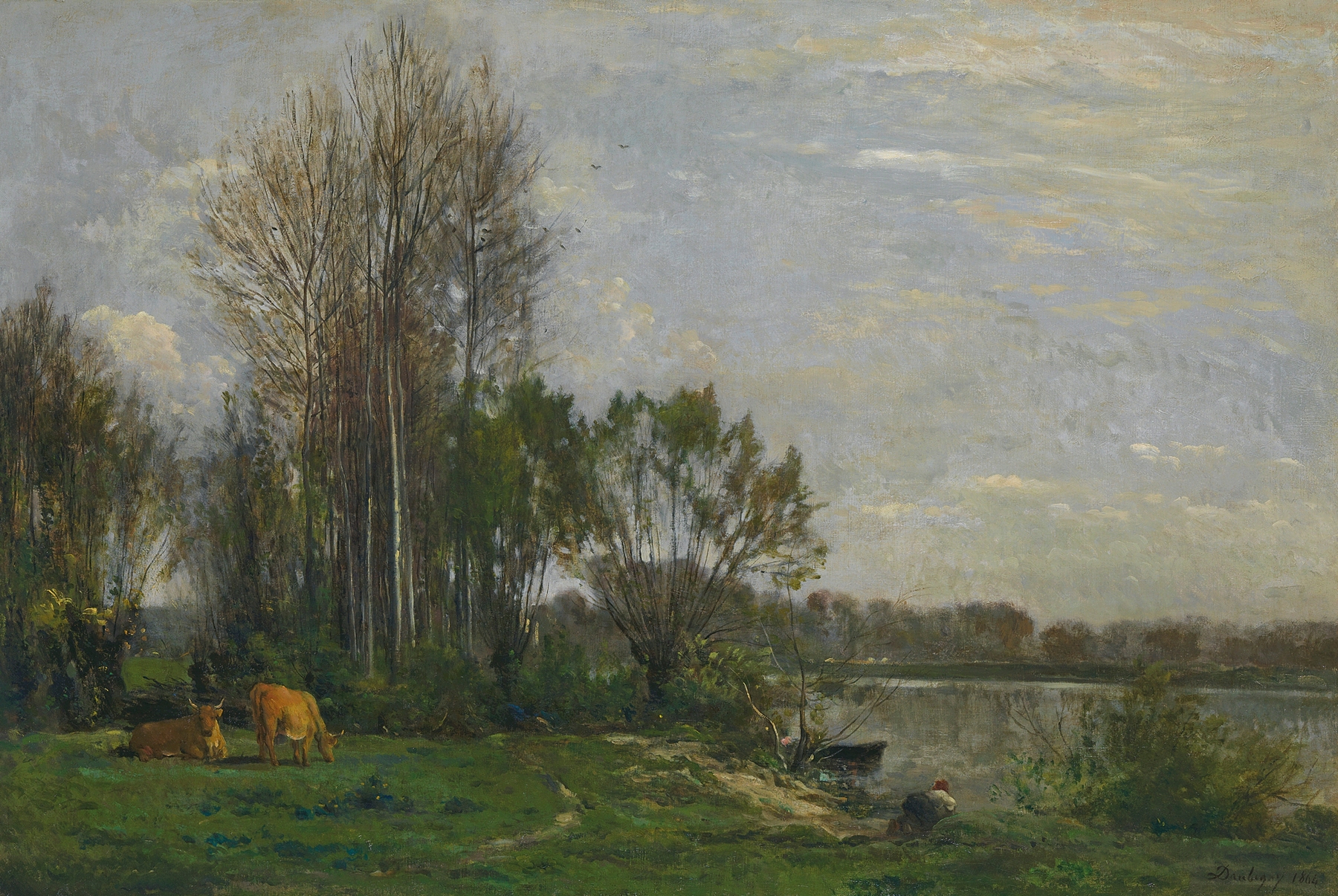
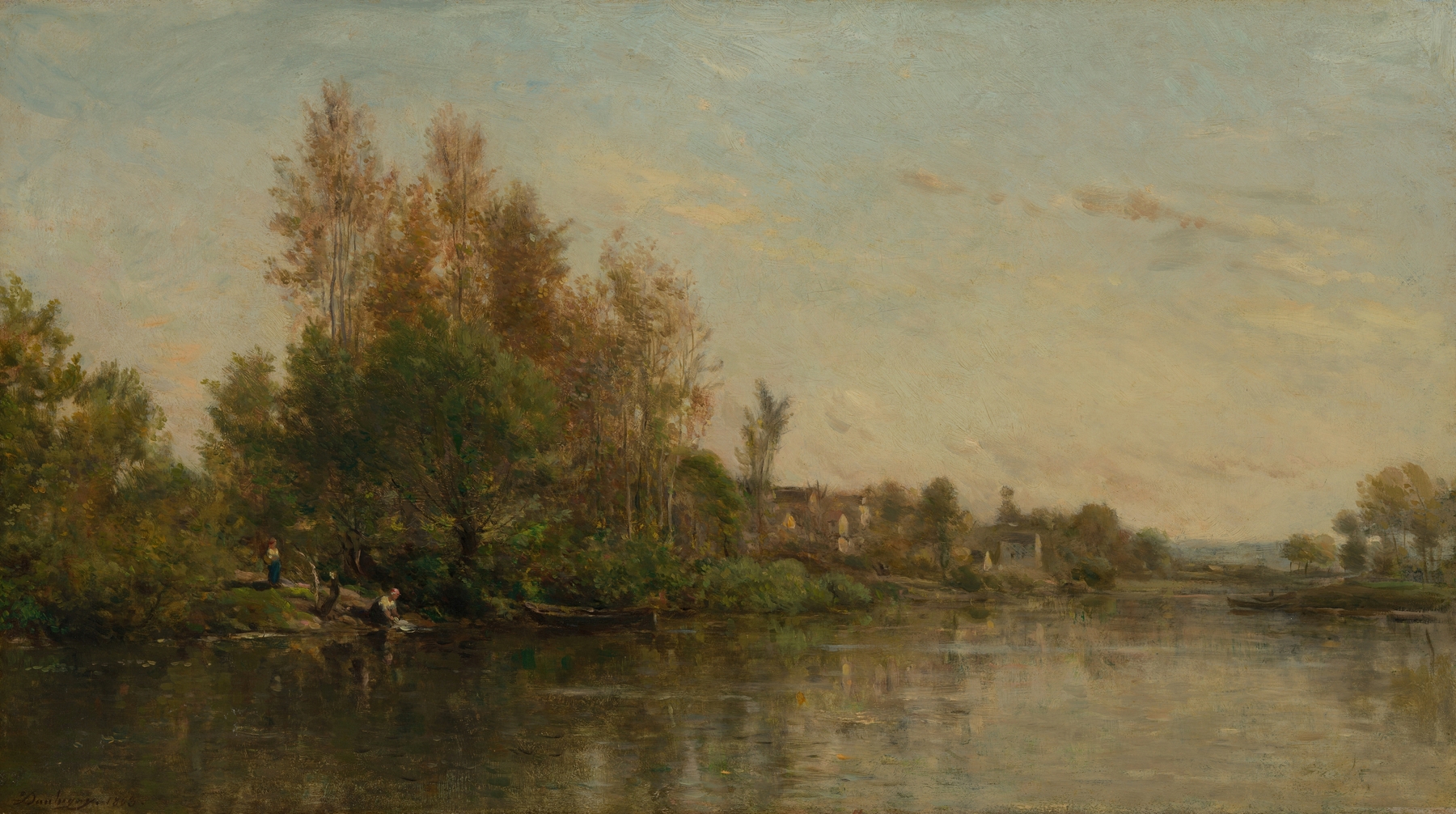
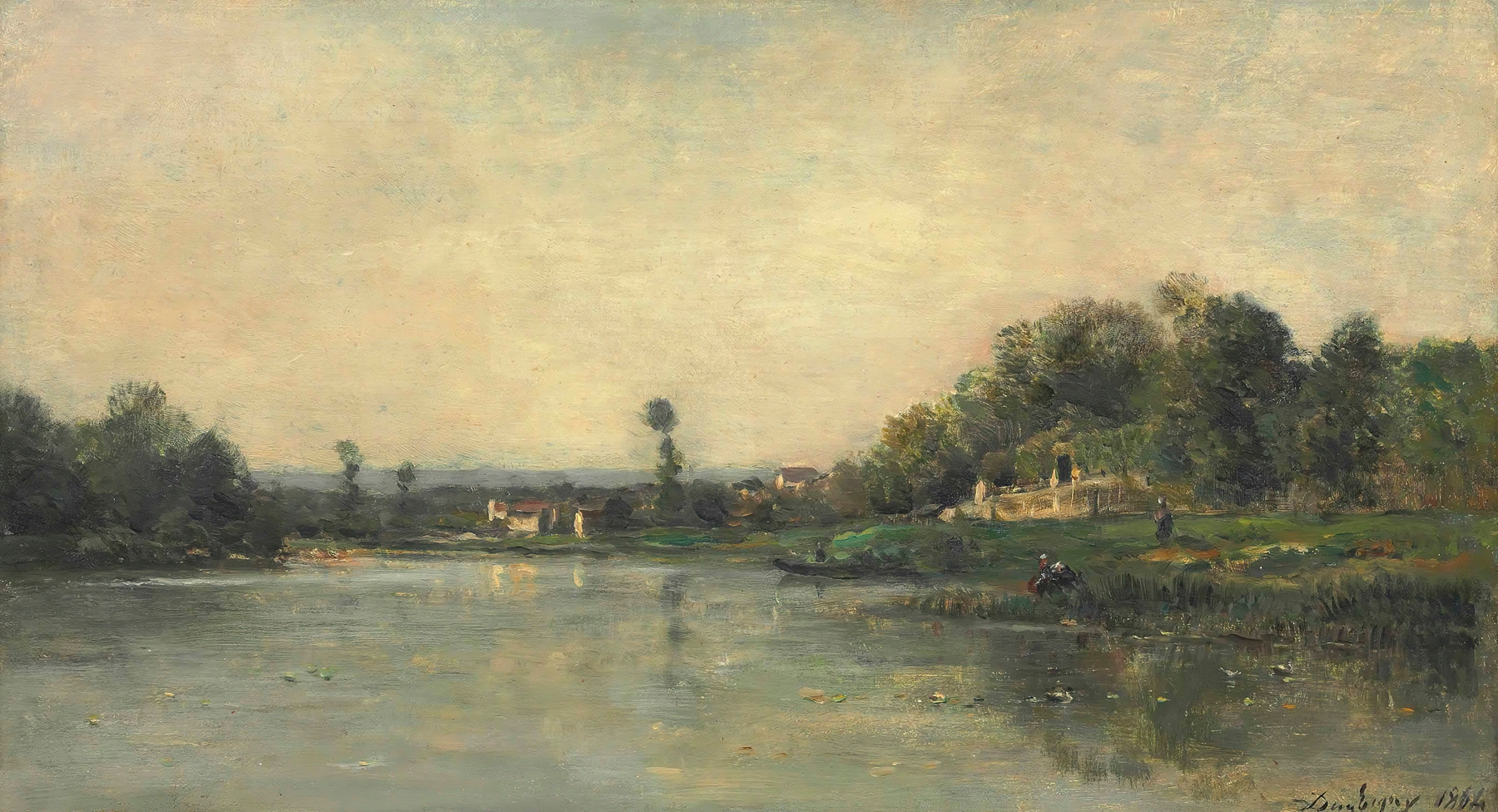
What if silence could speak through light? In Bords de l’Oise, a tranquil landscape unfolds, offering a moment of stillness that whispers to the soul. Focus on the gentle stroke of the brush that captures the rippling water in soft hues of blue and green. The eye is drawn first to the tranquil riverbank on the left, where delicate grasses sway in an unseen breeze, creating a quiet dance that complements the calm water.
Daubigny's technique combines impressionistic touches with meticulous detail — notice how the light falls upon the water’s surface, casting reflections that shimmer like thoughts barely formed, inviting contemplation. In this serene composition, there is an interplay between light and shadow, suggesting a balance between presence and absence. The empty spaces invite the viewer to ponder what lies beyond the canvas, evoking a sense of longing and introspection. The muted palette enhances the work's emotional depth, encapsulating a moment of both beauty and melancholy, as if the landscape itself holds secrets of nature’s vast quietude.
Charles François Daubigny painted Bords de l’Oise in 1860 while living in France, immersed in the burgeoning Impressionist movement. During this time, he was exploring new techniques that emphasized the effects of natural light and atmosphere. His work reflects the shift towards capturing fleeting moments in nature, as artists began to break away from strict academic styles, paving the way for a more expressive approach to landscape painting.