Landscape near Crémieu — History & Analysis
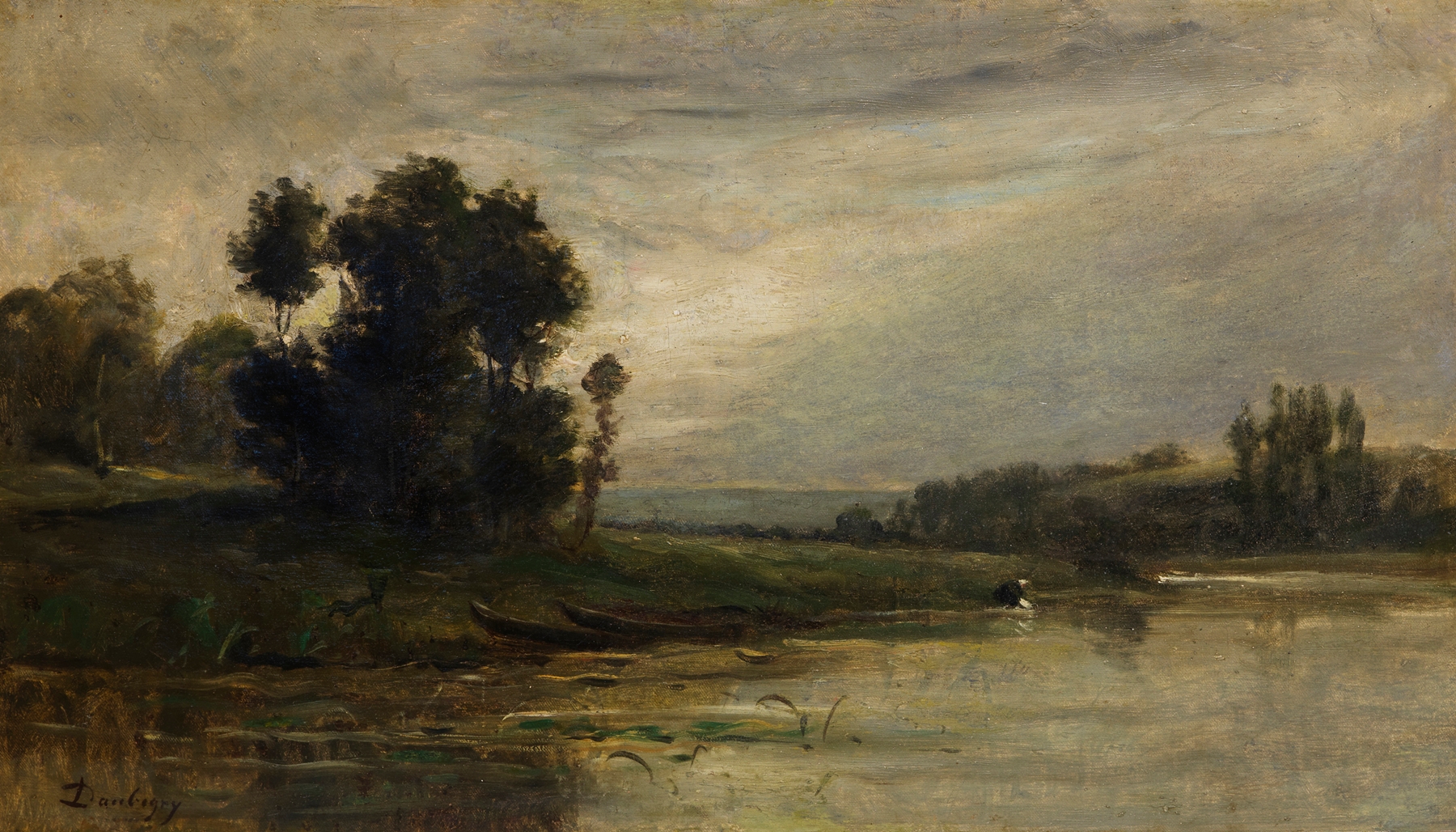
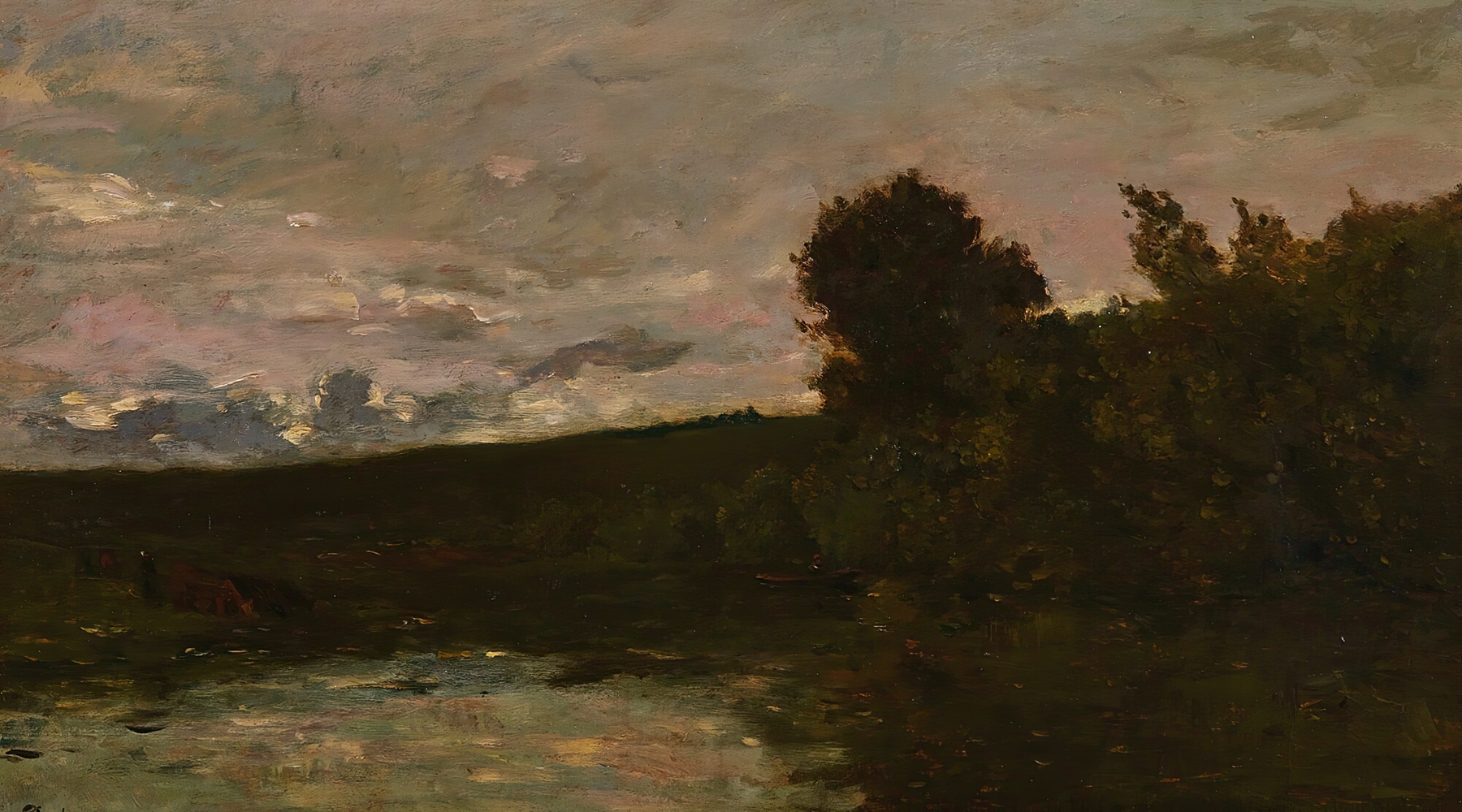
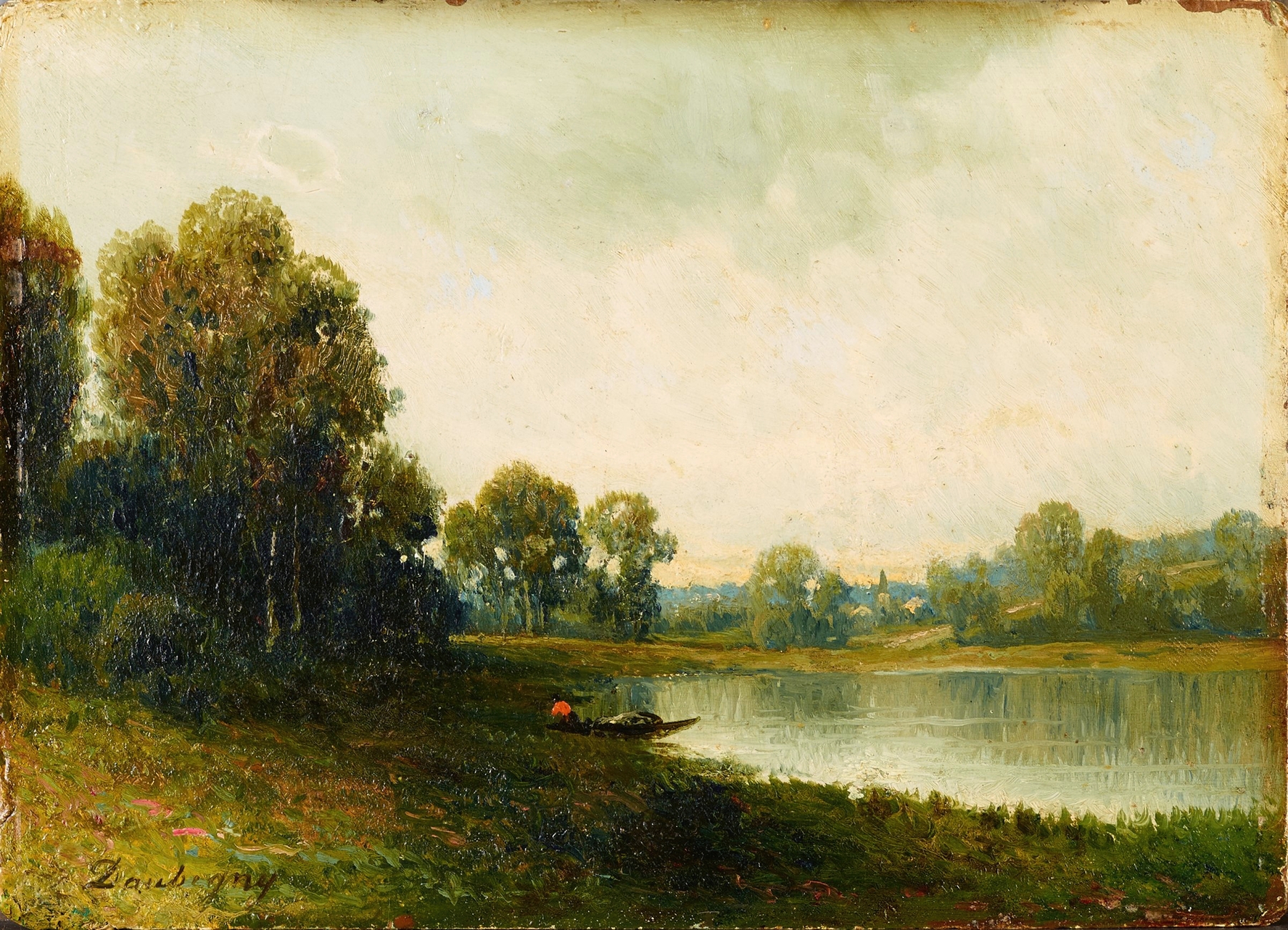
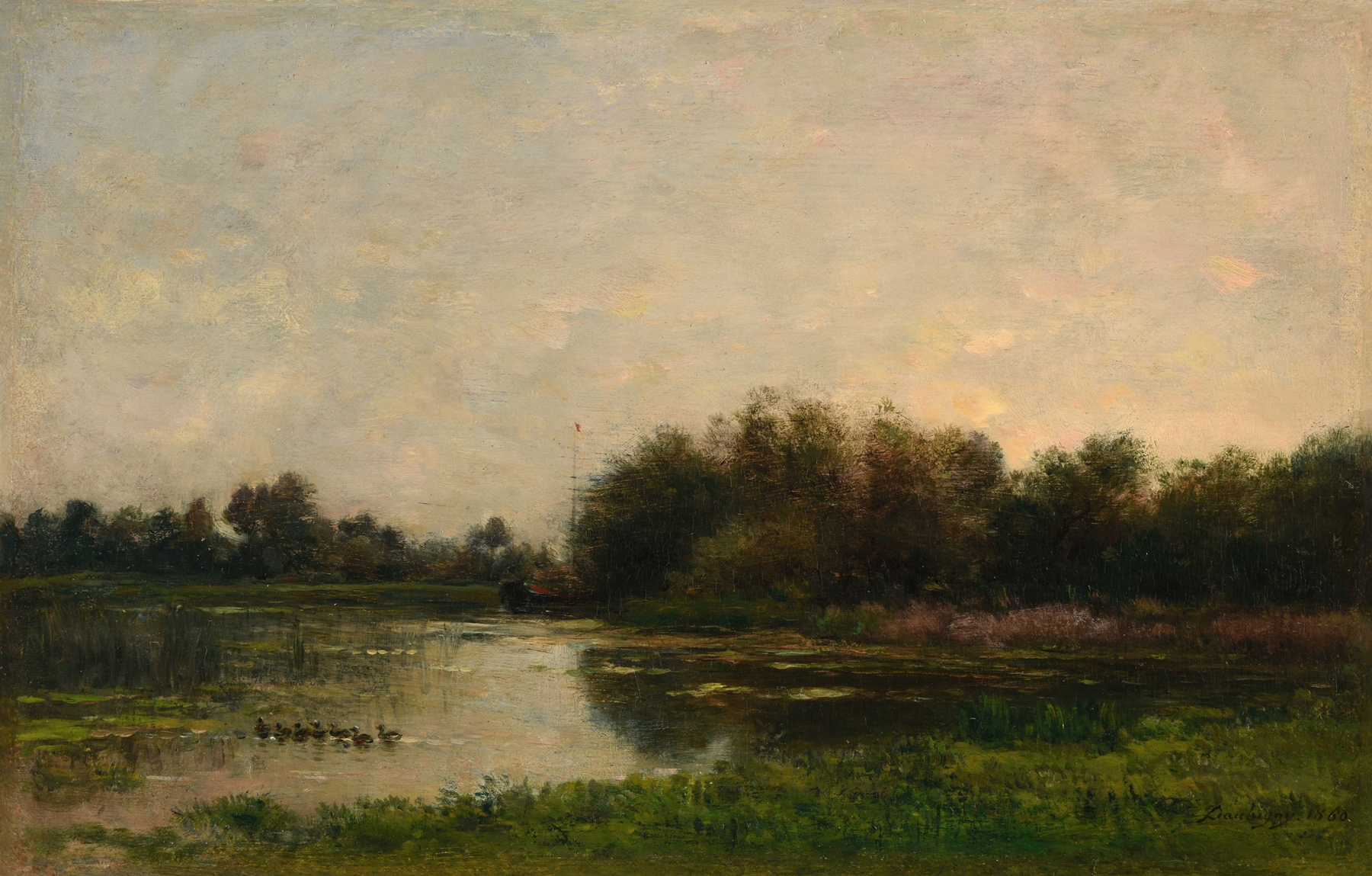
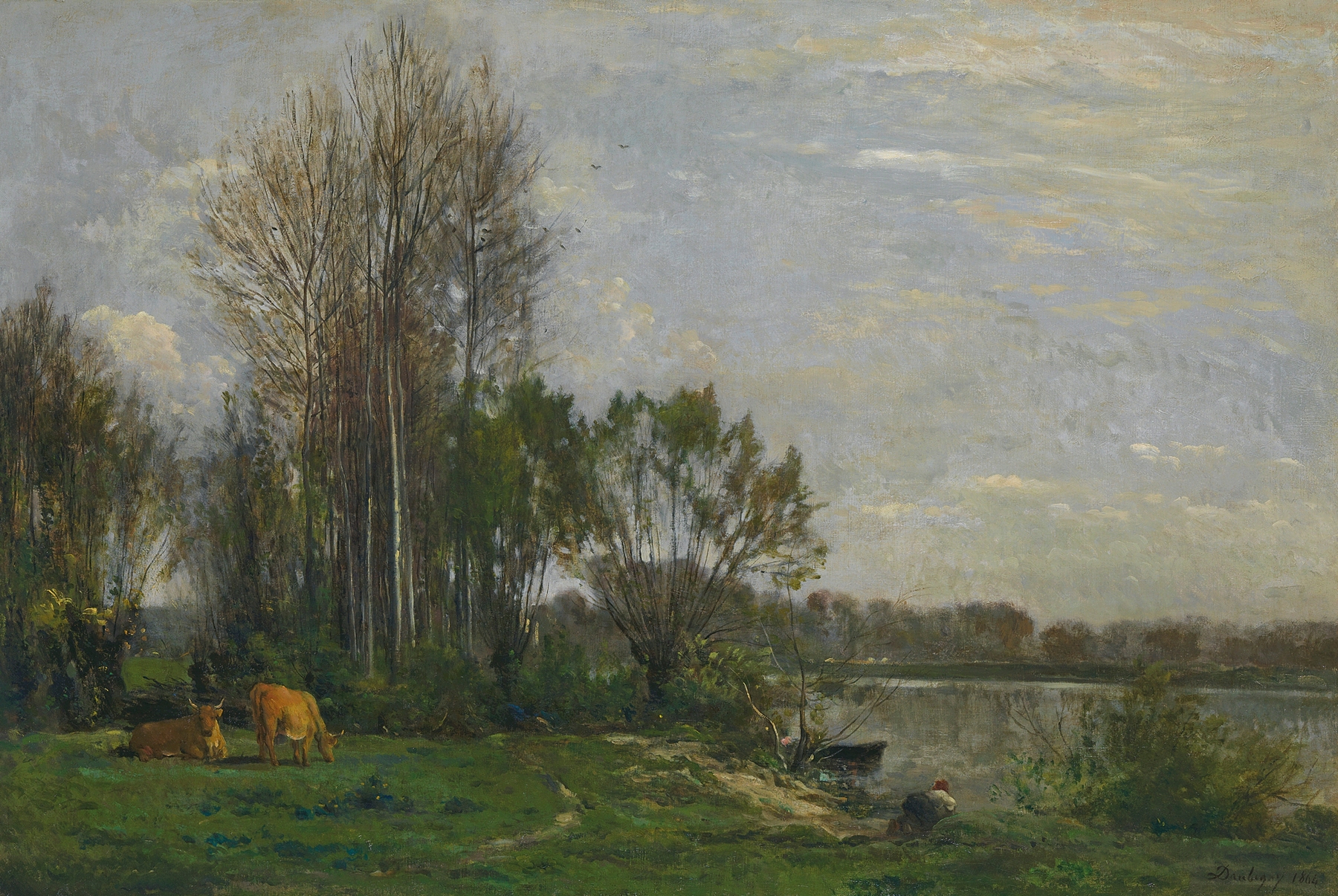
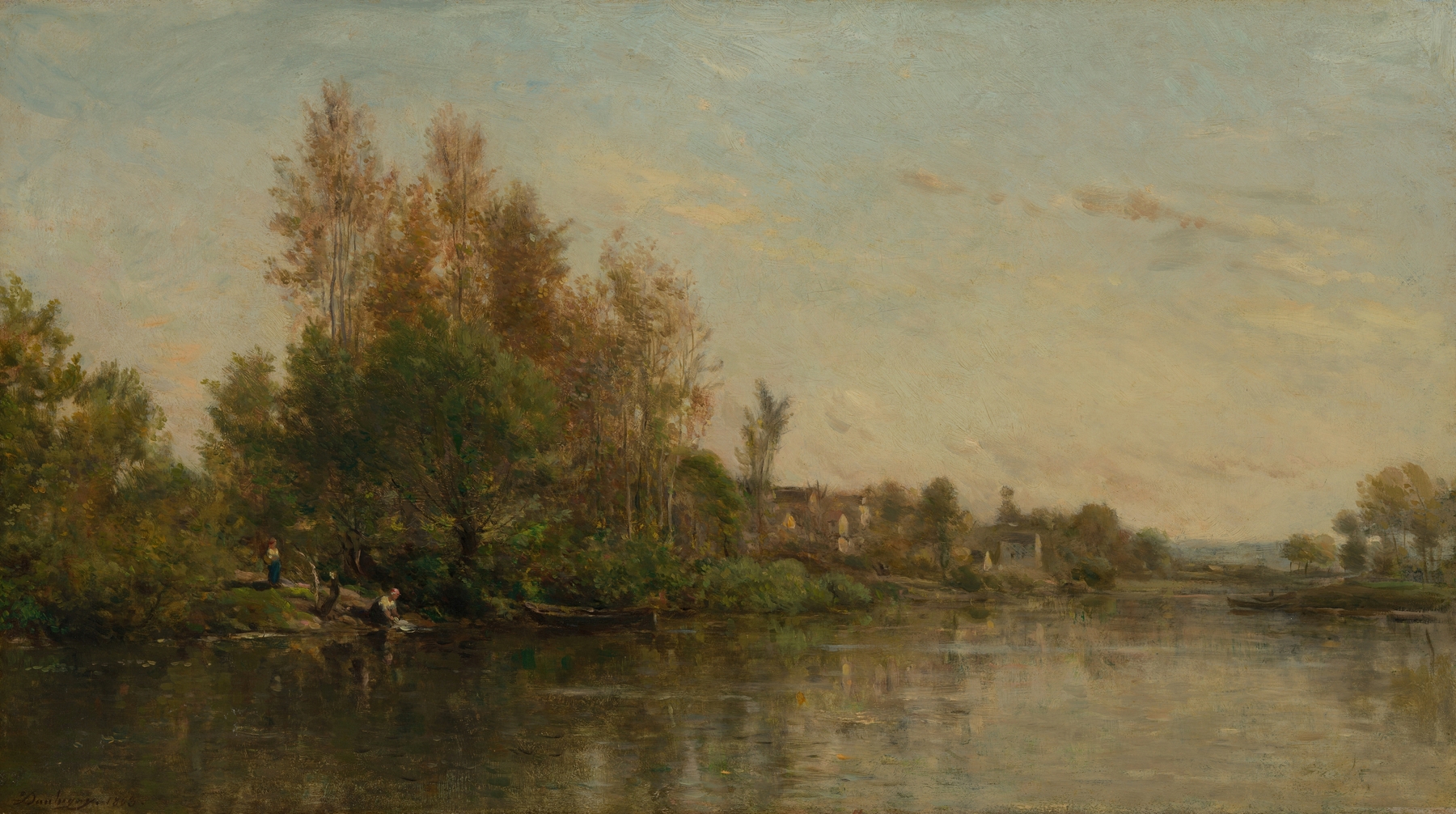
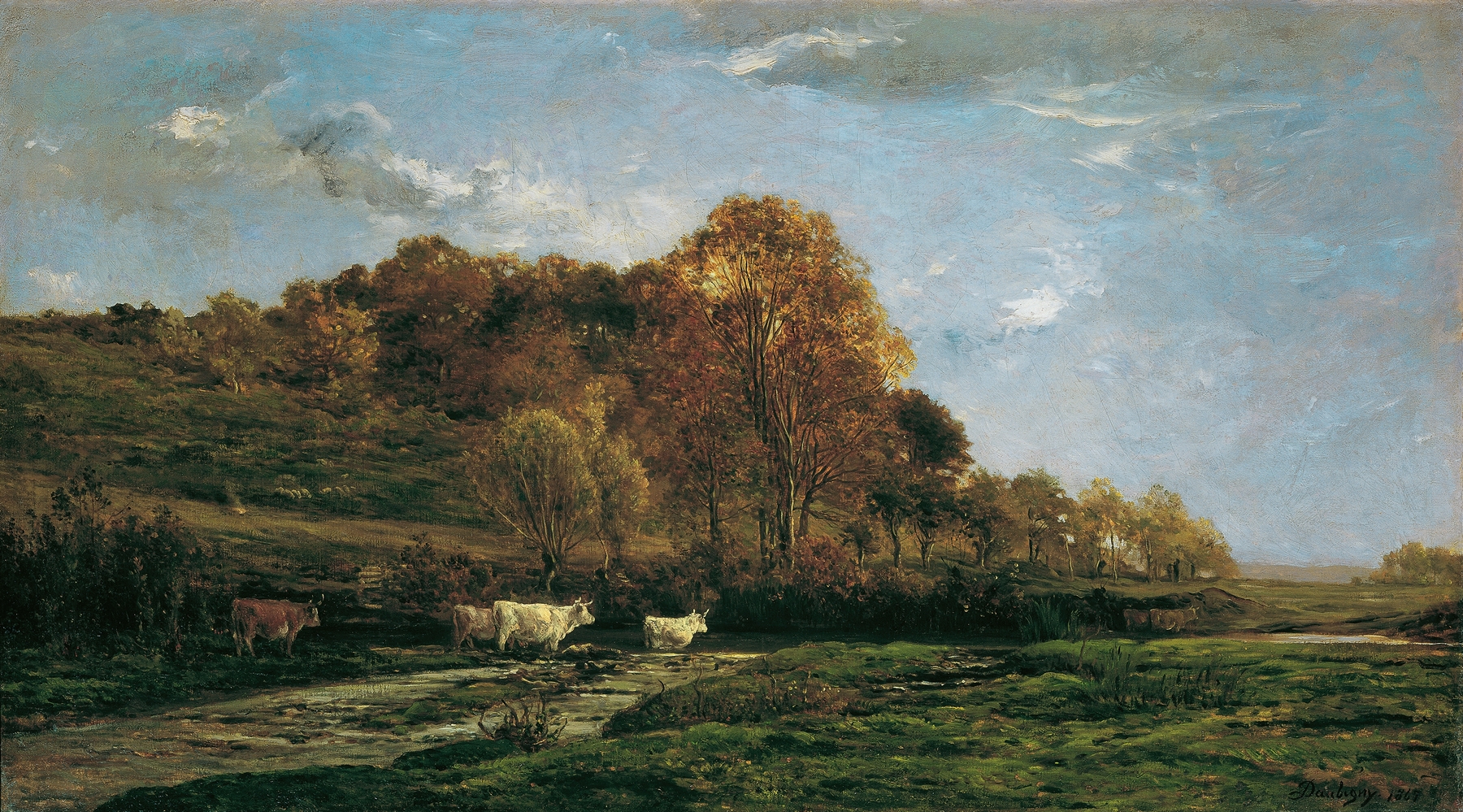
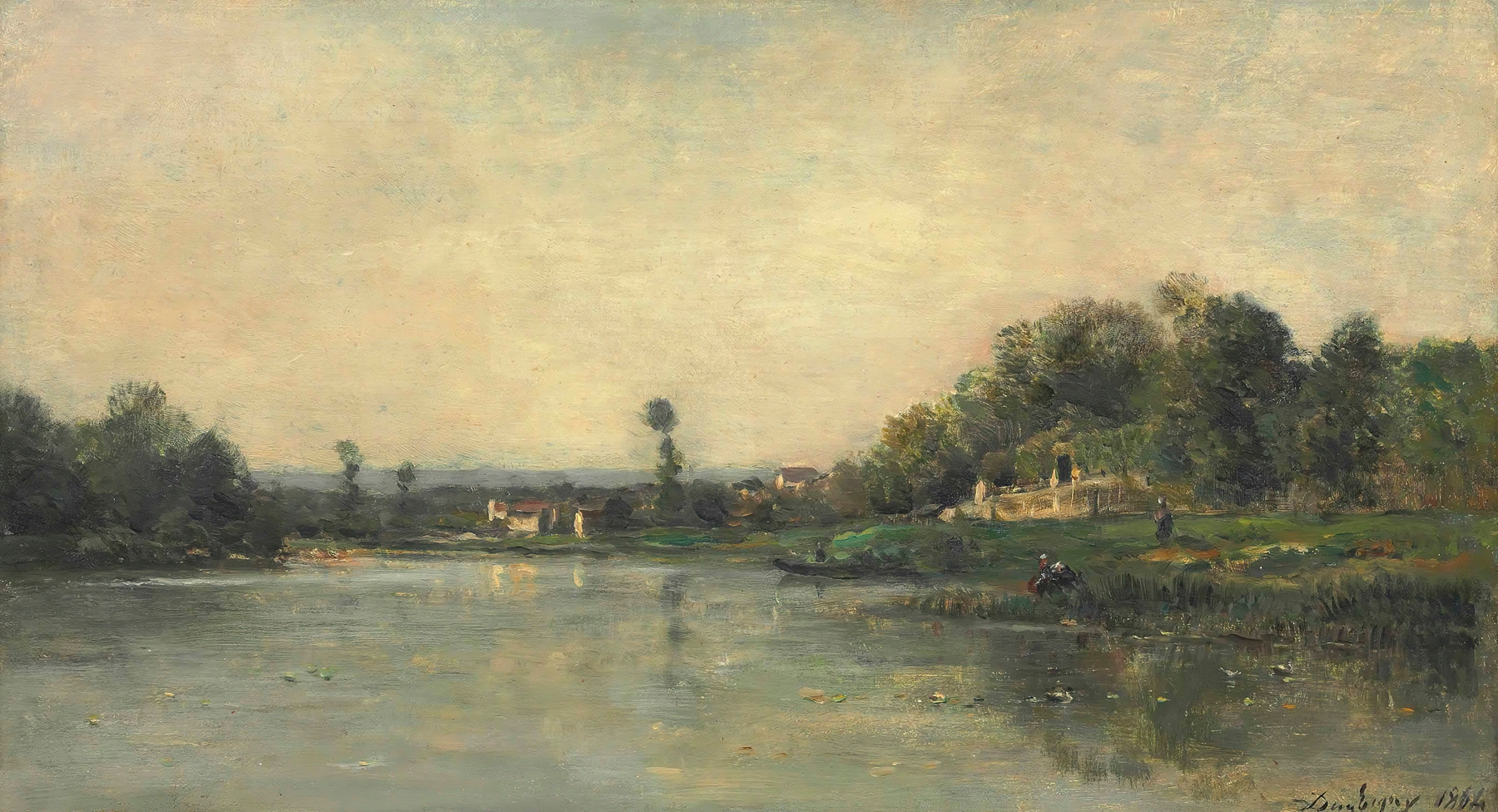
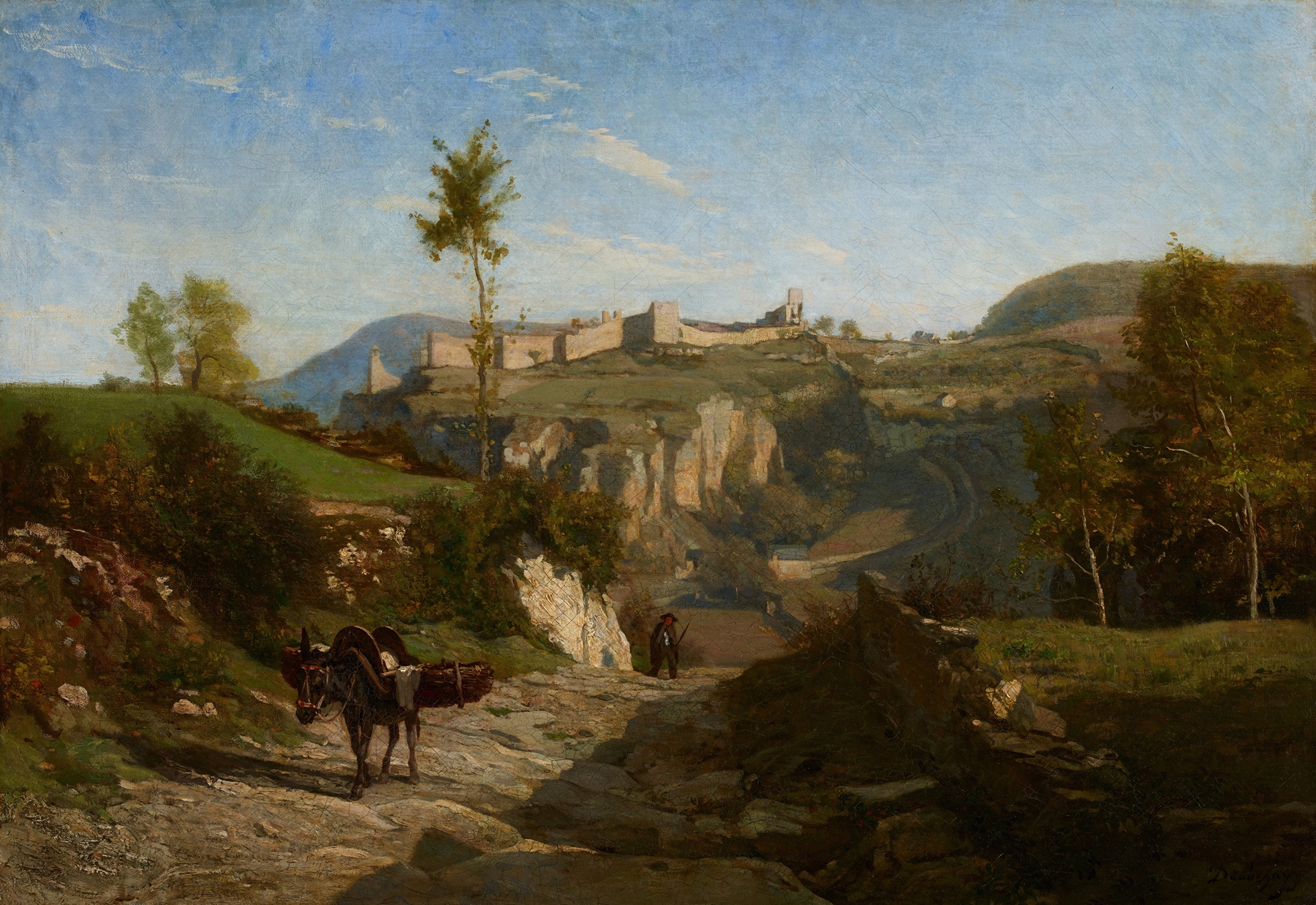
What if silence could speak through light? In an ethereal embrace, the shimmering hues of dawn seem to whisper secrets of the divine to the waking landscape. Look to the horizon where soft, golden sunlight spills over the rolling hills, illuminating the delicate strokes of greens and browns. The gentle undulation of the terrain draws your eye from the foreground—a quiet stream winding its way through lush grass—toward the tranquil farms nestled in the distance, their roofs kissed by morning light.
Daubigny’s masterful technique, evident in the impressionistic application of paint, captures the moment with a sense of reverence, inviting contemplation rather than haste. Amidst this serene vista, the contrast between the vibrant life of the foreground and the stillness of the background evokes a profound emotional tension. The delicate balance between nature and human habitation suggests a harmonious coexistence. The lush greenery hints at divine fertility, while the distant structures remind us of fleeting human endeavors, merging the sacred and the mundane in one breath.
Each brushstroke becomes a hymn to the divinity that resides in every inch of this landscape. In 1849, Daubigny painted this work during a period when plein air painting was gaining momentum in France, reflecting a growing appreciation for capturing nature's beauty directly from life. He found inspiration in the French countryside, aligning his vision with the burgeoning Impressionist movement, yet maintaining a unique approach that blended romanticism with emerging modernism. This era marked a pivotal moment in art history as artists began to seek new ways to interpret their surroundings.