The Banks of the Oise — History & Analysis
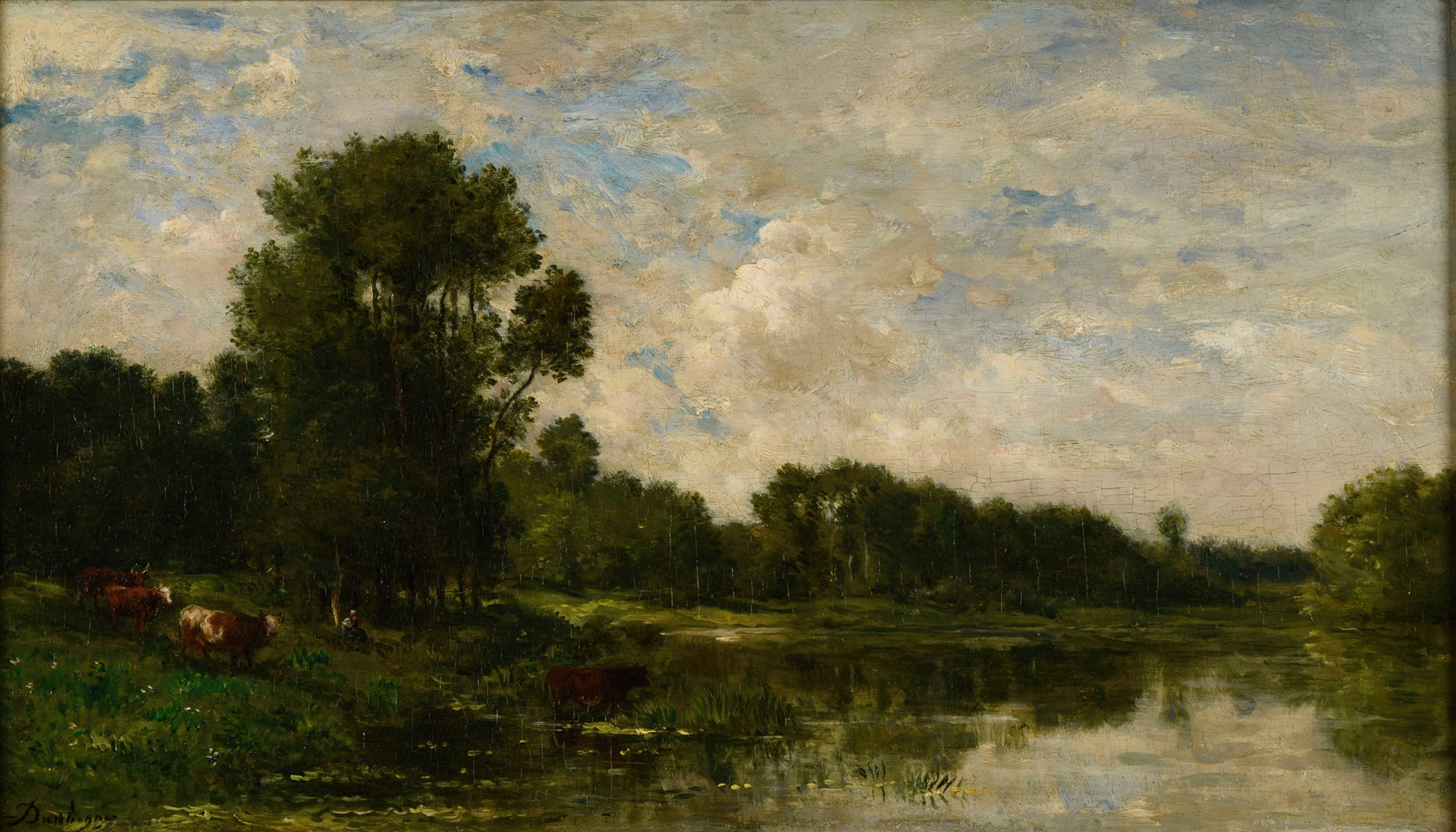
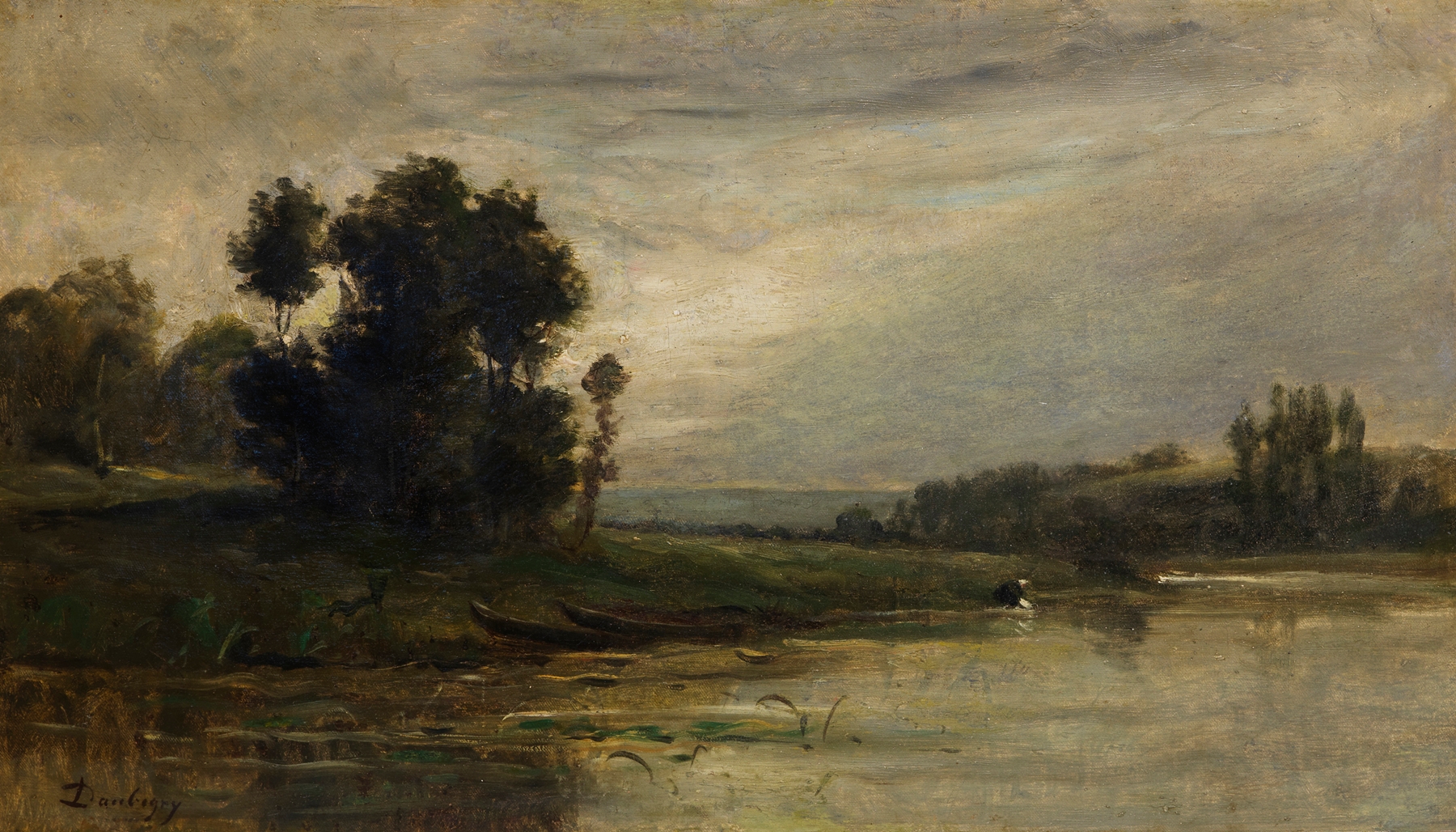
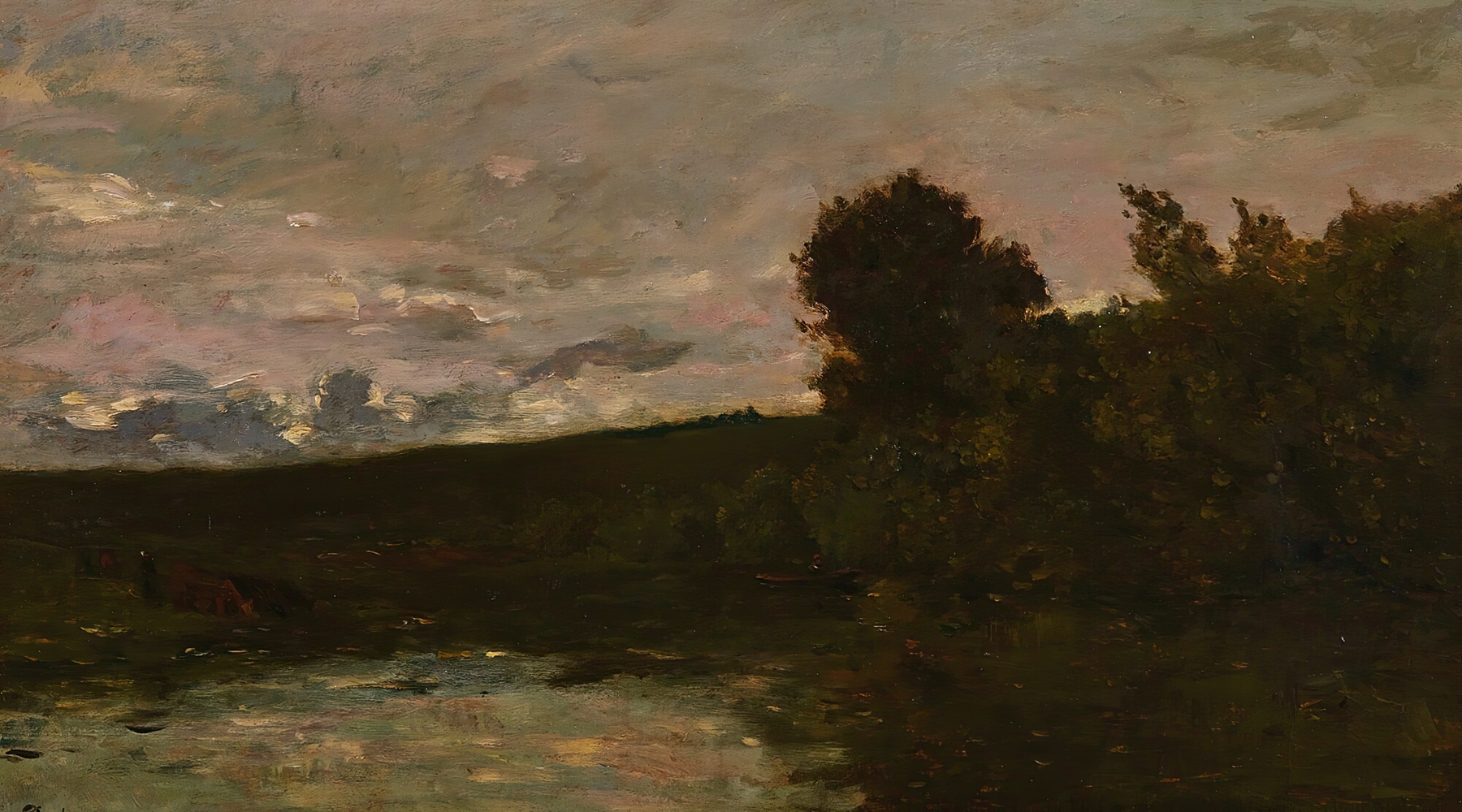
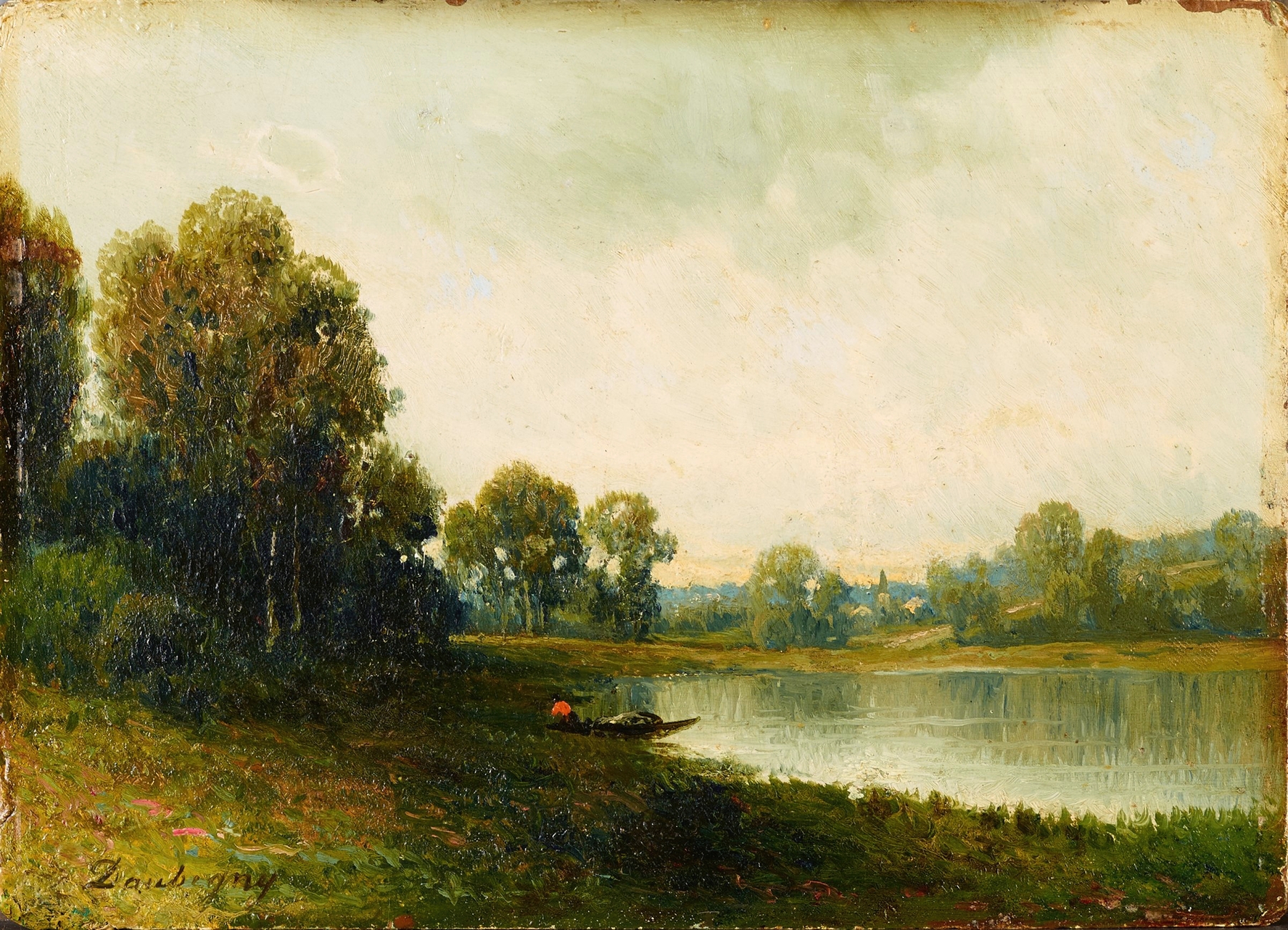
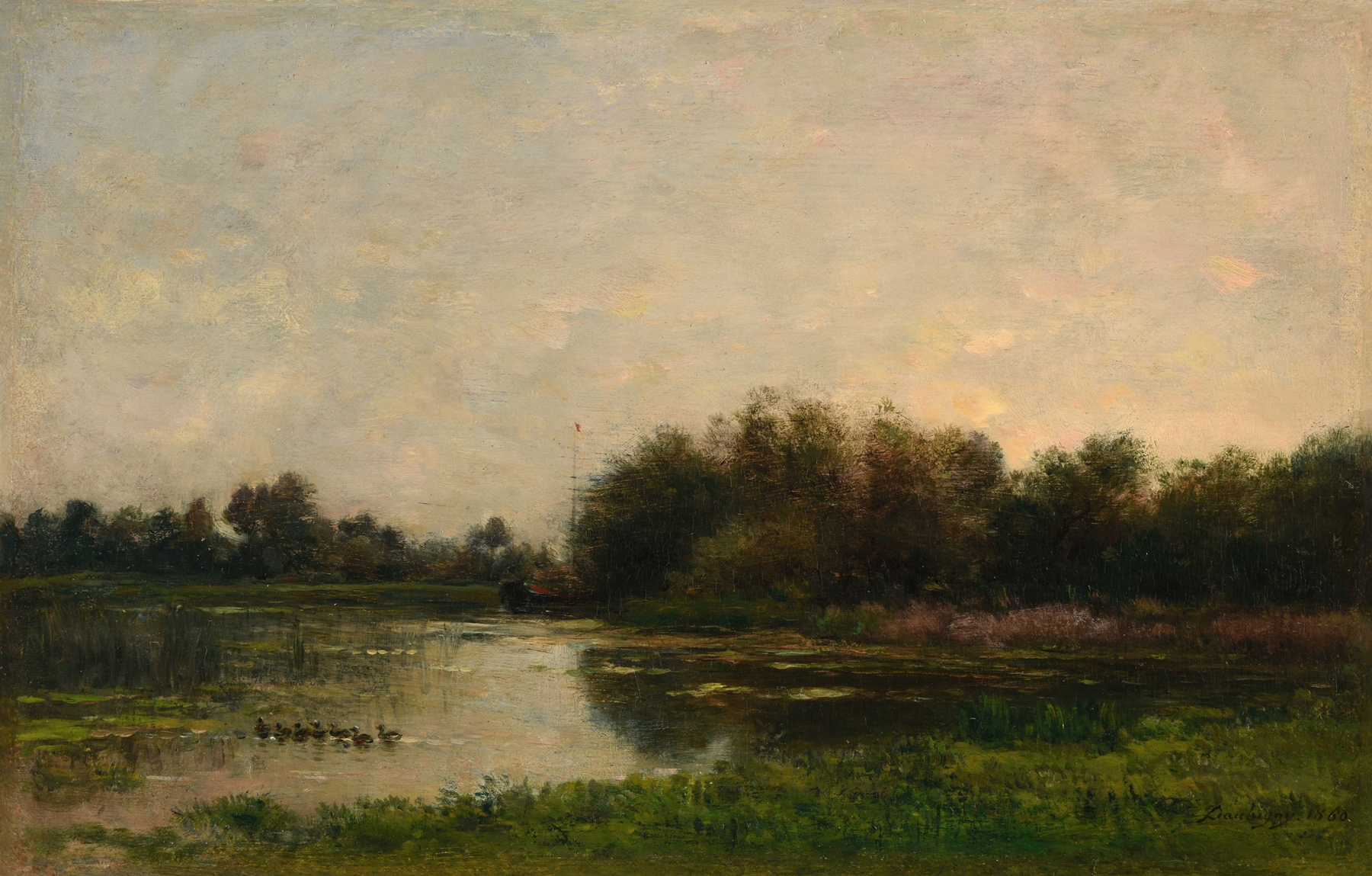
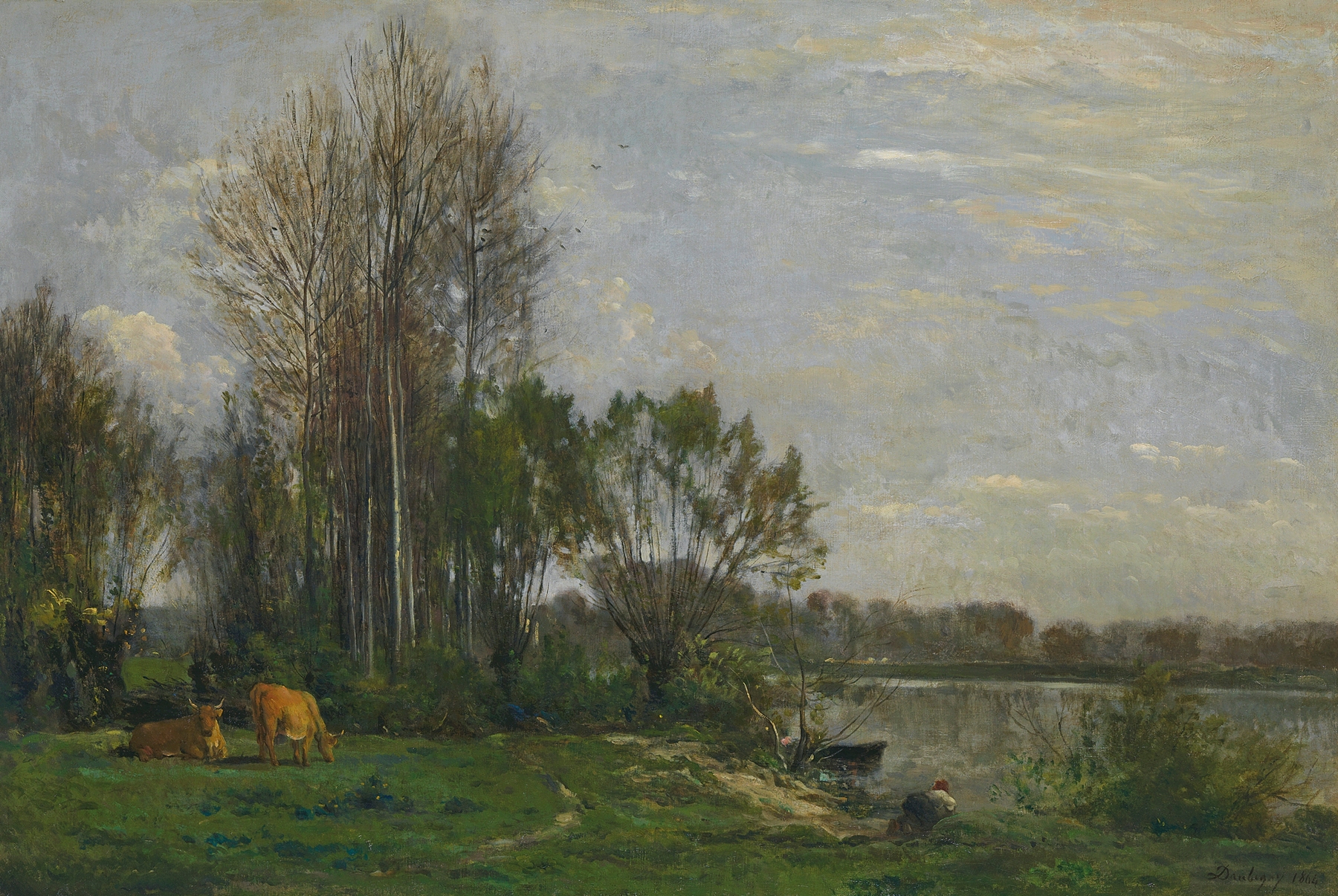
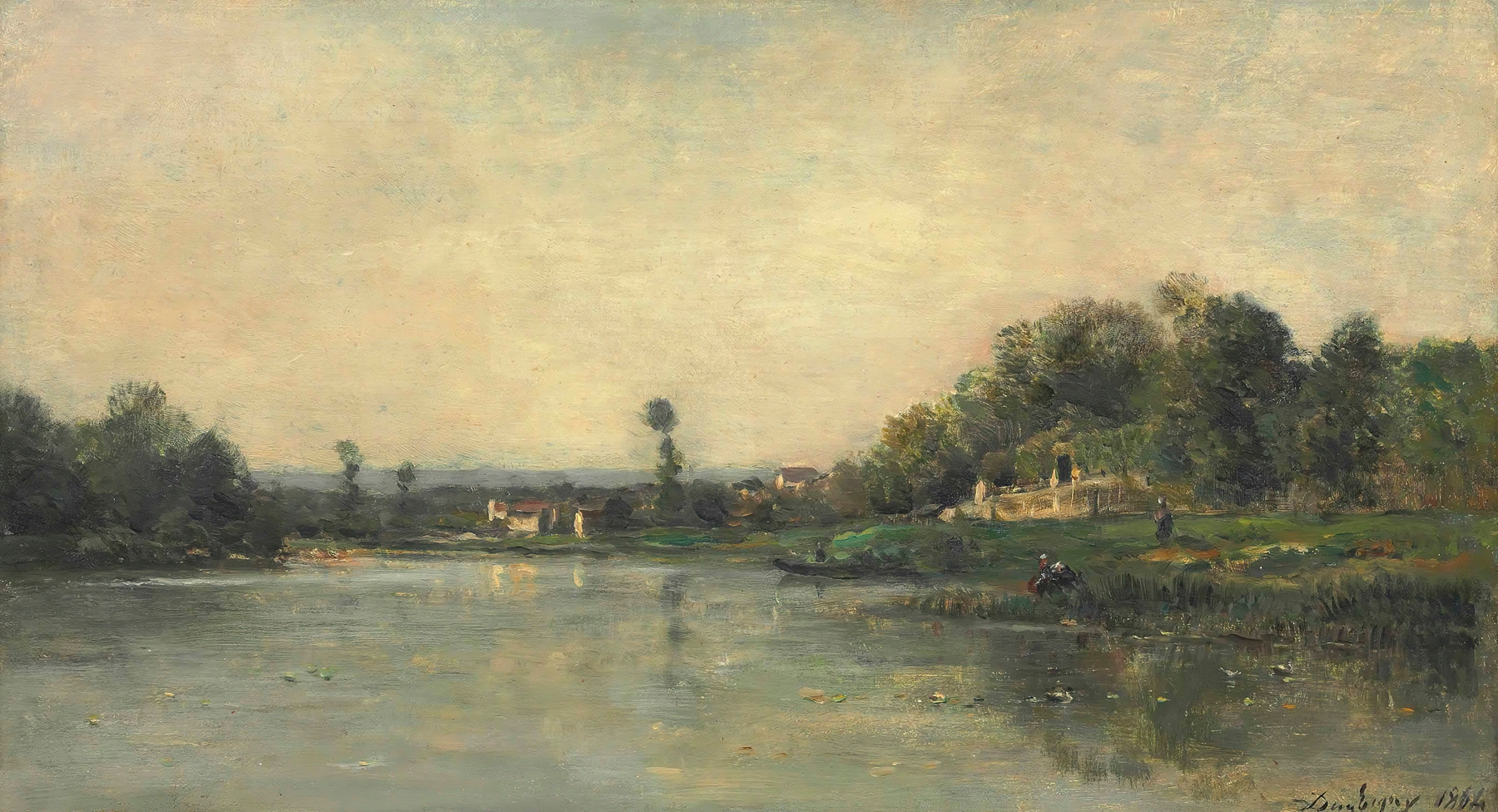
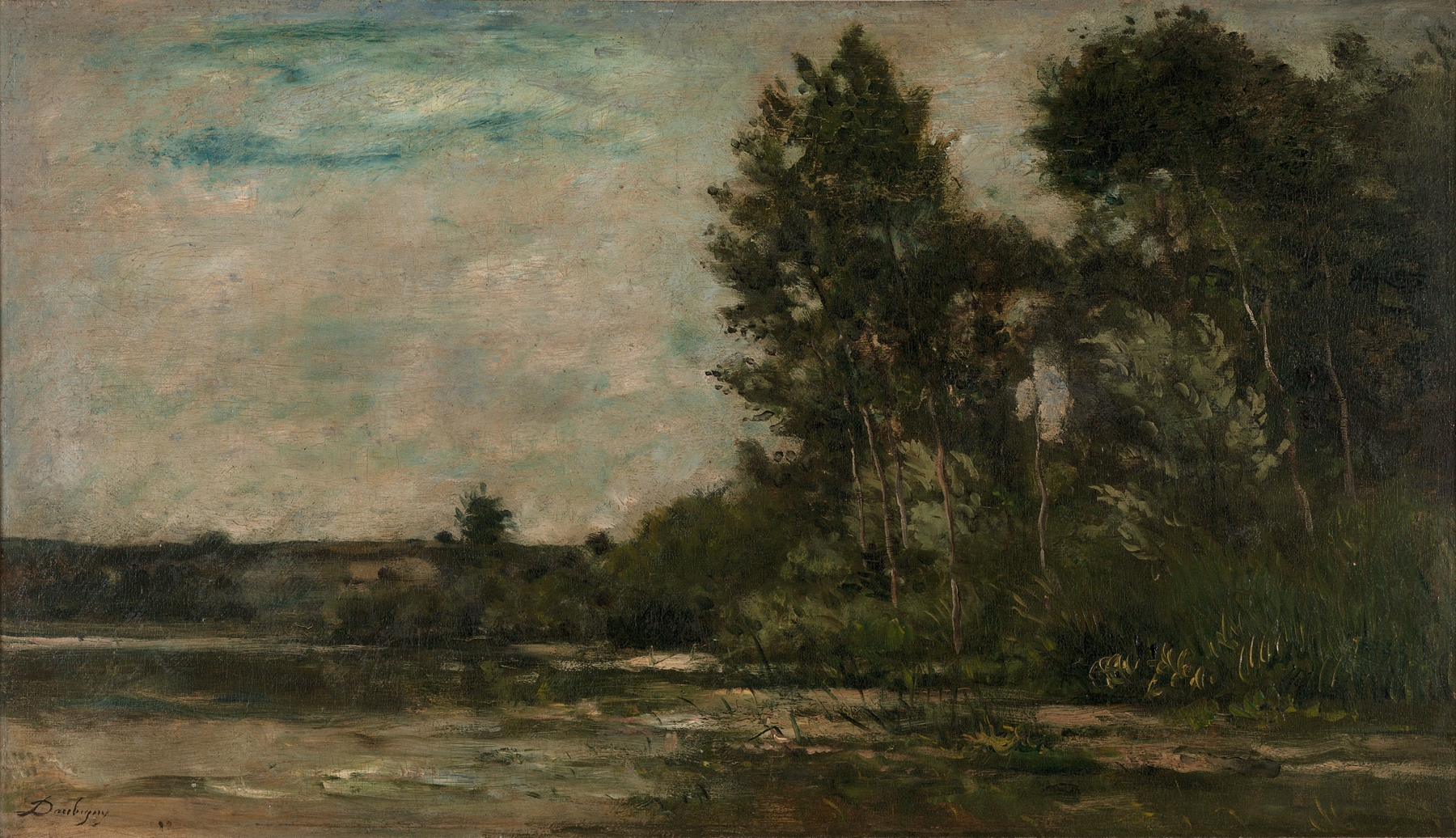
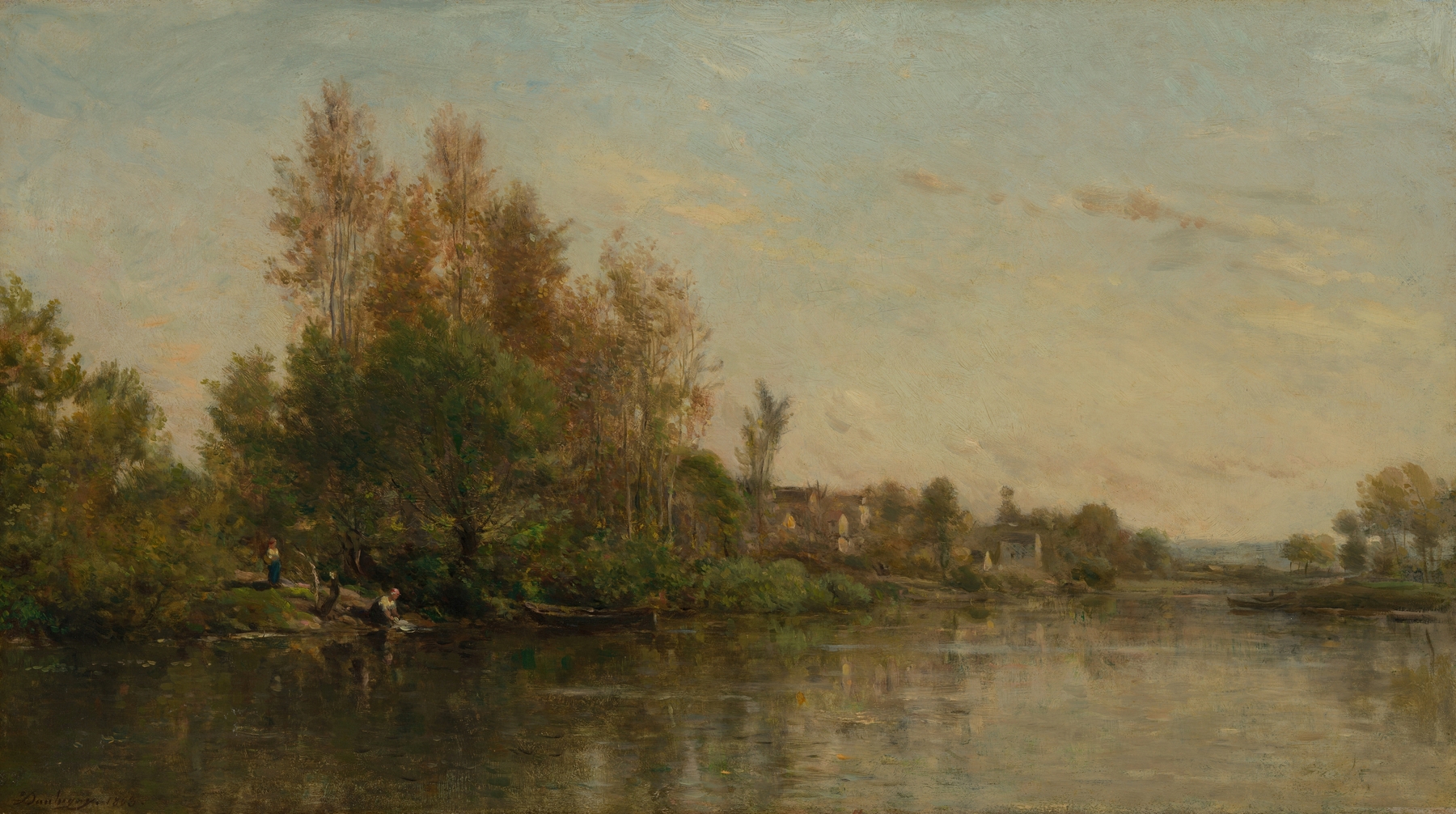
“The canvas doesn’t lie — it simply waits.” In the stillness of The Banks of the Oise, time seems to pause, allowing nature’s subtle decay to unfold before our eyes. The serene landscape invites contemplation, bridging the ephemeral and the eternal. Look to the foreground, where a gentle river meanders, bordered by verdant grasses that appear to curl and wither at their edges. Notice the soft, muted greens and browns, revealing Daubigny's deft handling of color and light. The reflection of the sky in the water glimmers with hints of golden sunlight, creating a delicate interplay between the bright and the somber.
The brushstrokes bring texture to the foliage, capturing the whispers of wind that rustle through the trees, while the distant hills fade into a melancholic blue haze. Yet, beneath this tranquil surface lies a deeper narrative of decay and transience. The wilting grasses and the darkening shadows remind us of nature's impermanence, evoking a sense of nostalgia for the vibrancy that once was. The juxtaposition of life and decay permeates the scene, urging viewers to appreciate fleeting beauty, while also confronting the reality of inevitable decline.
The richness of the landscape holds secrets of its own, begging the question of what lies beneath the surface. In 1863, Daubigny painted this piece while living in France, amidst a period of significant artistic experimentation. The Barbizon School was gaining prominence, encouraging artists to connect with nature directly and embrace realism. This work encapsulates his desire to portray the beauty of rural landscapes, echoing the shifts in both his personal life and the evolving art world around him.