Boys in a Dory — History & Analysis

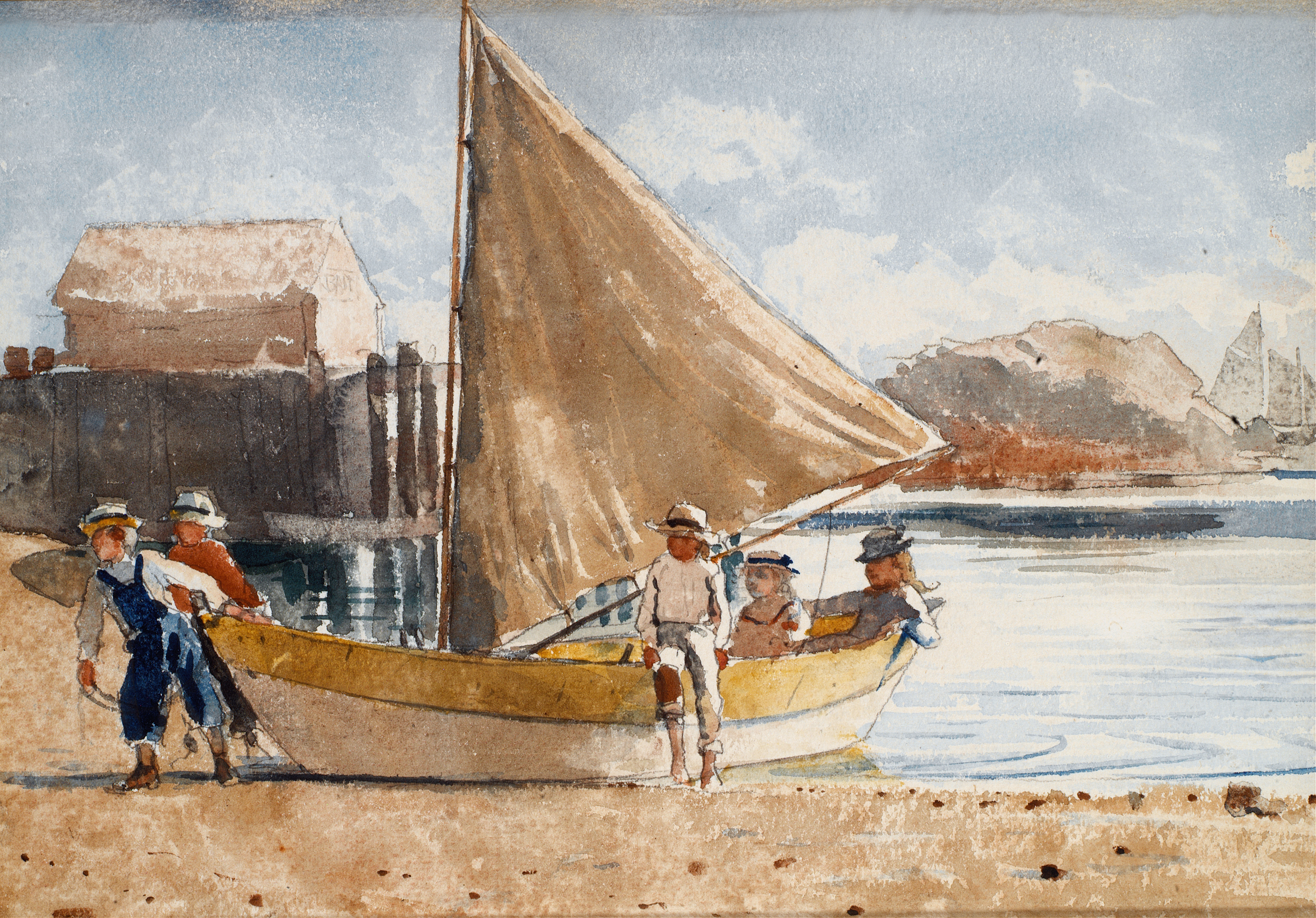
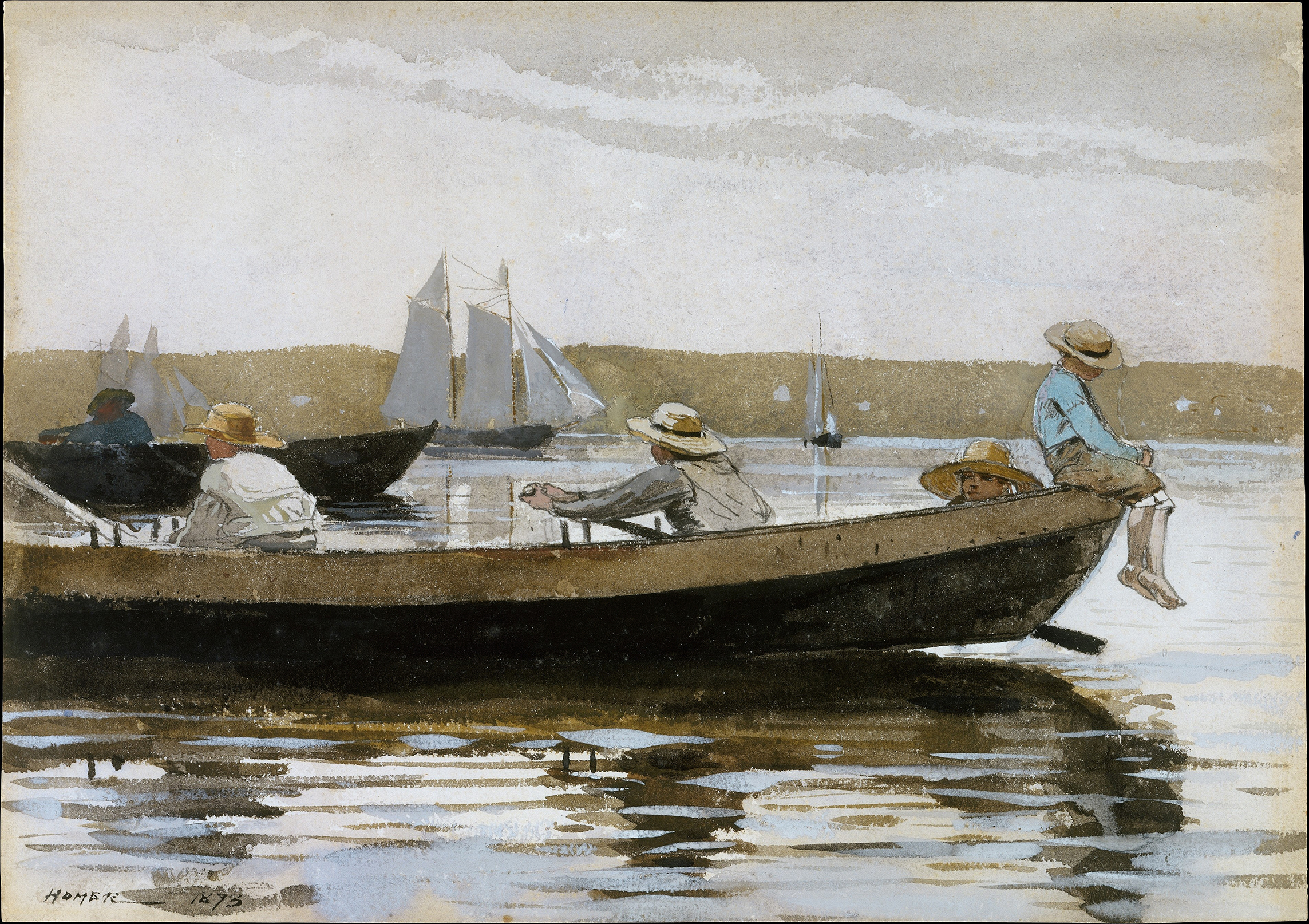
Can beauty exist without sorrow? In Winslow Homer’s Boys in a Dory, the delicate balance between joy and melancholy is laid bare on the canvas, capturing a fleeting moment that lingers with unspoken depths. Look to the left at the two boys, their youthful faces framed by the gentle curve of the dory. Their hands grip the oars with a mix of eagerness and uncertainty, while the sun casts a warm glow upon their sun-kissed skin.
Notice how the rippling water reflects the light, creating a dance of shimmering hues that contrasts the stillness of the surrounding shore. The palette is vivid yet restrained, evoking both the thrill of adventure and the hint of impending change. In the background, a weathered shoreline hints at the passage of time, suggesting decay and the inevitable loss that accompanies growth. The boys’ expressions oscillate between excitement and contemplation, hinting at the deeper emotional currents of childhood.
There’s an intricate interplay between the innocence of youth and the harsher realities of life, as the serene setting belies the struggles that lie beneath the surface—a testament to the bittersweet nature of growing up. Painted in 1873 during a transformative period for American art, Homer’s work reflected the shift towards realism and the exploration of everyday life. At that time, he was immersed in the natural beauty of coastal Maine, seeking to merge the essence of the landscape with the human experience. This piece embodies his innovative approach, as he captured not just a scene but the profound emotions intertwined with a simple moment on the water.