Boys in a Dory — History & Analysis
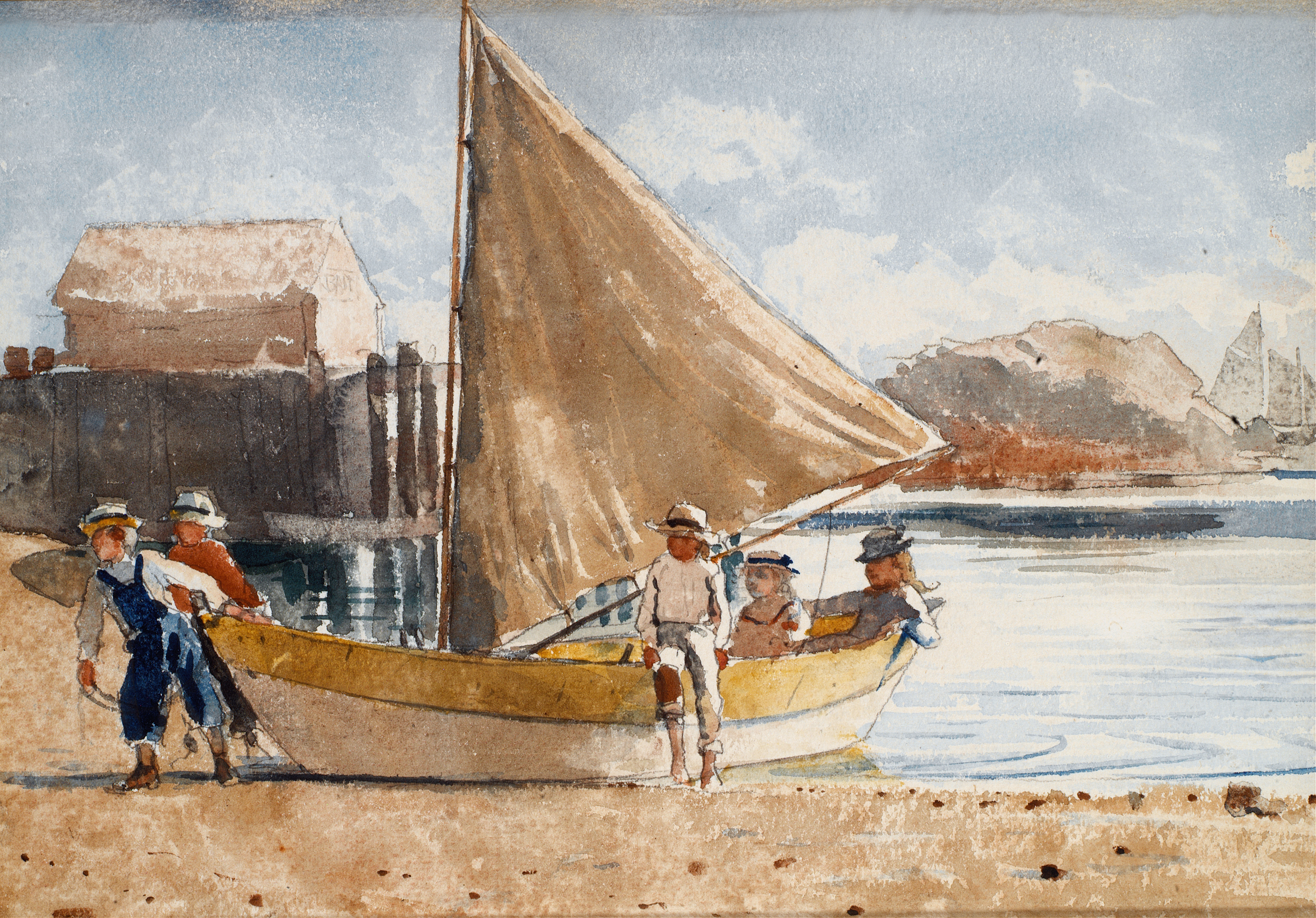
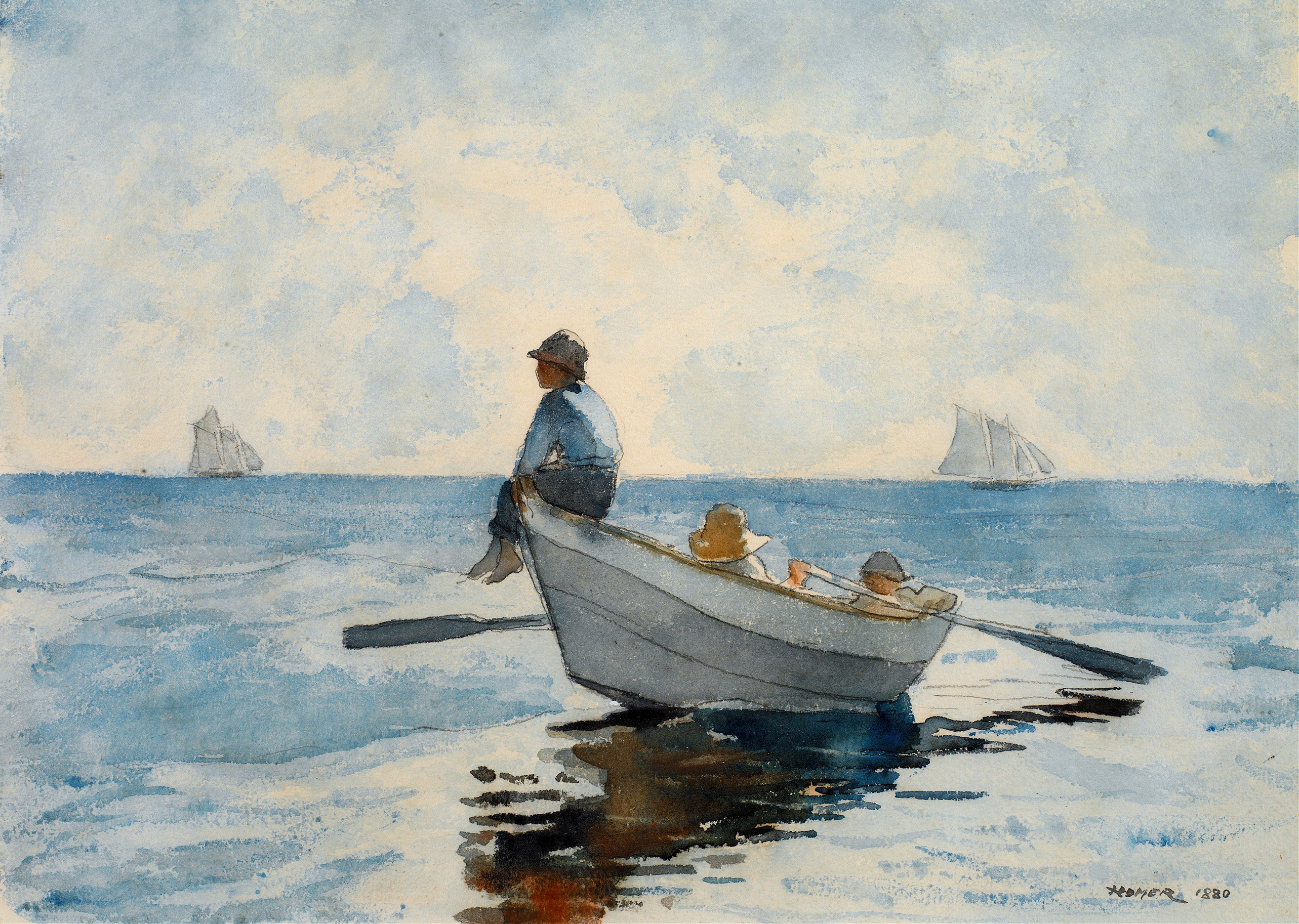
Who listens when art speaks of silence? In Boys in a Dory, a stillness settles over the young rowers, evoking an awakening that stirs within the viewer's soul. Focus on the boys' expressions, their youthful faces illuminated by diffused sunlight, which dances across the water's surface. Notice how the light creates a gentle shimmer, reflecting their fragile world and hinting at the deep bond forged between them.
The composition draws your gaze into the dory, where the overlapping figures convey a sense of intimacy and teamwork. The soft, muted colors of the water and sky contrast with the boys' vibrant clothing, emphasizing both their vitality and the tranquil environment that cradles them. In the subtle dynamic of the scene lies a complex interplay of freedom and innocence. The boys, immersed in this serene moment, seem to embody a fleeting childhood—an awakening to adventure balanced by the looming responsibilities of life.
Their laughter, though silent, resonates with a sense of joy and exploration, while the dory, a fragile vessel, symbolizes the delicate journey of youth navigating the vast, unpredictable sea of existence. Created in 1880, this piece reflects Winslow Homer's deep appreciation for the American landscape and its spirit. During this period, Homer was transitioning towards works focused on outdoor themes and the natural world, influenced by his experiences in the coastal regions of New England. The era was marked by a growing interest in realism and a departure from traditional academic painting, paving the way for an authentic representation of American life and its complexities.