Caravane traversant le désert — History & Analysis
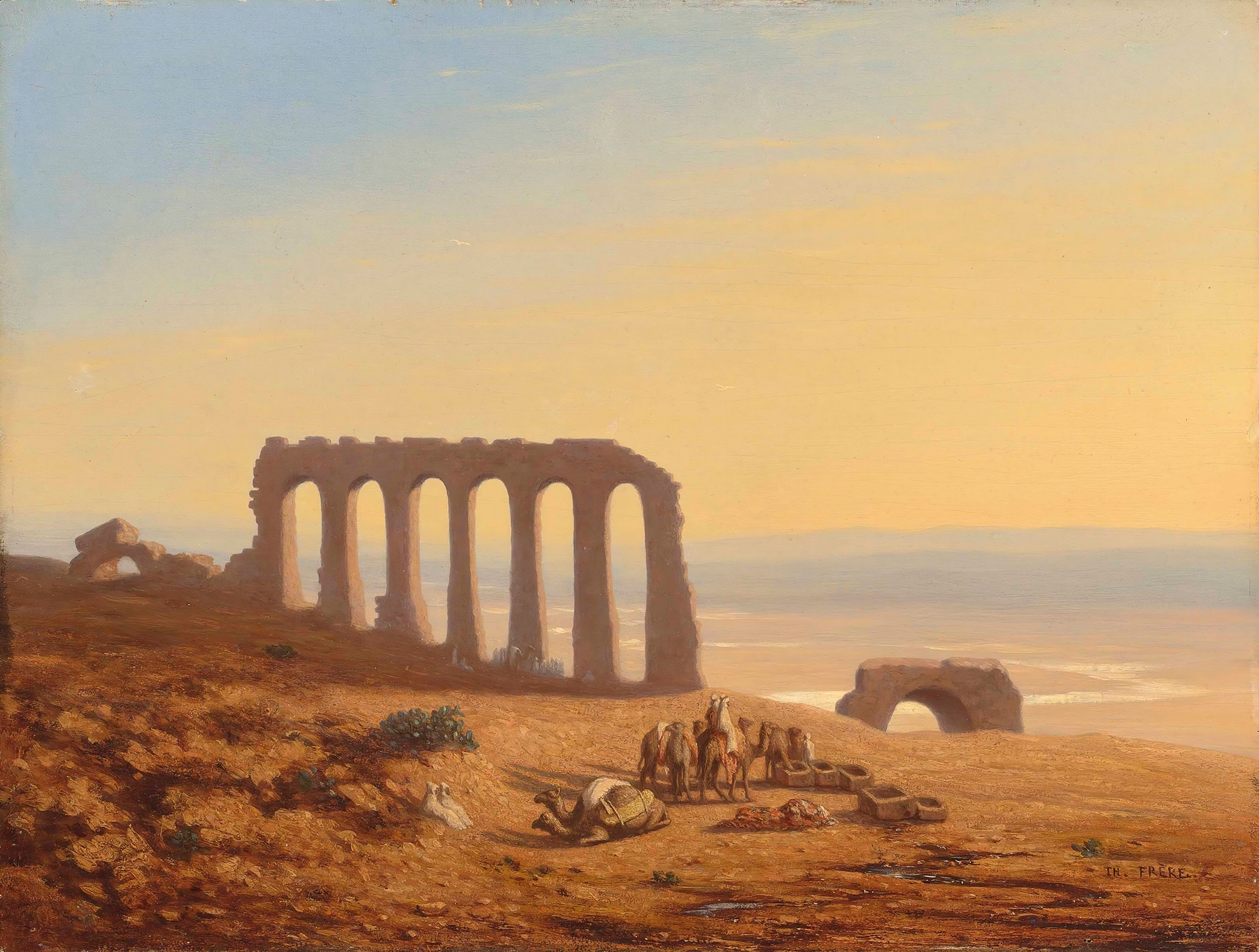
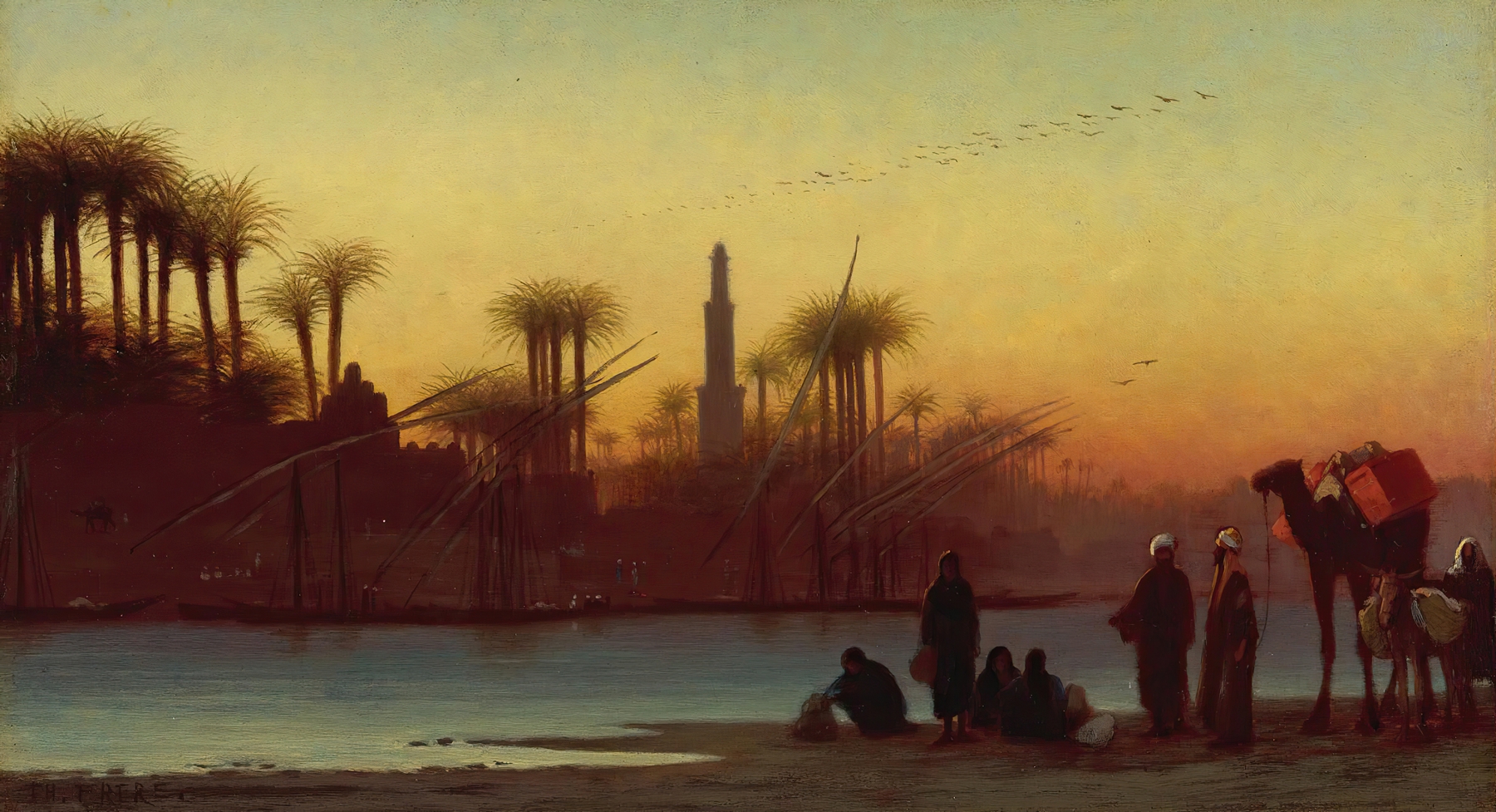
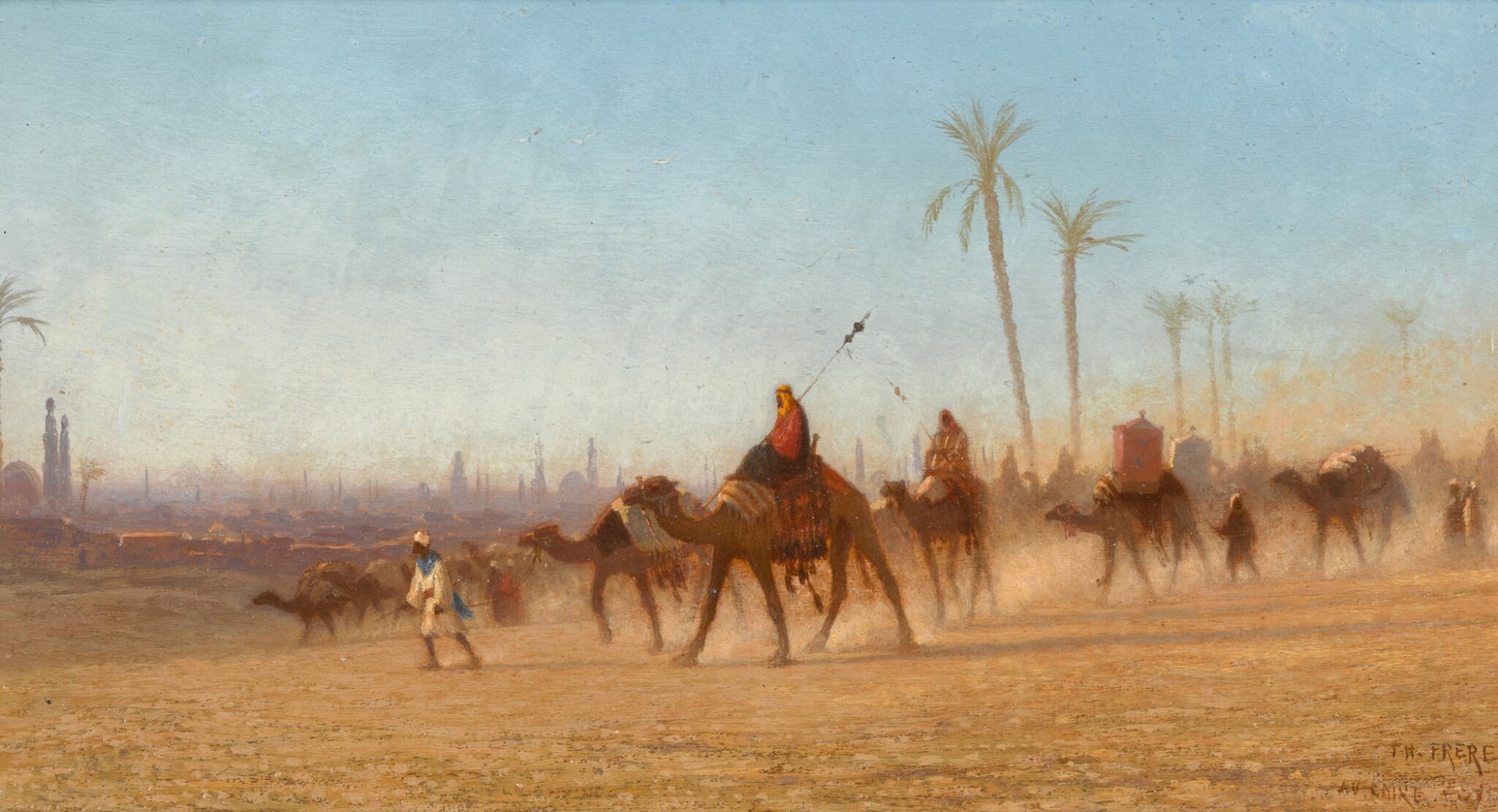
Who listens when art speaks of silence? In Caravane traversant le désert, the stillness of an endless landscape echoes the profound weight of solitude, inviting us to ponder the human experience against the vastness of nature. Look to the center of the canvas, where a caravan ambles through golden sands, the figures of men and camels delicately rendered against a glowing backdrop of ochre and sienna. The horizon stretches infinitely, punctuated only by distant dunes that seem to whisper secrets of the desert.
Notice how the interplay of light and shadow dances across the terrain, enhancing the sense of movement while also imbuing the scene with a sense of quiet contemplation. Yet amidst the apparent tranquility, a deeper tension emerges. The caravan, though occupied, evokes a poignant loneliness, each figure seemingly lost in thought as they traverse the desolate expanse.
The endless landscape surrounding them serves as a stark reminder of isolation, while the warm colors contrast sharply with the cold silence of the desert, mirroring the duality of human connection and solitude. In the early 1880s, Frère painted this work during a period of travel and exploration, influenced by the fascination with North Africa that swept European artists. Living in Paris, he was surrounded by the emergent Impressionist movement, but he chose to embrace a more traditional style, capturing the grandeur of the natural world while also reflecting the complexities of the human spirit within it.