Cavalry at Repose — History & Analysis
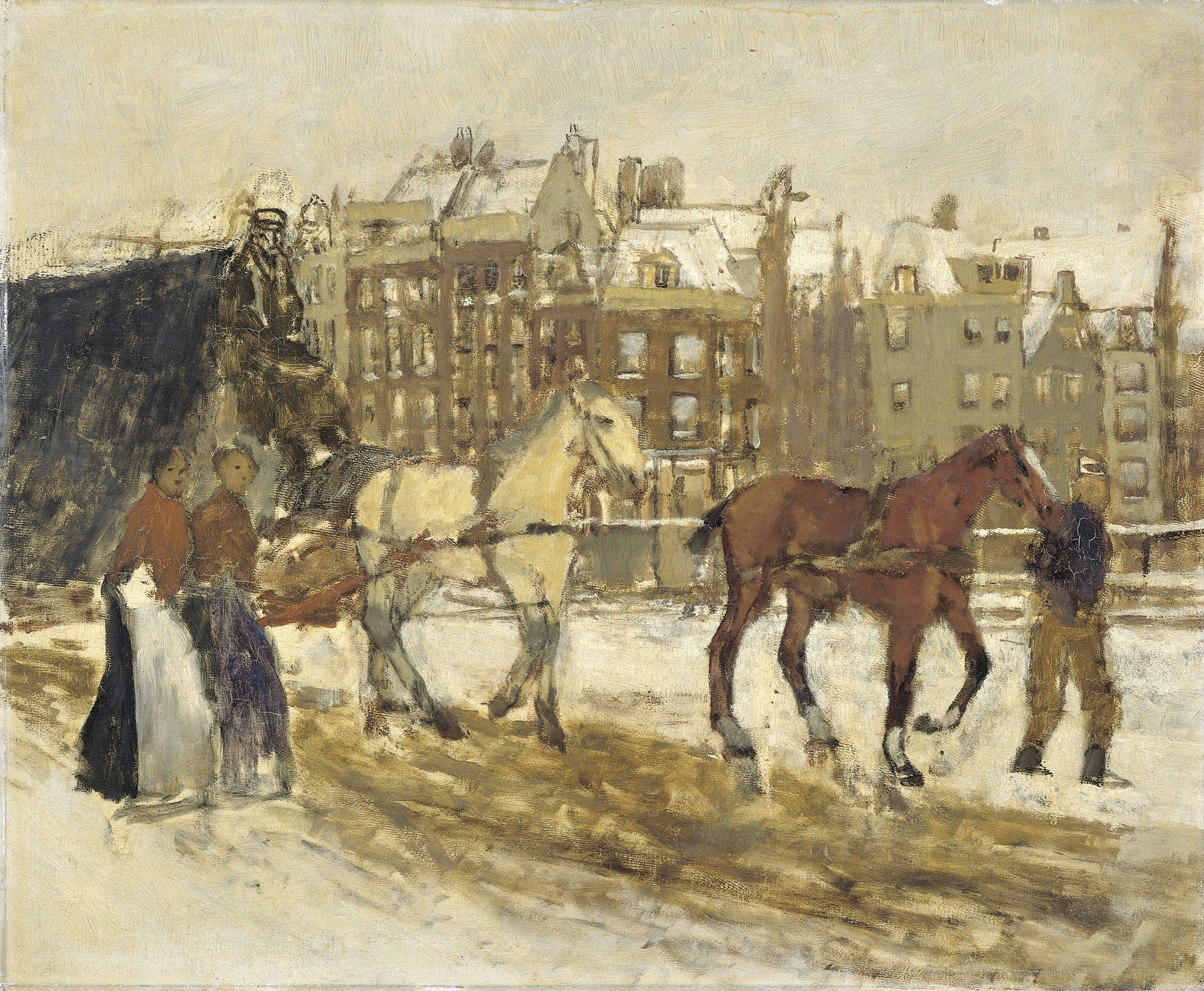
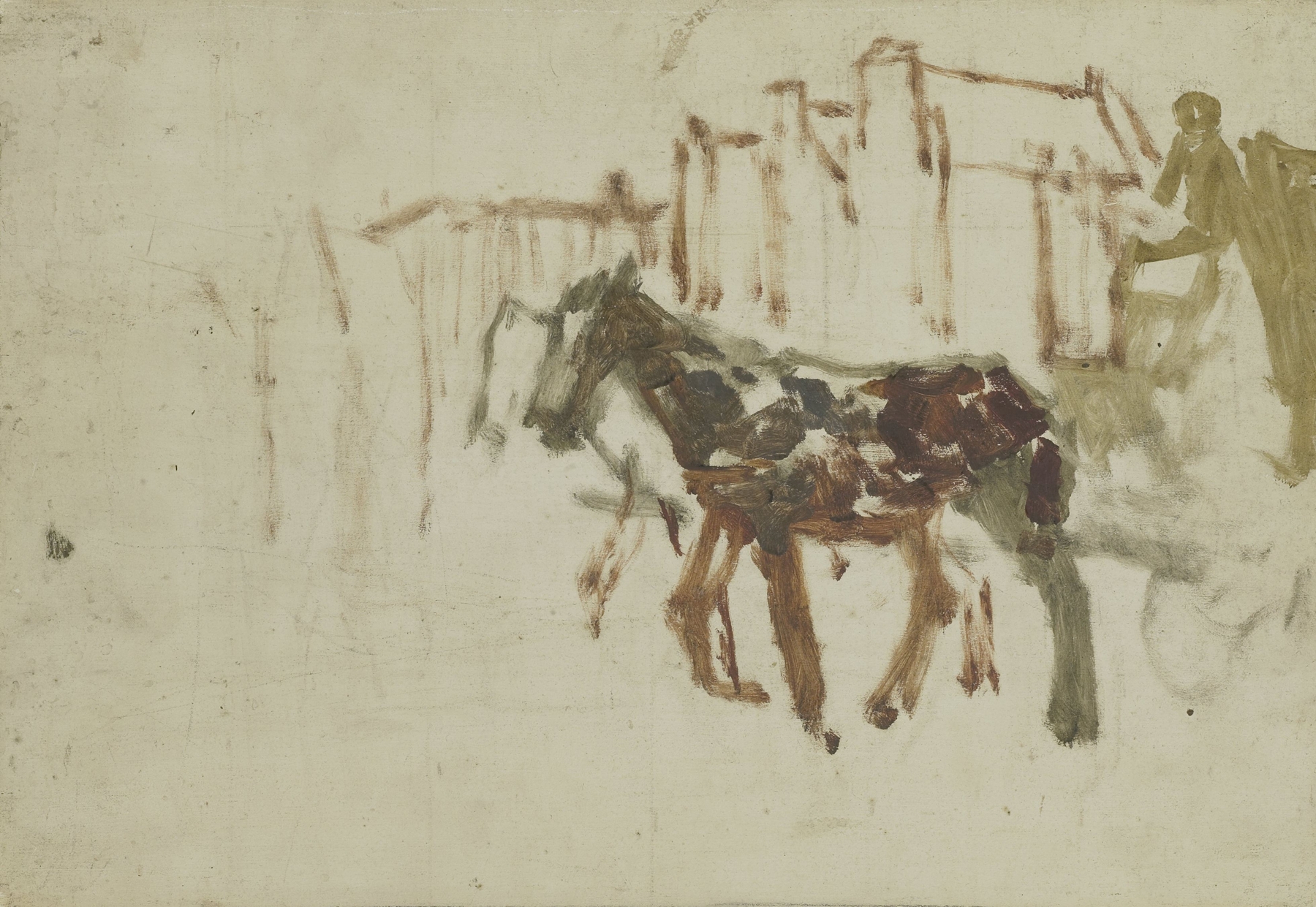
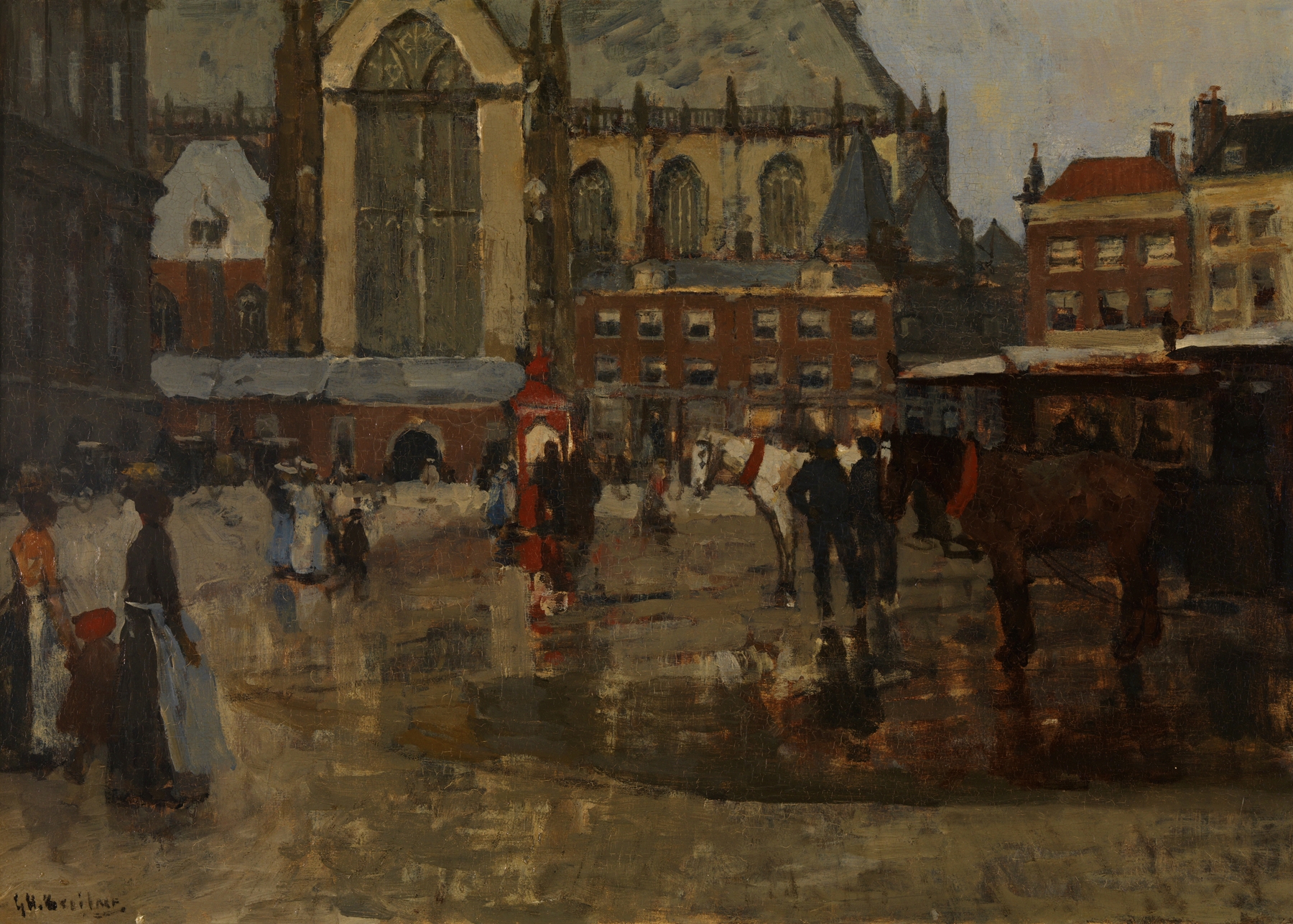
Could beauty survive in a century of chaos? In George Hendrik Breitner's Cavalry at Repose, this question resonates through the hues and forms captured on canvas, inviting us to explore the quietude amidst disorder. Look to the left at the sunlit horses, their glossy coats reflecting a spectrum of earthy browns and deep blacks, as they stand peacefully in the foreground. Notice the subtle play of light and shadow across their powerful bodies, emphasizing the muscle and grace inherent in these noble creatures.
The backdrop of muted greens and soft skies complements the scene, while the contrasting vibrancy of the figures draws the eye, creating an almost tactile experience of warmth and serenity. Delve deeper, and you will uncover the tension between serenity and restlessness. The relaxed stance of the horses contrasts with the stillness of the surrounding landscape, hinting at a world beyond that is filled with anticipation and uncertainty. The brushwork is both confident and soft, embodying a duality that speaks to the artist's contemplation of strength and vulnerability, evoking a deeper emotional resonance that transcends the mere representation of cavalry.
Breitner painted Cavalry at Repose during the late 19th century, a time when he was deeply engaged in capturing the life and landscapes of urban Amsterdam. This period was marked by the rapid changes of the Industrial Revolution and its impact on society, which informed his exploration of military life and its associated themes. His works often merged realism with impressionistic techniques, reflecting both the beauty and turmoil of the time.