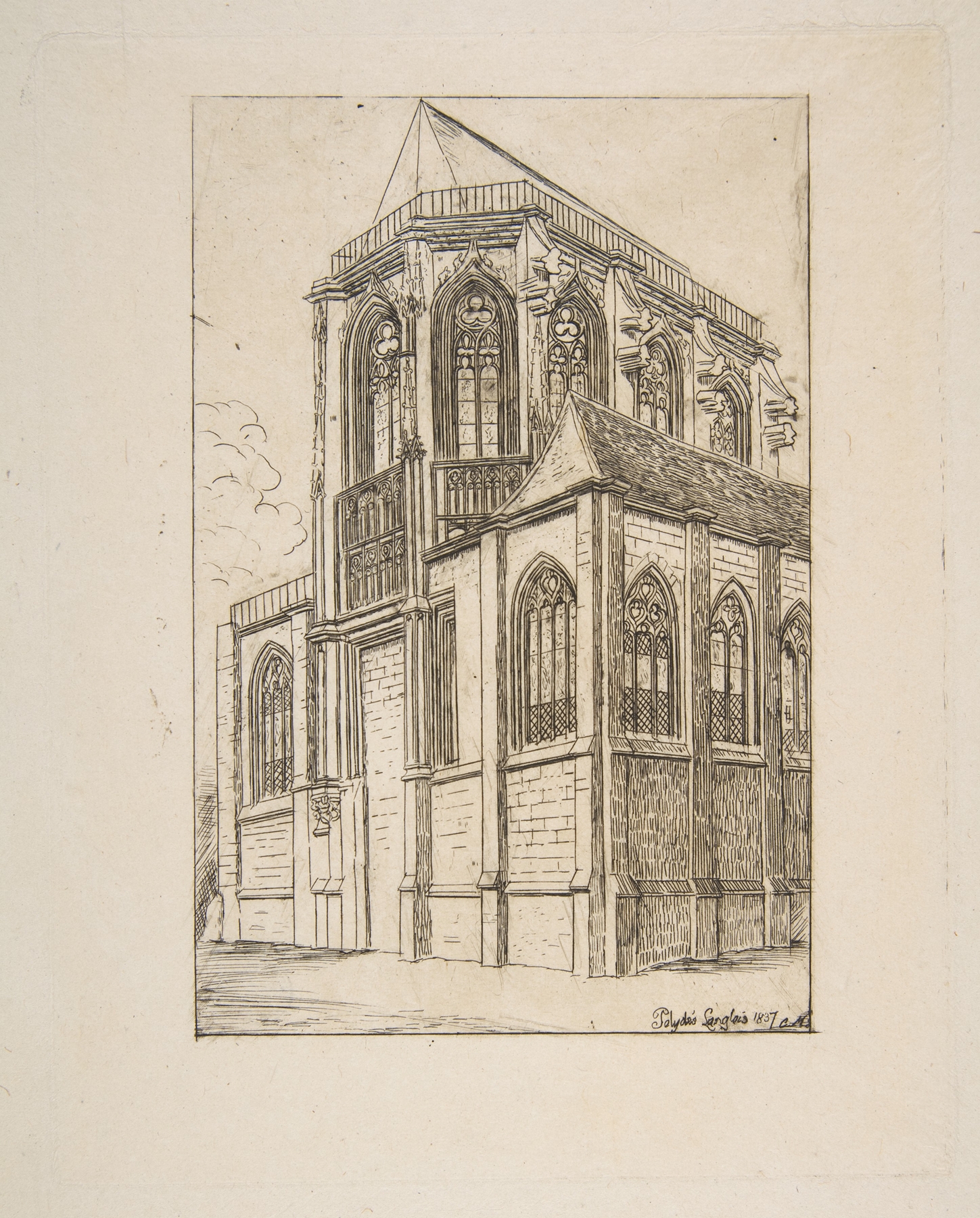
Chevet de St. Martin-sur-Renelle (The apse of the Church of St. Martin-sur-Renelle, Paris, after Langlois) — History & Analysis
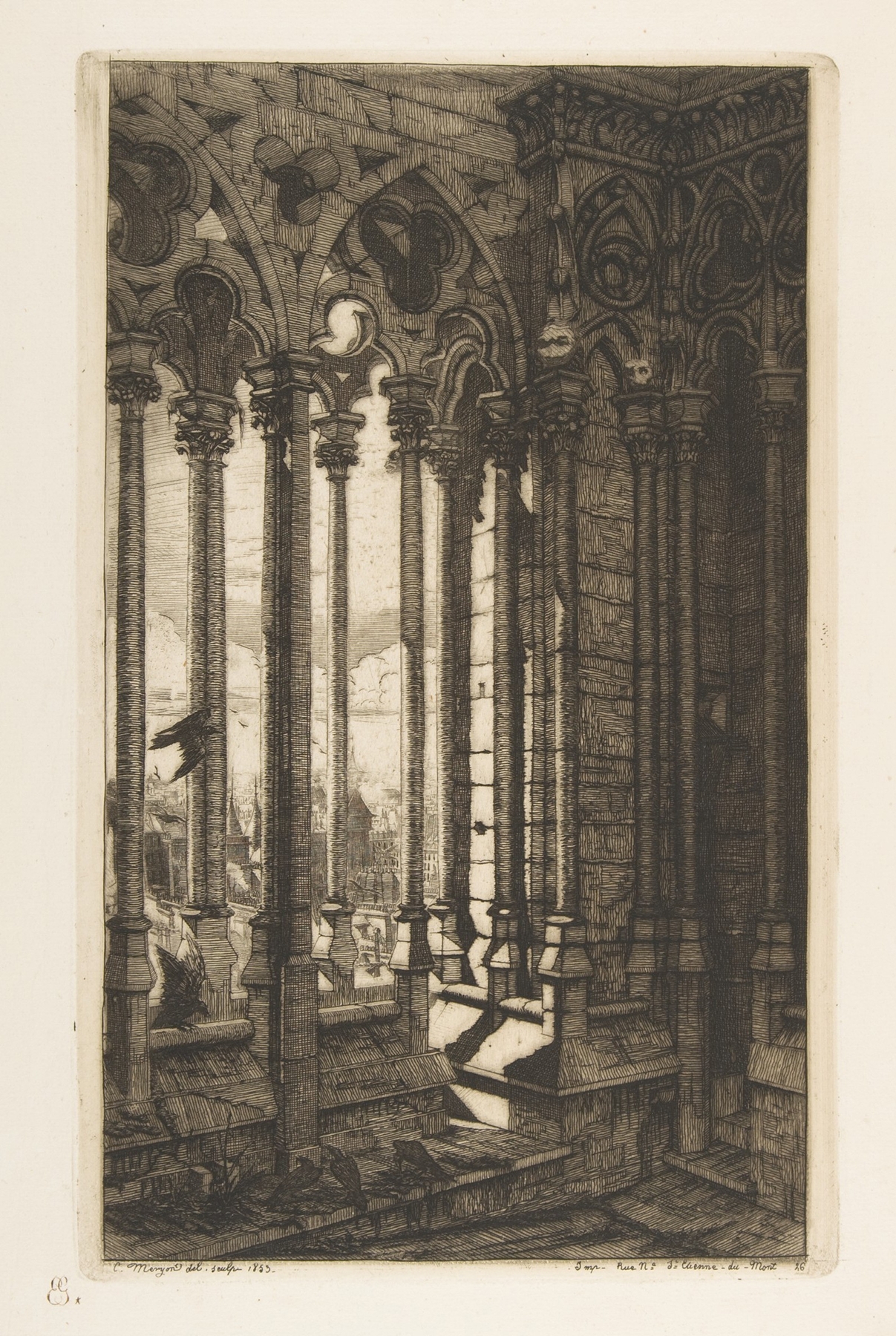
Could beauty survive in a century of chaos? In a world that teeters on the edge of despair, the surreal vision of the apse beckons with a haunting allure, a fragile illusion that defies the tumult around it. Look closely at the intricate details of the apse, where shadows play along the stonework and the delicate lines of the architecture pull your gaze towards the heavens. Notice how Meryon uses a muted palette to evoke a sense of nostalgia, imbuing the structure with a surreal quality that feels both timeless and transient.
The ethereal light dances upon the surfaces, reflecting his mastery of chiaroscuro, drawing out the rich textures of the stone while simultaneously cloaking the scene in a veil of mystery. Hidden within this composition, emotional tension emerges through the juxtaposition of the sacred and the decayed. The arches, grand but crumbling, suggest a battle against time, whispering stories of a once-vibrant past now obscured. Amidst this decay, the ethereal quality of the light evokes a sense of longing and hope, as if the spirit of the place yearns to be remembered, challenging the viewer to consider what remains when physical beauty fades.
In 1860, Meryon was navigating a tumultuous period in his life, grappling with personal and artistic crises while living in Paris. This period was marked by a growing sense of disillusionment in the art world and the rise of modernity, which contrasted sharply with his reverence for Gothic architecture. As he captured the apse of St. Martin-sur-Renelle, Meryon sought to preserve the essence of a fading beauty, a poignant reminder that even amidst chaos, art can hold the power of illusion and memory.