Gallery, Nôtre-Dame Cathedral, Paris — History & Analysis
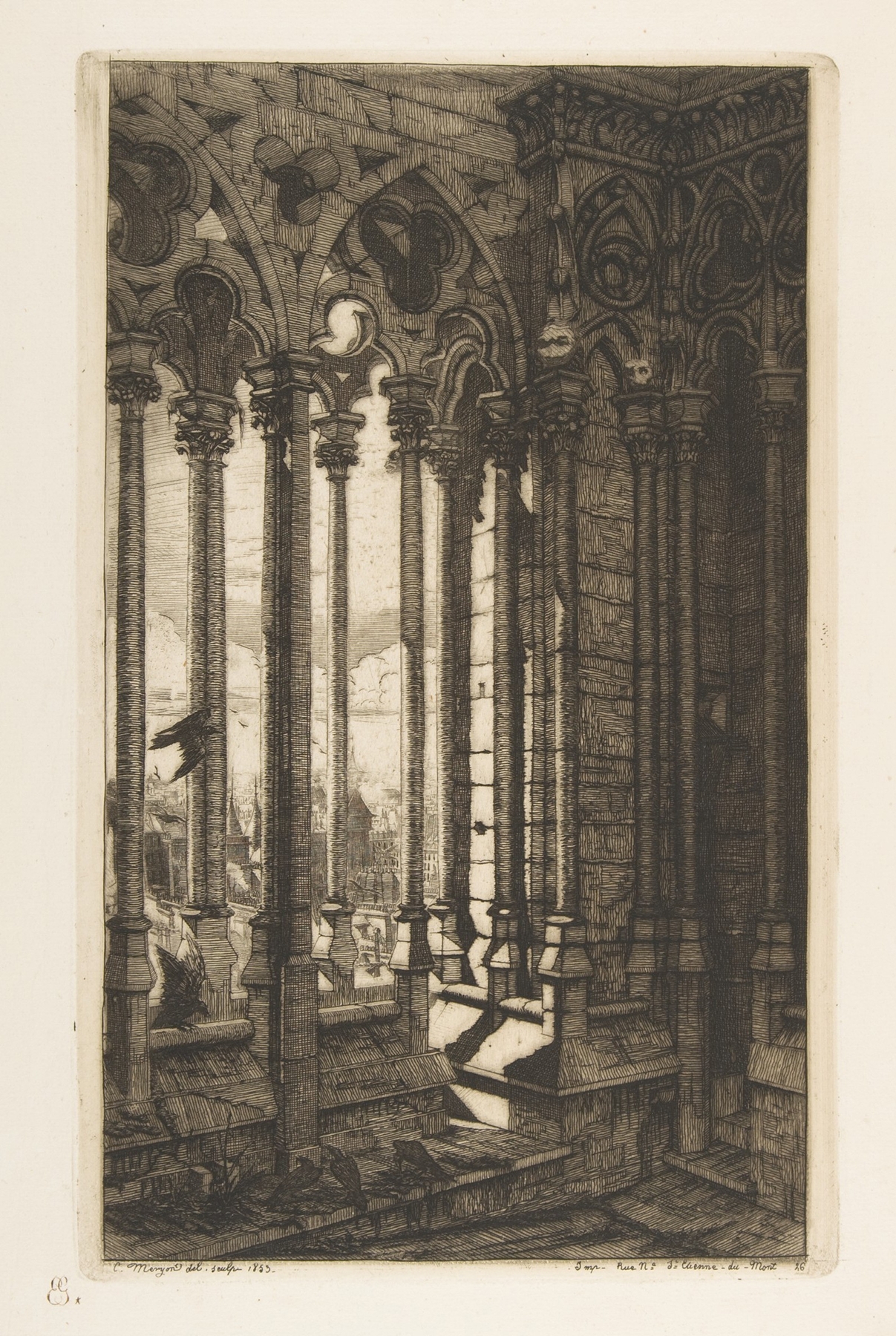
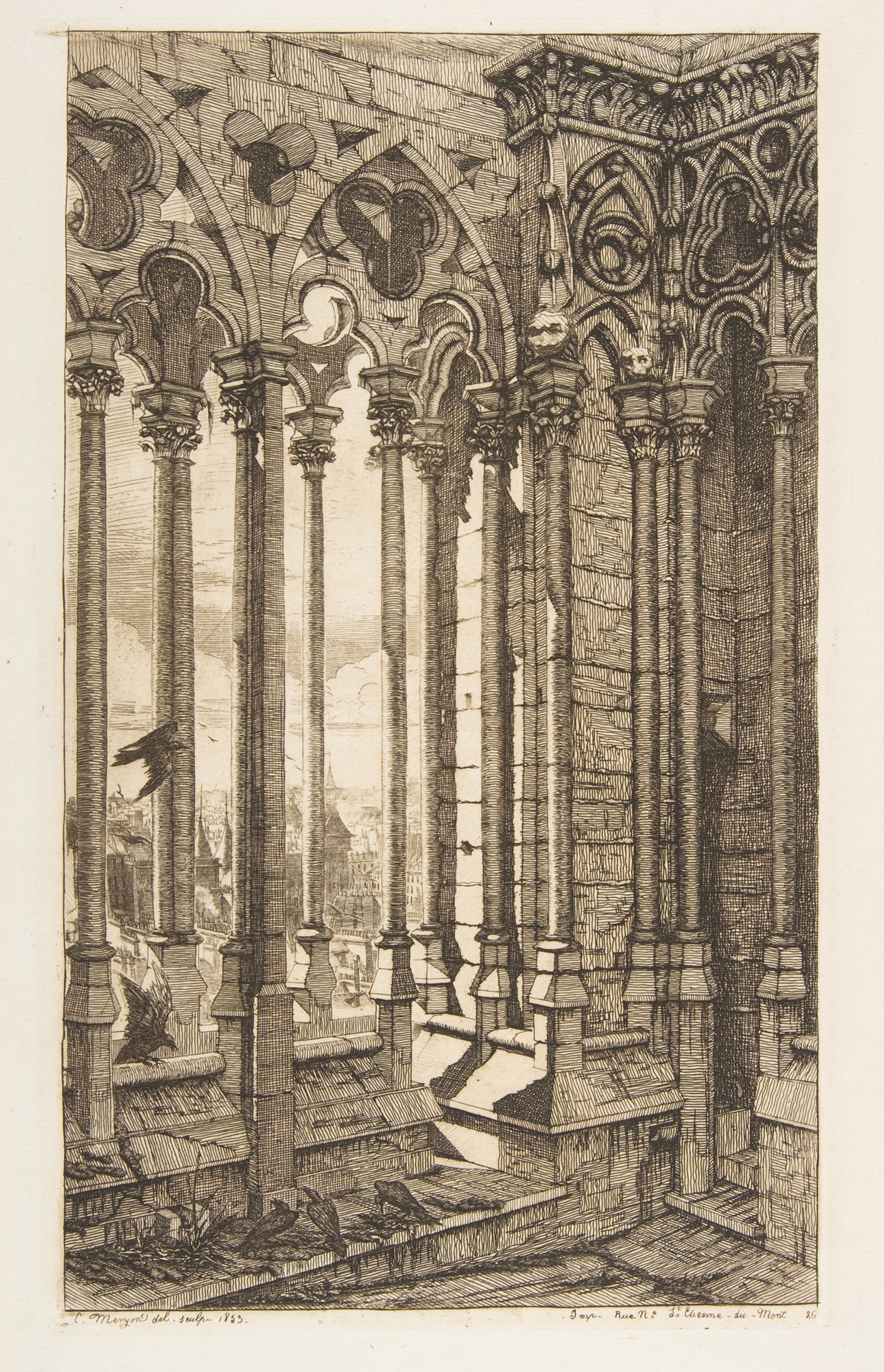
Can paint confess what words never could? In Gallery, Nôtre-Dame Cathedral, Paris, a haunting silence envelops the viewer, evoking a poignant sense of loss. Look to the center of the composition, where the soaring arches of the cathedral stretch toward the heavens, their intricate details meticulously rendered. The interplay of light and shadow draws the eye, revealing the delicate textures of the stonework, as if the very walls are whispering secrets of the past.
Meryon’s careful use of chiaroscuro amplifies the spiritual gravity of this sacred space, allowing the viewer to feel both the weight of history and the ethereal quality of the moment captured. Amid the architectural grandeur lies a tension between permanence and transience. The almost ghostly figures that populate the gallery suggest a fleeting connection to those who have come before, while their semi-opaque presence hints at the sorrow ingrained in memory. There’s a palpable contrast between the robust solidity of the cathedral and the ephemeral nature of human existence, urging us to reflect on our own mortality and the relationships that shape us.
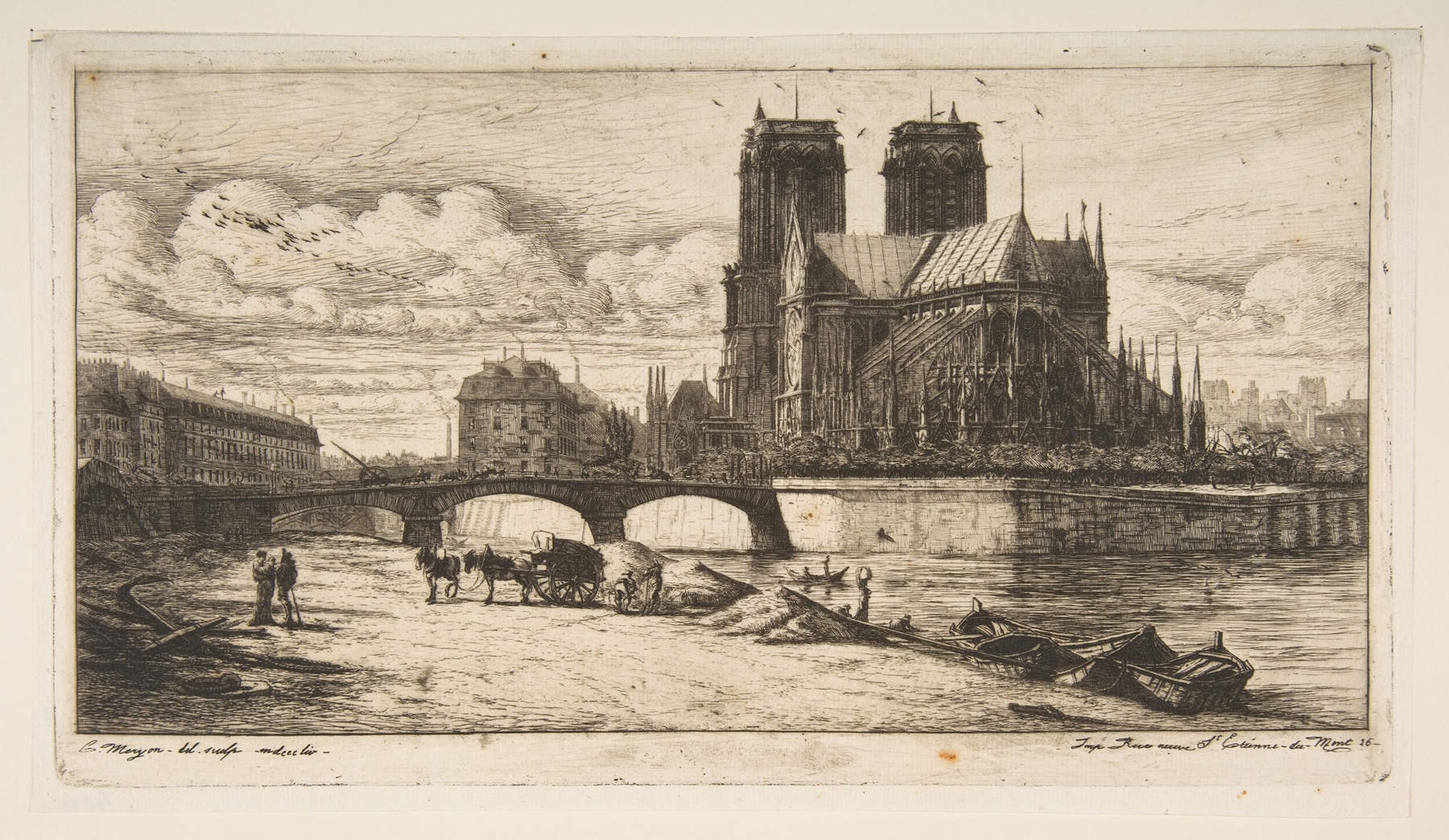
In 1853, Meryon was immersed in his exploration of Parisian architecture, experiencing both personal turmoil and a deep appreciation for the city’s beauty. This period marked a time of artistic evolution, as Meryon grappled with the challenges of his mental health while seeking to immortalize the remarkable structures around him. His dedication to capturing the essence of these historic landmarks, like the Nôtre-Dame, reveals a broader commentary on the passage of time and the enduring nature of art itself.