
The Mortuary, Paris (La Morgue) — History & Facts
In the stillness of The Mortuary, Paris, the weight of loss lingers in the air, a solemn reminder of the lives once lived. The stark reality of mortality unfolds in Meryon's scenes, inviting us to confront the unspoken truths of human existence. Look to the left, where the cold stone structure opens up, revealing the inner sanctum of the morgue. The play of light highlights the contours of the building, emphasizing the starkness of its architecture.
Shadows drape over the figures and objects, creating contrasting depths that evoke an austere elegance. The muted palette of grays and whites underscores the somber theme, reinforcing the emotional gravity that pervades the scene. Within this setting, the interplay of light and shadow speaks volumes about the nature of death and its aftermath. The figures, although silent, convey a profound sense of isolation and contemplation, perhaps reflecting on their own mortality.
Meryon captures the delicate tension between life and death, hinting at the stories left untold, the moments of grief that accompany the departed. The stillness invites viewers to pause, urging them to consider their own relationships with loss and the transient nature of existence. Created in 1854, this work emerged during a period when Meryon grappled with personal struggles and the complexities of urban life in Paris. The city was undergoing rapid changes, with industrialization reshaping its landscape.
Meryon, deeply influenced by the tensions of modernity and his own mental health challenges, found solace in the exploration of the human condition, ultimately leading him to depict this poignant scene.
More Artworks by Charles Meryon

Gallery, Nôtre-Dame Cathedral, Paris
Charles Meryon
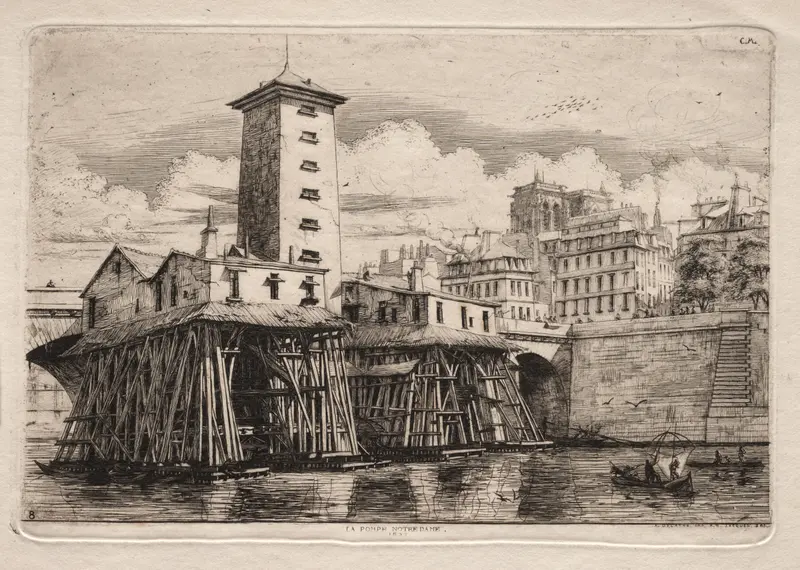
The Nôtre-Dame Pump, Paris
Charles Meryon
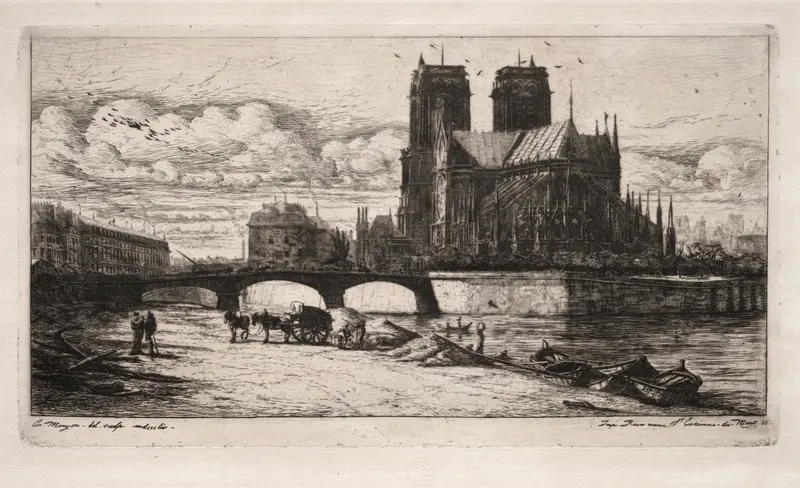
The Apse of Nôtre-Dame, Paris
Charles Meryon
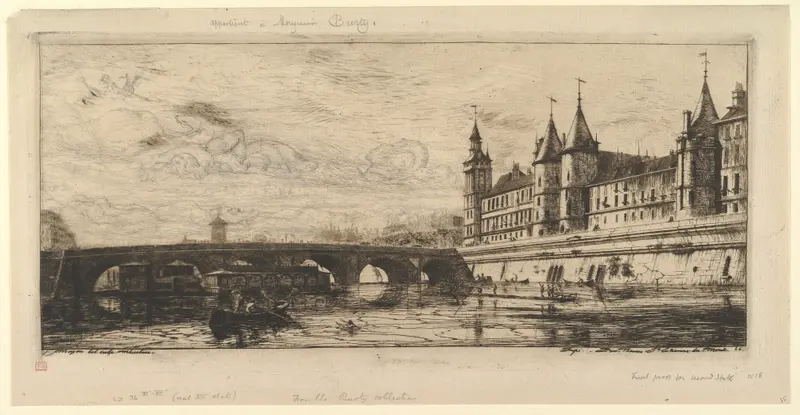
Le Pont au Change
Charles Meryon
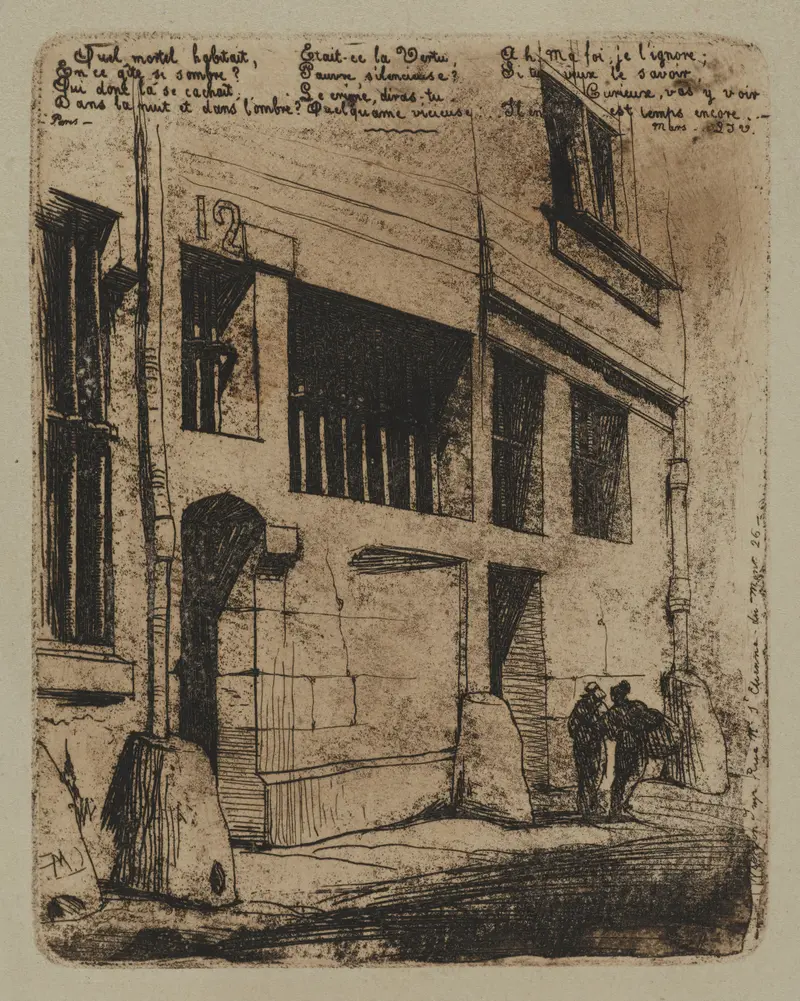
Rue des Mauvais Garçons, Paris
Charles Meryon
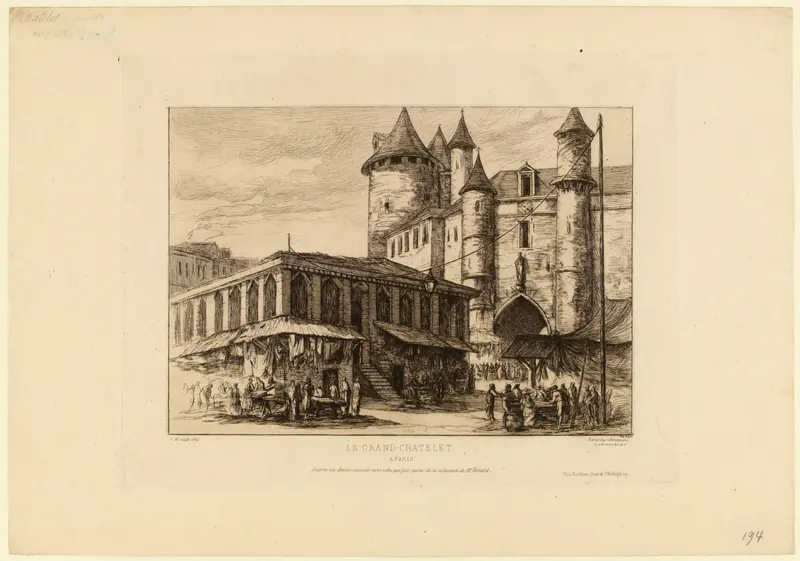
Le Grand Châtelet
Charles Meryon
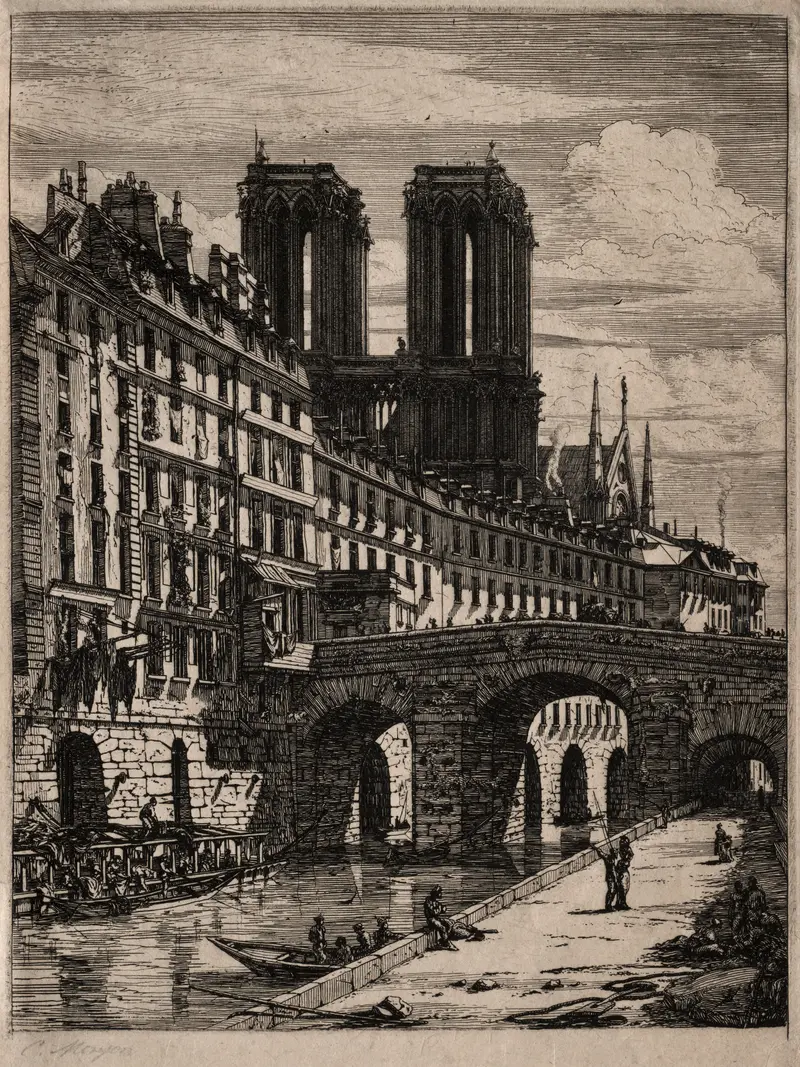
The Petit Pont, Paris
Charles Meryon
The Gallery, Nôtre-Dame Cathedral, Paris
Charles Meryon

L’Ancien Louvre (The Old Louvre, Paris, after Zeeman)
Charles Meryon
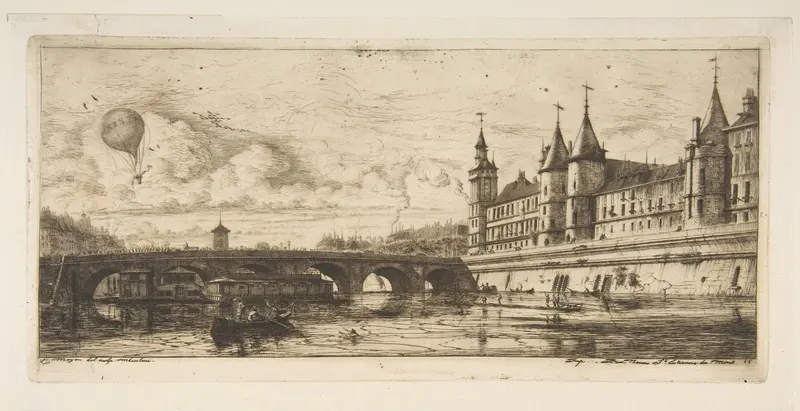
Pont-au-change, Paris
Charles Meryon





