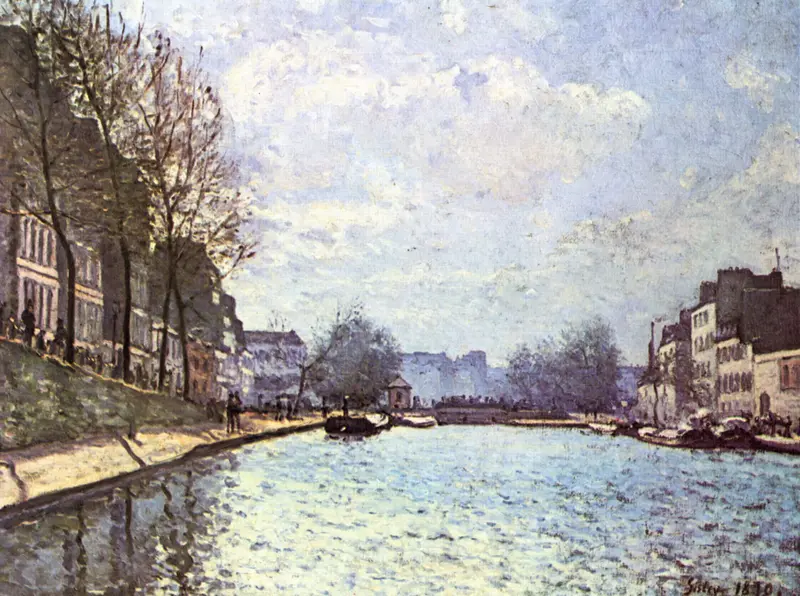
The Petit Pont, Paris — History & Facts
Could beauty survive in a century of chaos? The Petit Pont stands as a testament to the enduring essence of divine tranquility amid the tumult of urban life. Look closely at the delicate arch of the bridge, which effortlessly spans the river, drawing your gaze toward its graceful lines. Notice how the light dances across the water’s surface, reflecting a shimmering spectrum that hints at the sublime. The intricate etching technique, with its fine detailing and dynamic contrasts between shadow and light, evokes a sense of depth and movement, inviting the viewer to lose themselves in this idyllic Parisian moment. Embedded within the scene are emotional tensions—the juxtaposition of the serene, timeless bridge against the bustling activity of the city.
The figures in the foreground, small yet significant, seem oblivious to the beauty that envelops them, hinting at the often-overlooked divinity in everyday life. The distant silhouettes of the buildings echo the complexity of human existence, bridging the gap between nature and man-made structures, while the gentle ripples in the water suggest the continuous flow of time. In 1850, Charles Meryon created this piece amidst a period of personal upheaval and artistic exploration in Paris. The city was undergoing rapid industrialization and transformation, while Meryon himself was grappling with mental health challenges.
His work, particularly his prints, began to receive recognition during this time, as he sought to capture the transient beauty of the urban landscape, which was constantly evolving and shifting beneath the weight of modernity.
More Artworks by Charles Meryon

Gallery, Nôtre-Dame Cathedral, Paris
Charles Meryon
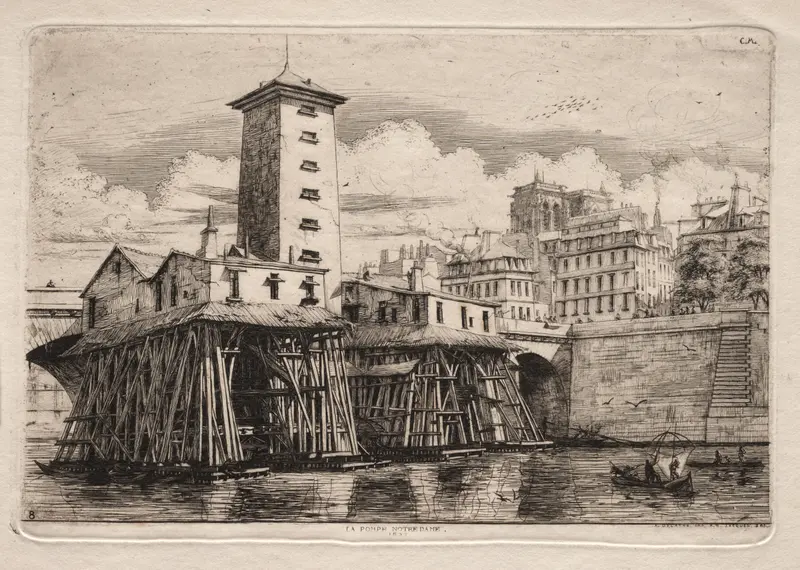
The Nôtre-Dame Pump, Paris
Charles Meryon
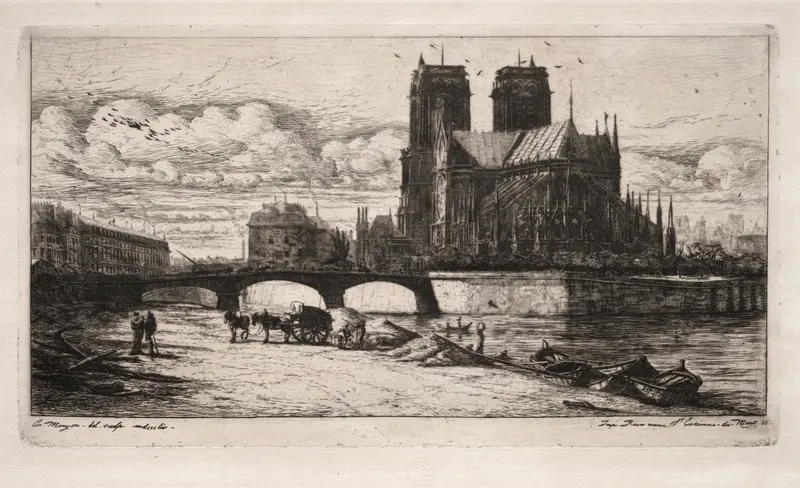
The Apse of Nôtre-Dame, Paris
Charles Meryon
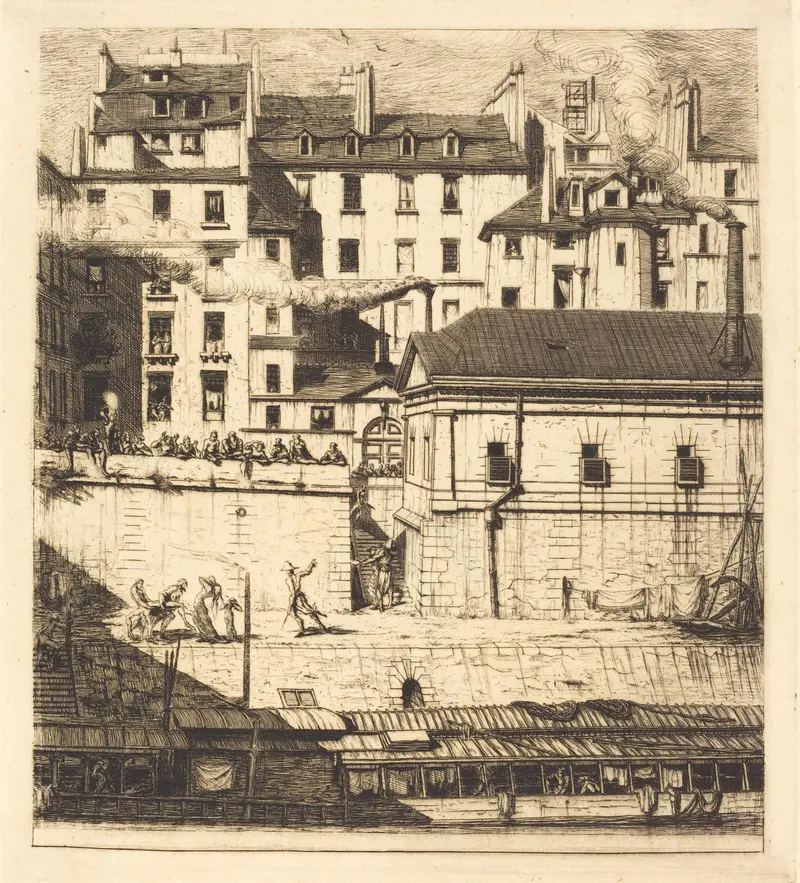
The Mortuary, Paris (La Morgue)
Charles Meryon
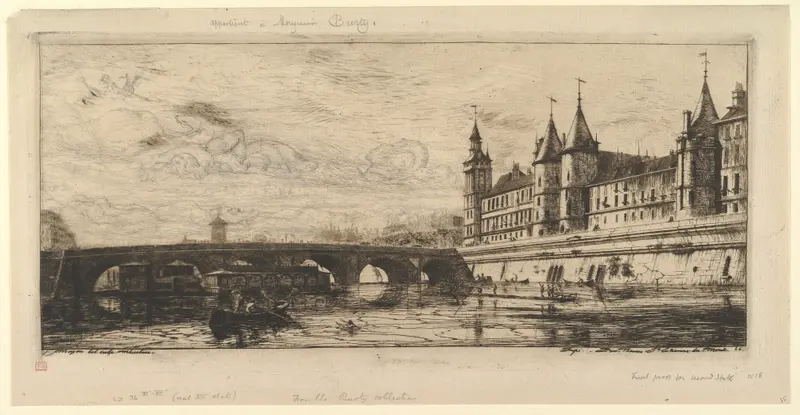
Le Pont au Change
Charles Meryon
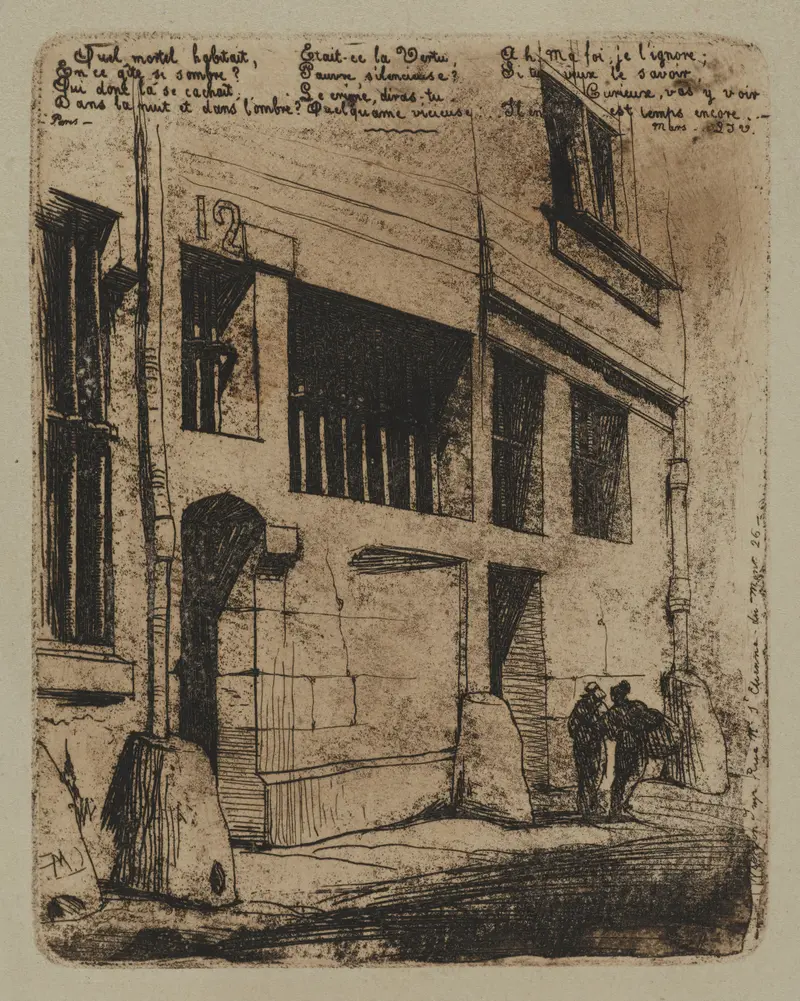
Rue des Mauvais Garçons, Paris
Charles Meryon
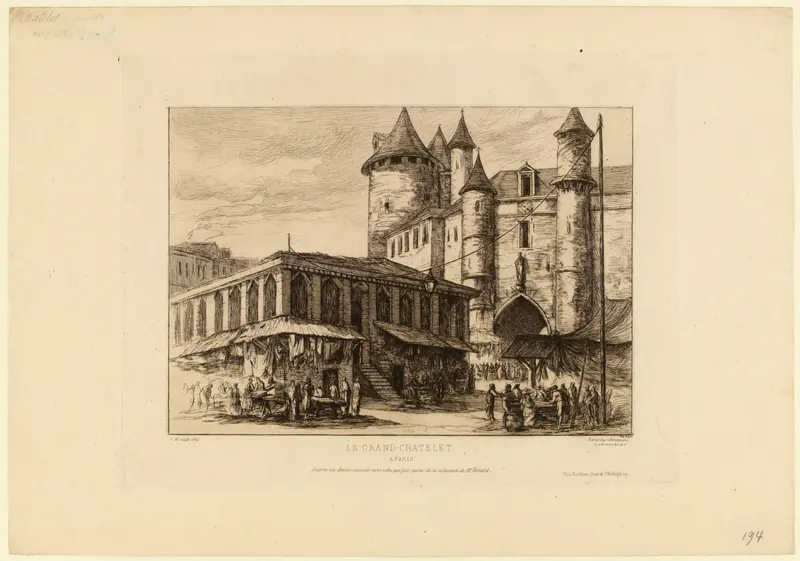
Le Grand Châtelet
Charles Meryon
The Gallery, Nôtre-Dame Cathedral, Paris
Charles Meryon

L’Ancien Louvre (The Old Louvre, Paris, after Zeeman)
Charles Meryon
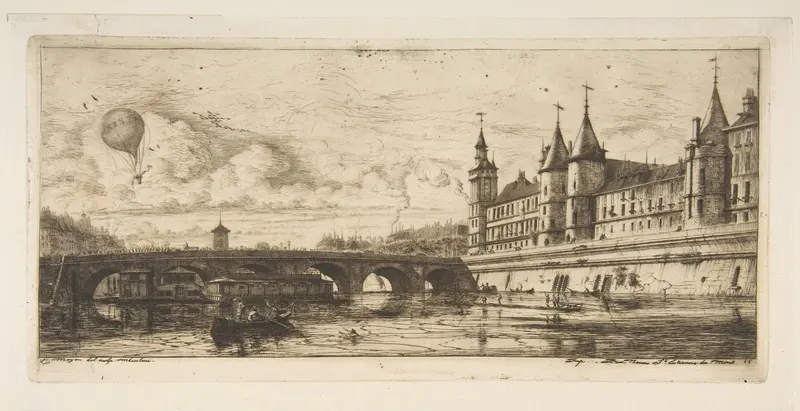
Pont-au-change, Paris
Charles Meryon