Cottages behind Horsley’s House — History & Analysis
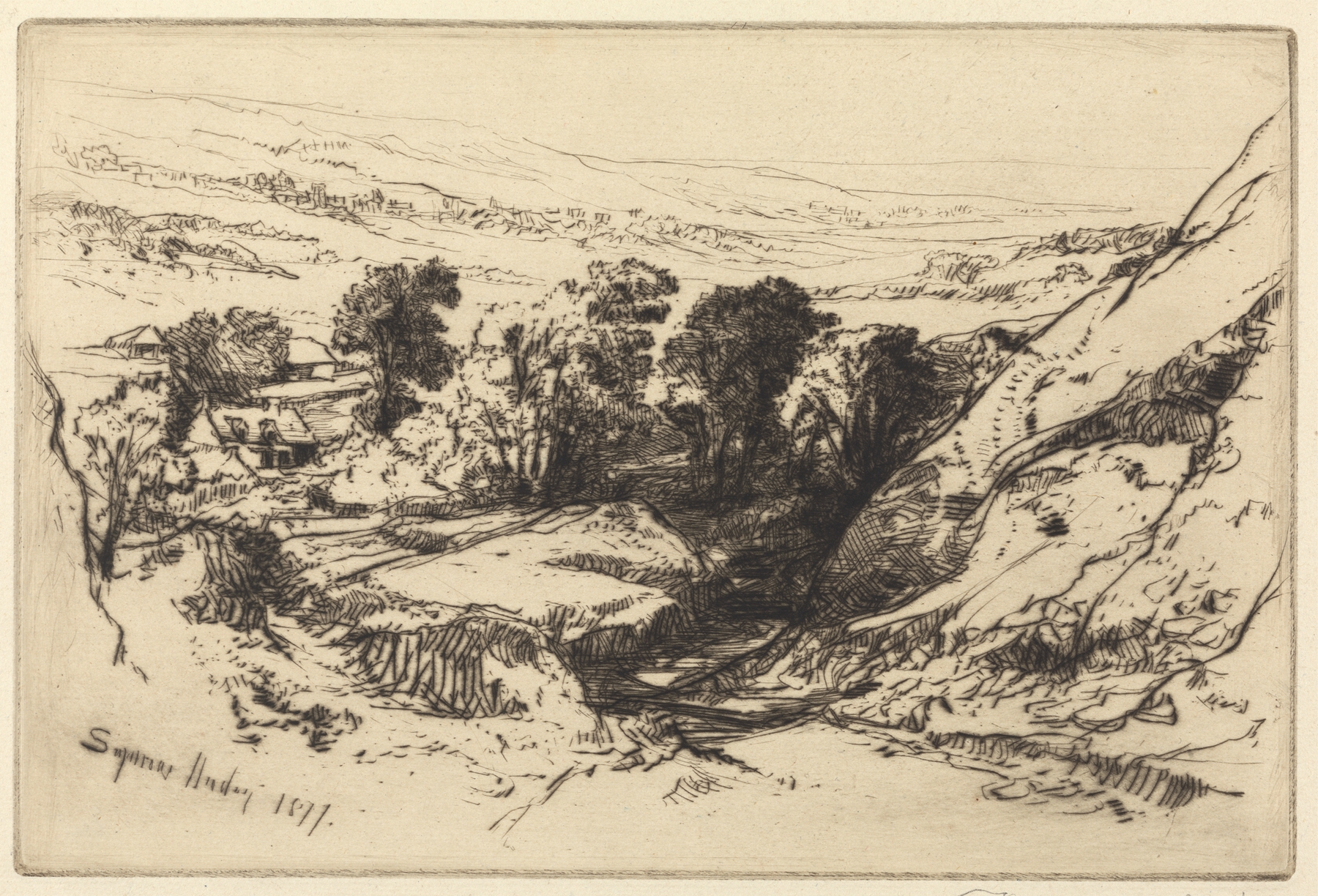
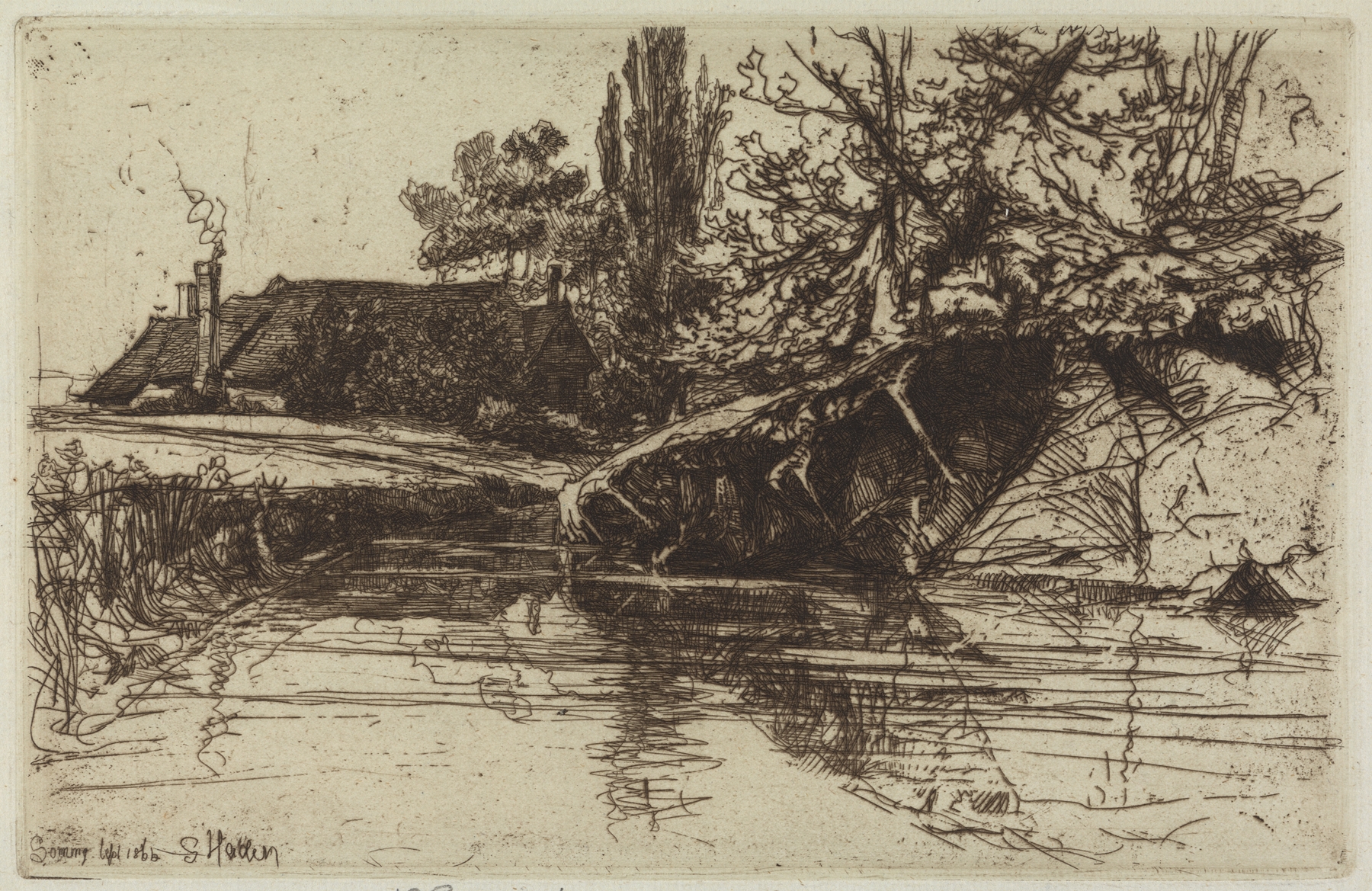
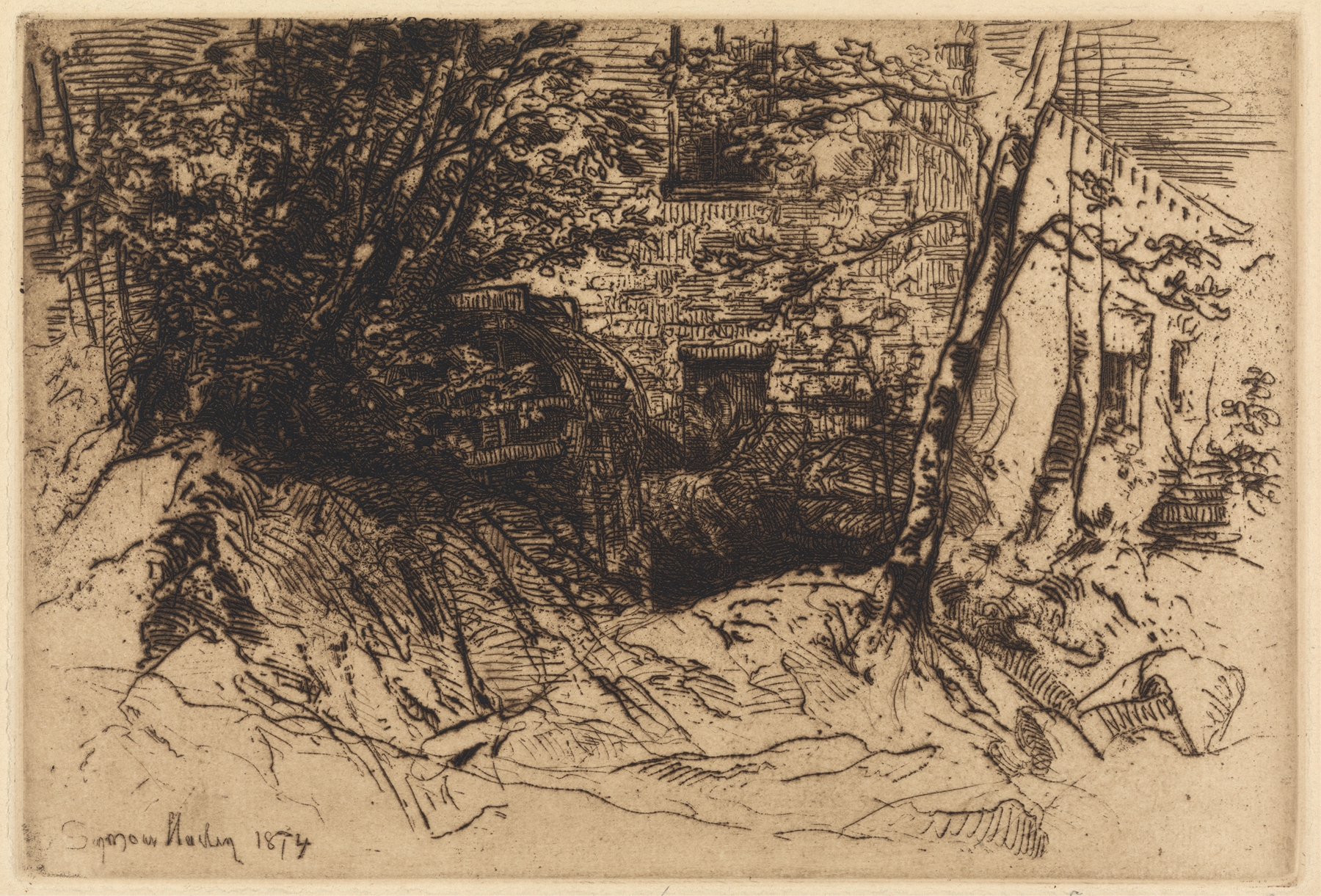
“Under the brush, chaos becomes grace.” In Cottages behind Horsley’s House, the tumultuous energy of nature is transformed into a serene tableau that invites contemplation. Look to the foreground, where the cottages nestle among the trees, their roofs barely visible beneath the canopy. The artist’s delicate etching technique captures the texture of the weathered wood and surrounding foliage with remarkable precision. Notice how the interplay of light and shadow dances across the scene, with soft tones of green and brown harmonizing to create a sense of tranquility amid the chaos of nature.
This composition draws the eye inward, inviting viewers to immerse themselves in the peaceful rhythm of rural life. As you explore further, the contrast between the solid structures and the fluid lines of the trees reveals an underlying tension. The cottages, sturdy and grounded, stand in stark relief against the tumultuous swirls of foliage encroaching upon them, symbolizing the struggle between human existence and the wildness of the natural world. The interplay of light suggests the passage of time, hinting at the fleeting nature of both tranquility and chaos that life encompasses.
In 1865, Haden was immersed in the burgeoning movement of English etching, which celebrated the intricacies of landscape and everyday life. At this time, he was also grappling with his identity as an artist, balancing his roles as a printmaker and a surgeon. The world was witnessing industrial change, which shaped his perspective on nature and humanity, making Cottages behind Horsley’s House a poignant reflection of his inner and outer landscapes.