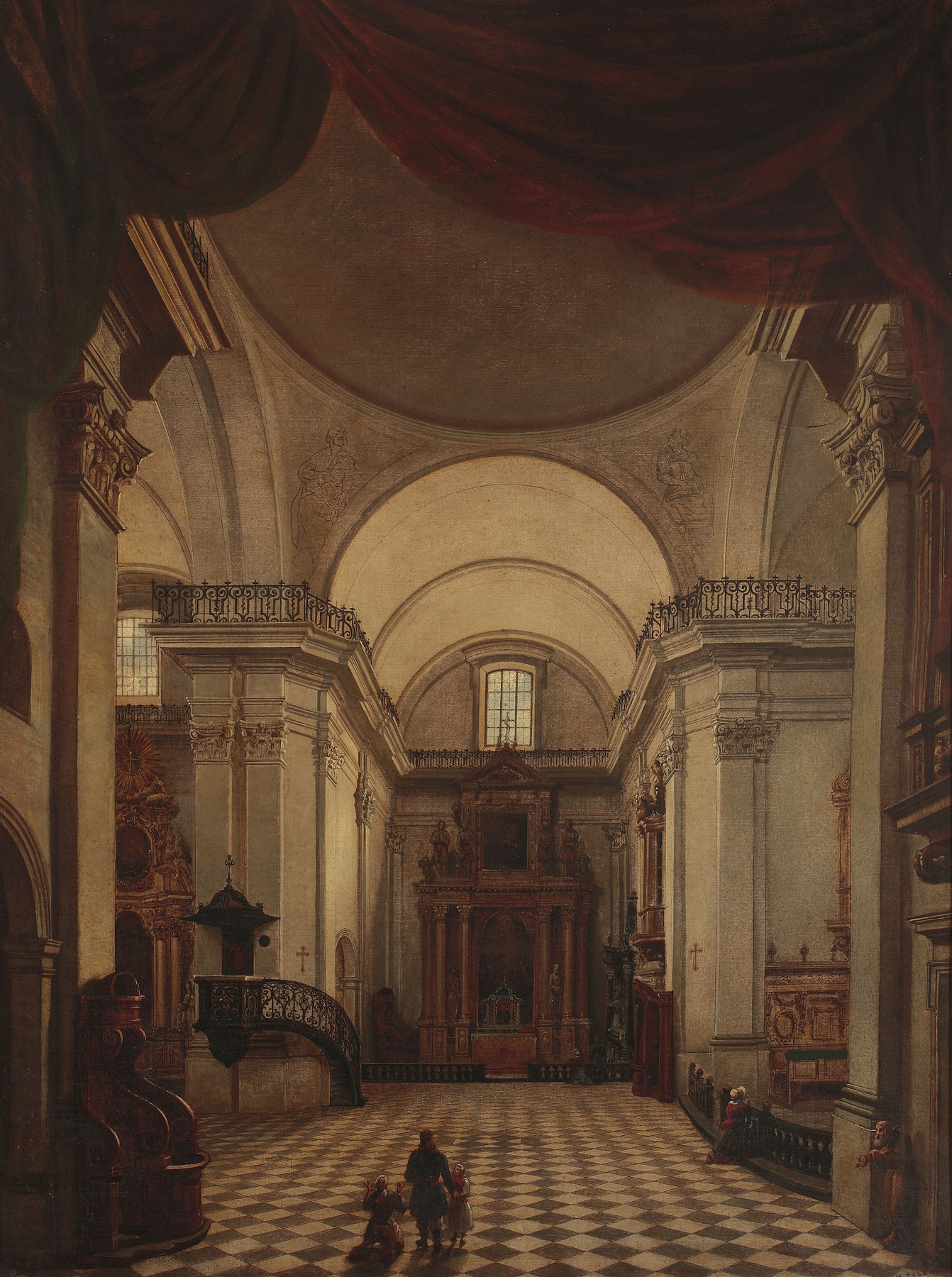
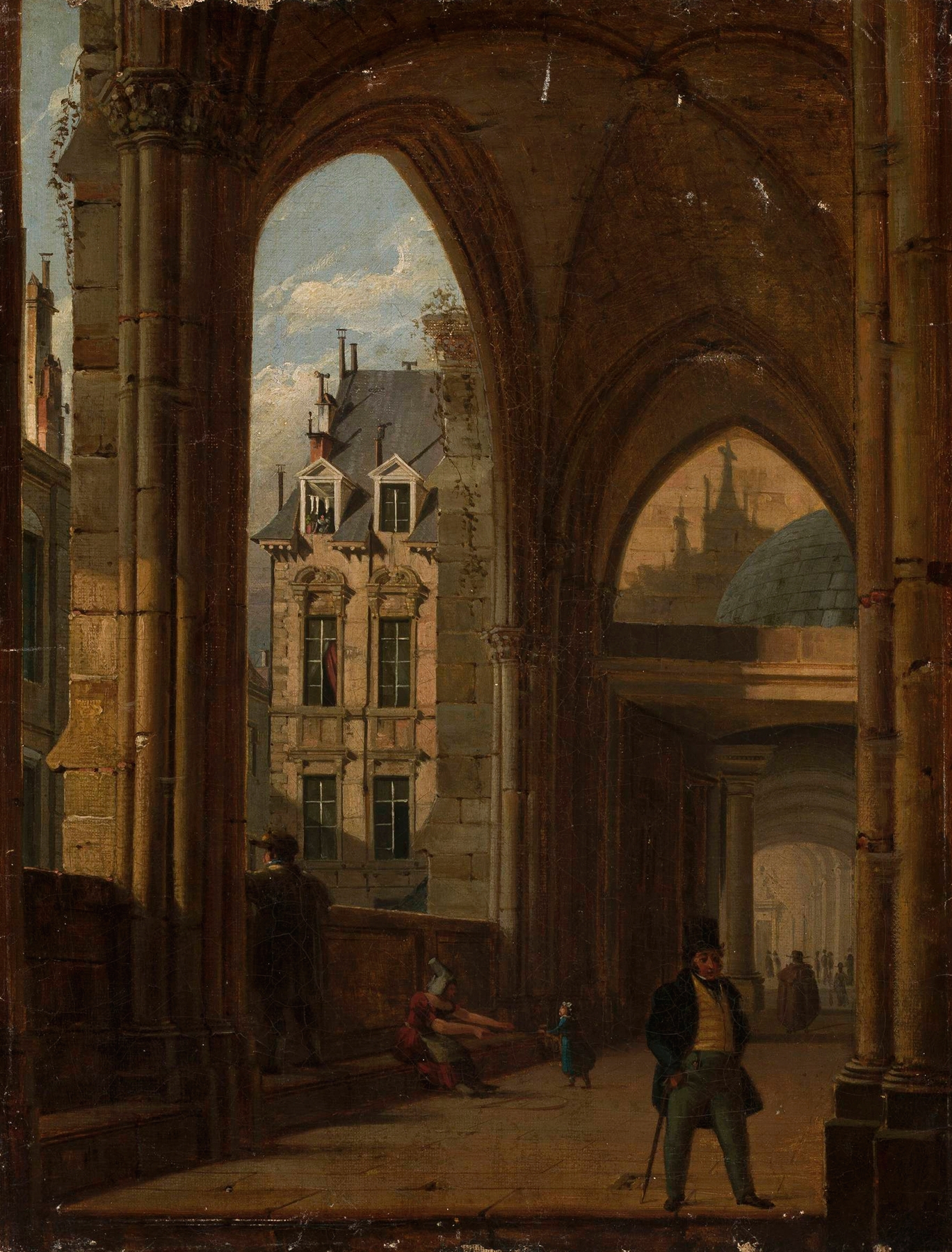
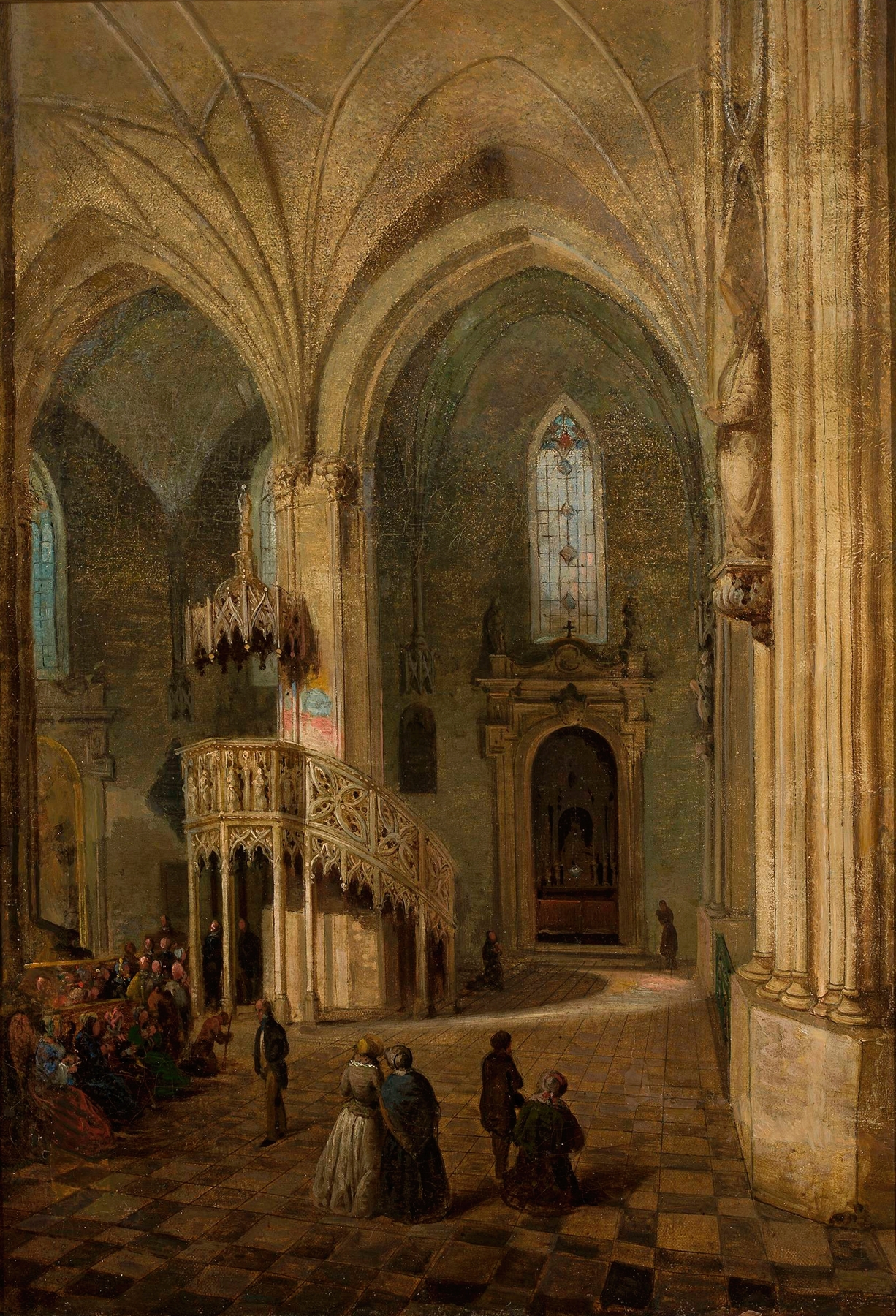
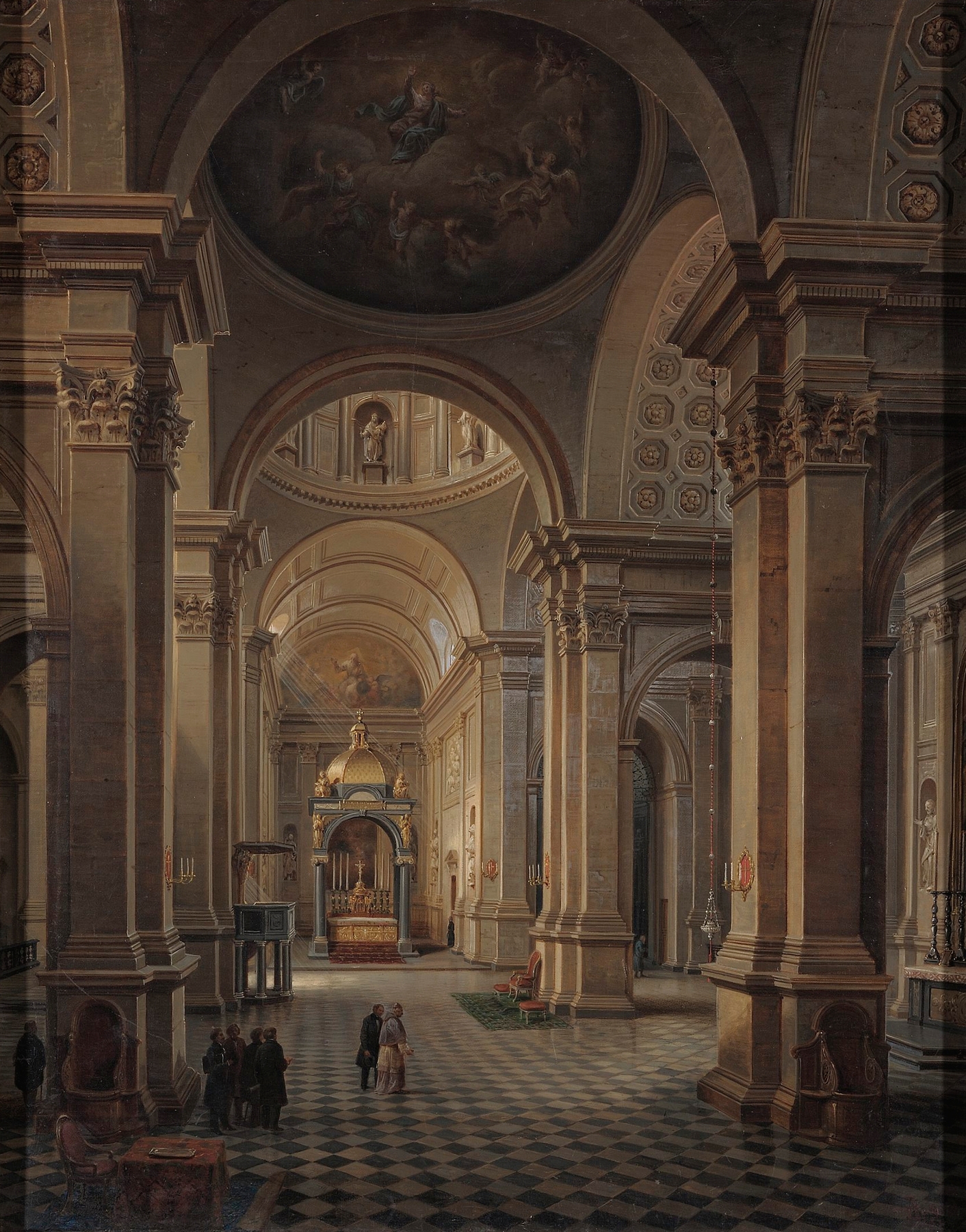
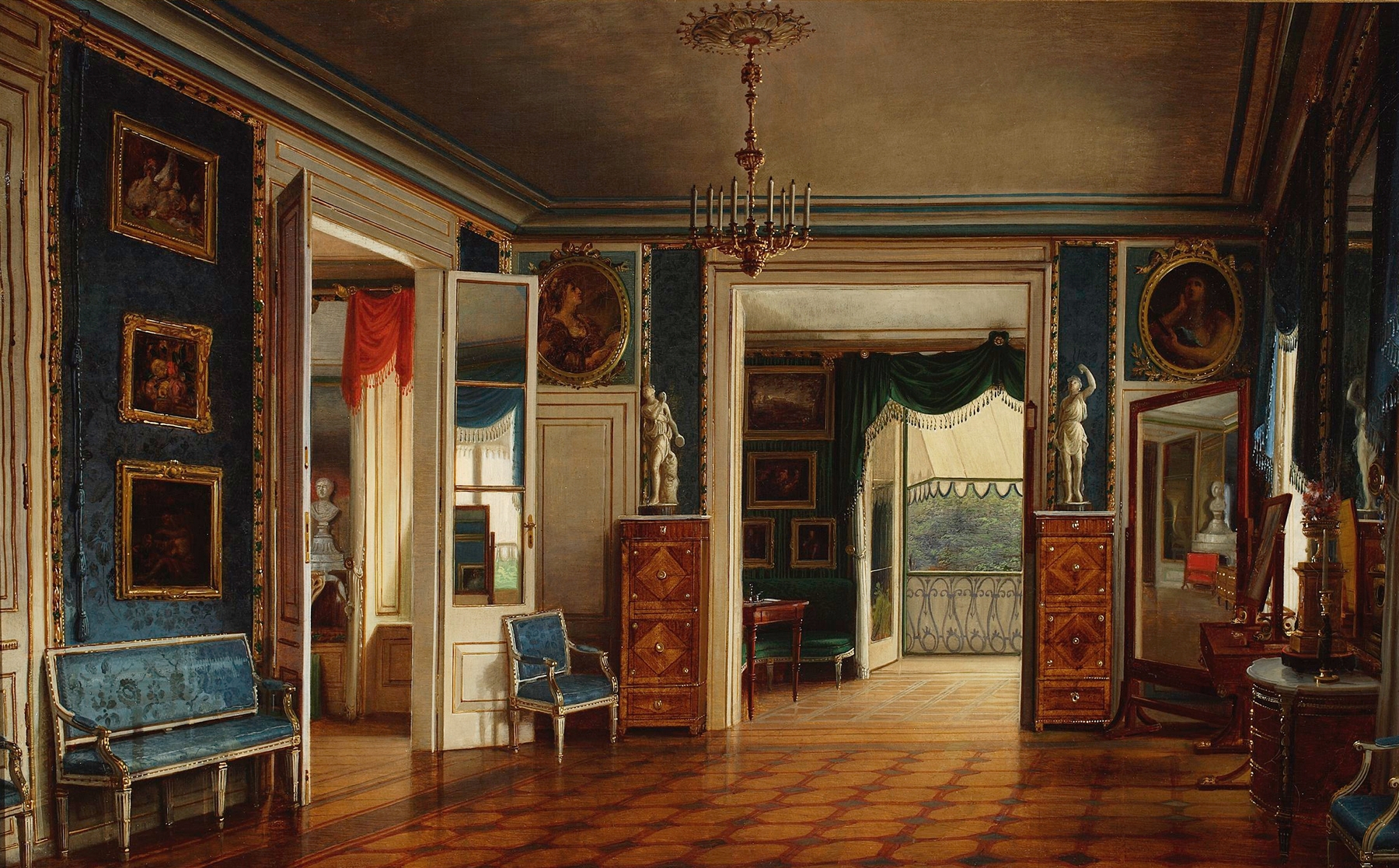
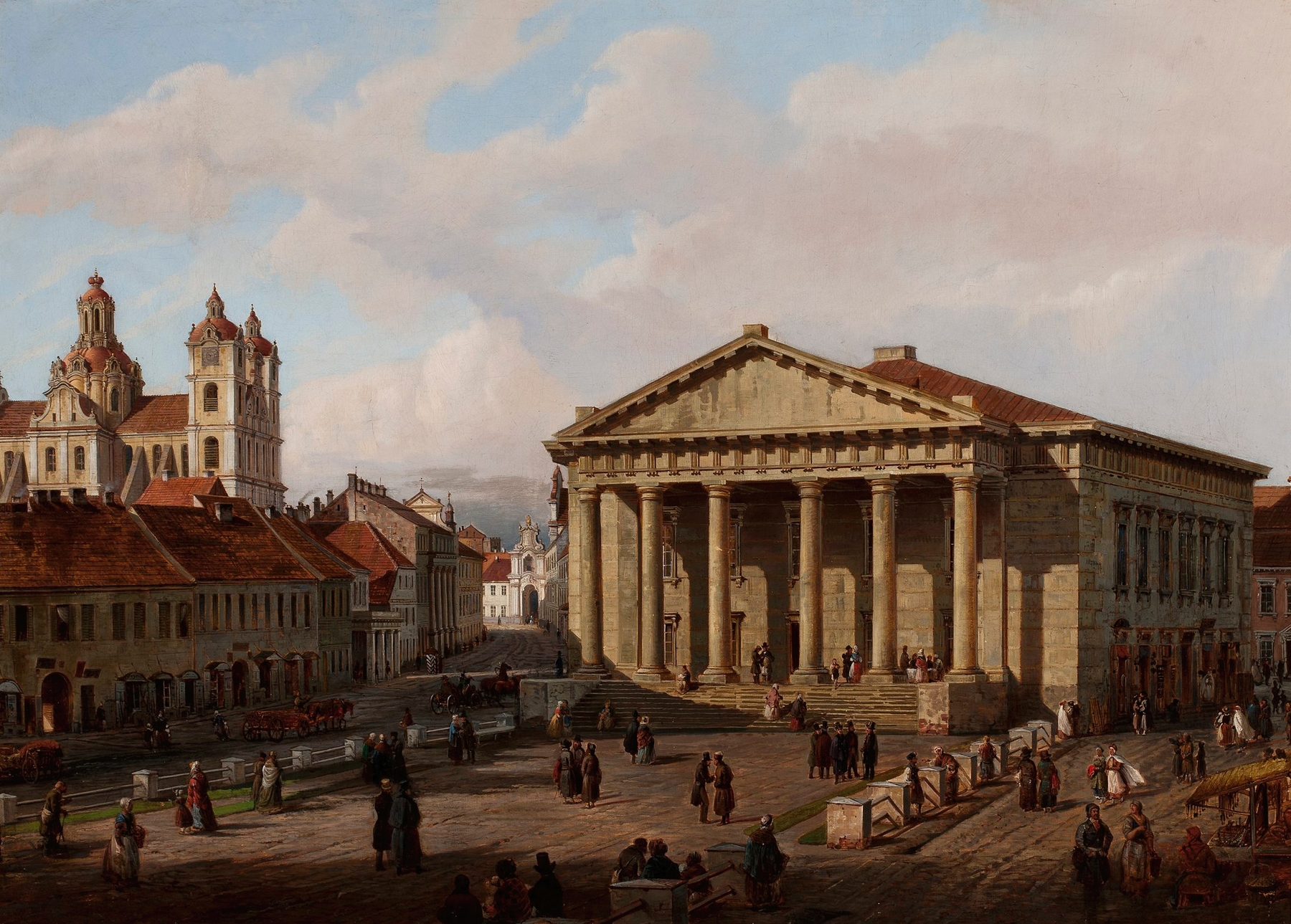
Courtyard of the Jagiellonian Library — History & Analysis
Is this a mirror — or a memory? In the stillness of the courtyard, shadows whisper tales of the past, leaving traces of footsteps long gone. Focus on the tranquil architecture first; notice how the arches rise elegantly, framing the intimate scene within. The muted earth tones of the stone structure blend seamlessly with the soft greens of the surrounding foliage, creating a harmonious dialogue between nature and human creation.
A gentle light filters through the leaves, casting dappled shadows that dance across the cobblestone floor, inviting one to ponder the silent stories held within these walls. Beneath the serene surface lies a poignant tension between permanence and transience. The meticulously arranged books, both a symbol of knowledge and the inevitable decay of time, remind us of mortality's grip on all things. The solitary figure, lost in thought, serves as both a participant and observer in this moment of contemplation, embodying the silent acknowledgment that every echo of life eventually fades into an indistinct memory.
In 1846, Marcin Zaleski was immersed in the artistic revival of historical architecture, capturing the essence of Polish cultural identity. During this period, Poland was undergoing political turmoil, yet the artist found solace in his surroundings, focusing on spaces that resonated with both history and the passage of time. This artwork reflects not only his personal experiences but also the historical context of a nation grappling with its own narrative.