Curved Irrigation Ditch Bordering Farmyard with Flowering Trees — History & Analysis
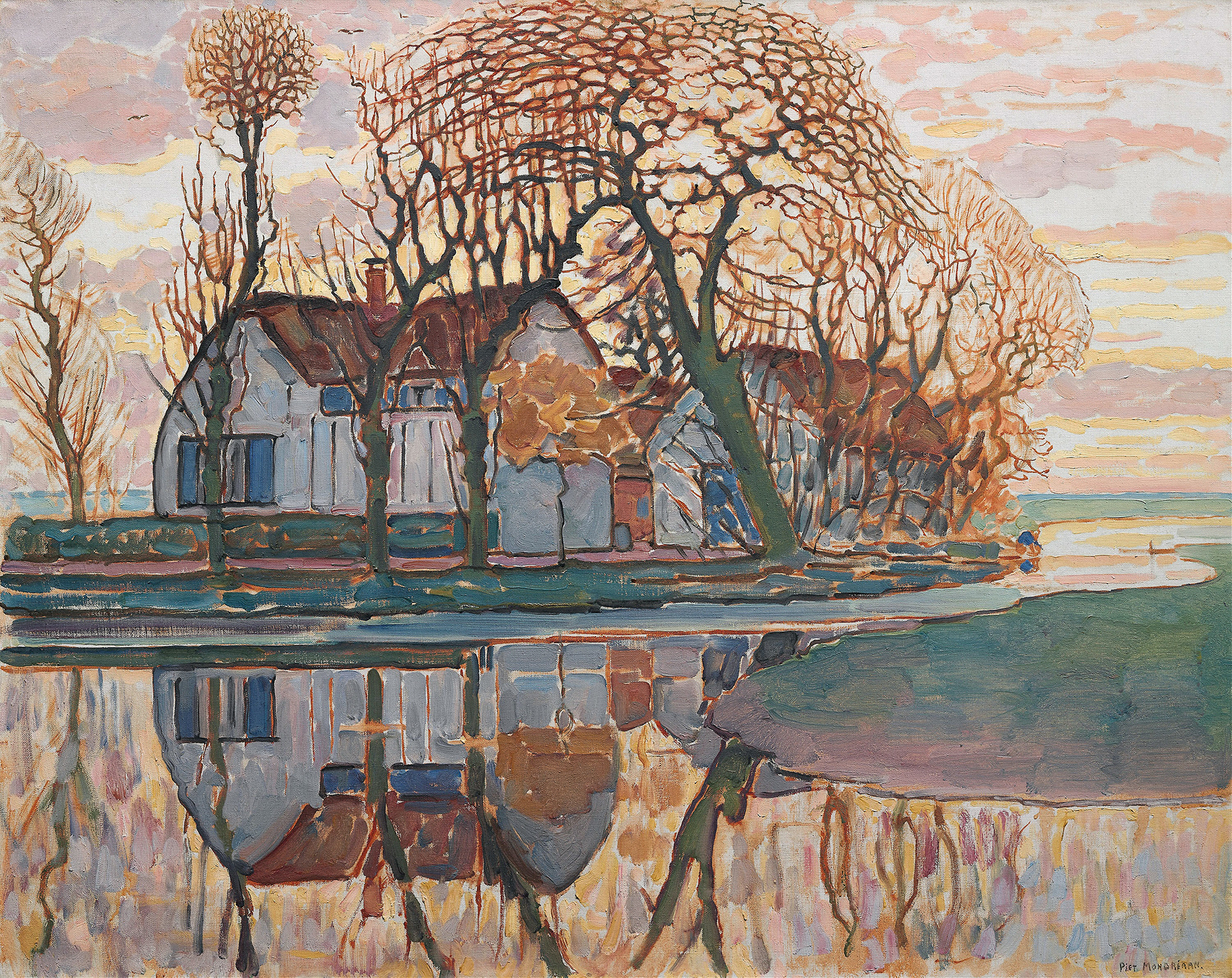
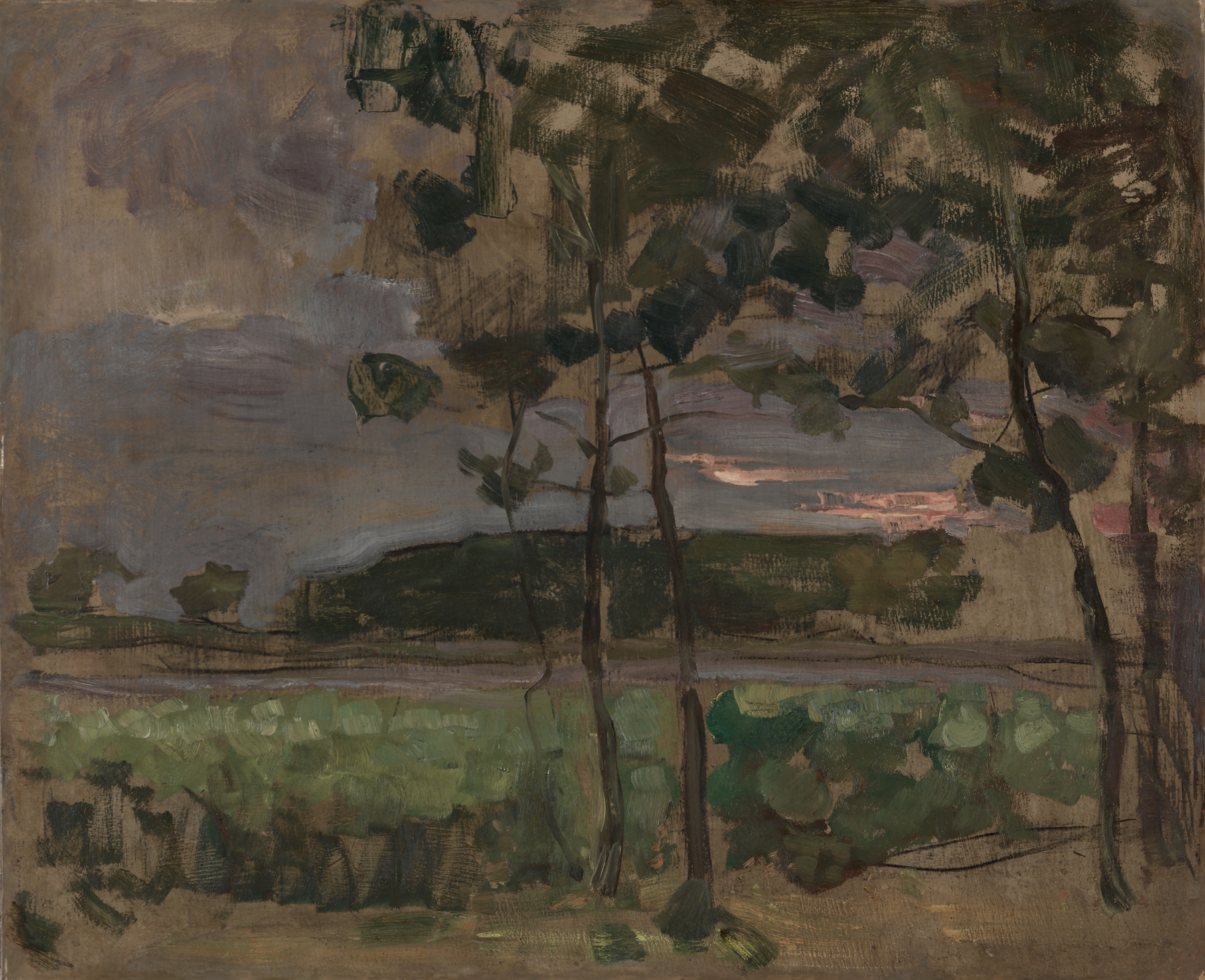
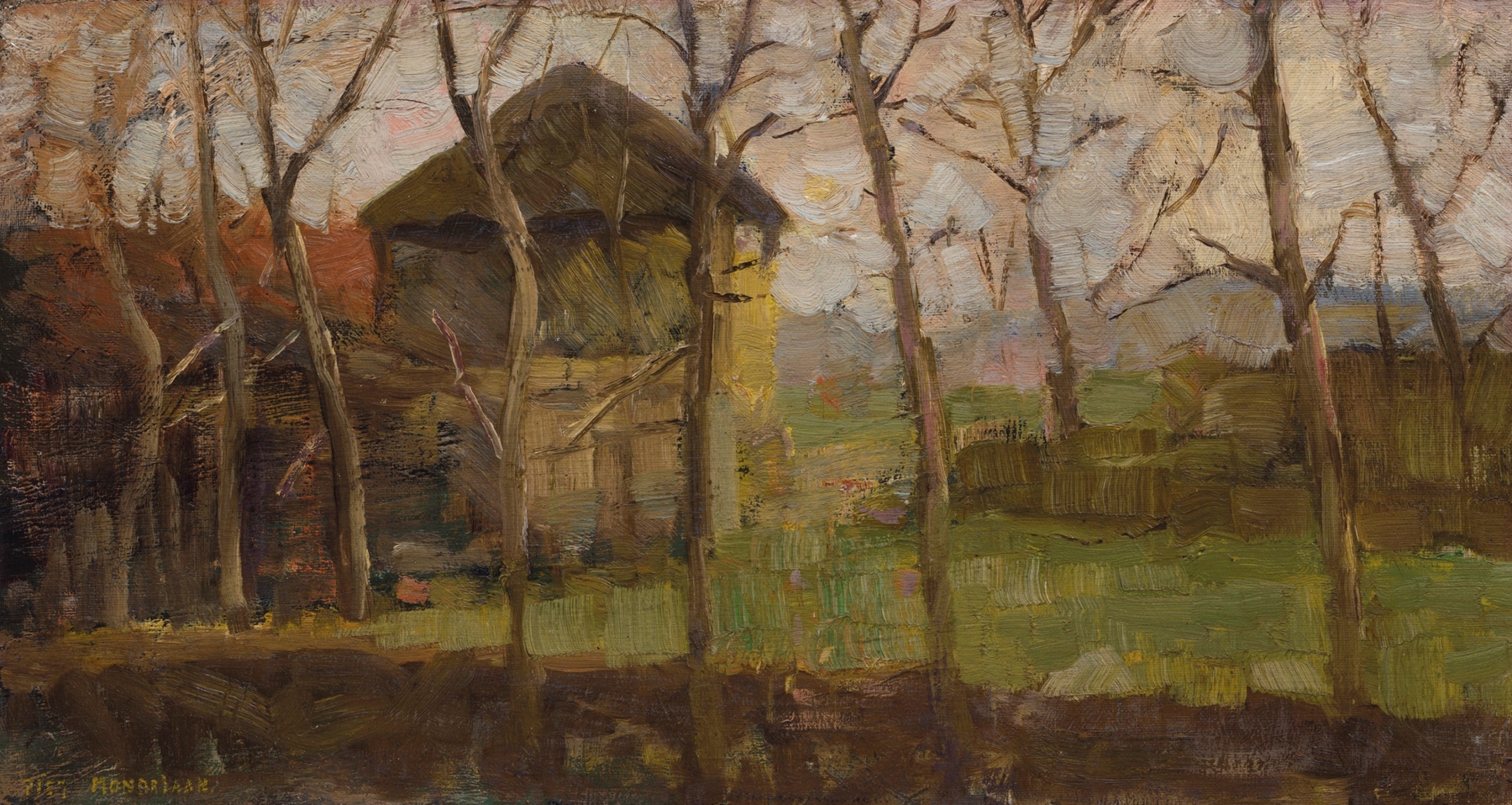
Can paint confess what words never could? In Curved Irrigation Ditch Bordering Farmyard with Flowering Trees, an ethereal connection between nature and abstraction emerges, inviting us to ponder the divine in simple forms. Look to the left at the vivid flowering trees, their blossoms whispering in a gentle breeze, coaxing your eyes to trail down towards the curved irrigation ditch. The soft, flowing contour contrasts sharply with the rigid geometry that Mondrian would later embrace.
Notice how the dappled light filters through the trees, highlighting the interplay of color—soft greens, vibrant pinks, and earthy browns—bringing warmth to the rural scene. Each brushstroke is deliberate, revealing the artist’s evolving mastery of color and composition at this early stage of his career. Delve deeper into the painting's emotional landscape, where the harmony between flora and water embodies the cycle of life and renewal. The deliberate curve of the ditch may symbolize a path or journey, a metaphor for the interconnectedness of life, while the flowering trees suggest moments of beauty amidst toil.
This duality reflects a tension between the pastoral serenity of the farmyard and the unseen challenges of rural existence, inviting viewers to reflect on their relationship with nature. In 1902, the artist created this work while living in the Netherlands, a time when he was beginning to break away from traditional forms towards a more abstract language. It was a period marked by personal exploration and the pursuit of a spiritual connection to everyday life, as he sought to unveil the underlying structures of the world around him. Mondrian would later redefine modern art, but here, in this intimate rural scene, we glimpse the early whispers of his quest for divinity through visual expression.