Daken te Oostende — History & Analysis
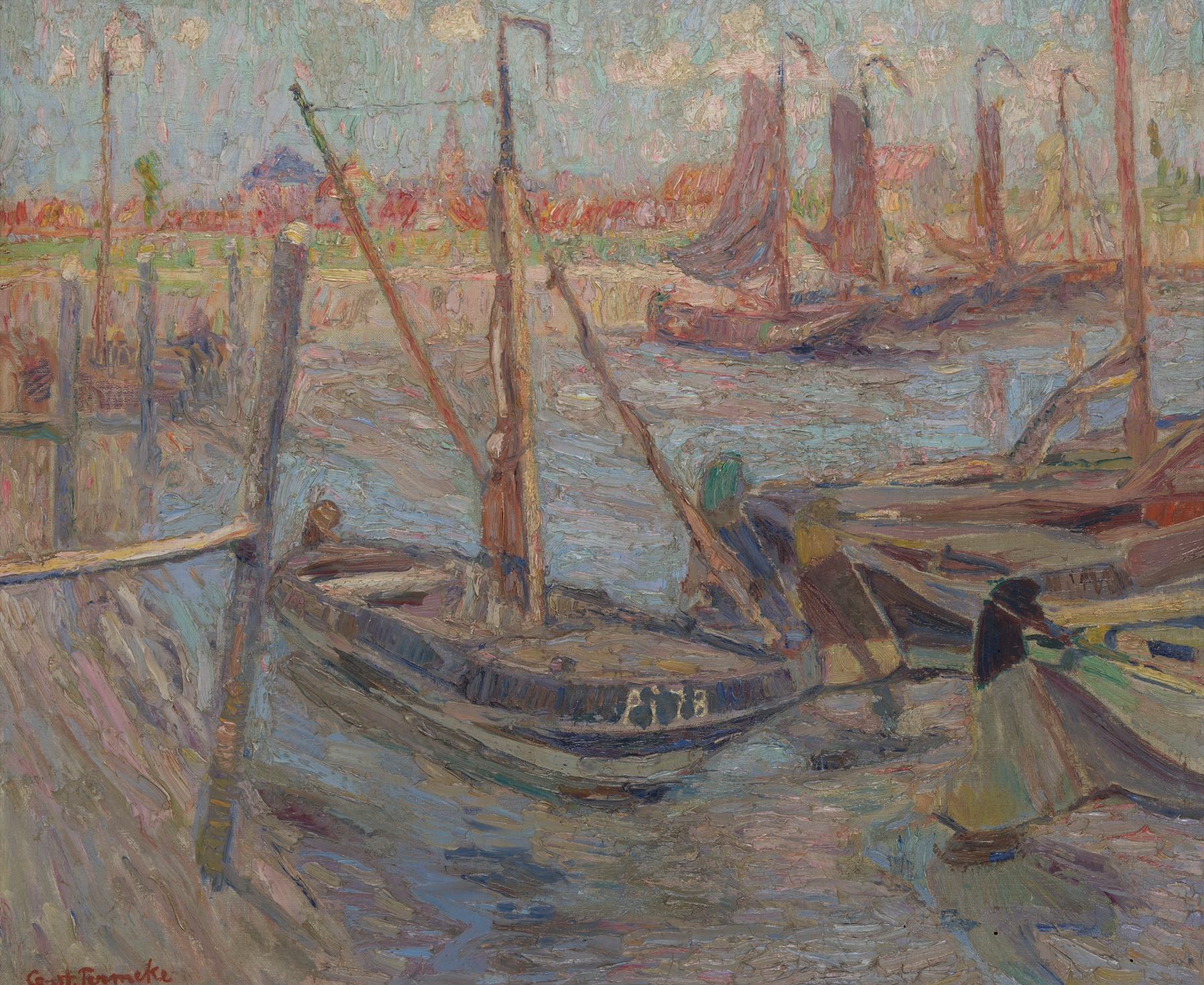
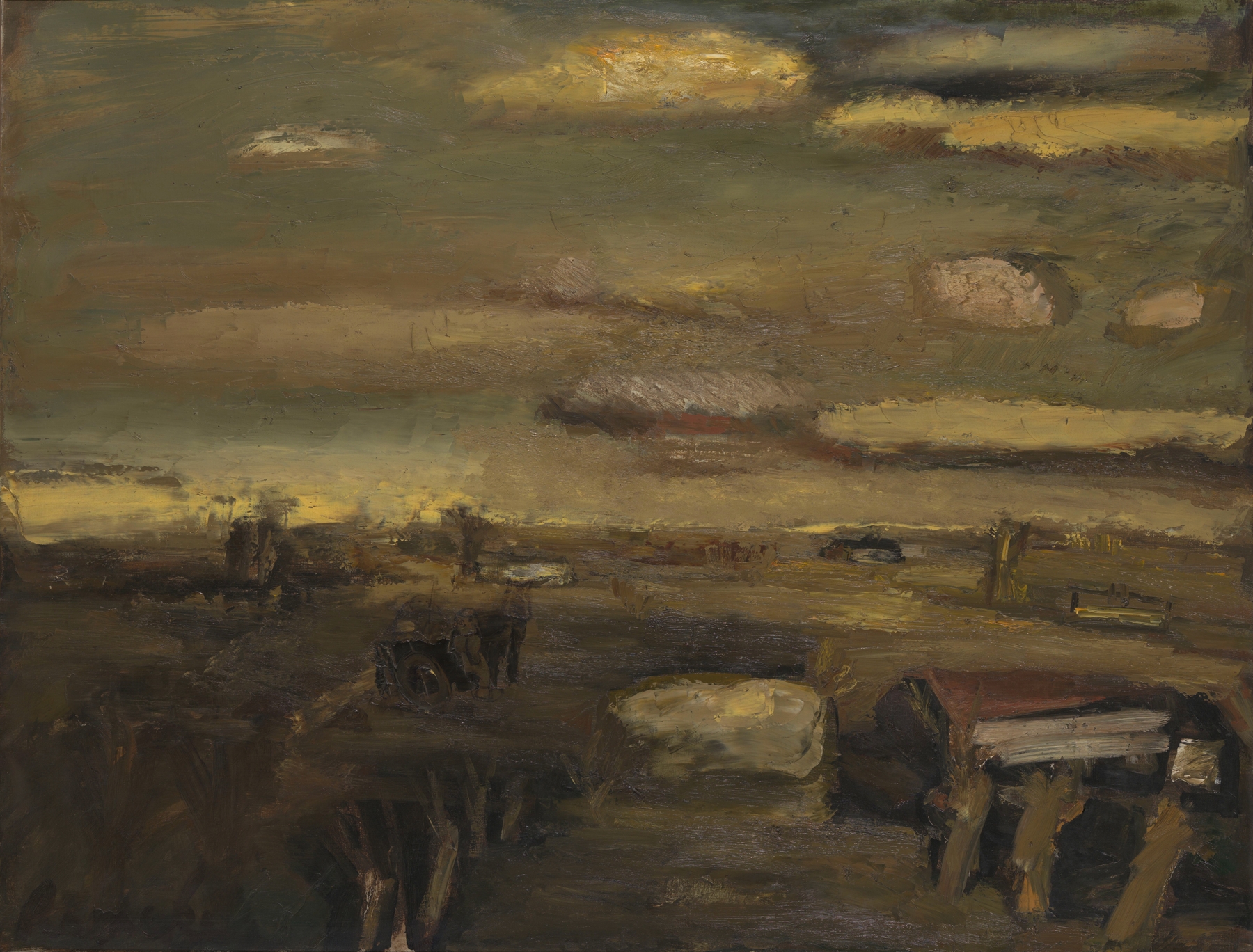
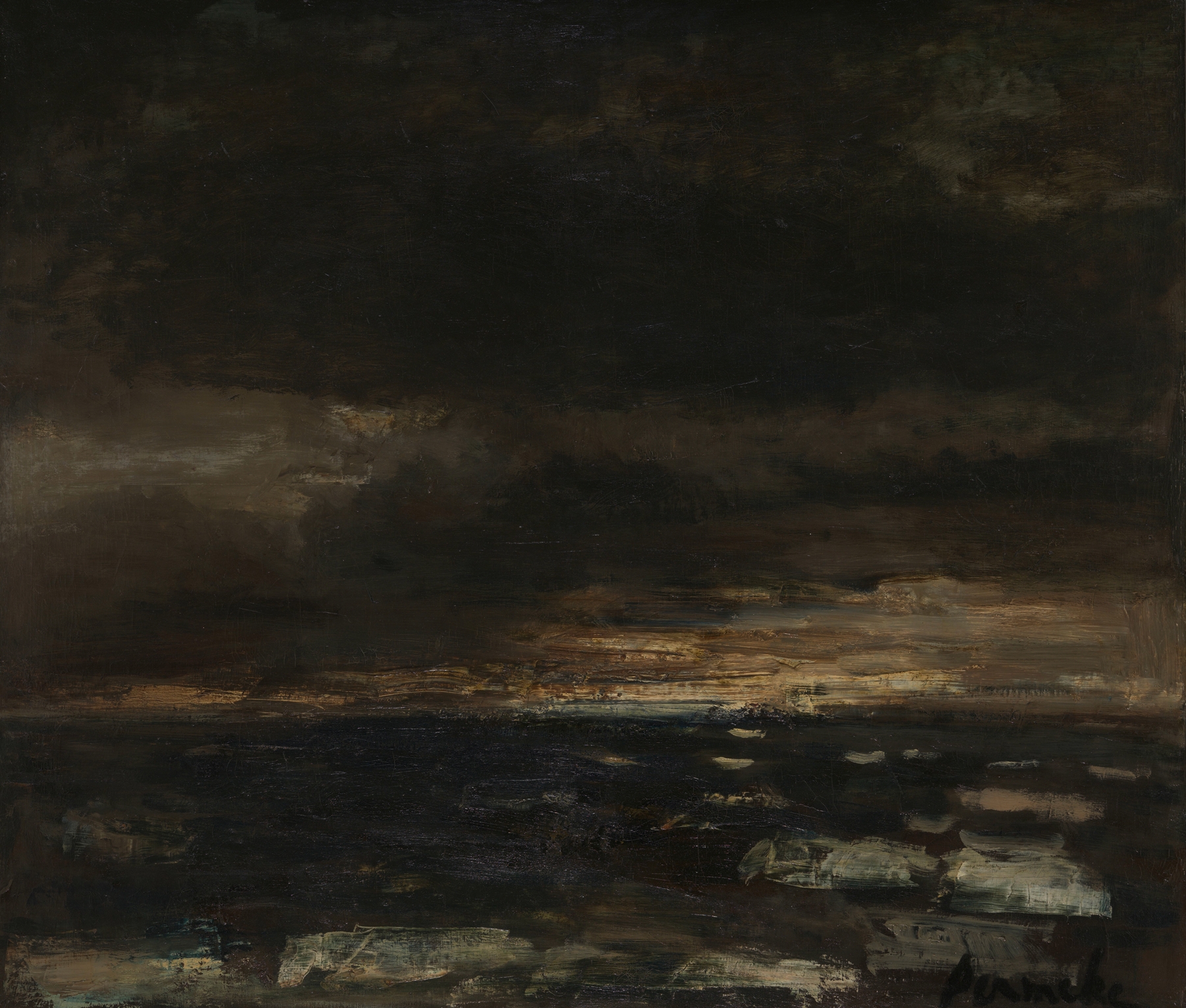
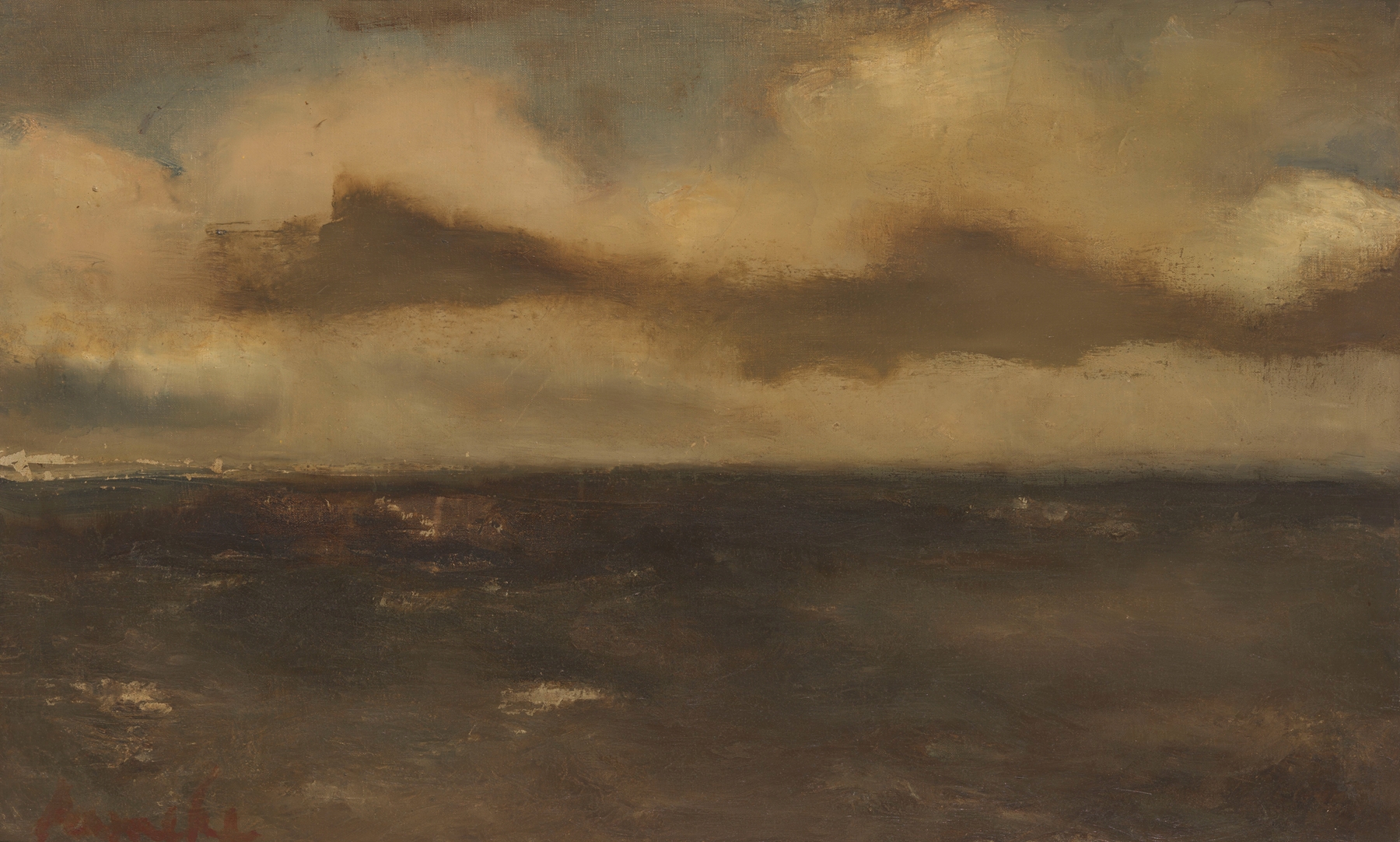
Did the painter know this moment would outlive them? The stillness of Daken te Oostende captures an emptiness that resonates deeply, inviting us to ponder the unseen stories woven into its fabric. Look to the center of the piece where the figure, a solitary fisherman, stands at the edge of the water, silhouetted against the subtle gradients of twilight. Notice how the gentle strokes of blue and grey evoke the chill of the evening air, while the muted palette reflects the fatigue of a life lived in rhythm with the tides.
The composition masterfully balances the weight of the figure with the vastness of the surrounding sea, embodying both isolation and a poignant connection to nature. Delve deeper into the canvas, and you’ll find layers of emotional complexity. The emptiness surrounding the fisherman hints at solitude, yet it also embodies a profound serenity—an acceptance of life's transient moments. The tension between the vibrant horizon and the darkened foreground creates a dialogue of hope and despair, suggesting that within the vastness of existence lies both freedom and loneliness.
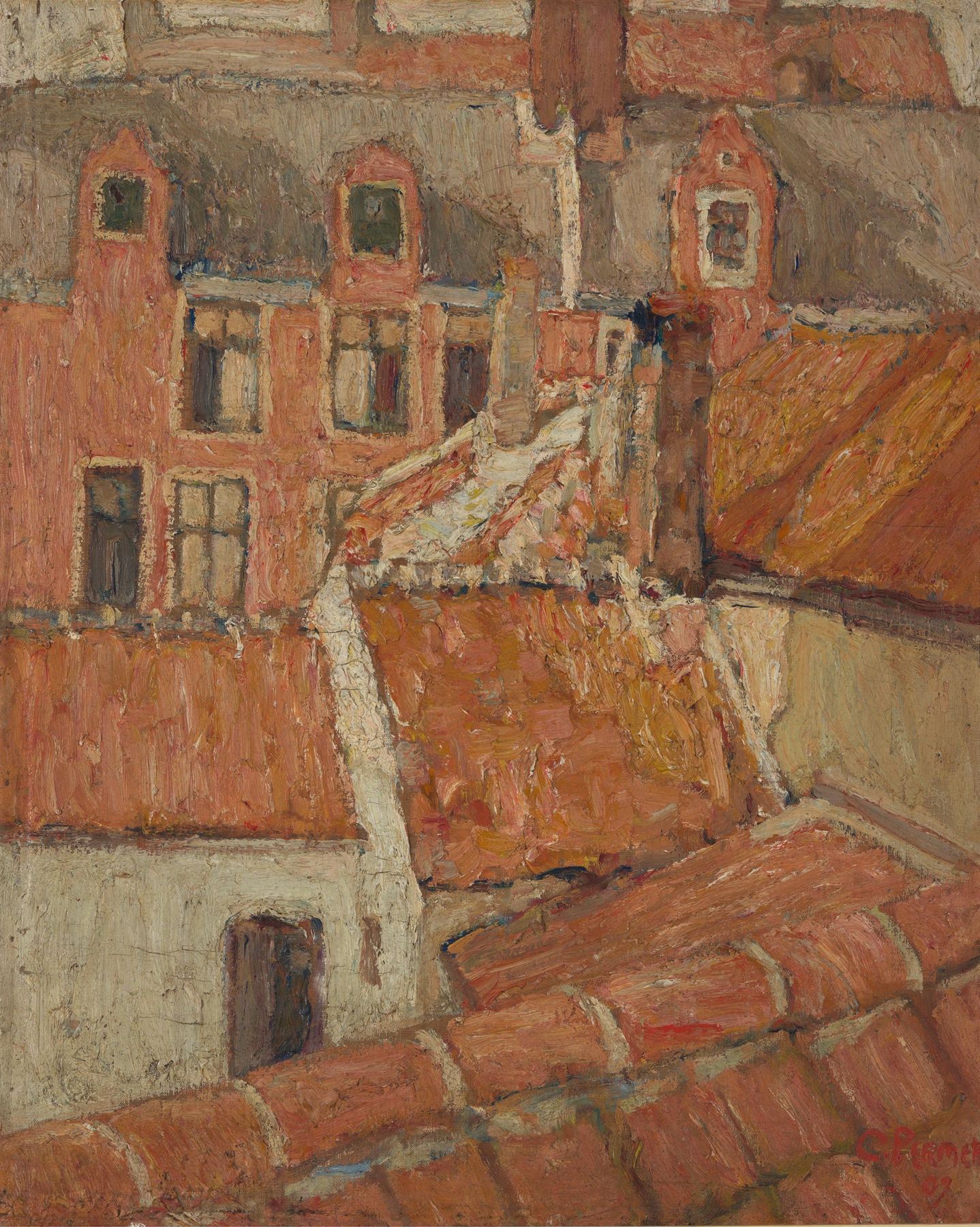
This duality invites contemplation of life’s relentless passage and the fleeting essence of human experience. In 1907, Constant Permeke created this artwork during a time of personal and artistic exploration. Living in Belgium, he was deeply influenced by the Symbolist movement, which sought to express emotional experiences rather than relying on realism. This setting, combined with the growing Awareness of regional character in art, fostered an environment where Permeke could experiment with forms and themes that would later define his legacy.