Haan op mesthoop — History & Analysis
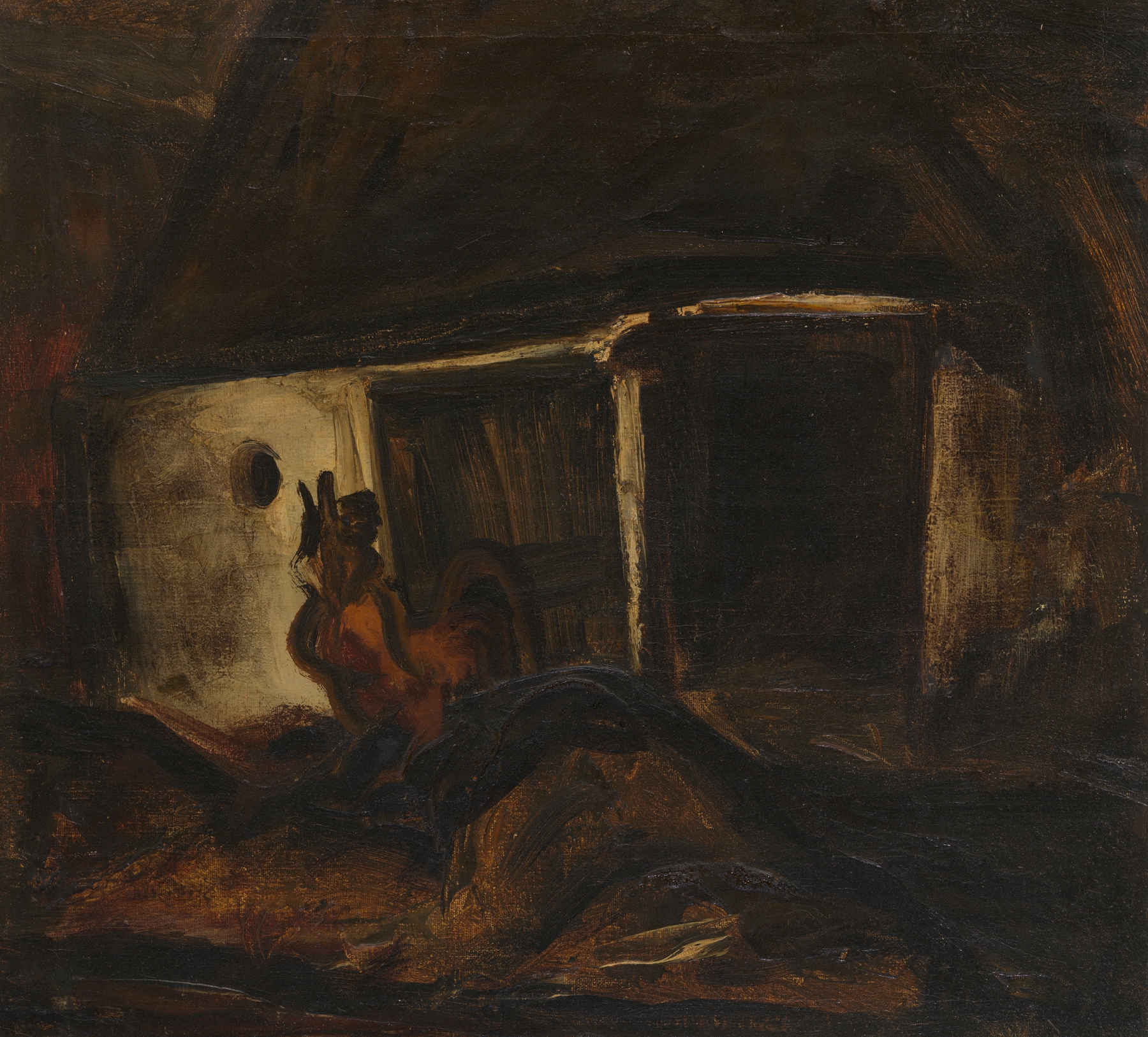
“Every brushstroke is a heartbeat remembered.” In the raw simplicity of Haan op mesthoop, the viewer is invited to contemplate the essence of awakening, both in nature and within oneself. The scene evokes a visceral connection to life’s fundamental rhythms, urging us to explore the deeper layers of existence that often lie beyond the surface. Look to the center of the canvas, where the proud rooster stands resolutely atop a mound of earth, its vibrant plumage contrasting vividly against the muted browns and greens that surround it. The painter employs bold, expressive strokes, emphasizing the textures of both the bird and its humble perch.
Pay attention to how the light falls upon the rooster’s feathers, creating a luminous aura that symbolizes potential and vitality, a stark reminder of life’s persistent energy amidst the organic decay around it. Delve deeper into the emotional fabric of this piece, where the stark juxtaposition of life and decay compels contemplation on renewal and resilience. The rooster, a traditional emblem of dawn and awakening, stands sentinel over the remnants of the earth, embodying hope in the face of transience. The earthy palette serves not just to ground the composition but also to evoke a sense of nostalgia, reminding us that every ending fosters a new beginning.
Constant Permeke created Haan op mesthoop in 1927 while living in Belgium, a time of significant social and artistic upheaval post-World War I. His focus on rural life and the human condition reflected a broader movement in art, emphasizing authenticity and emotional depth. This work, infused with personal and collective resonance, marks a pivotal moment in his exploration of form and subject.