De kindermoord — History & Analysis
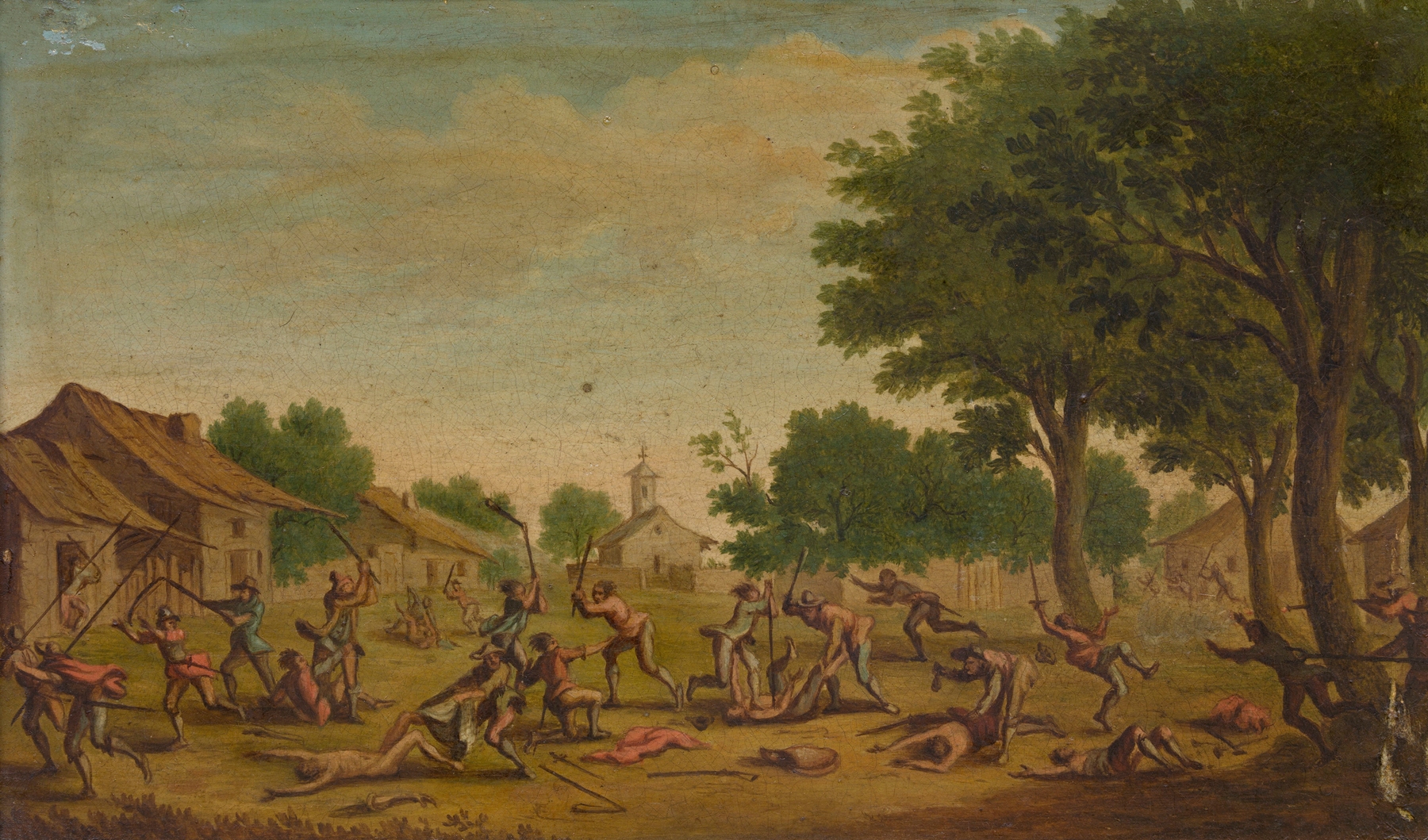
“To paint is to remember what time wants us to forget.” In that delicate balance between memory and oblivion, the canvas unfolds the haunting narrative of innocence lost and the tragedy of awakening. Focus on the central figures, where children, fragile and pure, are caught in a web of despair. The palette evokes an unsettling atmosphere; muted earth tones contrast sharply with the vibrant reds that spill forth like a cry for justice. Notice how the artist captures the tension in every gesture—arms flail, bodies contort, and eyes widen in a silent scream.
The composition draws you into the chaos, yet the meticulous detail in each face compels you to confront their despair head-on. Look closely at the surrounding figures, their expressions a blend of horror and resignation. The juxtaposition of innocence with the grim reality of violence creates an emotional turmoil that reverberates through the artwork. Shadows dance in the background, symbolizing the dark forces at play, while the chaotic arrangement of bodies hints at a disturbing reality, forcing the viewer to reckon with societal indifference.
The stark contrasts in the imagery serve as a poignant reminder of the fragility of life. In the early 1620s, Jacques Callot was in Nancy, France, where the Thirty Years' War loomed, casting a shadow across Europe. Amidst personal challenges and societal upheaval, he explored themes of human suffering and moral decay. De kindermoord emerged during a time when art served as both a reflection of current events and a poignant critique of humanity’s darkest instincts.