De verloren zoon als zwijnenhoeder — History & Analysis
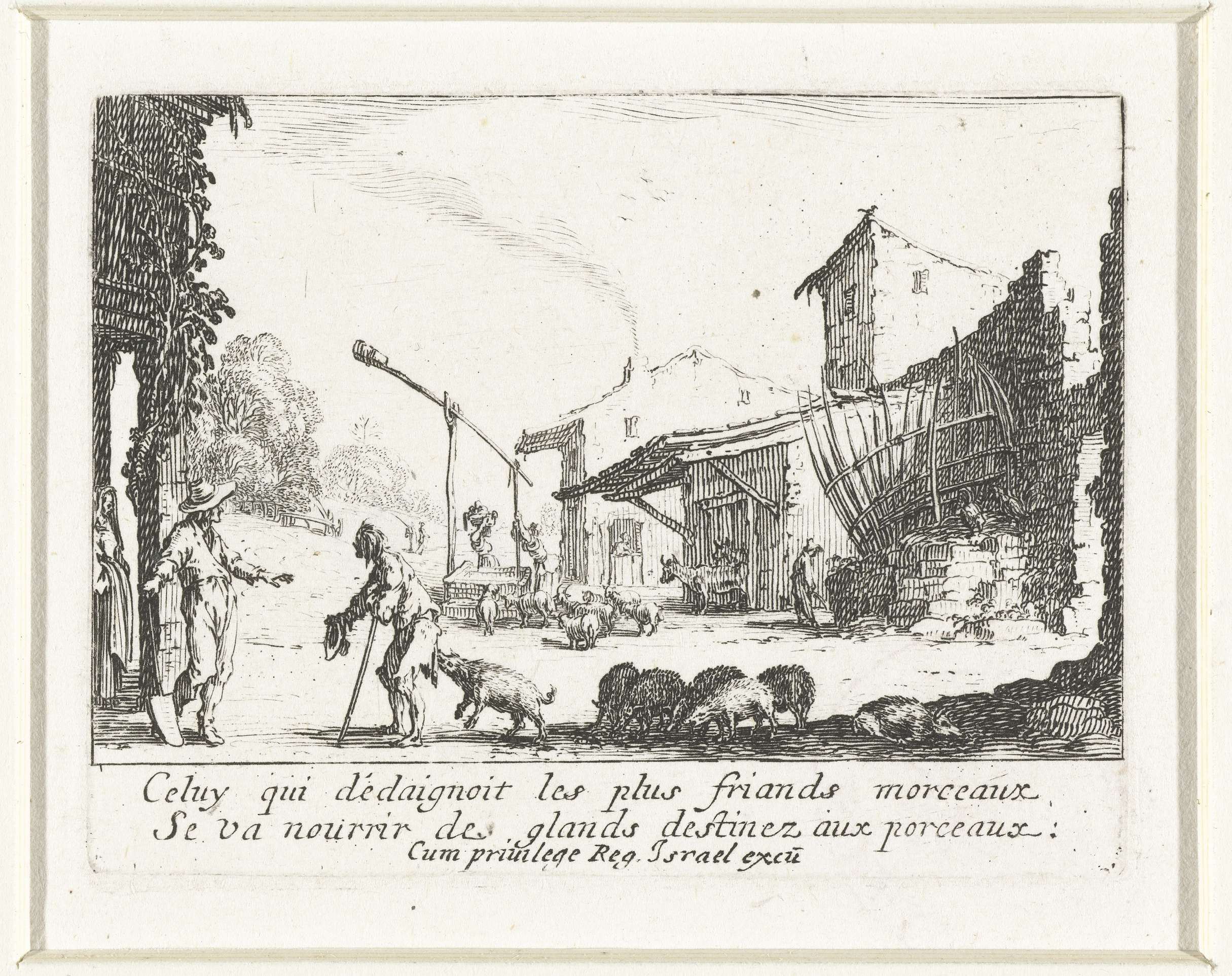
“Fear lurks not in the absence of hope, but in the shadows of our choices.” In De verloren zoon als zwijnenhoeder, the viewer is instantly drawn to the central figure, a young man clad in tattered clothing, his face etched with despair. Notice how the muted palette of browns and greys envelops him, creating a stark contrast against the vibrant, chaotic energy of the wild boars that surround him. The artist's deft brushwork invites you to explore the intricate details of the scene, urging your gaze to follow the swirling motions of both the animals and the troubled youth. Amidst the sense of turmoil, subtle nuances emerge.
The boars, while unruly, symbolize temptation and the consequences of indulgence, reflecting the young man’s moral downfall. His posture, slumped and wearied, conveys a profound sense of defeat and shame that resonates deeply. The wildness of the scene contrasts the man’s inner turmoil, suggesting a struggle between liberty and captivity that extends beyond the physical realm. Here lies a poignant commentary on the universal human experience of regret and loss, where fear manifests not just in action, but also in the weight of one’s soul.
Jacques Callot created this powerful piece in 1635 while living in Nancy, France, a period marked by personal and political upheaval. His innovative approach to printmaking and painting was gaining recognition, yet he grappled with the impact of ongoing wars and the human suffering they wrought. This work reflects not only the emotional landscape of its creator but also a broader commentary on the fragility of human existence in a chaotic world.