De vrouw van Potifar beschuldigt Jozef — History & Analysis
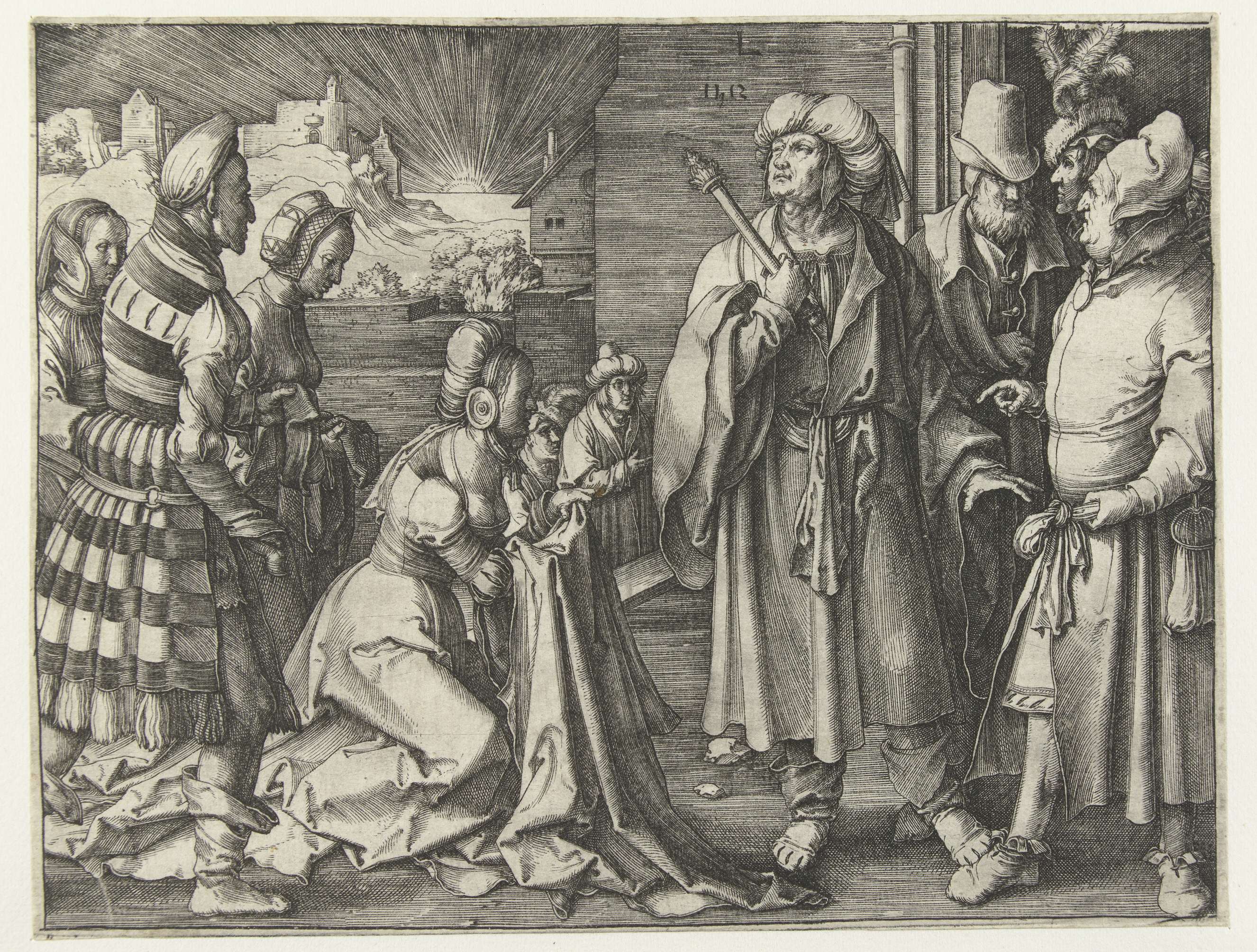
Art reveals the soul when the world turns away. In the stillness of De vrouw van Potifar beschuldigt Jozef, a moment crystallizes, where truth and deception dance in an eternal struggle, encapsulating the divine within human frailty. Look to the center where a bold gesture captures the eye: Potiphar’s wife, her arm accusatively outstretched, dominates the frame. The contrasting textures of her luxurious garments, rendered in rich reds and golds, draw attention to her calculated elegance.
Meanwhile, the muted palette of Jozef's clothing underscores his vulnerability against these accusations. The interplay of light creates sharp shadows, adding depth to the figures, and emphasizing the tension of the scene. The emotional gravity unfurls in the small details—the stark expression of shock on Jozef’s face, the subtle arch of his body as if recoiling from the injustice. Symbolism shimmers in the background, where the open window suggests both a vista of freedom and a barrier to truth.
The opulence surrounding Potiphar's wife only magnifies the theme of moral corruption, while Jozef stands as a beacon of integrity amidst this chaos. Lucas van Leyden painted this work in 1512 during a time when Northern Renaissance art was flourishing, defined by intricate detail and narrative depth. The artist, based in Holland, was establishing himself in a period of significant artistic evolution, as the themes of morality and human experience took center stage in the wake of emerging humanism. This piece reveals both his technical prowess and a keen reflection on the complexities of the human spirit.