Der Abend, Die Bergung des verletzten Wanderers durch den barmherzigen Samariter — History & Analysis
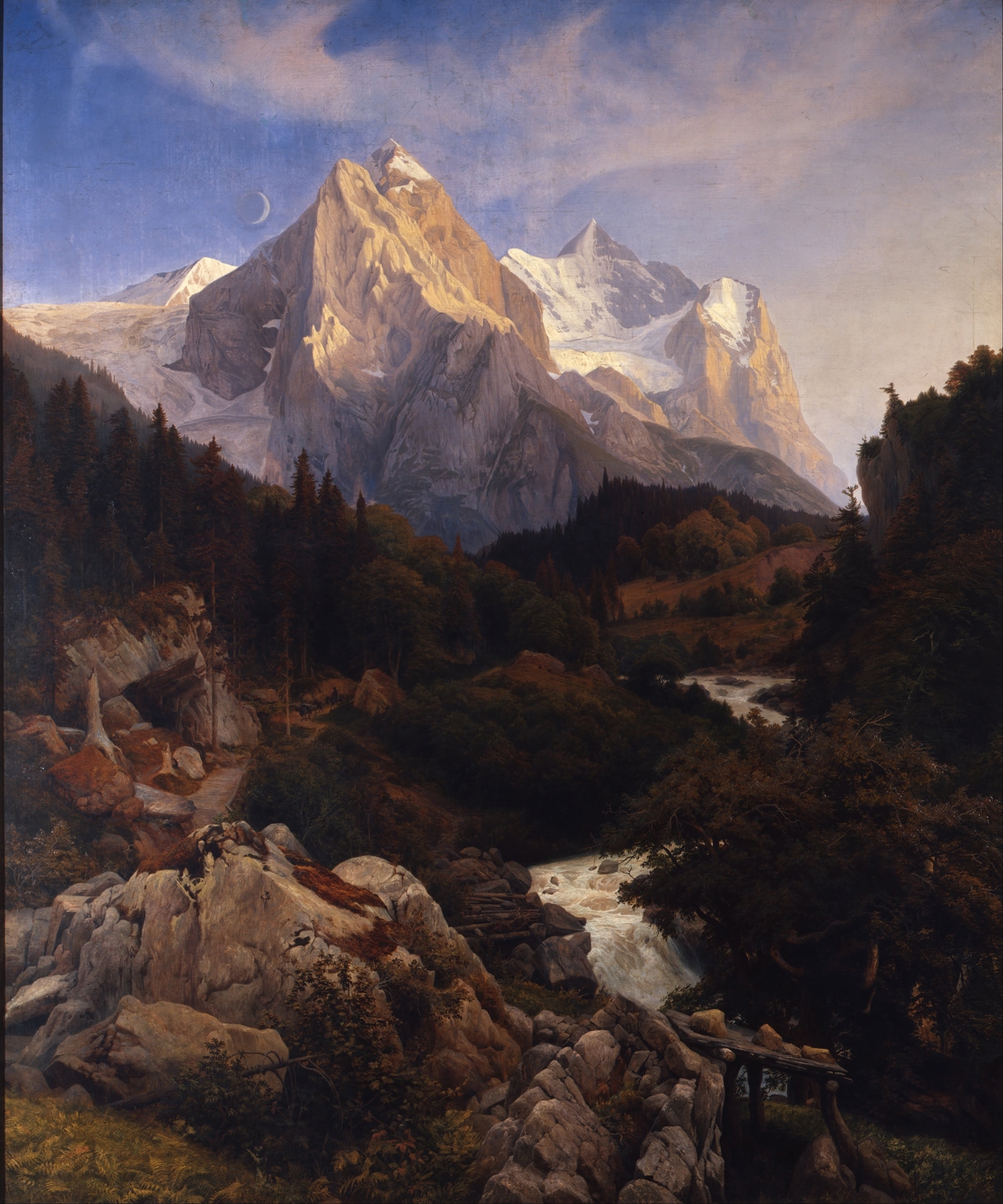
When did color learn to lie? In Johann Wilhelm Schirmer’s Der Abend, Die Bergung des verletzten Wanderers durch den barmherzigen Samariter, shadows blend seamlessly with the warm hues of twilight, crafting a narrative that delves into the complexities of compassion. Look to the center of the canvas where the benevolent Samaritan cradles an injured wanderer, the contrasting colors of deep greens and soft golds drawing the eye immediately. The light, bathing the figures in a gentle embrace, highlights the tender gesture of care, while the surrounding mountain landscape recedes into darker tones, amplifying the isolation of the moment.
Schirmer’s careful brushwork conveys texture, from the rugged terrain beneath to the delicate softness of the Samaritan's cloak, inviting viewers to linger in this poignant tableau. Yet, it is in the interplay of light and shadow where deeper meanings emerge. The light illuminating the figures symbolizes hope and humanity, while the encroaching shadows hint at the lurking dangers of the wilderness, a reminder of life’s fragility. The Samaritan pauses in the act of saving, caught between the urgency of his actions and the stillness of the approaching dusk, embodying the tension between duty and mortality—a dichotomy reflected in every stroke.
In 1857, Schirmer painted this piece during a period marked by a growing interest in naturalism and emotional storytelling in art. Living in Germany, he drew inspiration from Romanticism while striving to depict the struggles of humanity against nature. This era saw artists grapple with the moral questions of their time, and Der Abend stands as a testament to the complexities of kindness in a world fraught with peril.