The Wetterhorn — History & Analysis
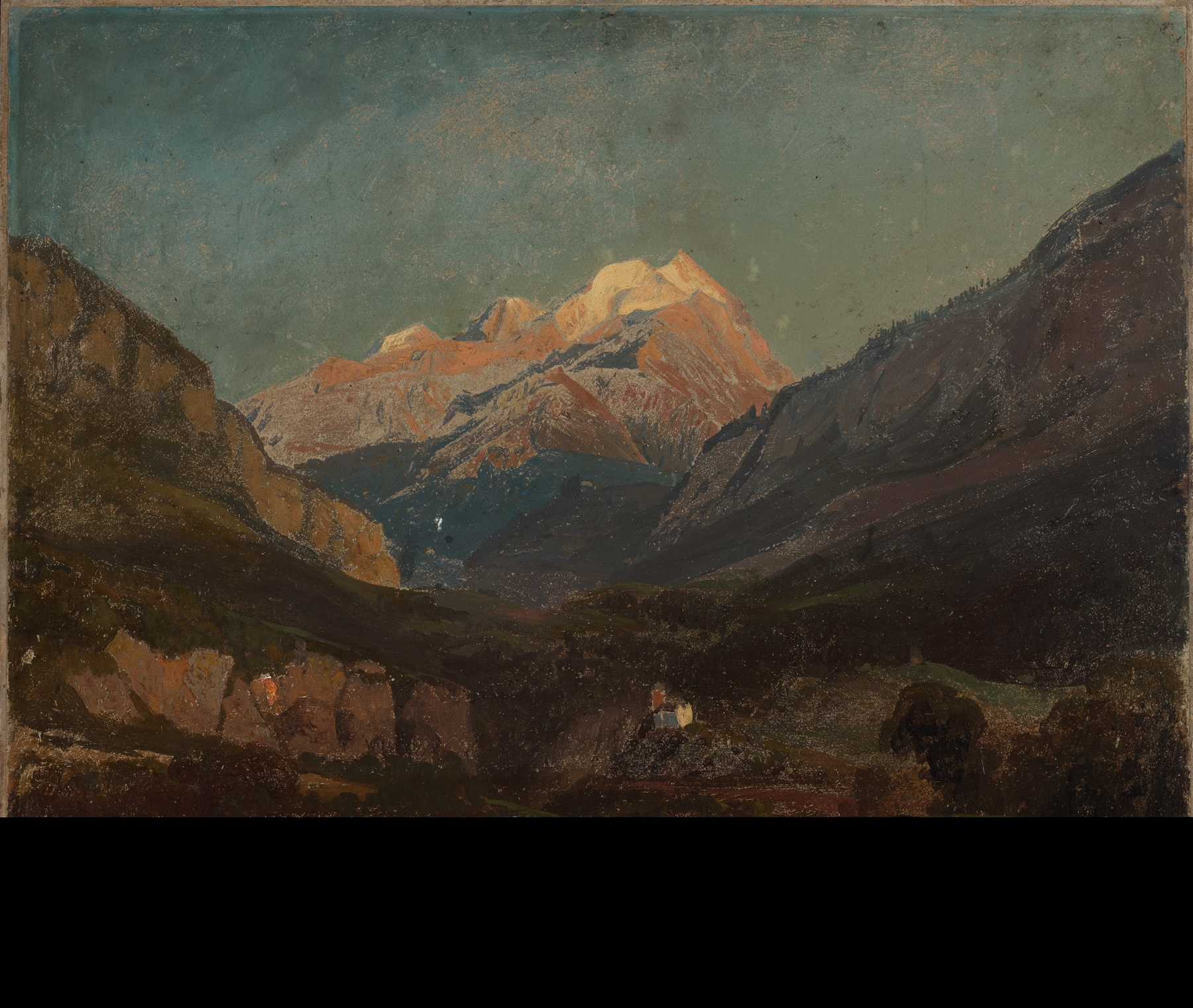
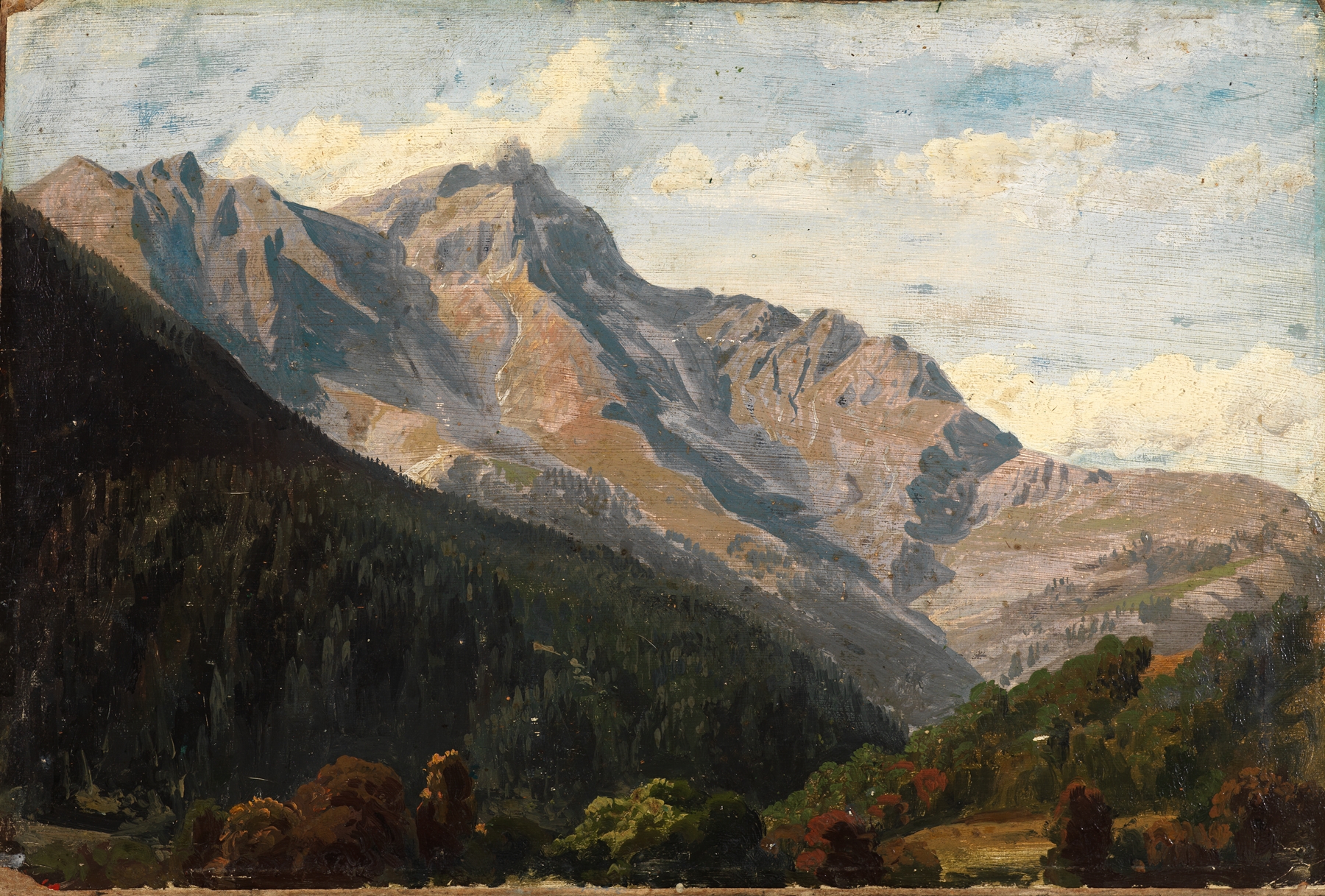
Can beauty exist without sorrow? The allure of nature often cradles within it the weight of longing and loss, a balance that emerges vividly in the contours of mountain landscapes. Look to the center, where the sharp peaks rise dramatically against a canvas of muted blues and soft, billowing clouds. The Wetterhorn commands attention, its craggy summit illuminated by a ghostly glow that hints at the divine. Notice how the composition draws your eye upward, perhaps inviting contemplation on the heights of faith and aspiration.
The brushwork is both precise and layered, capturing the raw texture of rock and the ethereal quality of the sky, creating a dialogue between the earthly and the celestial. In the interplay between light and darkness, there lies a profound tension. The shadows cast on the mountain suggest the struggles inherent in the pursuit of beauty, while the vibrant hues evoke hope and desire. This duality resonates with the viewer, whispering of the fragility of existence amidst nature's grandeur.
Hidden within the serene expanse is the suggestion that faith, much like the mountain, stands resolute yet vulnerable against the storms of life. In 1838, Johann Wilhelm Schirmer rendered this piece during a period of personal and artistic growth. Living in Germany, he was immersed in the Romantic movement, which celebrated individual experience and the sublime beauty of nature. His work reflects not only his deep connection to the landscape but also the broader cultural shifts of an era grappling with the interplay of emotion and the natural world.