Der große Wasserfall von Tivoli bei Rom — History & Analysis
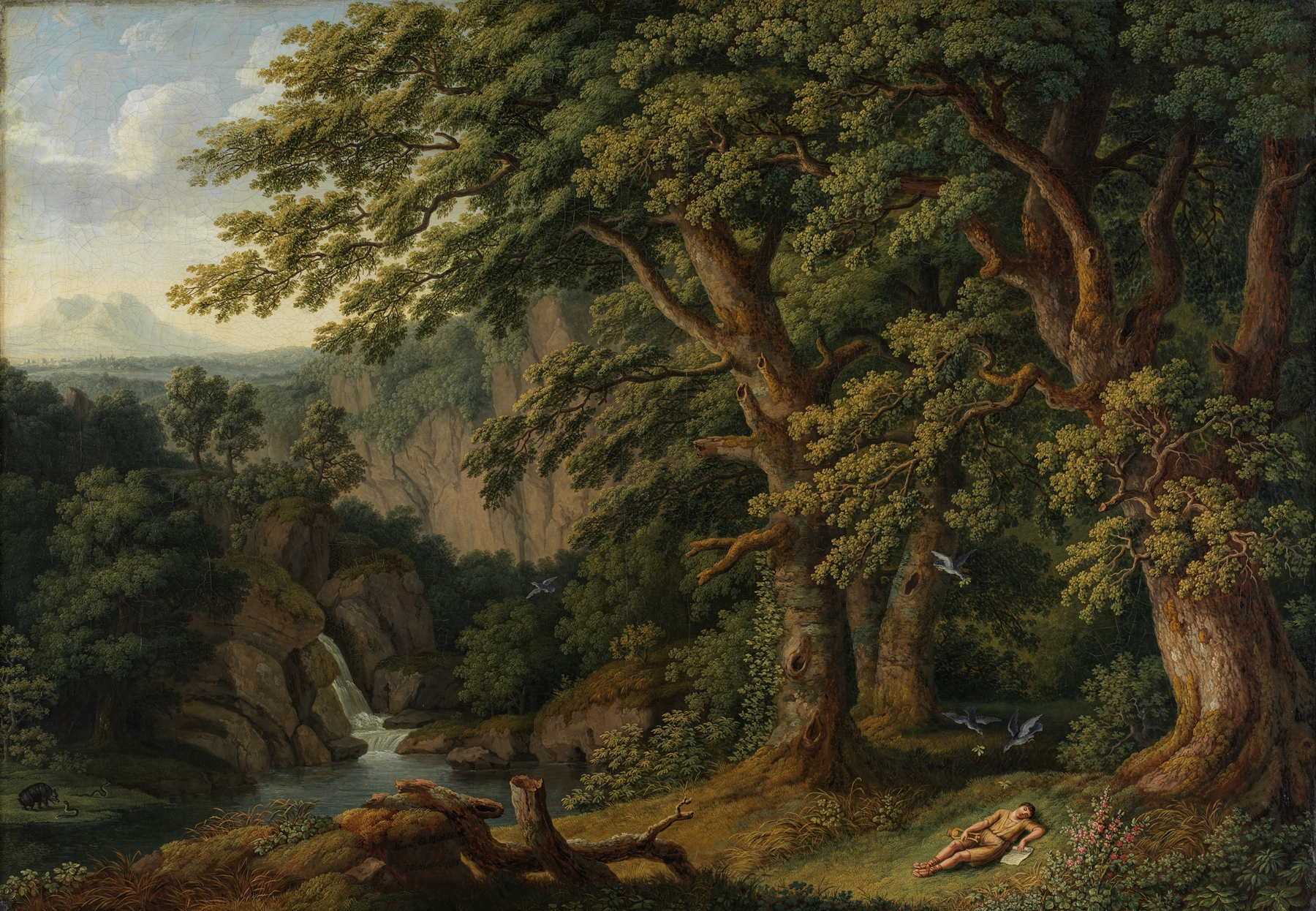
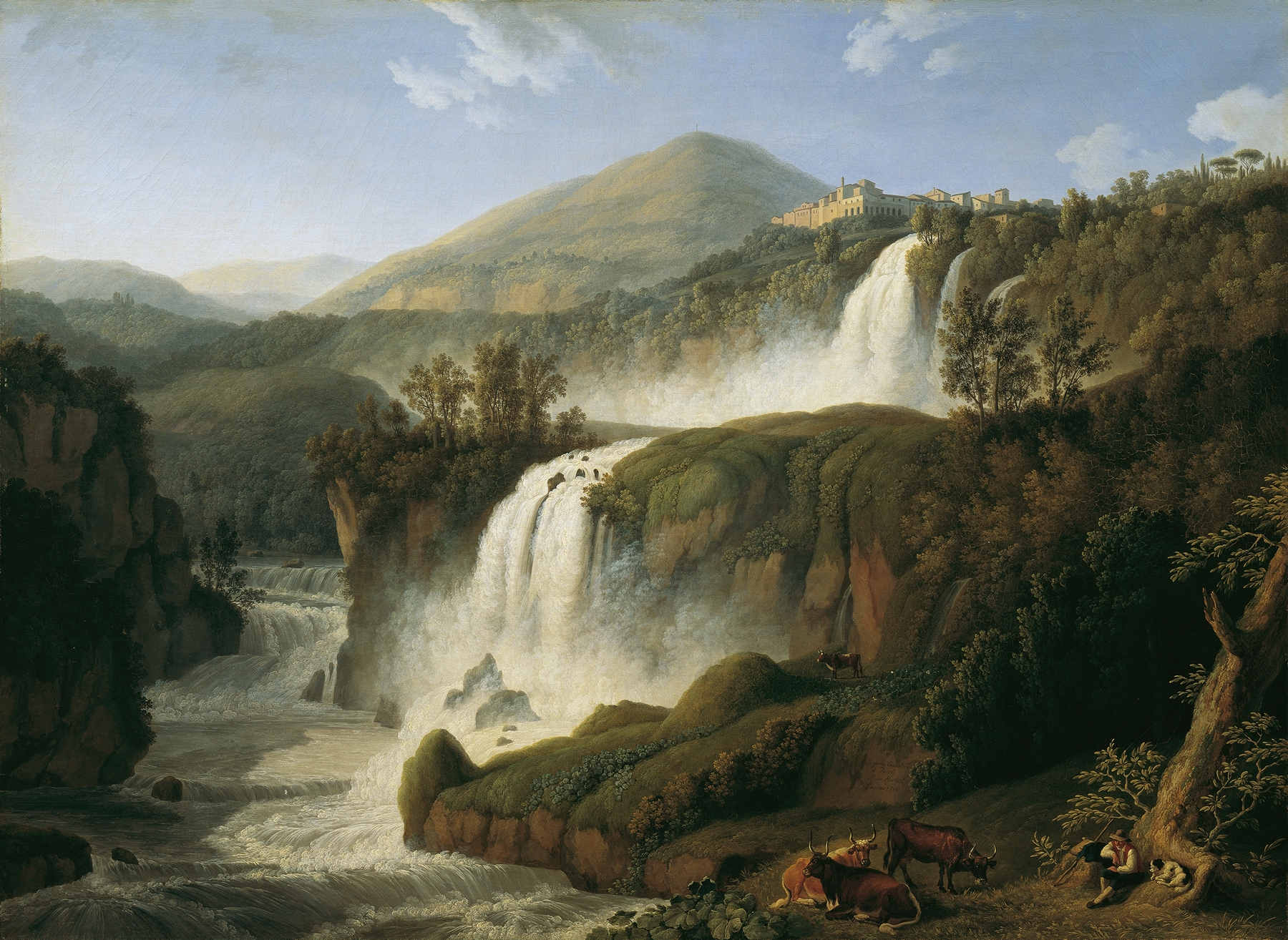
“Every silence here is a confession.” In the stillness of nature, even the movement of water speaks volumes, whispering secrets of time and tranquility. Look to the foreground to see the cascading water tumbling over rocks, each splash a study in whites and blues that dance with light. The vibrant greens envelop the scene, framing the waterfall as it flows with an enchanting rhythm. Notice how Hackert expertly contrasts the fluidity of the water with the rugged solidity of the surrounding cliffs, creating a dynamic interplay between softness and strength.
As the viewer's gaze glides up toward the distant horizon, a sense of both adventure and introspection emerges. The figures scattered along the rocky banks suggest humanity’s smallness against the grandeur of nature, each positioned in a moment of contemplation or interaction, adding layers of narrative to the landscape. The luminescence of the sky hints at the time of day, fostering an atmosphere that is both serene and fleeting, inviting deeper reflection on the passage of time.
In 1790, while living in Naples, the artist captured this scene amidst a period of artistic evolution in Europe. Influenced by the Romantic movement, Hackert sought to express nature's beauty with a heightened emotional resonance. This period marked a shift, as artists increasingly turned to the natural world, seeking to showcase its profound impact on the human spirit.