Jäger in den Cascinen von Pisa — History & Analysis
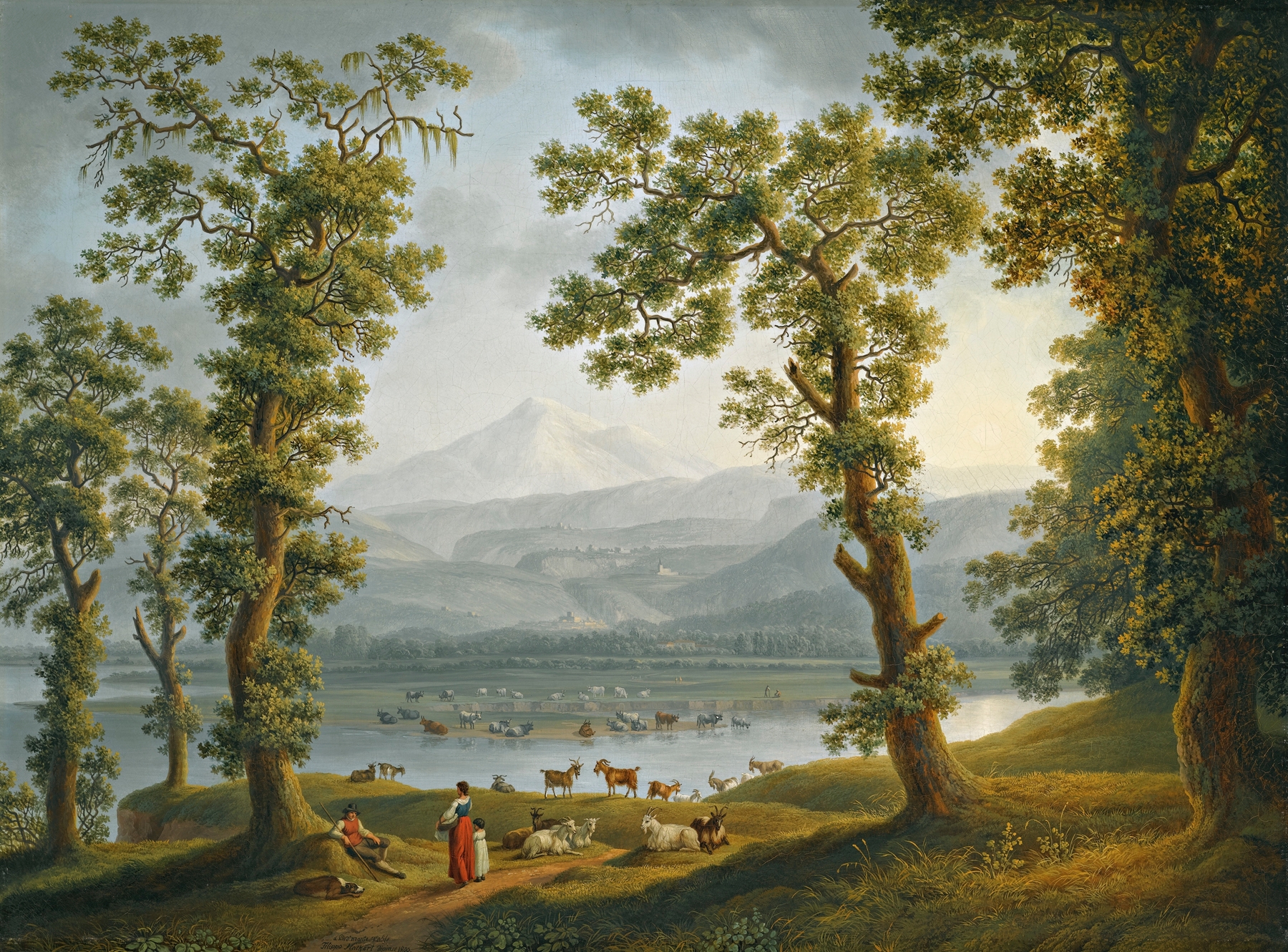
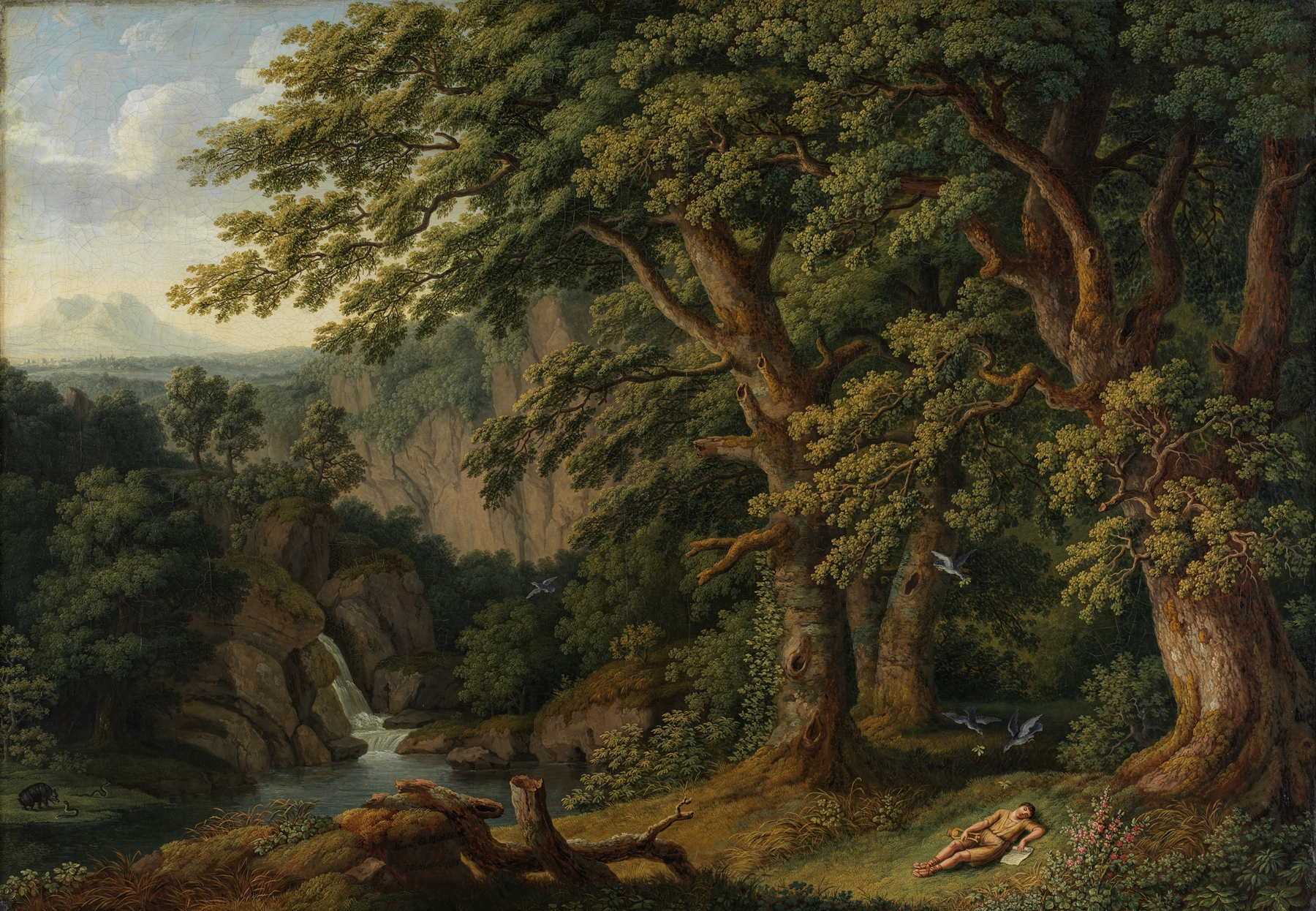
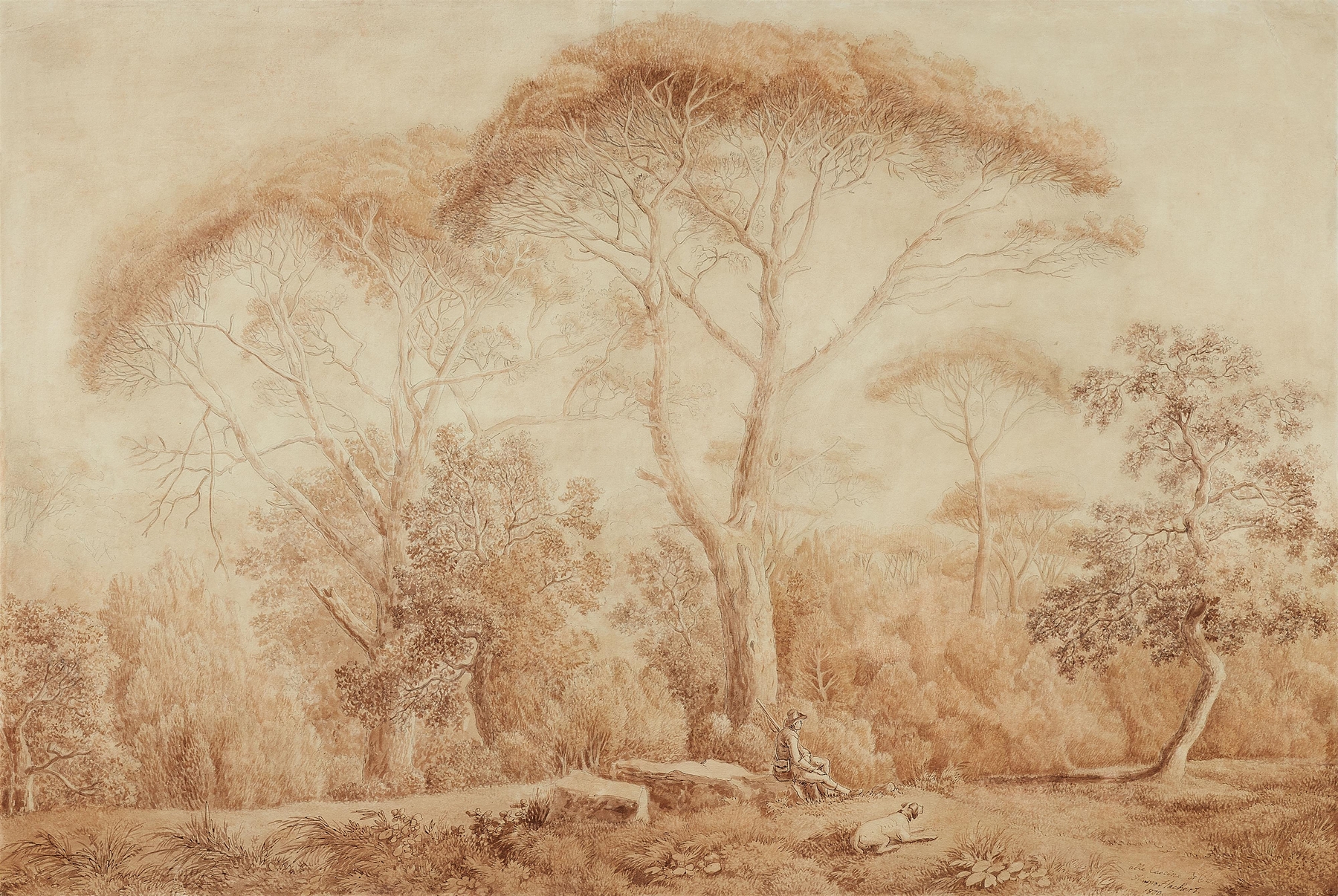
“Under the brush, chaos becomes grace.” This notion of balance resonates deeply within the heart of artistry, where the clash of nature and humanity finds its harmony. Focus on the tranquil scene that unfolds before you, where lush greenery envelops the landscape. Look closely to the left, where dappled sunlight filters through the leaves, casting a soft glow over the figures below. The hunter, poised and attentive, draws the eye with both his presence and the gentle curvature of the path that leads your gaze through the painting.
Notice how Hackert’s delicate brushwork captures the vibrant hues of the foliage, contrasting the earthy tones of the figures, as if nature itself is providing a silent stage for their activities. There’s a delicate tension between stillness and motion in this piece. The hunter, a personification of nature’s hunter-gatherer spirit, embodies a moment of anticipation—his careful stance suggests a respect for the environment that surrounds him. This stillness is amplified by the distant mountains, which rise majestically in the background, grounded yet aspirational.
They remind us that even in pursuit, there exists a balance, an interconnectedness to the world that must be recognized and revered. Created in 1800, this painting emerged during a time of artistic transition in Europe, as neoclassicism began to give way to romanticism. Jacob Philipp Hackert painted Jäger in den Cascinen von Pisa in Italy, where he found inspiration in the Tuscan landscape. His work reflects not only personal exploration but also the broader cultural movements that sought to harmonize the human experience with the natural world, emphasizing the balance that is essential for lasting beauty.