Die Wasserfälle von Tivoli — History & Analysis
Is this a mirror — or a memory? The cascading waters, captured with meticulous precision, balance the ephemeral with the eternal, inviting contemplation of nature’s fleeting beauty. Look to the right at the tumultuous falls, where the water pours over the rocks with relentless energy, creating a stark contrast to the serene pools below. The artist’s use of soft greens and deep blues draws your eye across the canvas, leading you through the vibrant foliage that frames the scene.
Notice how the light dances on the water’s surface, creating glimmers that echo the sun-drenched landscape. Every brushstroke seems deliberate, capturing both movement and stillness in perfect harmony. In the midst of this natural wonder, contrasts emerge — the chaos of the rushing water juxtaposed with the tranquil reflections in the pools below. The careful balance between wildness and calm serves as a commentary on the duality of human experience.
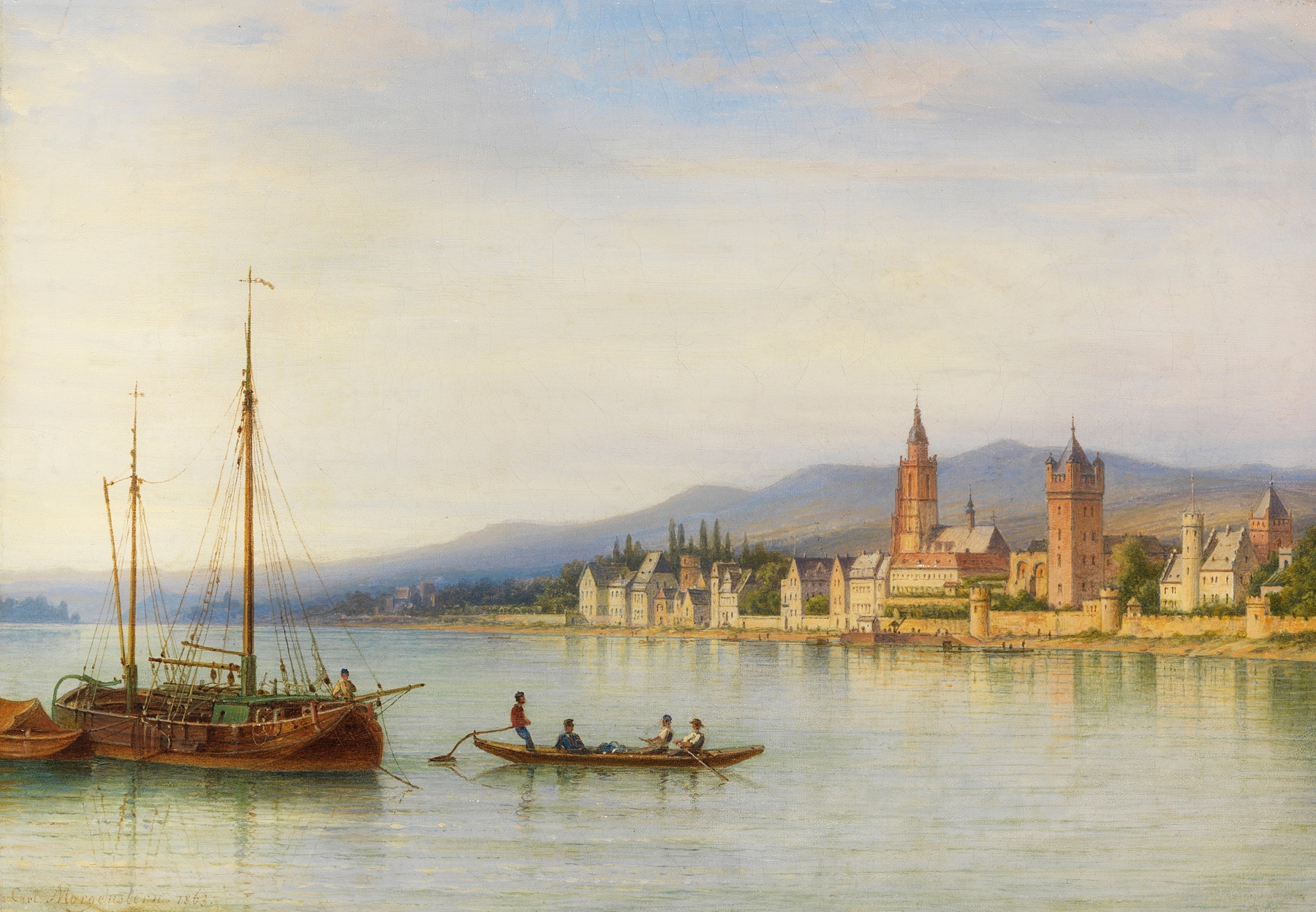
Each element, from the delicate flowers perched at the water's edge to the distant figures gazing in awe, invites viewers to ponder their own intersections with nature and memory. Carl Morgenstern painted this work in 1835 while living in Germany, during a time of burgeoning Romanticism in art. This period was marked by a deepening exploration of nature and the sublime, as artists sought to convey emotional depth through their depictions of landscapes. As Morgenstern engaged with these evolving ideals, Die Wasserfälle von Tivoli stands as a reflection of both the artist's personal journey and the collective consciousness of his time.