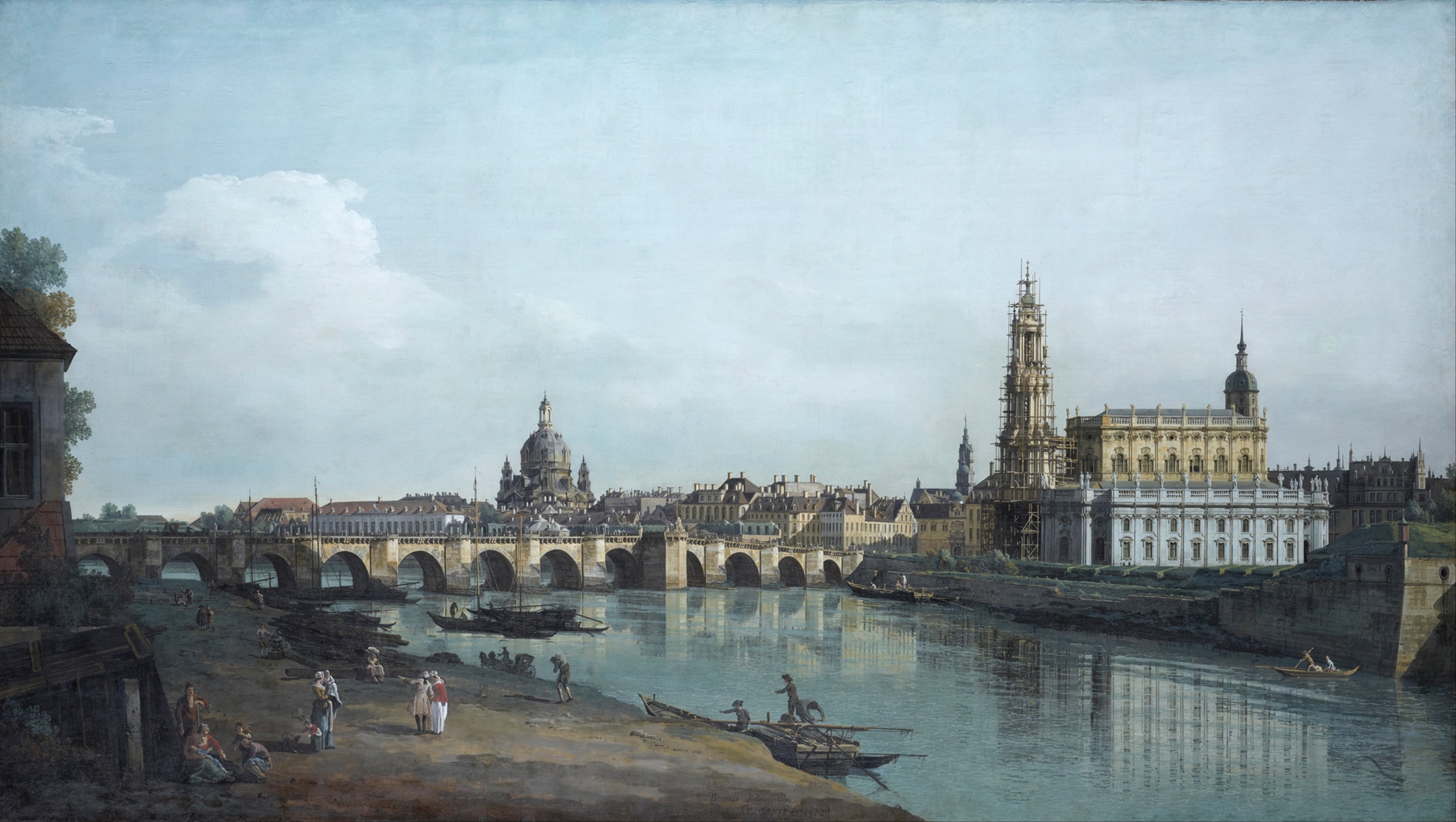
Dresden seen from the Right Bank of the Elbe, beneath the Augusts Bridge — History & Analysis
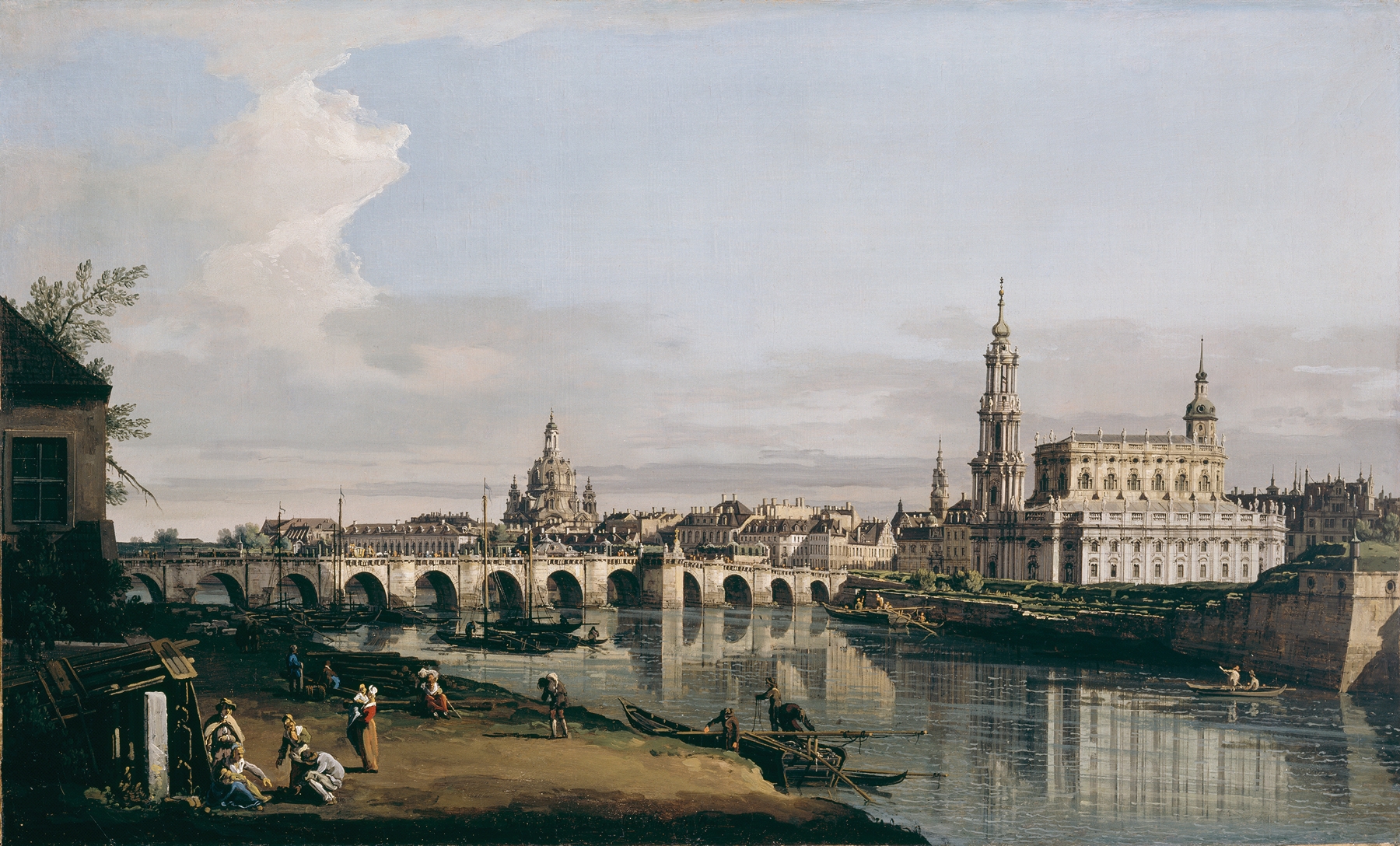
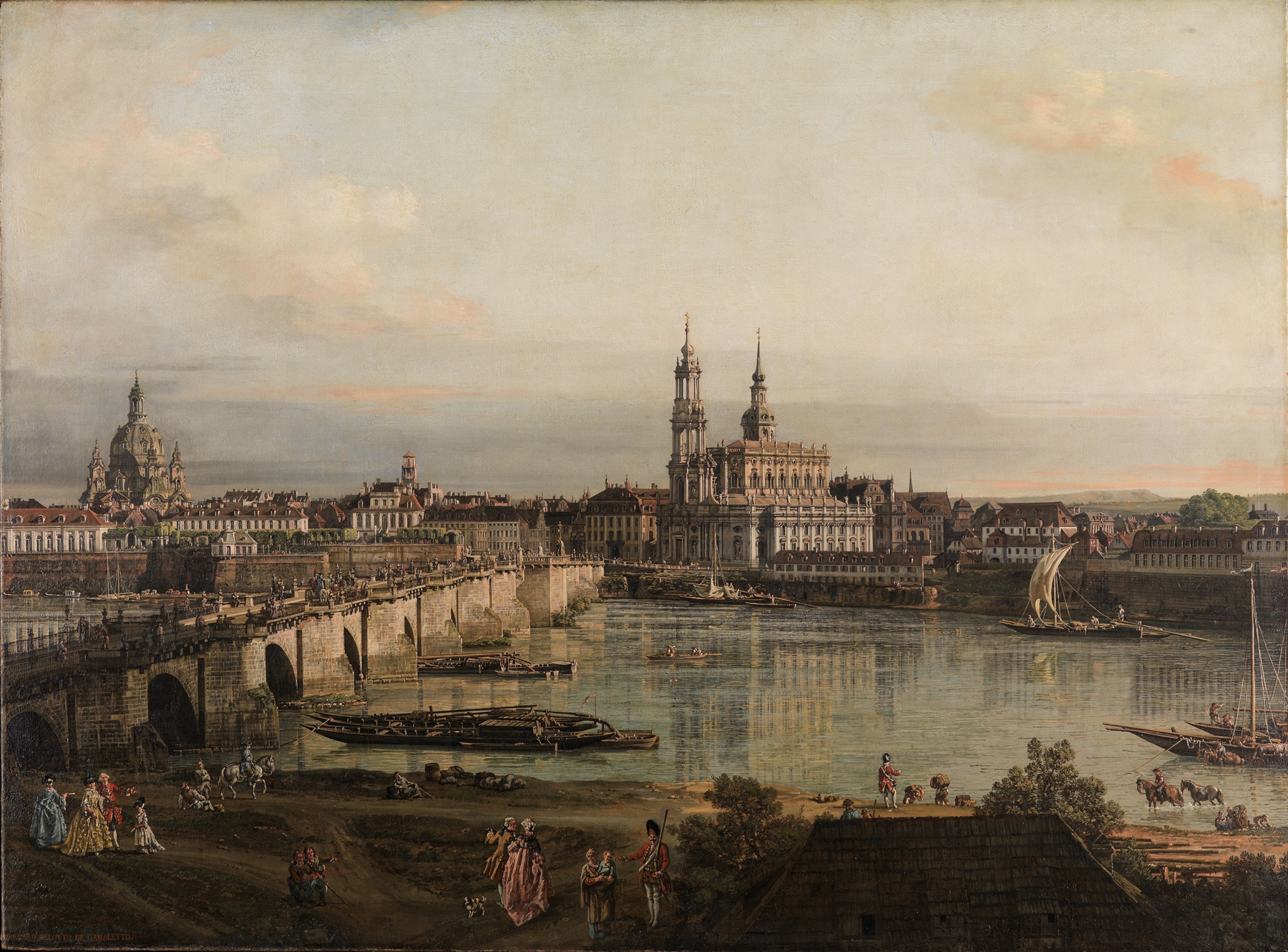
Did the painter know this moment would outlive them? Capturing the essence of a fleeting city, Dresden seen from the Right Bank of the Elbe, beneath the Augustus Bridge echoes an obsession with both place and permanence. Look to the left at the towering spires, their intricate details rising sharply against the expansive sky. Notice how the vibrant blues and warm earth tones intertwine, creating a harmonious balance that draws the eye across the canvas.
The artist's meticulous technique is evident in the careful rendering of light reflecting off the water, which adds depth and life to the scene while inviting viewers into this serene riverside moment. Amidst the architectural grandeur, subtle contrasts exist; the bustling life along the river is poised against the tranquility of the water’s surface. The figures, though small, are imbued with purpose, their gestures suggesting movement and interaction—a microcosm of the city’s vibrant energy. This tension between stillness and action reveals a deeper emotional resonance, highlighting the artist's obsession with not just capturing a moment, but preserving a sense of community and vitality.
Bernardo Bellotto created this painting in 1748, while residing in Dresden, a city experiencing both artistic flourishing and political tension. During this time, he was influenced by the burgeoning Rococo movement and the urban landscape that surrounded him, striving to immortalize the beauty of the city. As he painted, Europe was on the brink of transformation—his work not only reflects the moment but also an era that would shape the future of art and architecture.