Early Moonrise — History & Analysis
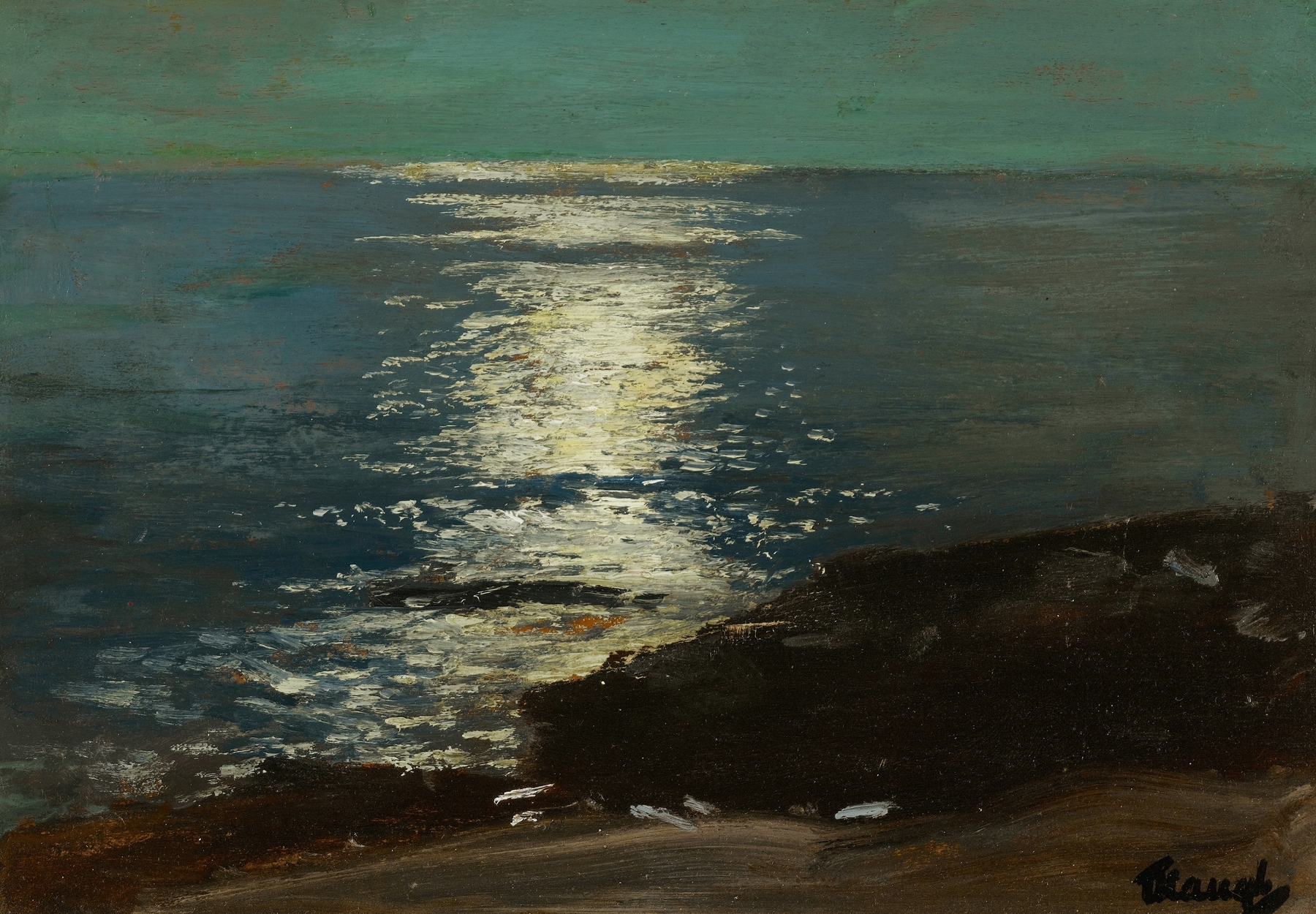
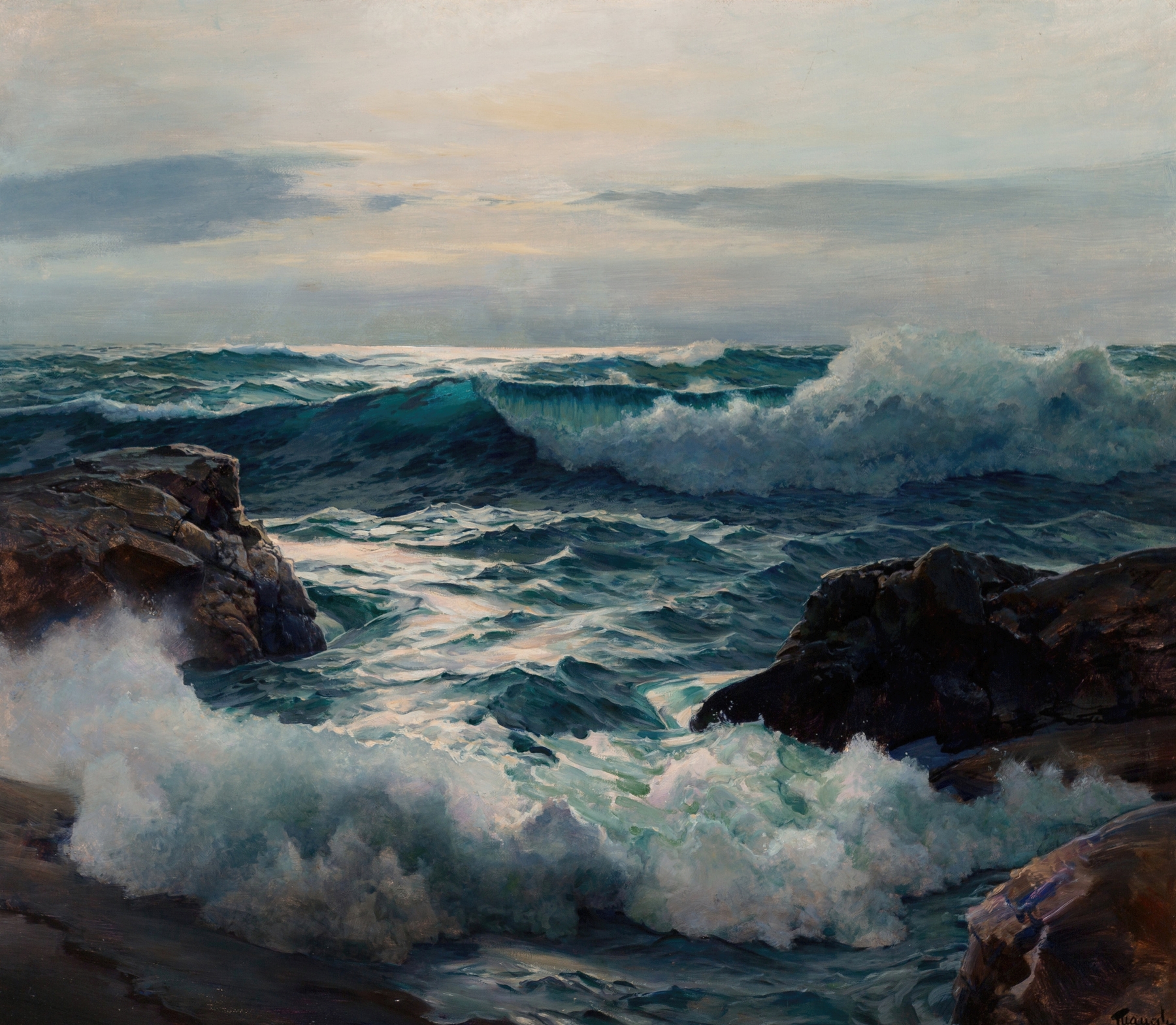
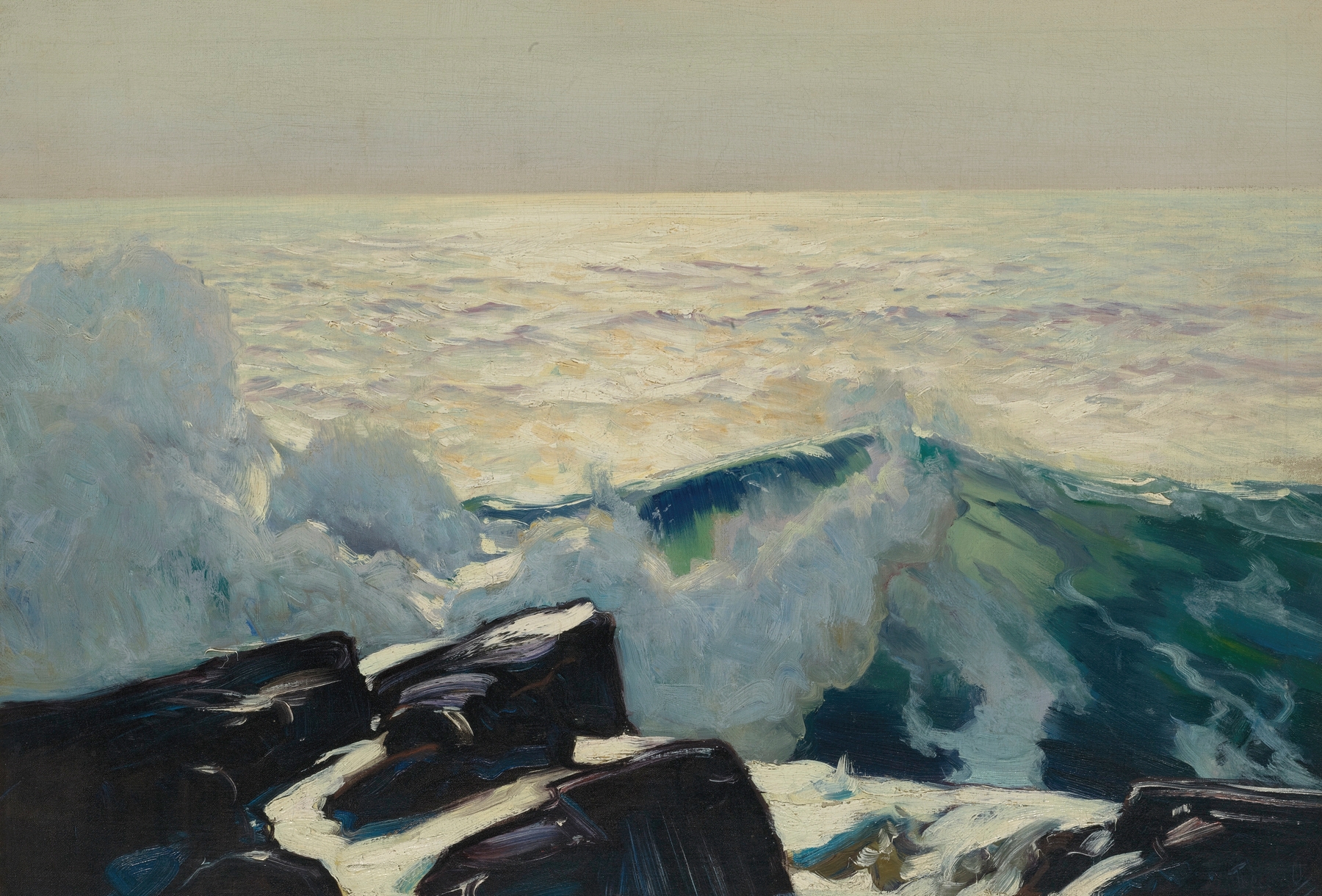
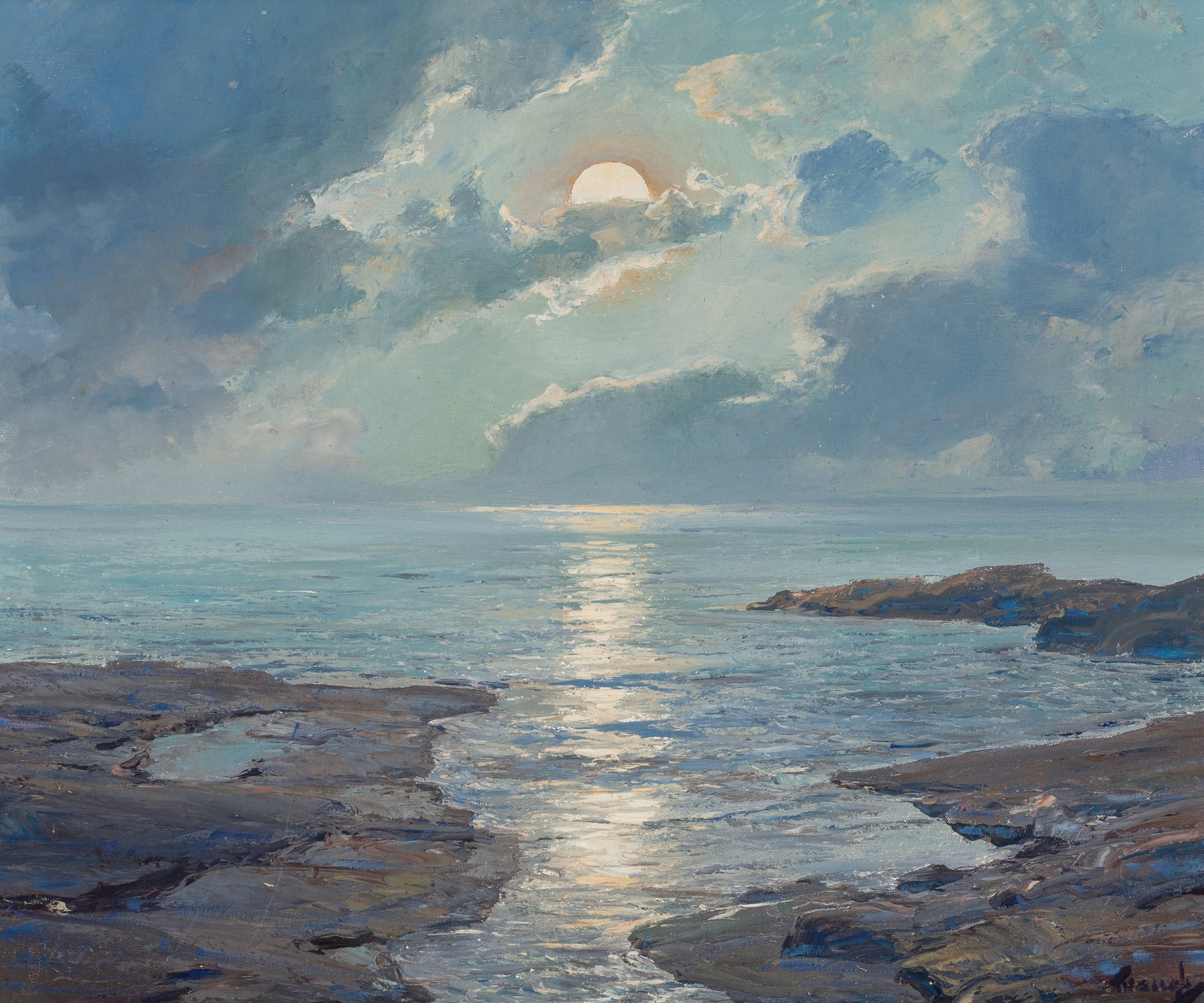
When did color learn to lie? The ethereal beauty of twilight holds secrets, whispering of decay beneath the vibrant hues. Look to the bottom left at the dark silhouette of the rocky shoreline, where shadows hint at the impermanence of nature. The deep blues and greens give way to an enchanting but disquieting light as the moon rises, casting a silvery glow that dances across the water’s surface.
Notice how Waugh’s brushwork creates a textured, almost palpable atmosphere, inviting viewers to step closer into this transient moment caught between day and night. As the eye travels upward, the soft, reflective light from the moon contrasts sharply with the encroaching darkness, evoking a profound tension between serenity and foreboding. The delicate interplay of warm and cool colors suggests an ephemeral beauty that may soon fade — a reminder of time’s relentless march toward decay. The interplay of light not only illuminates the celestial body but also reveals the hidden depths of the ocean below, hinting at the mysteries lurking just beneath the surface.
Painted in 1910, Waugh created Early Moonrise during a time when American artists were exploring new ways to express the natural world, often influenced by the Impressionist movement. Living in New England, he found inspiration in the coastal landscapes, capturing both their beauty and their impermanence. This work reflects his deep appreciation for the changing atmosphere and the transient moments that define our experience of nature.