El Maragato Threatens Friar Pedro de Zaldivia with His Gun — History & Analysis
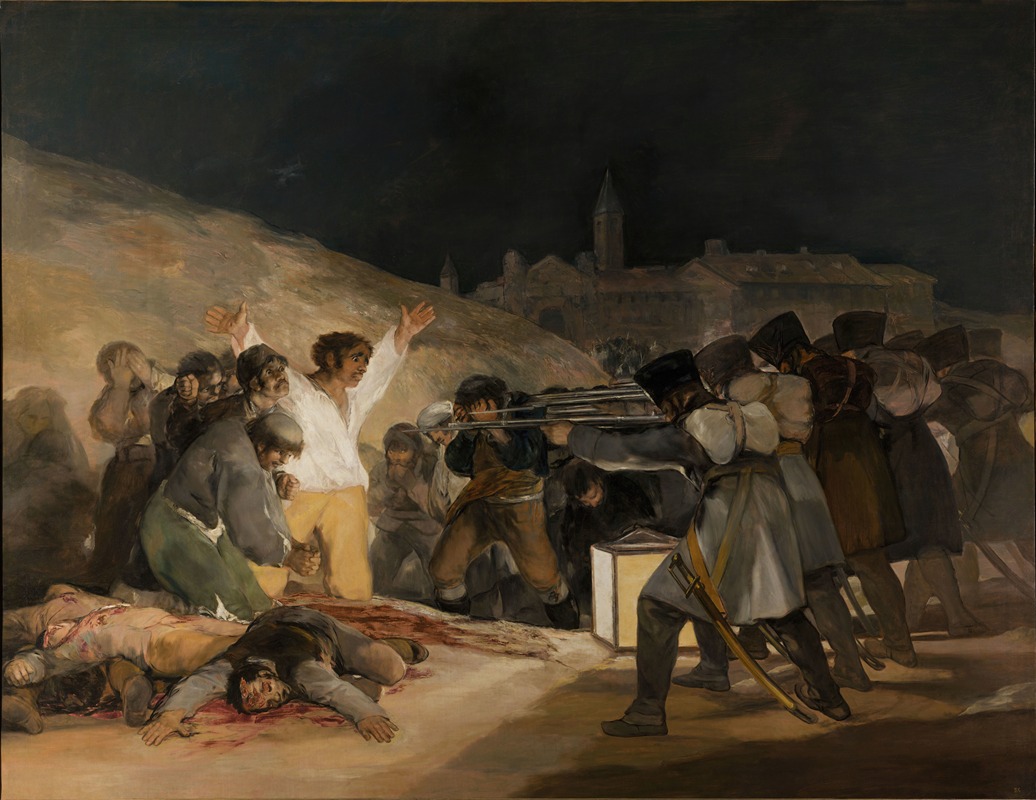
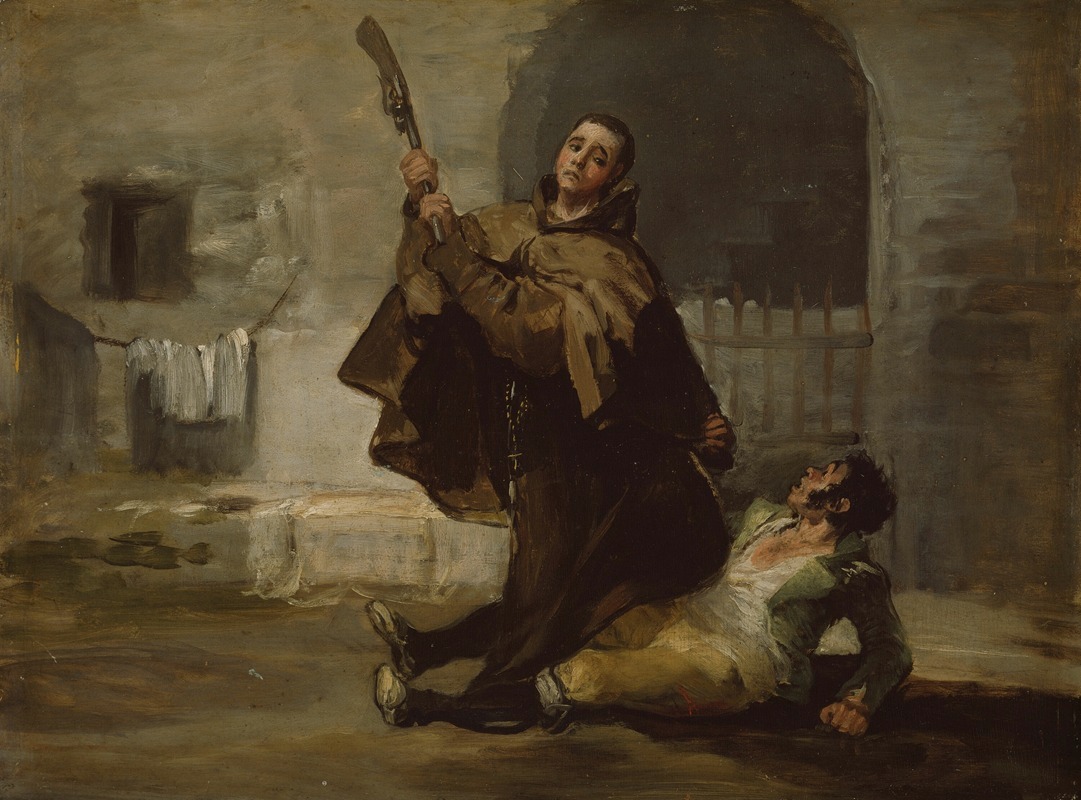
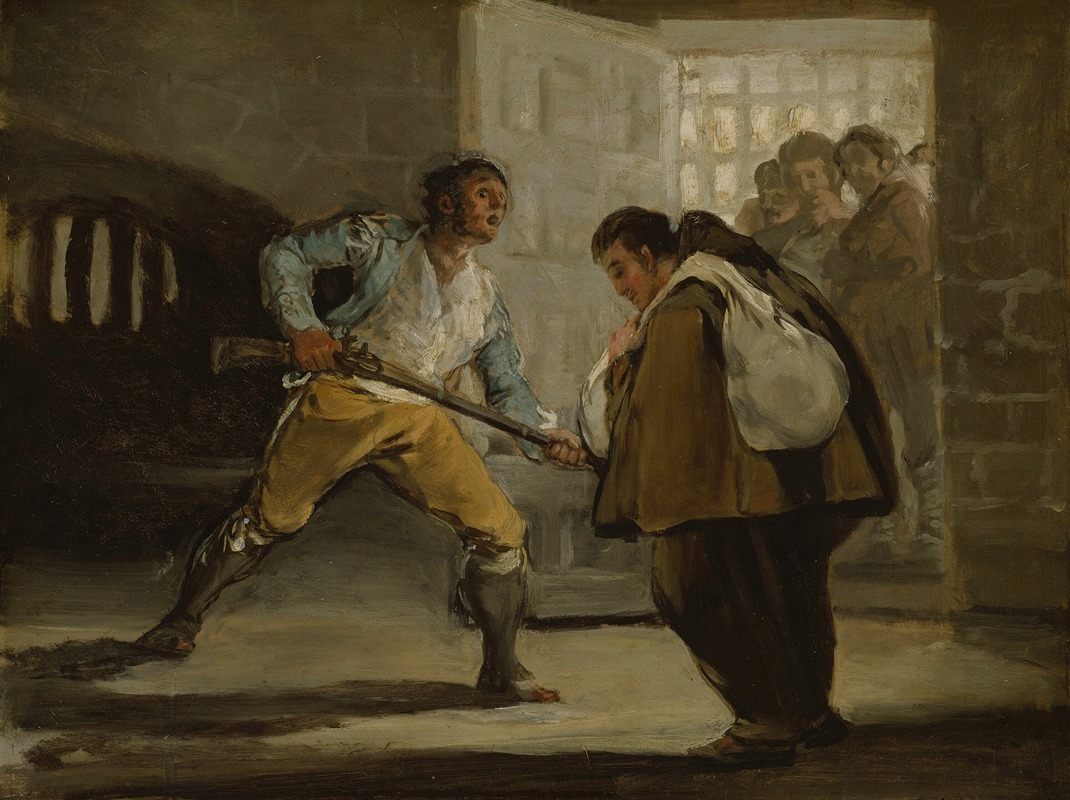
What if beauty was never meant to be finished? In a world where fragility dances on the edge of violence, the tension between power and vulnerability manifests in striking clarity. Notice how the figures are arranged; the ominous presence of El Maragato looms in the foreground, his gun poised yet seemingly at odds with the delicate, porcelain-like features of Friar Pedro de Zaldivia. Look closely at the sharp contrast between the dark, rough textures of El Maragato’s attire and the soft, ethereal drapery enveloping the friar.
The use of chiaroscuro enhances this dynamic, with light illuminating the friar’s face, capturing a moment of profound fear and uncertainty that starkly opposes the aggressor’s hardened gaze. Within this emotional tableau lies a narrative of power, dominance, and the fragility of life. The juxtaposition between the friar’s vulnerability and El Maragato’s threat speaks to the precariousness of belief in salvation amidst turmoil. The tension is not just physical but deeply existential; the friar’s gaze betrays an awareness of his mortality, while El Maragato embodies the raw, unrefined reality of human conflict.
This scene prompts reflection on the volatility of beauty, suggesting that such moments are fleeting and fraught with peril. Francisco José de Goya y Lucientes painted this work around 1806 during a tumultuous period in Spain, marked by political upheaval and social unrest. This era saw the rise of the Peninsular War, as Goya grappled with the harsh realities of human nature and the consequences of power. His work increasingly reflected his disillusionment with society, capturing the raw emotions and psychological depth that would come to characterize his later masterpieces.