Friar Pedro Clubs El Maragato with the Butt of the Gun — History & Analysis
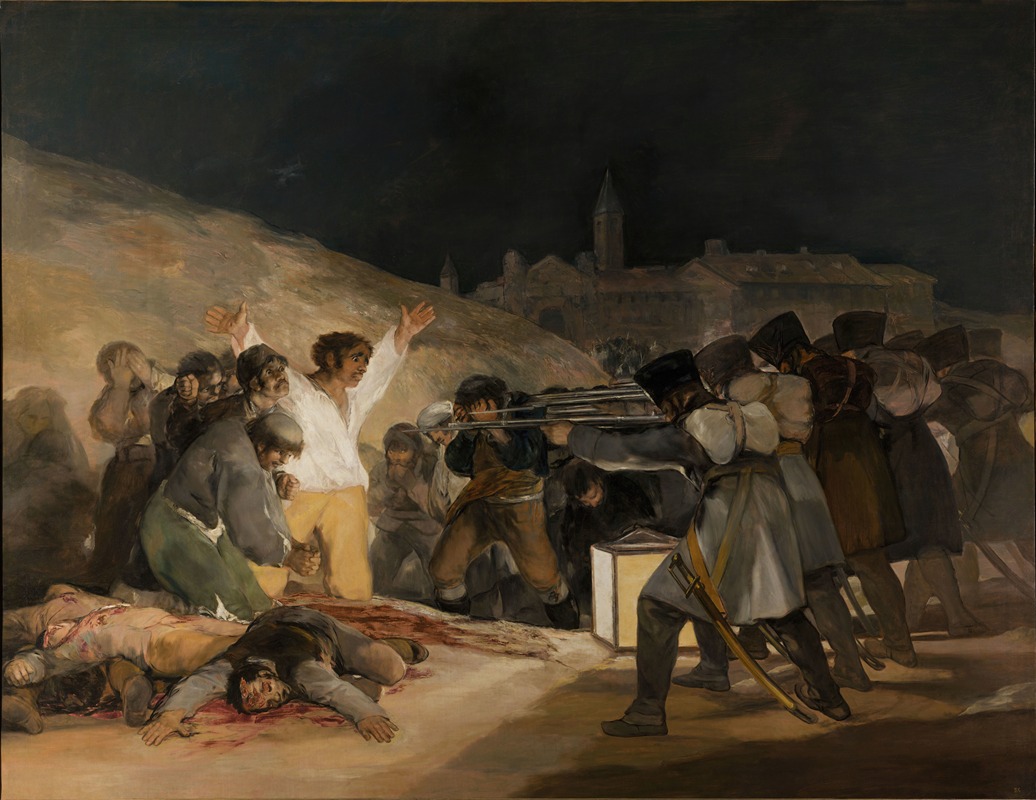
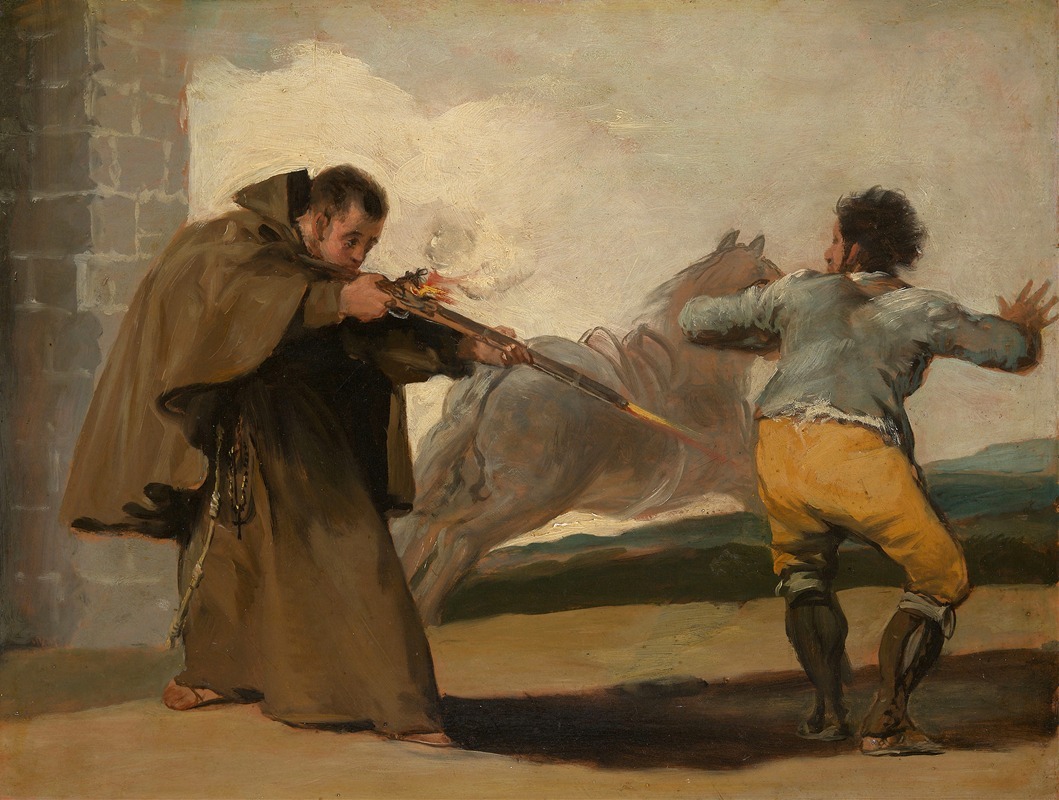
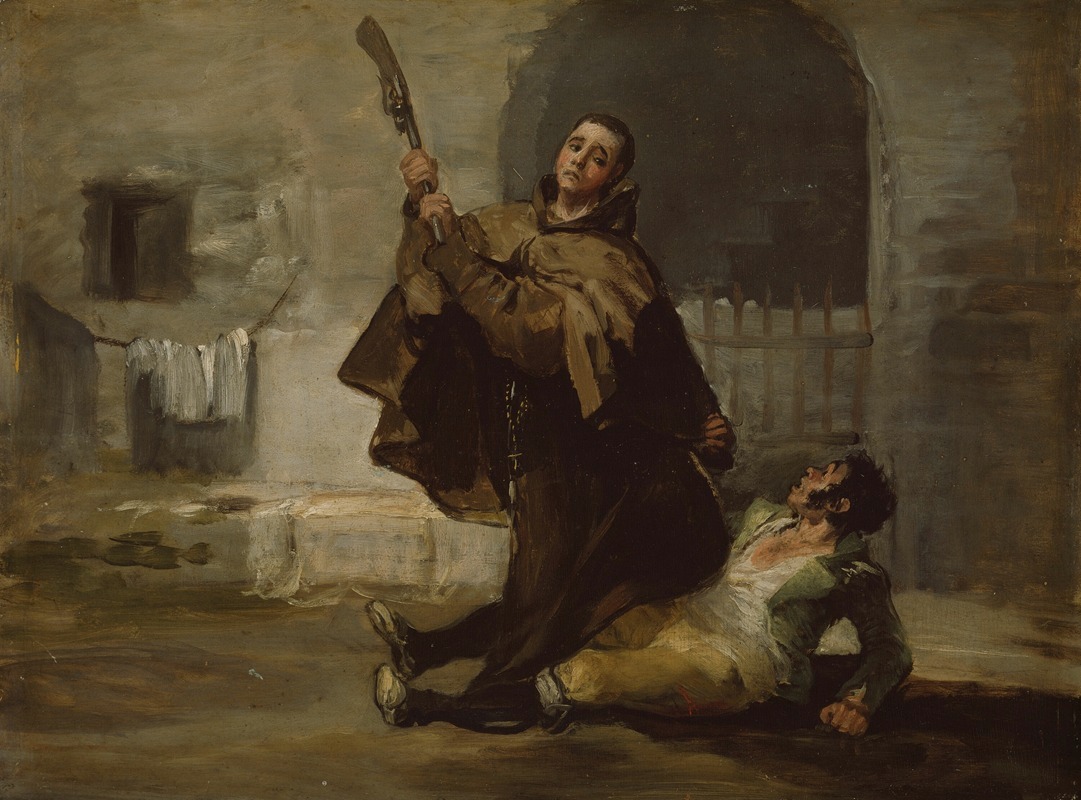
Could a single brushstroke hold eternity? In Friar Pedro Clubs El Maragato with the Butt of the Gun, the weight of violence and consequence hangs heavy, inviting contemplation of morality and the human condition. Look to the left at the stark posture of Friar Pedro, his figure rigid and determined, as he raises the gun, rendered with a dramatic palette of dark tones contrasting against the pale flesh of his victim. The brushwork pulses with urgency, capturing the moment just before impact. Notice how the subtle glow of light accentuates the tension in Pedro's furrowed brow, while the shadows play across the anguished face of El Maragato, whose fate is sealed in an instant.
The dynamic composition draws the viewer's eye, creating a visceral connection to this pivotal moment. The emotional tension within the painting speaks to power and vulnerability, where the sacred and profane collide. Pedro’s clerical robes suggest the sanctity of his position, yet his actions betray a dark complicity in violence. Meanwhile, the victim’s desperate gaze evokes empathy, challenging the viewer to confront the moral ambiguity of justice and retribution.
Each brushstroke transcends the narrative, inviting us to reflect on the broader implications of authority, faith, and moral failings. Created around 1806, the artist was exploring themes of brutality and human folly during a period of political upheaval in Spain. Goya was deeply affected by the Peninsular War and the social turmoil of his time, resulting in a shift towards darker subjects in his work. This painting, emblematic of his later style, grapples with the complexities of human nature and critiques the very institutions that claim to uphold virtue.