The Third of May 1808 — History & Analysis
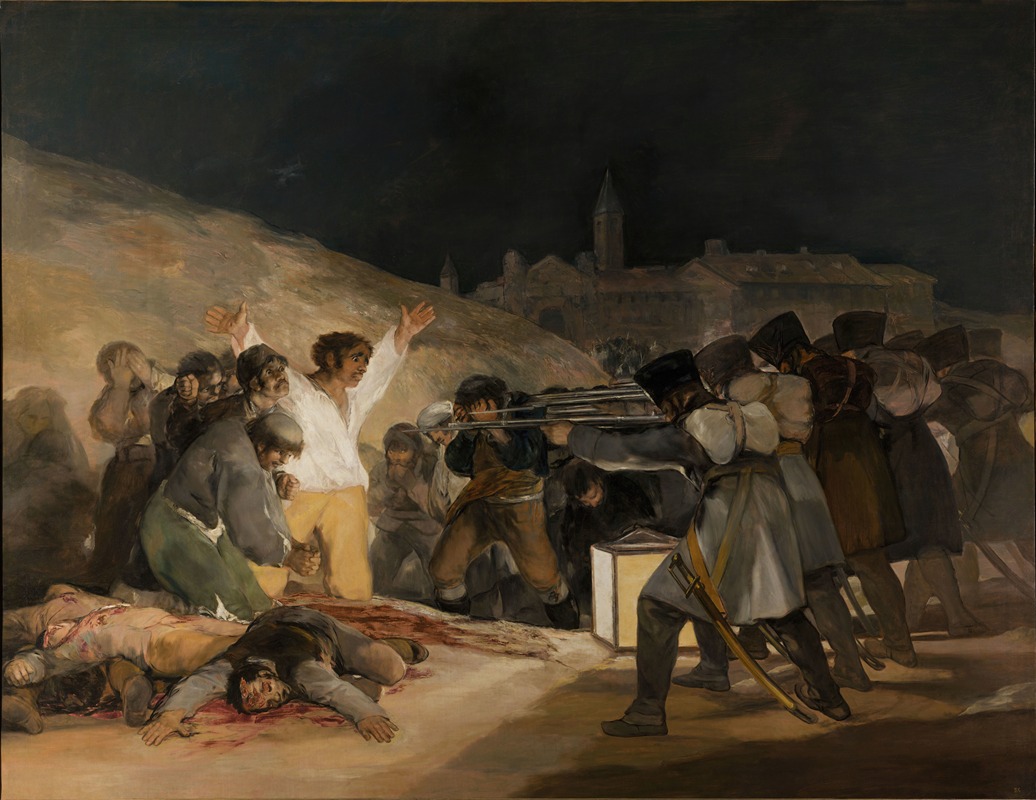
Could beauty survive in a century of chaos? In The Third of May 1808, Francisco de Goya grapples with the tumultuous fervor of human obsession, immortalizing a moment of unspeakable tension and heart-wrenching vulnerability. Look to the center of the canvas, where a man in white stands, arms outstretched in a gesture of desperation and defiance. The stark light illuminates his figure, contrasting sharply with the dark, oppressive silhouettes of the firing squad looming to the left. Notice how Goya employs a muted palette of ochres and deep blacks, submerging the scene in a haunting atmosphere that evokes both fear and empathy.
The rough brushwork enhances the urgency, as if the viewer could feel the tremors of impending violence. Beneath the surface, the painting reveals the complexity of heroism and despotism. The bright white of the central figure symbolizes purity and innocence amidst the chaos of war, yet it also highlights the futility of resistance against overwhelming power. The faces of the anonymous soldiers are obscured, emphasizing their dehumanization and the moral void in the act of execution.
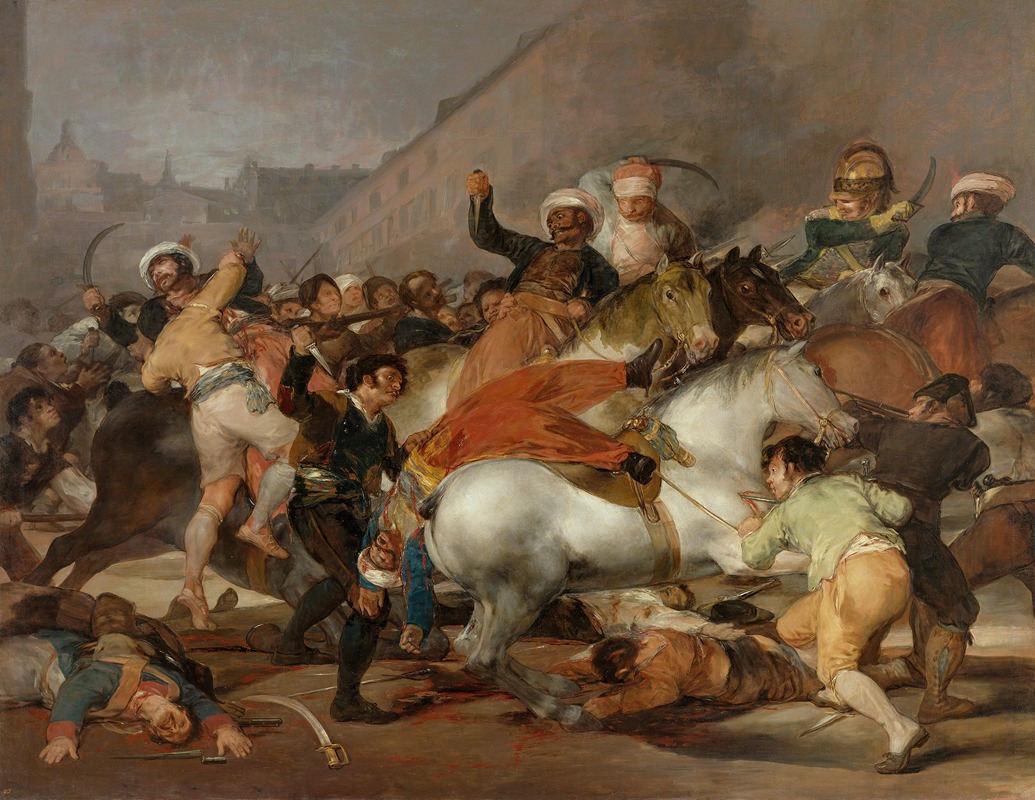
Goya's brush captures not just a moment in time but a profound emotional rift—between hope and despair, life and death. Goya created this work in 1808, a period marked by the Peninsular War and the brutal oppression of the Spanish people. Living in Madrid, he was deeply affected by the violence surrounding him, leading to a profound evolution in his artistic vision. This painting not only reflects the societal turmoil of his time but also marks a pivotal shift in the representation of war in art, moving towards a more personal and psychological exploration.