De slaap van de rede brengt monsters voort — History & Analysis
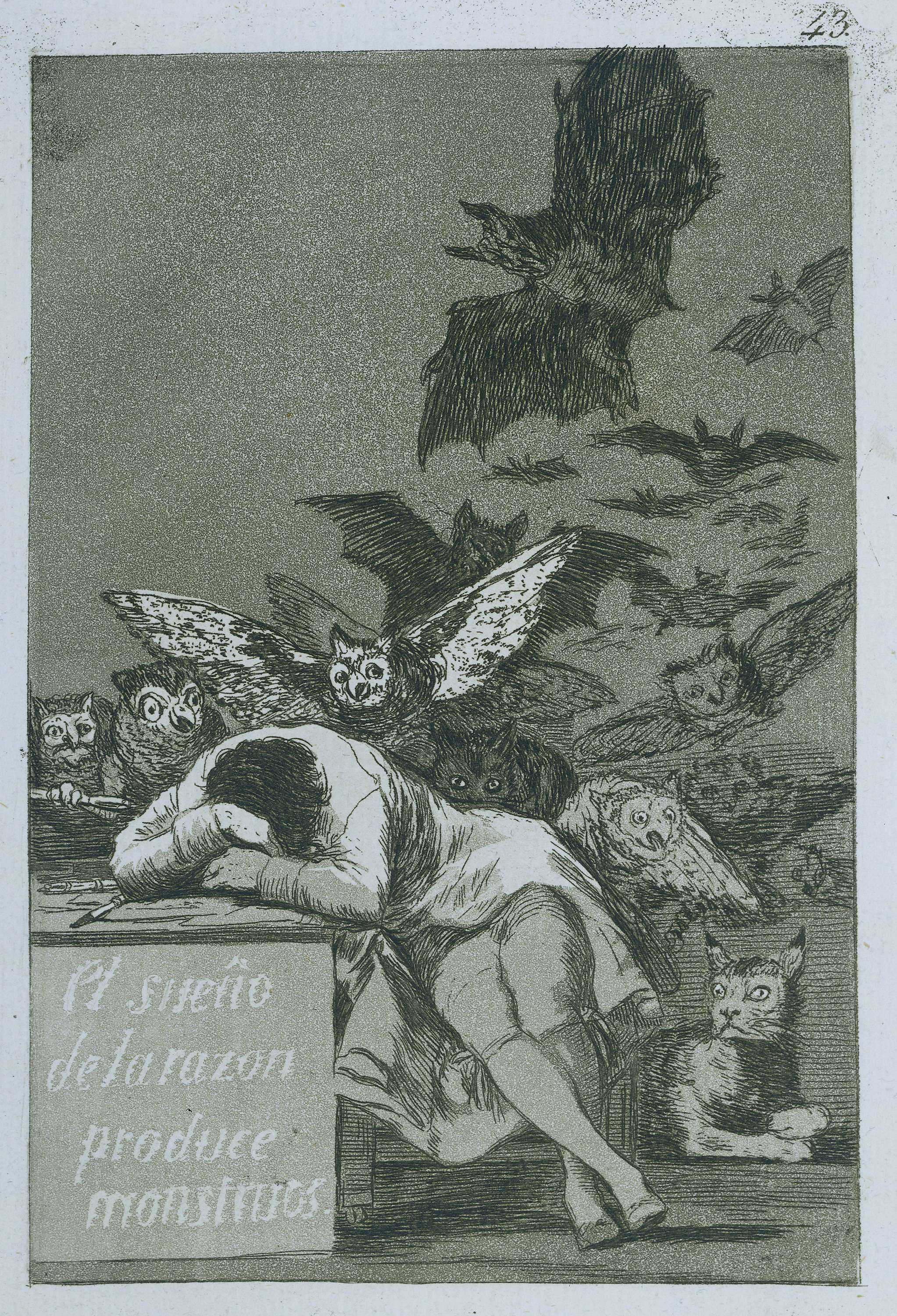
What secret hides in the quiet of the canvas? In the depths of our unconscious, the line between reason and madness blurs, revealing the obsessions that dwell within. Look to the center where a slumbering figure rests, head bowed and lost in dreams. The soft, muted tones of browns and grays envelop the scene, creating an atmosphere of eerie tranquility. Shadows loom large around him, hinting at the lurking horrors that emerge from the dark.
Notice how the figures — grotesque and menacing — creep forth from the background, their forms twisted and distorted, embodying the nightmares that awaken when rationality slips away. The juxtaposition of the sleeping man and the nightmarish creatures underscores the tension between enlightenment and ignorance. The figures, both threatening and hauntingly captivating, symbolize the chaos that arises when reason is abandoned. Their grotesque features highlight our deepest fears and obsessions, suggesting that what lies dormant within the mind can manifest as monstrous realities.
Goya's work operates as a profound commentary on the human psyche, reflecting the dark undercurrents of a society grappling with enlightenment and superstition. Created between 1797 and 1799, this piece emerged during a pivotal time in Goya's career as he transitioned from the neoclassical style to the darker themes of romanticism. Living in Spain amidst the backdrop of political turmoil, societal upheaval, and the encroaching influence of the Enlightenment, the artist sought to explore the complexities of human experience. His ability to capture the tensions of his time resulted in a poignant reflection of the struggles between reason and the primal, often monstrous, urges that lie beneath the surface.